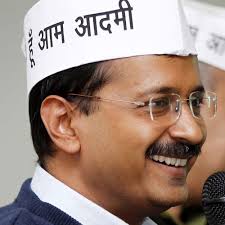
Kejriwal delivers on promise of free water

December 30, 2013
New Delhi, Dec 30: Fulfilling its poll promise, the Aam Aadmi Party government on Monday announced 667 litres of free water daily for domestic consumption to each household having metered connection in Delhi.

kejriwall

The decision was taken at a meeting of the Delhi Jal Board chaired by Chief Minister Arvind Kejriwal at his residence in Ghaziabad in Kausambi.

“All the domestic consumers having metered connection will get 20 kilolitres of water free of cost from January 1. We will not even levy any existing charges such as water cess and sewerage charge,” newly-appointed Delhi Jal Board CEO Vijay Kumar told reporters.

He, however, said if the consumption limit crosses 20 kilolitres, then the consumer will have to pay for the water and other charges.

Mr. Kumar was appointed CEO of DJB on Saturday evening in place of Debashree Mukherjee who is understood to have reservation over supplying water free of cost.

In its election manifesto, the Aam Admi Party had announced that 700 litres of free water will be supplied daily to each household if it comes to power.

Last month, Delhi Jal Board had planned to increase the water tariff by 10 per cent from January to improve its finances.

It is not immediately clear whether government will charge for water being supplied to over 1,600 unauthorised colonies across the city as in most households in these settlements water metres are yet to be installed.

Comments

Add new comment

  • Coastaldigest.com reserves the right to delete or block any comments.
  • Coastaldigset.com is not responsible for its readers’ comments.
  • Comments that are abusive, incendiary or irrelevant are strictly prohibited.
  • Please use a genuine email ID and provide your name to avoid reject.
Agencies
January 25,2020

Jammu, Jan 25: People in Jammu and Kashmir expressed happiness over the restoration of mobile data services and internet access through fixed-line across the Union Territory on Saturday.

Speaking to ANI Jitendra Sharma, a resident of Jammu said, "The government has taken a good decision. People had been facing hardship for a long period and I think it will improve further."

"It is a big relief to people. People can finish their pending work. I hope that 4G services will also be resumed soon," said a resident of Kashmir.

The internet speed is restricted to 2G only.

"Access shall be limited only to whitelisted sites and not to any social media applications allowing peer to peer communication and virtual private network applications. Directions shall be effective from January 25 and will remain in force till January 31," the statement by the government read.

Earlier on January 15, 2G services were reinstated in Jammu, Samba, Kathua, and Udhampur for white-listed sites.

The Central government had suspended the internet in the region following the abrogation of Article 370 of the Constitution on August 5 last year, which conferred special status to the erstwhile state of Jammu and Kashmir, and its bifurcation into two Union Territories -- Ladakh, and Jammu and Kashmir.

Comments

Add new comment

  • Coastaldigest.com reserves the right to delete or block any comments.
  • Coastaldigset.com is not responsible for its readers’ comments.
  • Comments that are abusive, incendiary or irrelevant are strictly prohibited.
  • Please use a genuine email ID and provide your name to avoid reject.
Agencies
August 8,2020

Kozhikode, Aug 8: Kerala Chief Minister Pinarayi Vijayan on Saturday announced a compensation of Rs 10 lakh to the next of kin of each passenger who died when an Air India Express flight veered off the runway while attempting to land at the Karipur International Airport here on August 7.

He was briefing the media after visiting the crash site at the airport and the injured at the Kozhikode Medical College Hospital.

Offering his condolences, the Chief Minister said, "Apart from the solatium for the victims, the state government would bear the treatment expenses of all those injured in this unfortunate plane crash irrespective of the hospitals they are in. The Civil Aviation Ministry and other Central Government agencies are expected to announce compensation for the air passengers. 

If any further assistance is required, the State Government will take an appropriate decision at that time to support them to get back to a normal life."

"However, the immediate task now is to ensure the best possible treatment for the survivors of the accident. The District Authority is coordinating the treatment of those rescued who are now in 16 hospitals across Kozhikode and Malappuram Districts," added Vijayan.

Of the 190 people on board the ill-fated plane, there were 184 passengers and six crew members. Of the 18 dead so far, 14 are adults (seven males and females each) and four are children. Both the Pilot and the Co-Pilot are among those dead. At present, 149 passengers are hospitalised, of them 23 with serious injuries. Till now, 23 passengers have been discharged. There are few passengers from Tamil Nadu and Telangana also.

All the dead have been identified, eight from Kozhikode district, six from Malappuram district and two from Palakkad district. The post mortem process has been expedited despite the Covid threat and is expected to finish before evening. All the accident victims will be tested for Covid including those who died in the crash. So far, only one victim has tested positive for coronavirus, the Chief Minister said.

He also appreciated the instant response by the local public living in the vicinity of the airport and also the local authorities to this tragedy which ensured the minimum loss of lives in a disaster of such large magnitude as a plane crash. The rescue operations were finished in the shortest possible time yesterday.

"Even though 18 precious lives have been lost due to the impact of the crash, the rescue operations were a miraculous work. The general public and the officials played a big role in spearheading the rescue operations," he said.

Vijayan along with Governor Arif Mohammad Khan reached Kozhikode this morning.

Governor Arif Mohammad Khan expressed his condolences and sympathies to the families of the accident victims and his best wishes for the speedy recovery of those injured.

The Chief Minister was accompanied by the Niyamasabha Speaker, P. Sreeramakrishnan; Minister for Industry E.P Jayarajan, Minister for Health and Social Justice, K K Shailaja; Minister for Agriculture V.S Sunilkumar; Minister for Ports Ramachandran Kadannappalli; Minister for Transport AK Saseendran, Minister for Excise T.P Ramakrishnan, Chief Secretary, Dr Vishwas Mehta; and State Police Chief, Loknath Behra, DGP. 

The Minister for Local Self Governments, A C Moideen and the Minister for Higher Education and Welfare of Minorities, Dr K T Jaleel were already present in Kozhikode.

Comments

Add new comment

  • Coastaldigest.com reserves the right to delete or block any comments.
  • Coastaldigset.com is not responsible for its readers’ comments.
  • Comments that are abusive, incendiary or irrelevant are strictly prohibited.
  • Please use a genuine email ID and provide your name to avoid reject.
Agencies
June 15,2020

New Delhi, Jun 15: Average temperature of India experienced a rise of 0.7 degree Celsius, along with decline in rainfall, significant increase in frequency of very severe cyclonic storms and droughts in over a decade due to human activities, the Ministry of Earth Sciences in its research report said.

The contentions were made in a report issued by the ministry on the impact of climate change. It will be published by Union Minister Harsh Vardhan on June 19.

According to the report, "Since the middle of the twentieth century, India witnessed rise in temperature; decrease in monsoon; rise in extreme temperature and rainfall, droughts, and sea levels; and increase intensity of severe cyclones.

The report, prepared by researchers of the Centre for Climate Change Research, a cell under The Ministry's Indian Institute of Tropical Meteorology, Pune, further stated that there is compelling scientific evidence that human activities have influenced these changes in regional climate.

India's average temperature has risen by around 0.7 degrees Celsius during 1901-2018, it said, adding that the rise is largely on account of GHG-induced warming and partially offset by forcing due to anthropogenic aerosols.

It states that the average temperature over India is projected to rise by 4.4 degrees Celsius, while the intensity of heat waves is likely to increase by 3-4 times by the end of the century.

In the 30-year period between 1986 and 2015, temperatures of the warmest day and the coldest night of the year have risen by about 0.63 degrees Celsius and 0.4 degree Celsius.

According to the report, by the end of the century, the temperatures of the warmest day and the coldest night are projected to rise by approximately 4.7 degrees Celsius and 5.5 degrees Celsius, respectively.

Alarmingly, sea surface temperature of the tropical Indian Ocean has also risen by one degrees Celsius on average during 1951-2015.

"The frequency of very severe cyclonic storms during the post-monsoon season has increased significantly (+1 event per decade) during the last two decades (2000-2018)," it added.

This came in the backdrop of Cyclone 'Amphan' and 'Nisarga' which made landfalls on May 20 and June 3 and killed several people, flattened villages, and destroyed farms.

"This is the first-ever climate change assessment report for India. This report will be very useful for policy makers, researchers, social scientists, economists, and students," said M. Rajeevan, secretary, the Ministry of Earth Sciences.

Besides this, the report also highlighted various other unnerving data on climate change in the country. Both the frequency and extent of droughts have increased significantly during 1951-2016.

The overall decrease of seasonal "summer monsoon rainfall" during the last 6-7 decades has led to an increased propensity for droughts over India.

"In particular, areas over central India, southwest coast, southern peninsula and north-eastern India have experienced more than 2 droughts per decade, on average, during this period. The area affected by drought has also increased by 1.3 per cent per decade over the same period."

The Hindu Kush Himalayas (HKH) also experienced a temperature rise of about 1.3 degree Celsius during 1951-2014.

Several areas of the Himalayas have experienced a declining trend in snowfall and also retreat of glaciers in recent decades. By the end of the twenty-first century, its annual mean surface temperature is projected to increase by about 5.2 degree Celsius.

The summer monsoon precipitation from June to September over India has also declined by around 6 per cent from 1951 to 2015, with notable decreases over the Indo-Gangetic Plains and the Western Ghats, the report further states.


Comments

Add new comment

  • Coastaldigest.com reserves the right to delete or block any comments.
  • Coastaldigset.com is not responsible for its readers’ comments.
  • Comments that are abusive, incendiary or irrelevant are strictly prohibited.
  • Please use a genuine email ID and provide your name to avoid reject.