



Killing a Rationalist: Silencing Reason

[email protected] (Ram Puniyani)
September 10, 2015

The killing of Professor Maleeshappa Madhivallapa Kalburgi on 30th August 2015 came as a severe jolt to all those who are for an open, liberal society, who uphold the values of reason and are against blind faith. Prof. Kalburgi was a renowned scholar with over 100 books to his credit. He had brought to fore the ideology of Basavanna; the 12th Century poet saint of Kannada; and had supported the idea that Lingyats, the followers of Basavanna be given the status of religious minorities as they do not belong to the Vedic tradition. His study of Vachanas, the teachings contained in the verses of Basavanna, was a profound contribution to the rational though.Kalburgi
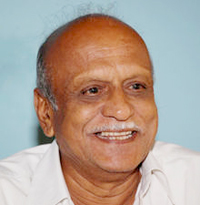
It was his forthright reminder of Basavanna’s teachings, criticism of idol worship and Brahmanical rituals, which earned him the wrath of Hindutva groups like Bajrang Dal. As there are many traditions within the broad pantheon of Hinduism, the atheist tradition has its own existence from centuries, Charvak being the one from ancient times. Even opposition of idol worship is not new to Hindu traditions as Swami Dayanand Sarswati, founder of Arya Samaj, had given the call to stop the idol worship.

Incidentally as we are receiving the news of this killing, the neighboring Bangla Desh has witnessed the murder of three young secular bloggers in recent times (2015). In Syria a Scholar Khaled al-Assad has been put to death by ISIS fanatics. Maharashtra was shaken by the murder of a rationalist of repute Dr. Narendra Dabholkar nearly two years ago. He was instrumental in getting the law against black magic and practices related to blind faith passed in Maharashtra. Another well respected activist, Comrade Govind Pansare was killed just a year ago. Pansare was working on many issues; anti-blind faith campaign being one of them. He is also the author of well known tract on Maharashtra’s revered king Shivaji. Contrary to the communal presentation of Shivaji as anti Muslim king, Pansare shows that Shivaji was the king who was very sympathetic to the farmers (rayyat) and that he was respecting all religions. This interpretation of Shivaji is a great eyesore to the Hindutva politics.

On the back of the murders of these two rationalists, comes the murder of Dr. M.M. Kalburgi on 30th August 2015 in his home in Dharwad. Prof Kalburgi was a very well accomplished man, ex Vice Chancellor of Kannada University in Hapmi, and recipient of National and Karnataka Sahitya Academy Awards for his writings. The learned professor had deep study of Virshaiva, Basavanna tradition amongst others. The opposition to him was due to his criticism of idol worship, Brahmanical rituals and ritualization of Basavanna tradition by Lingyats. Controversies followed him and so did the threats from conservative forces. The first one of which, was the publication of Marga treatise on Kannada folklore including articles on Virshaiva, Basavanna. Due to the death threats to him time and over again police protection was given. This police protection was withdrawn on his request recently. He supported U.R. Anathmurthy on the issue of stopping idol worship. When he invited VHP leaders and the pontiff of Vishveshra Tirtha Swami for a public debate; another controversy followed. His support to Karnataka bill against practices of superstition invited anger of Bajarang Dal and associate organizations and he had to face protest; where his effigy was burnt.

There is a pattern in the murders of Dabholkar, Pansare and Kalburgi. Though there are some differences in the broad range of field of their social engagement, the similarity is very striking. They were rational, they made their voice abundantly clear and many threats were received by them. Another stark similarity is that all these three murders took place in early mornings by those who came on motor cycles, one person driving the bike and the second one pumping bullets. Strangely despite a long lapse of time the killers of Dabholkar and Pansare have not been nabbed so far.

After the murder of Kalburgi one Bajrang Dal activist Bhuvith Shetty tweeted, ***"Then it was UR Ananthamurthy and now MM Kalburgi. Mock Hinduism and die dogs (sic.) death. And dear KS Bhagwan you are next" .*** This tweet was later withdrawn. Also many a person’s related to Hindu right wing organizations started saying that Kalburgi had insulted Hindu gods, so anger among Hindus and so such murders. This is a subtle justification of the intolerance which our society is being gripped with. As such the attitude of communal elements in different religions is very similar. One recalls the threat to Salman Rushdie, the type of intolerance shown to Taslima Nasreen and the murder of bloggers in Bangla Desh and also murder of Salman Taseer in Pakistan. Taseer had stood in defense of a Christian woman who was accused of blasphemy.

The opposition to the voices of reason has been going on in History all through. One can as well begin with Charvak, who opposed the Brahmanical understanding about the world, divine nature of Vedas in particular. Charvak said Vedas are manmade, social in nature, and was persecuted. Gradually with the power of clergy the imposition of faith on society became more institutionalized. Even teachings of Gautam Buddha, who was agnostic, and talked about the social nature of human problems, were attacked. This had led to the wiping out of Buddhism from India. The medieval Bhakti saints were also more for rational thinking, critical of the imposition of various social practices-rituals in the name of faith. Many saints like Tukaram in Maharashtra had to face persecution at the hands of those who were close to social power, the clergy.

Globally one can see the same pattern in Europe. In Europe the scientists, rational thinking had to face the opposition from organized Church, which condemned Galileo to hell for stating that the Earth is round etc. Similar was the fate of many scientists who had to face inquisitions and punishments of various types. Clergy hid behind the façade of ‘divine authority’: faith, and tried to stall the process of social change and halt the scientific thinking. The society over a period of time overcame the opposition to the rational thinking and so we saw the rooting of science and scientific inquiry. Clergy had maintained that they are the repository of whole knowledge; as knowledge is already there in our ‘Holy books’. This is a part generalization and it manifested in different cultures and religions in diverse ways. In Pakistan, some Maulanas asserted that the problems related to power can be solved by doing research on djinns, who are power houses of infinite energy; this was presented as part of the religious knowledge.

In India with freedom movement, those standing for social change and transformation did stand for rational thinking and critiqued the scriptures from that angle. The traditionalists, who wanted to retain the old social equations; resorted to ‘our glorious heritage of knowledge’. Faith based understanding was counterpoised against the spirit of scientific inquiry. With independence, with Nehru being at the helm of affairs, the notion of ‘scientific temper’ came up in a big way paving the way for establishment of institution of higher learning and research; leading to the national growth and transformation towards democratic structures. This was the time when the nation was looking forward to all round progress and rational thinking was duly promoted. The national science resolution; based on reason and logic was passed unanimously in 1958.

Things start changing in the decades of 1980s. The politics in the name of religion came up in a very assertive manner and faith not only continued to be the emotional support system in the times of social anxiety but some political forces started asserting identity politics, faith based politics. Identity issues and faith based politics started getting more legitimacy. The social conservatism and undermining of rational thought went hand in hand. Incidentally it is around this time also when the groups promoting rational thought, scientific temper, groups to oppose blind faith, came up. The most prominent of these groups was Kerala Sastra Sahitya Parishad. Later in Maharashtra Narendra Dabholkar took the lead to establish Andhshraddha Nirmulan Samiti (Committee to oppose Blind faith).

This took the Maharashtra conservative elements by storm as the volunteers of this organization started going from village to village and started demonstrating the science behind the magic tricks which were being practiced by hoards of God men and other of their tribe, who were taking full advantage of the social insecurity of poor villagers and exploiting them. Pansare, in addition to opposing blind faith was also disseminating the values of Shivaji, presenting him as a person respecting all religions, which Shivaji was. The right wingers could not stomach it; neither could they oppose the logical formulations presented by him. In Karnataka individual like U.R. Ananthmurthy articulated against idol worship and blind faith. Kalburgi not only supported U R Anathmurthy; he also went on the support the bill against the practices promoting blind faith. He did author papers/books to disseminate his ideas.

Slightly back in time when the first NDA Government came to power with Dr. Murli Manohar Joshi as the MHRD minister, he introduced the courses like ritualism (paurohitya) and astrology (jyotish shastra) in the universities. This gave a big boost to the ‘faith’ based groups who were politically close to the politics in the name of Hindu religion. With the new Government coming to power (2014) again now the mythology is being promoted as history, the Pushpak viman, ‘plastic surgery in ancient India’ etc. is being promoted; at the same time so called fringe elements, which as such are part of the Hindutva politics, are becoming more assertive. The liberal open space is shrinking and the place of debate is being taken by physical violence. The liberal values which accept the validity of differences is being eliminated by force, intimidation and even partly by state support. The murder of these ‘saintly’ figures , Dabholkar, Pansare and Klaburgi, just goes to show that we are landing in a situation where those entrenched in the conservative values are becoming dominant and do not want the rational thinking to exist in our society.

The aggressive stance by the Hindutva right wing on those who are putting forward the rational thought, criticizing the ills of caste system, idol worship etc. is ideological supplement to the politics of Hindu right wing. The march of this politics in recent years has been built around identity issues like Ram temple or cow slaughter. Their whole assertion is built around the Brahmanical Hinduism, which upholds the caste hierarchy. The ideology being propounded by the likes of Dabholkar, Pansare and Kalburgi stands closer to the ideology for liberation from the caste hierarchy, which is the root of HIndutva politics. This politics does target the religious minorities, while ironically Hinduism is so diverse with contradictory tendencies within same religious umbrella. Kalburgi’s murder is part of the larger scheme of things where the ideologies opposed to the present status quo are being hounded along with persecution of those who are struggling to uphold these values.

On the other hand there has been a tremendous opposition to these brutal acts. The social groups upholding pluralism and rationalism have been agitating against these murders and the ideology of those involved in these killings. Opposition of sections of society to the murders of Daholkar, Pansare and Kalburgi shows that there are still large numbers of people who are willing to uphold rational values and that gives a ray of hope for the times to come. In last couple of years after the murder of Dabholkar, various social groups have been coming together with a determination not only to oppose the intolerant conservative aggressive right wing politics, but also to take up the unfinished task of these slain pioneers committed to social change.

Comments

Add new comment

  • Coastaldigest.com reserves the right to delete or block any comments.
  • Coastaldigset.com is not responsible for its readers’ comments.
  • Comments that are abusive, incendiary or irrelevant are strictly prohibited.
  • Please use a genuine email ID and provide your name to avoid reject.
Wafa Sultana
April 4,2020

Over the last couple of days when the world was occupied with unifying efforts to fight the deadly Covid19 pandemic, sections of Indian media provided viewers a familiar scapegoat – the Indian Muslims – who are often stereotyped as a community being constantly at loggerheads with the citizenry and the State. Biased media channels were quick to resort to blaming the entire Muslim community for the spread of the disease in the country, thanks to an ill-timed Tablighi Jamaat gathering at its international headquarters in Delhi’s Nizamuddin. Unsurprisingly, the opprobrium was also marked by a sudden spike in WhatsApp forwards of videos with people wearing skullcaps licking spoons and performing Sufi breathing rituals, suggesting some sort of wild conspiracy on the part of the community to spread the virus.  Some media channels were quick to formulate, hypothesize and provide loose definitions of a newly discovered form of Jihad i.e. ‘Corona Jihad ’ thereby vilifying the Islamic faith and its followers.

While the investigation on the culpability of the organizers of the Nizamuddin event is still ongoing, there is enough information to suggest that the meeting was held before any lockdown was in force, and the problem began when there was no way of getting people out once the curfew was announced. Be that as it may, there is little doubt that organizing a meet of such a scale when there is a global pandemic smacks of gross misjudgment, and definitely the organizers should be held accountable if laws or public orders were defied. Attendees who attempt to defy quarantine measures must be dealt with strictly. However, what is alarming is that the focus and narrative have now shifted from the unfortunate event at Nizamuddin to the Tablighi Jamaat itself.

For those not familiar with the Tablighi Jamaat, the organization was founded in 1926 in Mewat by scholar Maulana Mohammad Ilyas. The Jamaat’s main objective was to get Muslim youth to learn and practice pristine Islam shorn of external influences. This is achieved through individuals dedicating time for moral and spiritual upliftment secluded from the rest of the world for a brief period of time. There is no formal membership process. More senior and experienced participants typically travel from one mosque to other delivering talks on religious topics, inviting local youth to attend and then volunteer for a spiritual retreat for a fixed number of days to a mosque in a nearby town or village to present the message to their co-religionists. Contrary to ongoing Islamophobic rhetoric, the movement does not actively proselytize. The focus is rather on getting Muslims to learn the teachings and practices of Islam.  This grassroots India-based movement has now grown to almost all countries with substantial Muslim populations. Its annual meets, or ‘ijtemas’ are among the largest Islamic congregations in the world after the annual Haj. One of the reasons for its popularity and wide network in the subcontinent and wordwide is the fact that it has eschewed the need for scholarly intervention, focusing on peer learning of fundamental beliefs and practice rather than high-falutin ideological debates. The Tablighi Jamaat also distinguishes itself from other Islamic movements through its strictly apolitical nature, with a focus on individual self-improvement rather than political mobilization. Hardships and difficulty in the world are expected to be face through ‘sabr’ (patience) and ‘dua’ (supplication),  than through quest for political power or influence. In terms of ideology, it is very much based on mainstream Sunni Islamic principles derived from the Deobandi school.

So, why is all this background important in the current context? While biased media entities have expectedly brought out their Islamophobic paraphernalia out for full display, more neutral commentators have tried to paint the Tablighi Jamaat as a fringe group and have tried to distance it from 'mainstream Muslims'. While the intent is no doubt innocent, this is a trap we must not fall into. This narrative, unfortunately, is also gaining ground due to apathy some Muslims have for the group, accusing it of being “disconnected from the realities of the world”. Unlike other Muslim organizations and movements, the Tablighi Jamat, by virtue of its political indifference, does not boast of high-profile advocates and savvy spokespersons who can defend it in mainstream or social media.  The use of adjectives such as 'outdated' and 'orthodox' by liberal columnists to describe the Jamaat feeds into the malignant attempt to change the narrative from the control of the spread of the pandemic due to the Nizamuddin gathering to 'raison d'etre' of the organization itself.

A large mainstream religious group like the Tablighi Jamaat with nearly a hundred-year history, normally considered to be peaceful, apolitical and minding its own business is now suddenly being villainized owing to unfortunate circumstances. Biased media reactions filled with disgust and hate seem to feed the Indian public conscience with a danngerous misconception - to be a nominal Muslim is okay but being a practicing one is not.  For those committed to the truth and fighting the spread of Islamophobia, the temptation to throw the entire Tablighi Jamaat under the bus must be resisted.

The writer is a lawyer and research scholar at Qatar University. Her research interests include Islamic law and politics.

Comments

zahoorahmed
 - 
Saturday, 4 Apr 2020

great article! provides a great perspective on tableeg jamat

Add new comment

  • Coastaldigest.com reserves the right to delete or block any comments.
  • Coastaldigset.com is not responsible for its readers’ comments.
  • Comments that are abusive, incendiary or irrelevant are strictly prohibited.
  • Please use a genuine email ID and provide your name to avoid reject.
Ram Puniyani
February 22,2020

This January 2020, it is thirty years since the Kashmiri Pundits’ exodus from the Kashmir valley took place. They had suffered grave injustices, violence and humiliation prior to the migration away from the place of their social and cultural roots in Kashmir Valley. The phenomenon of this exodus had been due to the communalization of militancy in Kashmir in the decade of 1980s. While no ruling Government has applied itself enough to ‘solve’ this uprooting of pundits from their roots, there are communal elements who have been aggressively using ‘what about Kashmiri Pundits?’, every time liberal, human rights defenders talk about the plight of Muslim minority in India. This minority is now facing an overall erosion of their citizenship rights.

Time and over again in the aftermath of communal violence in particular, the human rights groups have been trying to put forward the demands for justice and rehabilitation of the victim minority. Instead of being listened to those particularly from Hindu nationalist combine, as a matter of routine shout back, where were you when Kashmiri Pundits were driven away from the Valley? In a way the tragedy being heaped on one minority is being justified in the name of suffering of Pundits and in the process violence is being normalized. This sounds as if two wrongs make a right, as if the suffering Muslim minority or those who are trying to talk in defense of minority rights have been responsible for the pain of Kashmiri Pundits.

During these three, many political formations have come to power, including BJP, Congress, third front and what have you. To begin with when the exodus took place Kashmir was under President’s rule and V. P. Singh Government was in power at the center. This Government had the external support of BJP at that time. Later BJP led NDA came to power for close to six years from 1998, under the leadership of Atal Bihari Vajpayee. Then from 2014 it is BJP, with Narerda Modi as PM, with BJP brute majority is in power. Other components of NDA are there to enjoy some spoils of power without any say in the policies being pursued by the Government. Modi is having absolute power with Amit Shah occasionally presenting Modi’s viewpoints.

Those blurting, ‘what about Kashmiri Pundits?’ are using it as a mere rhetoric to hide their communal color. The matters of Kashmir are very disturbing and cannot be attributed to be the making of Indian Muslims as it is being projected in an overt and subtle manner. Today, of course the steps taken by the Modi Government, that of abrogation of Article 370, abolition of clause 35 A, downgrading the status of Kashmir from a state to union territory have created a situation where the return of Kashmiri Pundits may have become more difficult, as the local atmosphere is more stifling and the leaders with democratic potential have been slapped with Public Safety Act, where they can be interned for long time without any answerability to the Courts. The internet had been suspended, communication being stifled in an atmosphere where democratic freedoms are curtailed which makes solution of any problem more difficult.

Kashmir has been a vexed issue where the suppression of the clause of autonomy, leading to alienation led to rise of militancy. This was duly supported by Pakistan. The entry of Al Qaeda elements, who having played their role against Russian army in 1980s entered into Kashmir and communalized the situation in Kashmir. The initial Kashmir militancy was on the grounds of Kashmiriyat. Kashmiriyat is not Islam, it is synthesis of teachings of Buddha, values of Vedant and preaching’s of Sufi Islam. The tormenting of Kashmiri Pundits begins with these elements entering Kashmir.

Also the pundits, who have been the integral part of Kashmir Valley, were urged upon by Goodwill mission to stay on, with local Muslims promising to counter the anti Pundit atmosphere. Jagmohan, the Governor, who later became a minister in NDA Government, instead of providing security to the Pundits thought, is fit to provide facilities for their mass migration. He could have intensified counter militancy and protected the vulnerable Pundit community. Why this was not done?

Today, ‘What about Kashmiri Pundits?’ needs to be given a serious thought away from the blame game or using it as a hammer to beat the ‘Muslims of India’ or human rights defenders? The previous NDA regime (2014) had thought of setting up enclosures of Pundits in the Valley. Is that a solution? Solution lies in giving justice to them. There is a need for judicial commission to identify the culprits and legal measures to reassure the Pundit community. Will they like to return if the high handed stifling atmosphere, with large number of military being present in the area? The cultural and religious spaces of Pundits need to be revived and Kashmiryat has to be made the base of any reconciliation process.

Surely, the Al Qaeda type elements do not represent the alienation of local Kashmiris, who need to be drawn into the process of dialogue for a peaceful Kashmir, which is the best guarantee for progress in this ex-state, now a Union territory. Communal amity, the hallmark of Kashmir cannot be brought in by changing the demographic composition by settling outsiders in the Valley. A true introspection is needed for this troubled area. Democracy is the only path for solving the emigration of Pundits and also of large numbers of Muslims, who also had to leave the valley due to the intimidating militancy and presence of armed forces in large numbers. One recalls Times of India report of 5th February 1992 which states that militants killed 1585 people from January 1990 to October 1992 out of which 982 were Muslims and 218 Hindus.

We have been taking a path where democratic norms are being stifled, and the promises of autonomy which were part of treaty of accession being ignored. Can it solve the problem of Pundits?

Comments

Add new comment

  • Coastaldigest.com reserves the right to delete or block any comments.
  • Coastaldigset.com is not responsible for its readers’ comments.
  • Comments that are abusive, incendiary or irrelevant are strictly prohibited.
  • Please use a genuine email ID and provide your name to avoid reject.
Ram Puniyani
February 29,2020

Like most of the political phenomenon, even the practice of Nationalism is not a static one. It changes with the changing political equations of the political forces and assumes the expressions which are very diverse. As such the phenomenon of Nationalism has a long journey and various state policies in particular have used it for purposes which relate more to the power of the state ‘vis a vis’ its people, power of the state ‘vis a vis’ the neighboring countries among others.

In India there has been a certain change in the practices of the state which have transformed the meaning of Nationalism during last few years. Particularly with BJP, the Hindu Nationalist outfit gaining simple majority, it has unfolded the policies where one can discern the drastic change in the meaning and application of Nationalism in regard to its citizens, particularly those belonging to minority community, with regard to those who are liberal, and with those who stand with the concept of Human rights.

Our former Prime Minister of Dr. Manmohan Singh hit the nail on the head when he said that “Nationalism and the "Bharat Mata Ki Jai" slogan are being misused to construct a "militant and purely emotional" idea of India that excludes millions of residents and citizens. Former Prime Minister recently stated this in an apparent attack on the BJP.” The occasion was the release of a book, ‘Who is Bharat Mata’, edited by Purushottam Agarwal and Radhakrishna. This is a compilation of significant extracts from writings of Nehru, and important assessments of and contributions of Nehru by prominent personalities.

Dr. Singh went on to add "With an inimitable style…Nehru laid the foundation of the universities, academies and cultural institutions of Modern India. But for Nehru's leadership, independent India would not have become what it is today," This statement of Dr. Singh has great importance in contemporary times, as Nehru is being denigrated by Hindu nationalists for all the problems which India is facing today and attempts are on to undermine his role and glorifying Sardar Vallabh Bhai Patel. This is also significant as it gives us the glimpses of what Nationalism meant for Nehru.

As Singh’s statement captures the present nationalism being practiced by BJP and company, the Hindu nationalists, immediately shot back saying that Dr. Singh is supporting the anti India activities at JNU and Jamia and his party is supporting the anti India nationalists. They asked whether Singh likes the nationalism of the likes of Shashi Tharoor or Manishankar Ayer who are provoking the Shaheen Bagh protest rather than making the protestors quiet. Whether he likes the anti national protests which go on at JNU or Jamia? As per them there is no Nationalism in Congress. One more example being cited is the private visit of Shatrughan Sinha who talked to Pakistani President during his visit there recently!

Most of the arguments being used to oppose Dr. Singh are very superficial. What is being referred to; is not opposition to Indian nationalism and its central values which were the core of anti colonial struggles. While ‘Bharat Mata Ki Jai’ may not be acceptable to a section of population, even the book he was releasing has the title ‘Who is Bharat Mata’. What is being stated by Singh is the twist which slogan ‘Bharat Mata ki Jai’ has been used by Hindu nationalists to frighten the religious minorities.

Indian nation came into being on the values, which later were the foundation of Indian Constitution. Indian Constitution carefully picked up the terminology which was away from the concepts of Hindu or Muslim nationalism. That’s how the country came to be called as ‘India that is Bharat’. The freedom of expression which was the hallmark of freedom movement and it was given a pride of place in our Constitution. It respected the diversity and formulated rules where the nation was not based on particular culture, as Hindu nationalists will like us to believe, but cultural diversity was centrally recognized in the Constitution. In addition promoting good relations with neighbors and other countries of the World was also part of our principles.

JNU, Jamia and AMU are being demonized as most institutions so far regard the freedom of expression as a core part of Indian democracy. These institutions have been thriving on discussions and debates which have base in liberalism. Deliberately some slogans have been constructed to defame these institutions. While Constitution mandates good relations with neighbors, creation of ‘Anti Pakistan hysteria’ is the prime motive of many a channels and sections of other media, which are servile to the ideology of ruling Government. They also violate most of the norms of ethical journalism, where the criticism of the ruling party is an important factor to keep the ruling dispensation in toes.

A stifling atmosphere has been created during last six years. In this the Prime Minster can take a detour, land in Pakistan to have a cup of tea with Pakistan PM, but a Congress leader talking to Pakistani President is a sign of being anti National. Students taking out a march while reading the preamble of Indian Constitution are labeled as anti-national; and are stopped while those openly wielding guns near Jamia or Shaheen Bagh roam freely.

Nationalism should promote amity and love of the people; it should pave the way for growth and development. Currently the nationalism which is dominant and stalking the streets has weakened the very fraternity, which is one of the pillars of our democracy. Nehru did explain that Bharat Mata is not just our mountains, rivers and land but primarily the people who inhabit the land. Which nationalism to follow was settled during the freedom movement when Muslim nationalism and Hindu nationalism were rejected by the majority of people of India in favor of the Nationalism of Gandhi, Nehru, Patel and Maulana Azad, where minorities are equal citizens, deserving affirmative action. In today’s scenario the Hindu nationalists cannot accept any criticism of their policies.

Comments

Add new comment

  • Coastaldigest.com reserves the right to delete or block any comments.
  • Coastaldigset.com is not responsible for its readers’ comments.
  • Comments that are abusive, incendiary or irrelevant are strictly prohibited.
  • Please use a genuine email ID and provide your name to avoid reject.