



Labour drive fails to eliminate ‘tasattur’

December 21, 2013
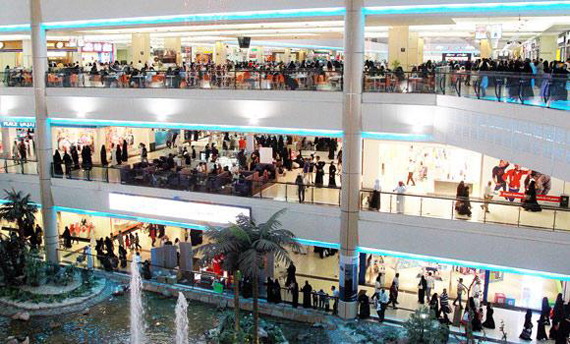
mall
Riyadh, Dec 21: The crackdown on violators of visa and resident regulations in the Kingdom has unveiled a vast network of cover-up businesses commonly known as tasattur which is prevalent in Jeddah, Riyadh, Dammam and the cities in the south.

More than 97 percent of small-scale enterprises come under tasattur which is posing a challenge as these businesses are a breeding ground for illegal expatriate workers in the Kingdom.

Only a fraction of tasattur businesses involved expatriates who had fallen out with their sponsors and who left during the correction period extending from July to November. The rest continue to flourish unabated.

The vegetable market sector, which was dominated by expatriates, mostly illegal workers, is the only business which is constantly monitored by multiple government committees and the governorate’s representatives. As a result, several Saudis have taken up the vacant positions and are now doing business in the fresh vegetable market.

Afghan nationals who are mostly involved in food business, especially in “foul tamiz” and Bukhari restaurants, are facing problems due to inspection campaigns. Many of the restaurants have been reduced to a single employee while others have closed shop. This sector is not attractive to Saudis workers because of the hard work and long hours required.

But other sectors are largely unaffected and functioning smoothly as the expatriates running the businesses have managed to rectify the status of their employees.

Various mechanical workshops, welding, carpentry, appliance and automobile repair shops, clothes and fancy dress shops, drivers of water trucks all remain largely managed by expatriates who are using coverup practices or tasattur.

There are thousands of workshops being operated by expatriates in Kilo 5, 7, 2 in South Jeddah and Nuzha in the north which fall under Tasttur. Most of the business houses in Batha and Hera in Riyadh and King Abdulaziz Street commonly known as Seiko building in Dammam also come in this category.

The manpower supply businesses in the Eastern province were totally run by expatriates under tasattur. Although some of the activities drew to a halt owing to the inspection campaigns, it is still business as usual for many of them.

Other medium and large enterprises involved in the education, health, consultancy and building construction sectors remain unaffected, according to sources.

“Coverup business is posing a grave challenge to the Kingdom’s economy and prosperity. It is eliminating employment prospects for genuine aspirants and draining the economic resources of the country,” said professor Khalid Al-Bassam of King Abdul Aziz University. Al-Bassam is also a consultant at the Jeddah Chamber of Commerce and Industry (JCCI).

He said that expatriates involved in coverup businesses sent home almost SR130 billion in 2011-12. “It is a hidden economy and more should be done to unearth it,” he added.

He said that coverup businesses or tasattur made room for illegal workers because foreigners preferred to hire their own ethnic community in their businesses.

Prominent businessman and director of JCCI Abdullah Bin Mahfouz was equally concerned about the harmful effects of tasattur on the economy. “More needs to be done to eliminate the phenomenon of coverup businesses from Jeddah city. It’s a dangerous disease which has to be dealt with firmly through a proper mechanism,” he said.

Professor Abdulaziz Diyab of King Abdulaziz University, who has done research on coverup businesses, said that approximately 30 percent of expatriate employees are working in coverup businesses in the Kingdom.

Expatriates involved in tasattur are under their sponsors but are running businesses in the name of a Saudi citizen. Most of these businesses are small and medium scale enterprises with an income of between SR50,000 and SR1 million on average a month.

“I am working as a salesman under my sponsor. How can you say that I am running the business,” asked an Indian business executive who has had a business in downtown Jeddah for 34 years.

Officially, it is not possible to prove the existence of tasattur because of the support it receives from Saudi individuals who work closely with the expatriates. According to a study by the Riyadh Chamber of Commerce and Industry, there are an estimated 200,000 such business units in the Kingdom. Most of these business entities are engaged largely in the business sector and fall in the small and medium enterprises category.

Comments

Add new comment

  • Coastaldigest.com reserves the right to delete or block any comments.
  • Coastaldigset.com is not responsible for its readers’ comments.
  • Comments that are abusive, incendiary or irrelevant are strictly prohibited.
  • Please use a genuine email ID and provide your name to avoid reject.
News Network
April 28,2020

Dubai, Apr 28: Riyadh municipality has announced 13 requirements to restore commercial activity in malls starting Wednesday (April 29), in accordance with the government’s coronavirus precautionary measures.

The requirements include: the continued closure of all entertainment and playing areas inside malls, and not allowing the entry of children under the age of 15.

The municipality requires all malls to ensure the availability of medical examination and sterilization teams to measure the temperature of all individuals entering the mall at all entrances throughout opening hours, prevent any person with a temperature exceeding 38 degrees Celsius from entering, remove all chairs and benches in the corridors, and provide masks and gloves for visitors at the entrances.

All malls are to have security personnel stationed at all entrances to ensure that visitors are wearing masks.

The municipality also requires all malls to sterilize the entire facility every 24 hours, allocate rooms for medical isolation when there is any suspicion of an individual being infected with COVID-19, ensure the presence of a sufficient number of security personnel, and carry out regular rounds to verify full compliance, and suspend the valet service.

It also called for malls to put up explanatory signs of the guidelines to ensure that everyone understands the precautionary measures.

Malls should rely on the use of escalators and stairs for movement between floors, and in the event they are not available, only two people are allowed to ride the elevator at a time.

Revised curfew

Saudi Arabia had revised on April 21 its coronavirus curfew timings for the holy month of Ramadan, allowing residents in all areas and cities not currently under a 24-horu lockdown to go out between 9 a.m. and 5 p.m.

However, areas under a complete lockdown will only be allowed to go out for essential needs, such as grocery shopping or medical visits, between the hours of 9 a.m. and 5 p.m. Residents in these areas must stay within their neighborhoods

A 24-hour lockdown was previously imposed on the cities of Riyadh, Tabuk, Dammam, Dhahran, and Hofuf and throughout the governorates of Jeddah, Taif, Qatif, and Khobar.

The government had imposed a full lockdown on the holy cities of Makkah and Madinah as well. Other cities and governorates had a curfew implemented from 3 p.m. to 6 a.m. daily.

Comments

Add new comment

  • Coastaldigest.com reserves the right to delete or block any comments.
  • Coastaldigset.com is not responsible for its readers’ comments.
  • Comments that are abusive, incendiary or irrelevant are strictly prohibited.
  • Please use a genuine email ID and provide your name to avoid reject.
News Network
May 10,2020

Dubai, May 10: Kuwait will enact a "total curfew" from 4pm (1300 GMT) on Sunday through to May 30 to help to curb the spread of the new coronavirus, the Information Ministry said on Twitter on Friday.

Further details of the curfew will be announced soon, it said.

Kuwait on April 20 expanded a nationwide curfew to 16 hours a day, from 4pm to 8am, and extended a suspension of work in the public sector, including government ministries, until May 31.

On Friday the Gulf state announced 641 new coronavirus cases and three deaths, bringing its total number of confirmed cases to 7,208, with 47 deaths.

Comments

Add new comment

  • Coastaldigest.com reserves the right to delete or block any comments.
  • Coastaldigset.com is not responsible for its readers’ comments.
  • Comments that are abusive, incendiary or irrelevant are strictly prohibited.
  • Please use a genuine email ID and provide your name to avoid reject.
News Network
May 13,2020

Riyadh, May 13: Saudi Arabia’s cabinet on Tuesday urged oil-producing nations not only to adhere to agreed cuts to production, but further reduce output to help restore balance in global oil markets, state news agency SPA reported.

In issuing the call to OPEC+, which includes members of the Organization of the Petroleum Exporting Countries plus Russia and other nations, ministers said the Kingdom is committed to supporting the stability of global oil markets.

After the meeting, acting Minister of Media Majed Al-Qasabi said that in addition to its commitment to the OPEC+ agreement, the Kingdom will voluntarily reduce output by an additional 1 million barrels a day in June. It will also try to implement additional cuts this month, with the consent of its customers, he added.

The cabinet said the Saudi initiatives aim to encourage other countries, whether they have signed up to the OPEC+ agreement or not, to adhere to its reduced rates and to cut output even further to help stabilize global oil markets.

During the cabinet meeting, which was conducted using video conferencing, King Salman also briefed ministers on his recent telephone conversation with US President Donald Trump. He said they affirmed the historical and strategic relationship between the two countries and their commitment to the continuation of joint efforts to enhance security and stability in the region.

Ministers were then updated on the latest developments in the corona virus crisis, including the steps being taken locally and internationally to control it and safeguard public health, the number of cases in the Kingdom and the care being provided to those who are infected. They also reviewed details of the active screening and testing programs in all parts of the country, which have helped to keep the number of deaths relatively low compared to global rates.

The cabinet praised the efforts being made by government officials to combat the pandemic, and stressed that citizens and expatriates must abide by the precautionary and preventive measures introduced to prevent the spread of the virus.

Ministers described the decision by Saudi Arabia to host the Pledging Event for the Humanitarian Crisis in Yemen 2020 on June 2 as an extension of the Kingdom’s humanitarian and development contribution, which reflects its pioneering role in supporting its neighbor.

The cabinet also welcomed the formation of the new government in Iraq and reiterated Saudi Arabia’s support for the nation and its readiness to work with the new administration to strengthen relations and enhance security and stability in the region.

Comments

Add new comment

  • Coastaldigest.com reserves the right to delete or block any comments.
  • Coastaldigset.com is not responsible for its readers’ comments.
  • Comments that are abusive, incendiary or irrelevant are strictly prohibited.
  • Please use a genuine email ID and provide your name to avoid reject.