



Limits on expat bank transfers ‘under study’

May 3, 2013

Bank_transfers

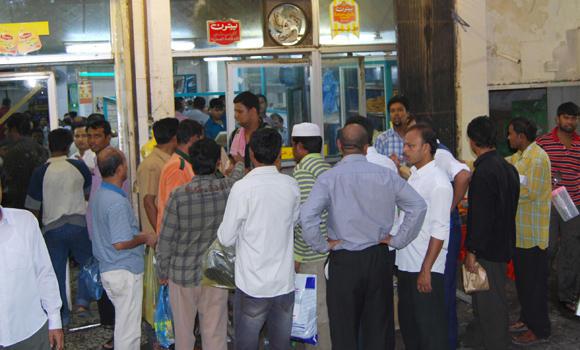
Jeddah, May 3: Saudi banks are considering limiting the amount of money expatriates send home, a bank official told Arab News. This is to comply with Ministry of Labor regulations being phased in as part of the Nitaqat program.

These regulations would see banks prevent expatriate workers from transferring sums more than their monthly income and freezing the accounts of workers who have not rectified their status.

However, Talat Hafiz, secretary-general of media and education for Saudi banks, told Arab News that banks have no intention to freeze accounts. “The banks cannot take such action. It is not their business to decide on these matters. The only party authorized to take such action is Saudi Arabian Monetary Agency,” he said.

“Saudi banks report to SAMA. So far we have not blocked anyone from opening an account, even those not licensed to work in the Kingdom.”

Adel Al-Hawwar, senior executive vice-chairman of retail banking at the National Commercial Bank, told Arab News that “it's unlikely that the banks will take this step at present. There is a system to protect wages, and it is meant to protect the rights of workers. It is also meant to ensure companies pay the salaries of workers as stated in their contracts.”

Hattab Al-Enezi, spokesman for the Ministry of Labor, told Arab News that the system of wage protection will start with large companies employing 3,000 employees and more. “Then we'll gradually move to companies that employ fewer people. Each company will be given two months to comply with the decision,” he said. “There is ongoing coordination between the Ministry of Labor and SAMA to keep checking on whether or not employers are complying with the regulations regarding worker payment and wage protection and other matters,” he added.

Comments

Add new comment

  • Coastaldigest.com reserves the right to delete or block any comments.
  • Coastaldigset.com is not responsible for its readers’ comments.
  • Comments that are abusive, incendiary or irrelevant are strictly prohibited.
  • Please use a genuine email ID and provide your name to avoid reject.
Agencies
May 26,2020

Riyadh, May 26: The authorities in Saudi Arabia have decided to ease some restrictions put in place over coronavirus fears, allowing movement and resumption of some economic and commercial activities, Saudi Press Agency reported early Tuesday citing an official source at the Interior Ministry.

The move also allows restarting of domestic flights, opening of mosques, restaurants and cafes and work attendance, however, the temporary suspension of Umrah pilgrimage remains in force.

The easing of restrictions will be carried out in a phased manner, with the first phase beginning on Thursday (May 28) and ending on May 30.

In the first phase, the movement within and between all regions of the Kingdom in private cars will be allowed from 6 a.m. to 3 p.m. except in Makkah. Economic and commercial activities will resume in retail and wholesale shops and malls but beauty salons, barber shops, sports clubs, health clubs, entertainment centers and cinemas will continue to remain shut due to social distancing concerns.

In the second phase, which begins on May 31 and ends on June 20, the movement is allowed from 6 a.m. and 8 p.m. in all areas of the Kingdom, except in Makkah. All congregational prayers, including Friday prayers, will resume in all mosques across the Kingdom except in Makkah.

The suspension of workplace attendance will end, allowing all employees in ministries, government entities and private sector companies to return to working from their offices provided that they follow strict precautionary guidelines.

The suspension on travel between regions in the Kingdom using various transport methods will no longer be in place. Airlines will be allowed to operate domestic flights if they adhere to precautionary measures set by the civil aviation authority and the Ministry of Health. The suspension of international flights, will, however, continue until further notice.

Restaurants and cafes serving food and beverages can reopen, however, beauty salons, barber shops, sports clubs, health clubs, entertainment centers and cinemas will be barred from reopening in the second phase. The ban on social gatherings of more than fifty people, such as weddings and funerals will also continue to remain in force.

In the third phase commencing on June 21, the Kingdom will return to "normal" conditions as it was before the coronavirus lockdown measures were implemented.

Meanwhile in Makkah, the first phase measures will be implemented between May 31 to June 20 and the second phase will begin on May 21. Friday prayers and all congregational prayers will continue to be held in the Grand Mosque, only to be attended by Imams and the employees.

Comments

Mohammed Sarfraz
 - 
Tuesday, 26 May 2020

I think second phase is May 31 to June 20. Must be a typo. 

Add new comment

  • Coastaldigest.com reserves the right to delete or block any comments.
  • Coastaldigset.com is not responsible for its readers’ comments.
  • Comments that are abusive, incendiary or irrelevant are strictly prohibited.
  • Please use a genuine email ID and provide your name to avoid reject.
KT
June 30,2020

Dubai, Jun 30: The UAE Embassy in India on Tuesday urged expats stranded in India to procure travel approvals from the Federal Authority for Identity and Citizenship (ICA) in the UAE ahead of their travel to the UAE.

It has also assured UAE residence visa holders that a no-objection letter to travel would be issued on a humanitarian basis, as long as the resident meets all conditions set by the government of UAE.

The UAE Embassy in New Delhi tweeted Tuesday morning, "The @UAEembassyIndia would like to draw the attention of the valid UAE residence permit holders currently present in India, to the necessity of obtaining necessary approval from the @ICAUAE while ensuring that all conditions set by the UAE competent authorities are observed."

It added, "Please note that UAE will issue no objection letter to travel in some humanitarian cases only that meet all conditions and requirements."

The embassy also affirmed its commitment to the decisions of the Indian authorities regarding the continued closure of airports in India, and implementation of some restrictions that do not allow foreign airlines to carry passengers.

"We express our thank for your cooperation and your understanding of the current global situation, and in case there is any developments in this regard, we will publish it on the official platforms of embassy (sic)," the Embassy tweeted.

Comments

Add new comment

  • Coastaldigest.com reserves the right to delete or block any comments.
  • Coastaldigset.com is not responsible for its readers’ comments.
  • Comments that are abusive, incendiary or irrelevant are strictly prohibited.
  • Please use a genuine email ID and provide your name to avoid reject.
Agencies
July 31,2020

Mount Arafat, July 30: Muslim pilgrims converged Thursday on Saudi Arabia's Mount Arafat for the climax of this year's hajj, the smallest in modern times and a sharp contrast to the massive crowds of previous years.

A tight security cordon has been erected all around the foot of the rocky hill outside Mecca, also known as Jabal al-Rahma or Mount of Mercy.

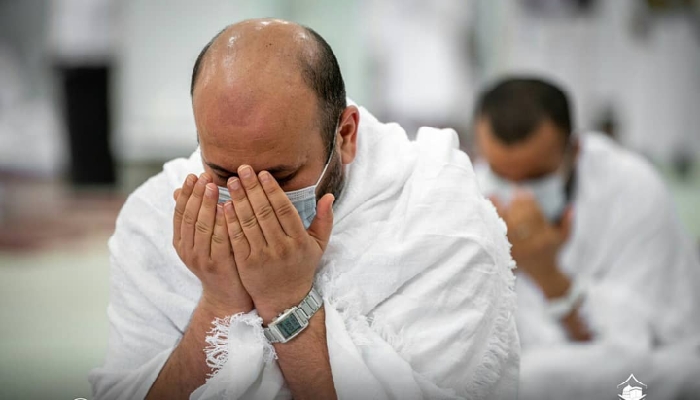
Pilgrims, donning masks and observing social distancing, were brought in buses from neighbouring Mina, state television showed, as Saudi authorities impose measures to prevent a coronavirus outbreak.

They were subject to temperature checks and attended a sermon -- which state media said was translated into 10 languages -- before they set off on the climb to the summit for hours of Koran recitals and prayers to atone for their sins.

The scene was strikingly different to last year's ritual when a sea of pilgrims ascended Mount Arafat, marshalled by tens of thousands of stewards in a bid to prevent any crushes.

After sunset prayers, pilgrims will make their way down Mount Arafat to Muzdalifah, another holy site where they will sleep under the stars to prepare for the final stage of hajj, the symbolic "stoning of the devil".

It takes place on Friday and also marks the beginning of Eid al-Adha, the festival of sacrifice.

The hajj, one of the five pillars of Islam and a must for able-bodied Muslims at least once in their lifetime, is usually one of the world's largest religious gatherings.

But only up to 10,000 people already residing in the kingdom will participate in this year's ritual, compared with 2019's gathering of some 2.5 million from around the world.

"You are not our guests but those of God, the custodian of the two holy mosques (Saudi Arabia's King Salman) and the nation," Hajj Minister Mohammad Benten said in a video released by the media ministry on Wednesday.

Security cordon

A security cordon has been thrown around the holy sites to prevent any security breaches, an interior ministry spokesman said.

Riyadh faced strong criticism in 2015 when some 2,300 worshippers were killed in the deadliest stampede in the gathering's history.

But this year, those risks are greatly reduced by the much smaller crowd.

The pilgrims have all been tested for the virus, and foreign journalists were barred from this year's hajj, usually a huge global media event.

As part of the rites completed over five days in the holy city of Mecca and its surroundings, the pilgrims converged on Mount Arafat after spending the night in Mina.

A district of Mecca, Mina sits in a narrow valley surrounded by rocky mountains, and is transformed each year into a vast encampment for pilgrims.

They began the hajj on Wednesday with their first "tawaf", the circumambulation of the Kaaba, a large structure in Mecca’s Grand Mosque towards which Muslims around the world pray.

The Kaaba is draped in a black cloth embroidered in gold with Koranic verses and known as the kiswa, which is changed each year during the pilgrimage.

Pilgrims were brought inside the mosque in small batches, walking along paths marked on the floor, in sharp contrast to the normal sea of humanity that swirls around the Kaaba during hajj.

Comments

Add new comment

  • Coastaldigest.com reserves the right to delete or block any comments.
  • Coastaldigset.com is not responsible for its readers’ comments.
  • Comments that are abusive, incendiary or irrelevant are strictly prohibited.
  • Please use a genuine email ID and provide your name to avoid reject.