



Lokpal Bill passed in Lok Sabha, will become law soon

December 18, 2013

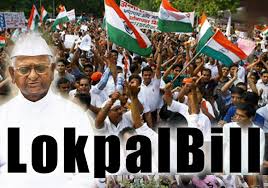
New Delhi, Dec 18: The historic Lokpal Bill today took a giant step towards enactment after a 40-year wait, with the Lok Sabha passing it a day after the anti-corruption measure sailed through the Rajya Sabha with the support of opposition parties.lok
"It is our responsibility to complete our unfinished fight against corruption," said Congress leader Rahul Gandhi, who is being pitched by his party as its leading champion for the Lokpal initiative.

Shortly afterwards, the government's key ally Mulayam Singh Yadav and his Samajwadi Party staged a strategic walkout after slamming the Bill. The party was yesterday talked into backing down on its threat to block the Bill at any cost.

"In a democracy the people's representatives are supreme. This Bill will allow a policeman to come and harass us. Have MPs and MLAs not been convicted under existing laws?" Mr Yadav said, urging Prime Minister Manmohan Singh and Congress president Sonia Gandhi to speak up on the proposed law.

Senior BJP leader Sushma Swaraj, the Leader of Opposition in the Lok Sabha, appeared to target the ruling Congress as she criticized attempts to take credit for pushing the Lokpal Bill. She said Anna Hazare deserved credit for it.

"People are lining up to take credit, but there is an old man who keeps fasting for the bill and appeals to our collective conscience. And then the people of this country deserve credit," she said.

Anti-corruption crusader Anna Hazare has said he will call off his indefinite hungerstrike - now in its ninth day - once the lower house passes the bill.

Anna is fasting to demand that Parliament give life to the legislation, first proposed 46 years ago, in the current Winter Session which ends on Friday. But the ruling Congress' extreme zeal to ensure that happens is being seen more as a result of the massive losses it suffered in the recently held Assembly elections.

In Delhi, which it had ruled for 15 years, the Congress was felled by Arvind Kejriwal's one-year-old Aam Aadmi Party, which made a stunning debut based on its promise to fight corruption.

In general elections due by May, corruption and clean governance are expected to be top campaign issues.

The Lokpal Bill provides for the appointment of a powerful anti-graft ombudsman to investigate wrongdoing in government.

Comments

Add new comment

  • Coastaldigest.com reserves the right to delete or block any comments.
  • Coastaldigset.com is not responsible for its readers’ comments.
  • Comments that are abusive, incendiary or irrelevant are strictly prohibited.
  • Please use a genuine email ID and provide your name to avoid reject.
Agencies
May 21,2020

Eminent river engineer and former professor of civil engineering at IIT in the Banaras Hindu University (BHU) Prof. U.K. Choudhary has said that the judicious use of river technology can help resolve the Coronavirus crisis as well as the plight of Ganga river.

Choudhary, who is also founder of Ganga Research Centre at IIT (BHU), said: "The Ganga water contains a significantly higher proportion of bacteriophages - a kind of virus that kill bacteria. Our ancient scriptures like Vedas, Puranas and Upanishads say that Ganga jal is medicinal water. Scientists later found that Ganga water has bacteriophages capable of killing pathogens."

Explaining further, he said, "Let us analyze the source of bacteriophages. If we take three rivers of Himalayan origin having sources at different heights -the Ganga (Gomukh), Yamuna (Yamunotri) and the Sone river, we find the colours of waters are different. The whitish colour of Ganga water, greenish colour of Yamuna water and the brownish colour of Sone water is also indicative. As Gomukh is the highest among the three, its water comes from lowest depth of aquifer as compared to Yamunotri and Sone river," he explained.

Thus, the quality of river water is proportional to height of origin point. This defines the genetic character of Ganga water. The balanced flow of this water in entire length of the Ganga defines the medicinal property of Ganga water," he stated.

Prof Chaudhary said that the bacteriophages in the Ganga can curb the spread of coronavirus through soil, water and air.
He suggested that the idea is to preserve the medicinal value of Ganga water and to use it to fight Corona. He said that this can be done by opening the gates of all the dams and barrages in a way that the discharge through each is similar to the water at Gomukh. In this way, the concentration of bacteriophage will be enhanced in Ganga water making it more effective against pathogens.

"With increasing diffusion of bacteriophages in water and soil, the spread of Coronavirus will be impacted and reduced. This methodology and technique can also help maintain the quality of Ganga water later when the problem of Corona ends," he said.

Comments

Add new comment

  • Coastaldigest.com reserves the right to delete or block any comments.
  • Coastaldigset.com is not responsible for its readers’ comments.
  • Comments that are abusive, incendiary or irrelevant are strictly prohibited.
  • Please use a genuine email ID and provide your name to avoid reject.
Agencies
June 6,2020

United Nations, Jun 6: The coronavirus disease has not "exploded" in India, but the risk of that happening remains as the country moves towards unlocking its nationwide lockdown that was imposed in March to contain the Covid-19, according to a top WHO expert.

WHO Health Emergencies Programme Executive Director Michael Ryan on Friday said the doubling time of the coronavirus cases in India is about three weeks at this stage.

“So the direction of travel of the epidemic is not exponential but it is still growing,” he said, adding that the impact of the pandemic is different in different parts of India and varies between urban and rural settings.

“In South Asia, not just in India but in Bangladesh and...in Pakistan, other countries in South Asia, with large dense populations, the disease has not exploded. But there is always the risk of that happening,” Ryan said in Geneva.

He stressed that as the disease generates and creates a foothold in communities, it can accelerate at any time as has been seen in a number of settings.

Ryan noted that measures taken in India such as the nationwide lockdown have had an impact in slowing transmission but the risk of an increase in cases looms as the country opens up.

“The measures taken in India certainly had an impact in dampening transmission and as India, as in other large countries, open up and as people begin to move again, there's always a risk of the disease bouncing back up,” he said.

He added that there are specific issues in India regarding the large amount of migration, the dense populations in the urban environment and the fact that many workers have no choice but to go to work every day.

India went past Italy to become the sixth worst-hit nation by the COVID-19 pandemic.

India saw a record single-day jump of 9,887 coronavirus cases and 294 deaths on Saturday, pushing the nationwide infection tally to 2,36,657 and the death toll to 6,642, according to the health ministry.

The lockdown in India, was first clamped on March 25 and spanned for 21 days, while the second phase of the curbs began on April 15 and stretched for 19 days till May 3. The third phase of the lockdown was in effect for 14 days and ended on May 17. The fourth phase ended on May 31.

The country had registered 512 coronavirus infection cases till March 24.

The nation-wide lockdown in containment zones will continue till June 30 in India but extensive relaxations in a phased manner from June 8 are listed in the Union home ministry's fresh guidelines on tackling the Covid-19 pandemic issued last week.

WHO Chief Scientist Soumya Swaminathan said the over 200,000 current coronavirus cases in India, a country of over 1.3 billion people, "look big but for a country of this size, it's still modest.”

She stressed that it is important for India to keep track of the growth rate, the doubling time of the virus and to make sure that that number doesn't get worse.

She said that India is a “heterogeneous and huge country” with very densely populated cities and much lower density in some rural areas and varying health systems in different states and these offer challenges to the control of Covid-19.

Swaminathan added that as the lockdown and restrictions are lifted, it must be ensured that all precautions are taken by people.

“We've been making this point repeatedly that really if you want behaviour change at a large level, people need to understand the rationale for asking them to do certain things (such as) wearing masks,” she said.

In many urban areas in India, it's impossible to maintain physical distancing, she said adding that it then becomes very important for people to wear appropriate face coverings when they are out, in office settings, in public transport and educational institutions.

“As some states are thinking about opening, every institution, organisation, industry and sector needs to think about what are the measures that need to be put in place before you can allow a functioning and it may never be back to normal.”

She said that in many professions working from home can be encouraged but in several jobs, people have to go to work and in such cases measures must be put in place that allow people to protect themselves and others.

“I think communication and behaviour change is a very large part of this whole exercise,” she added.

Comments

Add new comment

  • Coastaldigest.com reserves the right to delete or block any comments.
  • Coastaldigset.com is not responsible for its readers’ comments.
  • Comments that are abusive, incendiary or irrelevant are strictly prohibited.
  • Please use a genuine email ID and provide your name to avoid reject.
News Network
February 28,2020

Hyderabad, Feb 28: The Cyber Crime Police of Hyderabad has registered an FIR against social media platforms- WhatsApp, Twitter and TikTok- for allowing people to spread anti-national activities, as per a complaint filed by one S Srishailam.

Raghuveer, Additional DCP Cyber Crimes said," We have received a court referred complaint, which was filed by S Srisailam in the concerned court stating that social media platforms Whatsapp, Twitter and TikTok are allowing few people to spread anti-national activities and videos."

S Srisailam also claimed that a few people are running a campaign against the CAA on social media platforms to spread hatred which in turn is causing damage to national integrity.

"In this regard, because the complaint was referred by a court a case has been registered against Whatsapp, Twitter & TikTok under the relevant section of Indian Penal Code and IT Act and took up the investigation," the DCP added.

He also added that the police cannot take action against these platforms as they are not banned in India but can initiate action against persons who intentionally indulge in spreading hatred.

"The police are conducting the investigation and if allegations of the complainant are found to be false then we will drop the case. We had received the case one week ago," informed the DCP.

Comments

Add new comment

  • Coastaldigest.com reserves the right to delete or block any comments.
  • Coastaldigset.com is not responsible for its readers’ comments.
  • Comments that are abusive, incendiary or irrelevant are strictly prohibited.
  • Please use a genuine email ID and provide your name to avoid reject.