



Madinah suicide bomber disowned by family

July 9, 2016

Tabuk/ Riyadh, Jul 9: Fahd Musallam Hammad Al-Nujaidi Al-Bluwi has renounced his terrorist brother Naer Al-Bluwi, who carried out Monday’s suicide bombing in Madinah, stressing that he strongly rejects the terrorist act perpetrated in the vicinity of the Prophet’s Mosque.
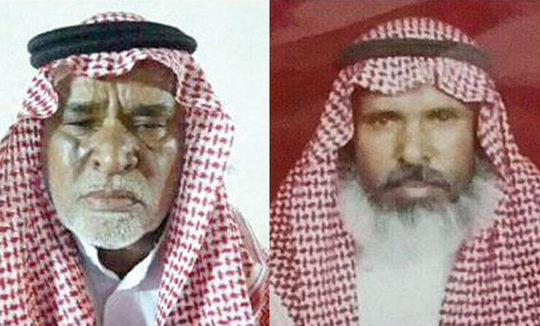
bomb copy

He said his brother’s actions went against Islamic teachings and that all his family members have disowned Naer and condemned his crime.

Fahd said three years ago, Naer joined the Border Guards, but later quit and was living in Tabuk. He used to visit his parents in the Wajeh Governorate occasionally.

He stayed with them this last Shaaban. On Ramadan 25, he told them on phone he was going to Makkah.

Fahd said his sister had told him that she had seen some clips belonging to terrorists in her brother’s mobile, adding that he immediately reported that to the security agencies.

Feeling broken and frustrated, Naer’s father said no words could express his anger and disgust with what Naer had done. “I disown him.”

He said: “I feel hopeless and saddened by this crime that my son carried out. He does not represent me or my tribe, and all my family supports the country’s efforts to fight terrorism.”

Zaki Hammad Al-Bluwi, Naer’s uncle, said his nephew’s criminal act is far from religion and humanity.

He said Naer was a criminal who slaughtered Muslims in the holy month, against all values and principles, and he and his family stood united against anyone attempting to harm the nation.

Meanwhile, Maj. Gen. Mansour Al-Turki, Interior Ministry spokesman, said Naer had traveled abroad several times this year. He said the terror acts leave no doubts about their affiliation with terrorist organizations, especially Daesh.

“Enough evidence has been collected against those arrested and it shows that they supported Daesh,” said Al-Turki.

Investigations are under way, he said, stressing that the current security situation requires that people maintain calm and have patience. “The whole truth about the attacks will be revealed, after which the necessary legal procedures will be followed.”

Al-Turki said that preliminary investigations show that some of the 12 arrested Pakistanis have links with Daesh. The material used by the suicide bomber in Jeddah, nitroglycerin, is the same as the chemical used in the Qatif and Madinah bombings, he said.

Chemical expert Hisham Al-Sharqawi said one of its components, glycerin, is sold in drug stores and pharmacies as a moisturizing cream. It was transformed into explosives by the bombers. “This also indicates that the explosive belts came from the same source. The suspects who were arrested are affiliated with Daesh,” he said.

“It is one of the oils that are used as catalysts for explosives. When it is exposed to high temperatures, it explodes instantly,” he explained.

Al-Sharqawi said that some forms of acidic materials can become incendiary formulations, and that the most dangerous compounds within those materials are typically available for everyday use in various forms.

Nitroglycerin has been linked to several terrorist attacks in Saudi Arabia, and is a primary material in explosive belts.

Comments

Add new comment

  • Coastaldigest.com reserves the right to delete or block any comments.
  • Coastaldigset.com is not responsible for its readers’ comments.
  • Comments that are abusive, incendiary or irrelevant are strictly prohibited.
  • Please use a genuine email ID and provide your name to avoid reject.
Agencies
May 2,2020

Doha, May 2: Twenty-three staff at a hospital in Qatar were injured when tents being used to boost capacity in response to coronavirus collapsed in a fierce storm, local media reported Friday.

Winds of up to 72 kilometres per hour (45 miles per hour) caused two temporary tent annexes at Hazm Mebaireek General Hospital in Qatar's Industrial Area to collapse on Thursday, the Gulf Times reported.

No patients were hurt and most injuries to staff at the facility, 20 kilometres south west of central Doha, were minor, the daily added, citing the health ministry.

During the gale-force winds on Thursday, a Qatar Airways Boeing 787 on the ground was blown into a nearby Airbus A350 at Doha's Hamad airport causing minor damage but no injuries, the airline said in a statement.

Ten@ten989

عاصفة رعدية ورياح قوية تهدم المستشفى الميداني في قطر وأضرار أخرى في منطقة

#انهيار_المستشفي_الميداني

32

4:14 AM - May 1, 2020

Twitter Ads info and privacy

22 people are talking about this

The Industrial Area is a gritty, densely-populated district that is home to mostly migrant labourers and has been the epicentre of Qatar's outbreak. 

Tens of thousands of residents were quarantined in the area after cases of the novel coronavirus were confirmed among the community in mid-March.

Qatar -- home to hundreds of thousands of foreign labourers working on projects linked to the 2022 World Cup -- has reported 12 deaths and 14,096 cases of the Covid-19 respiratory disease.

The hospital's executive director Hussein Ishaq said the incident was being treated "very seriously" and that an investigation had been launched.

Hospital staff had "helped ensure that no patients were injured and were safely transferred to other hospitals", he said, quoted in the Gulf Times.

Comments

Add new comment

  • Coastaldigest.com reserves the right to delete or block any comments.
  • Coastaldigset.com is not responsible for its readers’ comments.
  • Comments that are abusive, incendiary or irrelevant are strictly prohibited.
  • Please use a genuine email ID and provide your name to avoid reject.
News Network
April 24,2020

Apr 24: Dubai's Supreme Committee of Crisis and Disaster Management has announced partial easing of restrictions on public movement in the emirate starting from Friday amid the COVID-19 outbreak.

The announcement is in line with the decisions of the Ministry of Health and Prevention and the National Emergency Crisis and Disaster Management Authority (NCEMA), a statement released late on Thursday said.

The move, which coincides with the start of the fasting month of Ramzan, will allow increased freedom of movement while ensuring the continuation of strict precautionary and preventive measures, the statement said.

The Committee has also outlined a new set of guidelines on movement and a list of exempted commercial activities and vital sectors, it added.

The decision to reduce restrictions on movement in Dubai follows a careful assessment of the current situation and analysis of reports from various authorities working to combat the pandemic, the committee said.

Underlining the emirate’s success in countering the spread of the virus, it said that stringent measures undertaken over the last three weeks have significantly helped to mitigate the crisis.

It further stressed that despite the partial easing of restrictions on movement, people will not be allowed to hold public or private gatherings and those who breach the guidelines will face legal action.

The need to ensure the safety and wellbeing of the community cannot be underestimated, the Committee stressed.

"Despite the difficult circumstances the world is facing today, the UAE has set an example for dealing with the crisis. This was also made possible through the commitment of all individuals and institutions both in the private and public sector,” the committee said in the statement.

“All measures undertaken by the country have been driven by the objective of safeguarding everyone’s safety and wellbeing,” it added.

Public transport (bus and metro), restaurants and cafes (except for buffet and shisha), retail sector (malls, high-street outlets and souqs), wholesale sector and maintenance shops will be allowed to operate under certain conditions, it said.

Shopping malls, markets and commercial outlets will be open daily from 12 pm to 10 pm. Restaurants and shops are allowed to operate at a maximum of 30 per cent capacity at shopping malls, it said.

Malls and retail outlets are not allowed to hold entertainment events to avoid congestion and crowding, it added.

Restaurants and cafés too have been allowed to operate but are not permitted to serve shisha and buffet. Dine-in customers are allowed but should occupy only a maximum of 30 per cent of the outlet’s capacity and only single-use cutlery can be used at restaurants and cafes, it said.

However, family entertainment facilities, cinemas, changing rooms and prayer rooms will not be allowed to operate. Hotels will be allowed to operate without opening pools, gyms, sauna and massage parlours.

A maximum of 30 per cent of the workforce of all organisations will be allowed to work from their offices while the rest will be required to work from home.

As part of the first phase of easing of restrictions, the stringent curbs on public movement will now be limited to the period between 10 pm to 6 am. During this period, the public will be allowed to leave their homes only for medical emergencies.

Individuals will be able to leave their homes between 6 am and 10 pm without a permit.

The public will be required to strictly follow precautionary measures which include maintaining physical distance from others as per guidelines and wearing a face mask. Those who do not wear a mask will be subject to a fine of AED 1,000.

Members of the public have also been allowed to exercise outside their homes provided they do not leave their area of residence. They can undertake activities such as walking, running or cycling for 1-2 hours each time. Only a maximum of three people can exercise at the same time.

Permission has also been granted to allow visit first and second degree relatives as long as gatherings are restricted to not more than five people. However, visiting high-risk individuals (individuals above 60 years and those with underlying medical conditions) should be avoided.

Comments

Add new comment

  • Coastaldigest.com reserves the right to delete or block any comments.
  • Coastaldigset.com is not responsible for its readers’ comments.
  • Comments that are abusive, incendiary or irrelevant are strictly prohibited.
  • Please use a genuine email ID and provide your name to avoid reject.
News Network
April 26,2020

Abu Dhabi, Apr 26: Indian Ambassador to the UAE Pavan Kapoor says he is appalled after the bodies of three Indians flown back to India were returned to Abu Dhabi on Friday.

The three deceased Indian nationals had died of non-coronavirus causes and were flown to Delhi on Thursday but were promptly returned by authorities there.

“We are appalled at what has happened,” Kapoor told Gulf News. “We do not know if the bodies were returned because of coronavirus-related restrictions, but we are obviously not sending the remains of people [who have passed away from COVID-19],” he added.

“[As we understand], it happened because of new protocols at the airport and we are trying to sort it out,” he said.

Sent back a few hours later

“The remains were not offloaded from the plane, and were sent back a few hours later,” Kapoor explained.

The deceased were Kamlesh Bhatt, who passed away on April 17, and Sanjeev Kumar and Jagsir Singh who both died on April 13.

According to reports in Indian media, Kamlesh Bhat was 23 years old, and hailed from Tehri Garhwal district. He allegedly died of cardiac arrest. Along with the remains Kumar and Singh, Bhatt’s body was initially repatriated on an Etihad Airways flight, then sent back, even though his relatives had been on their way to collect them.

Kapoor explained the procedure through which remains are normally returned to family members back home, saying that the worker’s employer typically makes arrangements with cargo companies to repatriate bodies on cargo aircraft.

The employer applies for a No Objection Certificate from the Indian Embassy, which is granted once the Embassy ensures that all local formalities have been completed. The cargo company then applies for airport clearance, and the airline obtains approvals from the receiving airport.

“If airport protocols have changed, it means cargo companies have to be more careful about the clearance they’re getting,” Kapoor advised.

Additional costs
The ambassador added there may eventually be additional costs to repatriate the bodies but that it is first necessary to sort out the concerns.

The global coronavirus outbreak has spawned difficulties in repatriating mortal remains as a result of the travel restrictions imposed by countries. Remains of people dying from COVID-19 are not being sent back, but the caution surrounding the handling of bodies often affects the repatriation of those who succumb to other causes.

As Gulf News reported, Kerala chief minister Pinarayi Vijayan reached out to Indian Prime Minister Narendra Modi on Friday for intervention in bringing back the bodies of Keralites who have died in the Gulf from non-COVID-19 causes.

“I would like to draw your attention to the grievances received from Non-resident Keralites Associations (NRKs) in the Gulf Cooperation Council (GCC) countries on the delay caused in bringing home the mortal remains of NRKs who had expired due to reasons other than the COVID-19 infection,” read the letter by the CM.

“It is learnt that a ‘clearance certificate’ from the Indian Embassies is required to process the application of bringing home the mortal remains of the dead. The Embassies are [further] insisting on the production of a no-objection certificate from the Ministry of Home Affairs (MHA), New Delhi. To enable to bring back the bodies of the NRIs whose deaths occurred due to reasons other than COVID-19 infection, without necessary procedural hassles, I request your kind intervention,” Vijayan has requested.

Comments

Add new comment

  • Coastaldigest.com reserves the right to delete or block any comments.
  • Coastaldigset.com is not responsible for its readers’ comments.
  • Comments that are abusive, incendiary or irrelevant are strictly prohibited.
  • Please use a genuine email ID and provide your name to avoid reject.