



Man owns Rolls Royce, says 'Please let me drive it'

February 11, 2017

New Delhi, Feb 11: A Delhi resident has approached the National Green Tribunal to be allowed to drive his 20-year-old Rolls Royce car.
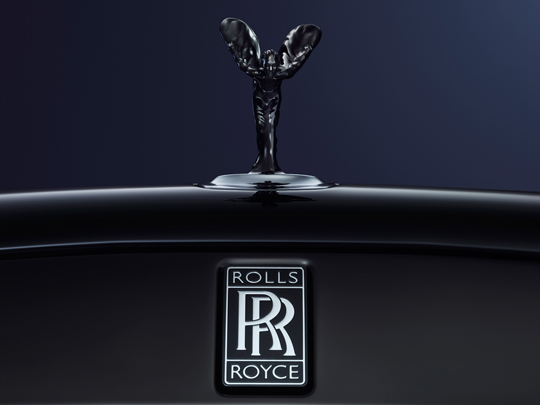
rollroyceCars older than 15 years are banned on the city's streets, among the world's most polluted, in efforts to improve air quality. The owner, who claimed to have been driving the vehicle on the roads only on exceptional occasions, has submitted that his classic model has run only 35,000 km since its registration in 1996 and it is a healthy condition and in no way harmful to the environment.

Taking note of the facts of the case, a bench headed by NGT Chairperson Swatanter Kumar sought a response of the government authorities on his plea to examine whether he can claim renewal of the registration of his Rolls Royce. The plea filed by Delhi resident Ashok Kumar Jain will come up for hearing on February 22.

The car owner said he purchased the Rolls Royce petrol-based car in 1995 and it was imported in 1996 after making a payment of 112,350 pounds, which was equivalent to Rs. 1 crore as on that date, along with customs duty.

He said the vehicle is insured and had requisite pollution test certificate and due to the tribunal's order, he would not be able to get his vehicle's registration renewed. He sought permission to use the vehicle after complying with necessary fitness certificate and pollution tests.

The petition said the tribunal while restricting the right of owners of petrol vehicles older than 15 years to ply on the roads of Delhi and NCR or from getting fresh registration in these areas, "did not consider the scenario of such classic models of luxury cars which have not lost their value despite the time period and would be worth upgrading to permissible fitness requirements under the Motor Vehicles Act for plying on the road".

It said such cars have gained a distinct sense of value due to their rare make and availability of the models in the market and Jain's vehicle is a classic model which could be recognised as a vintage model in course of time.

"...Applicant is even ready and willing to upgrade the car and make it compliant with the norms on emissions as required for plying the same in New Delhi.

"He has sought to upgrade his car if required to ensure that the car meets the emission standards as is required in India," it said, adding that he has approached manufacturers of the car in the United Kingdom who have agreed.

The tribunal had on November 26, 2014 banned plying of all diesel and petrol vehicles which were over 10-years-old and 15-year-old respectively on Delhi roads to tackle increasing air pollution.

Comments

Add new comment

  • Coastaldigest.com reserves the right to delete or block any comments.
  • Coastaldigset.com is not responsible for its readers’ comments.
  • Comments that are abusive, incendiary or irrelevant are strictly prohibited.
  • Please use a genuine email ID and provide your name to avoid reject.
Agencies
June 9,2020

Soon, you may be able to withdraw cash from an ATM without touching any part of the machine. AGS Transact Technologies, a provider of cash and digital payment solutions and automation technology, on Monday said it has successfully developed and tested a touchless ATM solution in light of the COVID-19 pandemic.

The ‘contactless' solution, currently under demo at interested banks, enables a customer to perform all the steps required to withdraw cash from an ATM using the mobile app itself. 

The customer simply has to scan the QR code displayed on the ATM screen and follow the directions on their respective bank's mobile application. 

This includes entering the amount and mPIN required to dispense the cash from the ATM machine. 

According to the company, the QR code feature makes cash withdrawals quicker and more secure, and negates the chances of compromising the ATM Pin or card skimming.

"The new Touchless ATM solution is an extension of the flagship QR Cash solution which ensures safety of the users and will provide a seamless cash withdrawal experience with enhanced security," said Ravi B. Goyal, Chairman and MD, AGS Transact Technologies Ltd.

With minimum investment, the banks can enable this solution for their ATM networks by upgrading the existing software.

AGSTTL has so far installed, maintained and managed a network of over 72,000 ATMs across the country and also provides customised solutions to leading banks. 

The company earlier introduced UPI-QR based Cash withdrawal solution in partnership with Bank of India. 

This is how the solution works.

Open the Bank mobile application on your smartphone and select QR Cash Withdrawal. Enter the amount you wish to withdraw on the mobile app and scan the QR code on the ATM screen.

Next, confirm the amount by clicking on ‘proceed' in the app and enter the mPin to authenticate the transaction. Now collect the cash and receipt and you are done.

"The seamless, cardless and touchless withdrawal method is designed to provide easy transaction flow, without the need to touch the ATM screen or enter the pin," said Mahesh Patel, President and Group Chief Technology Officer, AGS Transact Technologies.

Comments

Add new comment

  • Coastaldigest.com reserves the right to delete or block any comments.
  • Coastaldigset.com is not responsible for its readers’ comments.
  • Comments that are abusive, incendiary or irrelevant are strictly prohibited.
  • Please use a genuine email ID and provide your name to avoid reject.
Agencies
July 4,2020

Twitter has joined efforts to do away with racially loaded terms such as master, slave and blacklist from its coding language in the wake of the death of African-American George Floyd and ensuing Black Lives Matter protests.

The project started even before the current movement for racial justice escalated following the death of 46-year-old George Floyd in police custody in May.

The use of terms such as "master" and "slave" in programming language originated decades ago. While "master" is used to refer to the primary version of a code, "slave" refers to the replicas. Similarly, the term "Blacklist" is used to refer to items which are meant to be automatically denied.

The efforts to change these terms in favour of more inclusive language at Twitter were initiated by Regynald Augustin and Kevin Oliver and the microblogging platform is now backing their efforts.

"Inclusive language plays a critical role in fostering an environment where everyone belongs. At Twitter, the language we have been using in our code does not reflect our values as a company or represent the people we serve. We want to change that. #WordsMatter," Twitter's engineering team said in a post on Thursday.

As per the recommendations from the team, the term "whitelist" could be replaced by "allowlist" and "blacklist" by "denylist".

Similarly, "master/slave" could be replaced by "leader/follower", "primary/replica" or "primary/standby".

Twitter, however, is not the first to start a project to bring inclusivity in programming language.

According to a report in CNET, the team behind the Drupal online publishing software started using "primary/replica" in place of "master/slave" as early as in 2014.

The use of the terms "master/slave" was also dropped by developers of the Python programming language in 2018.

Now similar efforts are underway at Microsoft's Github and LinkedIn divisions as well, said the report.

Comments

Add new comment

  • Coastaldigest.com reserves the right to delete or block any comments.
  • Coastaldigset.com is not responsible for its readers’ comments.
  • Comments that are abusive, incendiary or irrelevant are strictly prohibited.
  • Please use a genuine email ID and provide your name to avoid reject.
News Network
May 7,2020

Toronto, May 7: Scientists have uncovered how bats can carry the MERS coronavirus without getting sick, shedding light on what triggers coronaviruses, including the one behind the COVID-19 pandemic, to jump to humans.

According to the study, published in the journal Scientific Reports, coronaviruses like the Middle East respiratory syndrome (MERS) virus, and the COVID19-causing SARS-CoV-2 virus, are thought to have originated in bats.

While these viruses can cause serious, and often fatal disease in people, bats seem unharmed, the researchers, including those from the University of Saskatchewan (USask) in Canada, said.

"The bats don't get rid of the virus and yet don't get sick. We wanted to understand why the MERS virus doesn't shut down the bat immune responses as it does in humans," said USask microbiologist Vikram Misra.

In the study, the scientists demonstrated that cells from an insect-eating brown bat can be persistently infected with MERS coronavirus for months, due to important adaptations from both the bat and the virus working together.

"Instead of killing bat cells as the virus does with human cells, the MERS coronavirus enters a long-term relationship with the host, maintained by the bat's unique 'super' immune system," said Misra, one of the study's co-authors.

"SARS-CoV-2 is thought to operate in the same way," he added.

Stresses on bats, such as wet markets, other diseases, and habitat loss, may have a role in coronavirus spilling over to other species, the study noted.

"When a bat experiences stress to their immune system, it disrupts this immune system-virus balance and allows the virus to multiply," Misra said.

The scientists, involved in the study, had earlier developed a potential treatment for MERS-CoV, and are currently working towards a vaccine against COVID-19.

While camels are the known intermediate hosts of MERS-CoV, they said bats are suspected to be the ancestral host.

There is no vaccine for either SARS-CoV-2 or MERS, the researchers noted.

Follow latest updates on the COVID-19 pandemic here

"We see that the MERS coronavirus can very quickly adapt itself to a particular niche, and although we do not completely understand what is going on, this demonstrates how coronaviruses are able to jump from species to species so effortlessly," said USask scientist Darryl Falzarano, who co-led the study.

According to Misra, coronaviruses rapidly adapt to the species they infect, but little is known on the molecular interactions of these viruses with their natural bat hosts.

An earlier study had shown that bat coronaviruses can persist in their natural bat host for at least four months of hibernation.

When exposed to the MERS virus, the researchers said, bat cells adapt, not by producing inflammation-causing proteins that are hallmarks of getting sick, but instead by maintaining a natural antiviral response.

On the contrary, they said this function shuts down in other species, including humans.

The MERS virus, the researchers said, also adapts to the bat host cells by very rapidly mutating one specific gene.

These adaptations, according to the study, result in the virus remaining long-term in the bat, but being rendered harmless until something like a disease, or other stressors, upsets this balance.

In future experiments, the scientists hope to understand how the bat-borne MERS virus adapts to infection and replication in human cells.

"This information may be critical for predicting the next bat virus that will cause a pandemic," Misra said.

Comments

Add new comment

  • Coastaldigest.com reserves the right to delete or block any comments.
  • Coastaldigset.com is not responsible for its readers’ comments.
  • Comments that are abusive, incendiary or irrelevant are strictly prohibited.
  • Please use a genuine email ID and provide your name to avoid reject.