


Mangaluru: Drug offender Goods' Rahim arrested under Goonda Act

[email protected] (CD Network | Chakravarthi)
October 4, 2016

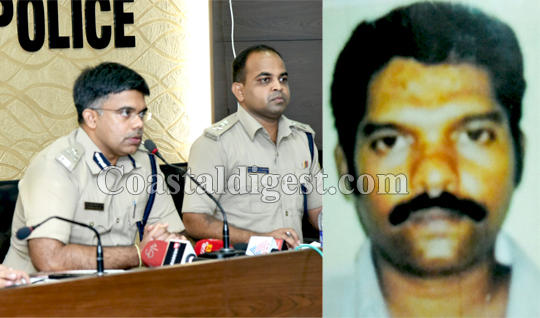
Mangaluru, Oct 5: In a rare move, the Mangaluru city police have invoked a drug peddler under the Karnataka Prevention of Dangerous Activities of Bootleggers, Drug Offenders, Gamblers, Goondas, Immoral Traffic Offenders, Slum Grabbers and Video or Audio Pirates Act, 1985.
comm1

City Police Commissioner M. Chandra Sekhar told presspersons here on Tuesday that he passed the order against T.P. Abdul Rahim alias T.P. Rahim alias Goods' Rahim alias Kindi' Rahim (41), a resident of Ansari Road, Bunder, Mangaluru, based on the reports by inspector Shantharam, Assistant Commissioner of Police Uday M. Nayak and Deputy Commissioner of Police (Law and Order) M. Shantharaju.

The accused, facing eight cases under the NDPS Act, has been sent to Belagavi Central Prison, the commissioner said.

Alarmed over the increasing reports of drug abuse by youngsters, the city police have launched a two-pronged drive—to deter drug usage and to cut supply of drugs.

“Detaining a drug peddler under the Goonda Act is aimed at curtailing drug supply,” Mr. Sekhar said and claimed that such an action was taken for the first time in Mangaluru. “The police have a list of persons who indulge in drug supply and action will be taken against all of them. Priority is being given to nab those who supply drugs near educational institutions,” he said.

Rahim, despite being arrested several times for peddling, continued to indulge in the crime after coming out on bail. Similar steps would follow for others too, the commissioner said. The police had conducted over 40 raids this year, seized 94.219 kg of ganja and canabbis and 70 g of cocaine, he said. The police have so far sent about 135 drug addicts to rehabilitation centres and would keep a close watch on them at least for six months after their release.

“The police do not want to socially boycott them as drug abuse is a curable symptom. Parents too have a greater role in identifying the changed behaviour of their wards and arranging counselling before things go out of hand,” he said.

Deputy Commissioners of Police M. Shantharaju (Law and Order) and Sanjeev M. Patil (Crime and Traffic) were present.

Comments

A.Mangalore
 - 
Wednesday, 5 Oct 2016

Good move. He should be behind the bar forever.

Add new comment

  • Coastaldigest.com reserves the right to delete or block any comments.
  • Coastaldigset.com is not responsible for its readers’ comments.
  • Comments that are abusive, incendiary or irrelevant are strictly prohibited.
  • Please use a genuine email ID and provide your name to avoid reject.
News Network
January 15,2020

Mangalore, Jan 15: In one of the biggest seizure of gold in the new decade, Directorate of Revenue Intelligence (DRI) sleuths here have seized five kg of gold valued at Rs two Crore from the Air Cargo Complex at International Airport here recently.

Acting on a tip-off the officers of Directorate of Revenue Intelligence (DRI) Bangalore and Mangalore in a co-ordinated effort unraveled a unique modus of smuggling of gold through Air Cargo Complex, at old airport, Bajpe Mangalore two days back, According to release issued here on Tuesday evening.

The smuggled gold was concealed in five metal sprockets which were imported by M/s Swaroop Mineral Pvt Ltd of Udupi in the name of “mining conveyor drive chain”.

Comments

Add new comment

  • Coastaldigest.com reserves the right to delete or block any comments.
  • Coastaldigset.com is not responsible for its readers’ comments.
  • Comments that are abusive, incendiary or irrelevant are strictly prohibited.
  • Please use a genuine email ID and provide your name to avoid reject.
News Network
April 13,2020

Bengaluru, Apr 13: Karnataka chief minister B S Yediyurappa on Monday said the COVID-19 situation has thrown the state into a deep financial trouble and there is a need to to find ways to overcome the present crisis, as he announced certain measures aimed at resource mobalisation.

He said the state government was awaiting guidelines from the Centre regarding the implementation of lockdown during the next two weeks, and noted that discussions were on regarding relaxations on the sale of liquor and the decision will be taken after April 14.

Yediyurappa on Monday held a meeting with officials of various departments along with his cabinet colleagues and the chief secretary.

"The possible situation once the lockdown is released, was widely discussed in the meeting. Discussion was also held about the financial situation of the state government and how to mobilise resources. Many suggestions were given and it was decided to implement those suggestions," the Chief Minister said.

Speaking to reporters after the meeting, he said, "...the COVID-19 situation has thrown our state into deep financial trouble and there is a need to to find ways to overcome present financial crisis."

Yediyurappa said it was decided to speed up the disposal of cases related to regularisation of unauthorised constructions which are pending before the High Court and Supreme Court, during the meeting.

"If the court decides the matter, thousands of people who own unauthorised houses will be relieved," he said, adding that this will also help government in mobilising resources for fund starved development works.

He said in addition to this the government is planning to auction more than 12,000 corner sites lying idle in Bengaluru, and it was also decided to allow auction of corner and vacant sites in respective urban development authorities across the state.

"By auction of corner sites in Bengaluru, we plan to mobalise about Rs 14,000-15,000 crore. BDA is preparing for it, only if we get good market value we will sell or else no," he added.

It was also decided to amend the law governing permission to allow sites in private and co-operative housing societies, the Chief Minister further said, adding that hundreds of societies were waiting for approval from government for releasing the sites.

Yediyurappa said it was decided to use Rs 1,000 crore available in Rajiv Gandhi Health University to upgrade medical college hospitals.

It was also decided to distribute free milk to slums and poor for one more week, the Chief Minister said while appealing to sugar factory owners to clear the pending payment to the tune of Rs 2,834 crore to farmers in 11 districts.

The government has also released Rs 45 crore compensation for the loss of paddy crop in Raichur and Koppal District due to hailstorm based on report submitted by Deputy Commissioners, he added.

Responding to a question, Yediyurappa said, still no guidelines have come from the Centre on lockdown implementation for next two weeks, we are waiting for it.

Once the guidelines come it will help us to speed up the process of lockdown, and also relaxations if any.

Asked what plans does the government have if states are asked to decide on relaxation, he said, already Prime Minister has said that guidelines will be given, if they say on certain matters states can take decision, we will decide on what needs to be done to improve the state's economy.

To a question on relaxation on sale of liquor through Mysore Sales International Ltd (MSIL) outlets, he said, discussions are on, after April 14, we will take decision in this regard.

Comments

Add new comment

  • Coastaldigest.com reserves the right to delete or block any comments.
  • Coastaldigset.com is not responsible for its readers’ comments.
  • Comments that are abusive, incendiary or irrelevant are strictly prohibited.
  • Please use a genuine email ID and provide your name to avoid reject.
Agencies
May 8,2020

Washington D.C., May 8: The prime time for brain development in a child's life is the first year, where the infant spends most of the time asleep. It is the time when neural connections form and sensory memories are encoded.

However, when sleep is disrupted, as occurs more often among children with autism, brain development may be affected, too.

New research led by the University of Washington finds that sleep problems in a baby's first 12 months may not only precede an autism diagnosis but also may be associated with altered growth trajectory in a key part of the brain, the hippocampus.

The study, which was published in the American Journal of Psychiatry, researchers report that in a sample of more than 400 taken of 6- to 12-month-old infants, those who were later diagnosed with autism were more likely to have had difficulty falling asleep.

It also states that this sleep difficulty was associated with altered growth trajectories in the hippocampus.

"The hippocampus is critical for learning and memory, and changes in the size of the hippocampus have been associated with poor sleep in adults and older children.

As many as 80 per cent of the children with autism spectrum disorder have sleep problems," said Annette Estes, director of the UW Autism Center and senior author of the study.

"In our clinical experience, parents have a lot of concerns about their children's sleep, and in our work on early autism intervention, we observed that sleep problems were holding children and families back," added Estes, who is also a UW professor of speech and hearing sciences.

"It could be that altered sleep is part-and-parcel of autism for some children. One clue is that behavioural interventions to improve sleep don't work for all children with autism, even when their parents are doing everything just right. This suggests that there may be a biological component to sleep problems for some children with autism," said Estes.

To consider links among sleep, brain development, and autism, researchers at the IBIS Network looked at MRI scans of 432 infants, surveyed parents about sleep patterns, and measured cognitive functioning using a standardized assessment.

At the outset of the study, infants were classified according to their risk for developing autism: Those who were at higher risk of developing autism -- about two-thirds of the study sample -- had an older sibling who had already been diagnosed.

Infant siblings of children with autism have a 20 per cent chance of developing autism spectrum disorder -- a much higher risk than children in the general population.

In the current study, 127 of the 432 infants were identified as "low risk" at the time the MRI scans were taken because they had no family history of autism.

They later evaluated all the participants at 24 months of age to determine whether they had developed autism. Of the roughly 300 children originally considered "high familial risk," 71 were diagnosed with autism spectrum disorder at that age.

Problems with sleep were more common among the infants later diagnosed with an autism spectrum disorder, as were larger hippocampi. No other subcortical brain structures were affected, including the amygdala, which is responsible for certain emotions and aspects of memory, or the thalamus, a signal transmitter from the spinal cord to the cerebral cortex.

The authors note that while parents reported more sleep difficulties among infants who developed autism compared to those who did not, the differences were very subtle and only observed when looking at group averages across hundreds of infants.

Sleep patterns in the first years of life change rapidly as infants transition from sleeping around the clock to a more adult-like sleep/wake cycle. Until further research is completed, Estes said, it is not possible to interpret challenges with sleep as an early sign of increased risk for autism.

Comments

Add new comment

  • Coastaldigest.com reserves the right to delete or block any comments.
  • Coastaldigset.com is not responsible for its readers’ comments.
  • Comments that are abusive, incendiary or irrelevant are strictly prohibited.
  • Please use a genuine email ID and provide your name to avoid reject.