



Material with highest conductivity developed for faster, powerful electronic device functioning

May 8, 2017

Washington, May 8: Scientists, including those of Indian origin, have discovered a new material with highest- ever conductivity in its class, which could lead to smaller, faster and more powerful electronic devices.
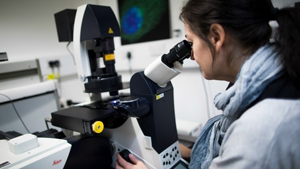
researchWhat makes this nano-scale thin film material so unique is that it has a high conductivity, which helps electronics conduct more electricity and become more powerful, said researchers led by the University of Minnesota in the US.

The material also has a wide bandgap, which means light can easily pass through the material making it optically transparent, they said.

In most cases, materials with wide bandgap, usually have either low conductivity or poor transparency.

"The high conductivity and wide bandgap make this an ideal material for making optically transparent conducting films which could be used in a wide variety of electronic devices," said Bharat Jalan, professor at University of Minnesota and the lead researcher on the study.

This includes "high power electronics, electronic displays, touchscreens and even solar cells in which light needs to pass through the device," Jalan said.

Currently, most of the transparent conductors in electronics use a chemical element called indium.

The price of indium has gone up tremendously in the past few years significantly adding to the cost of current display technology, researchers said.

As a result, there has been tremendous effort to find alternative materials that work as well, or even better, than indium-based transparent conductors.

In the new study, researchers developed a transparent conducting thin film using a novel synthesis method, in which they grew a BaSnO3 thin film (a combination of barium, tin and oxygen, called barium stannate), but replaced elemental tin source with a chemical precursor of tin.

The chemical precursor of tin has unique, radical properties that enhanced the chemical reactivity and greatly improved the metal oxide formation process.

Both barium and tin are significantly cheaper than indium and are abundantly available.

"We were quite surprised at how well this unconventional approach worked the very first time we used the tin chemical precursor," said Abhinav Prakash, graduate student at University of Minnesota.

"It was a big risk, but it was quite a big breakthrough for us," said Prakash, the first author of the paper published in the journal Nature Communications.

Comments

Add new comment

  • Coastaldigest.com reserves the right to delete or block any comments.
  • Coastaldigset.com is not responsible for its readers’ comments.
  • Comments that are abusive, incendiary or irrelevant are strictly prohibited.
  • Please use a genuine email ID and provide your name to avoid reject.
Agencies
April 15,2020

Dear parents, if you want your children to have proper sleep, read this carefully. Joining a growing list of studies that tell parents to shun devices at bed-time, researchers say that children who use devices and decide what time they go to sleep, achieve less sleep and feel more sleepier the following day than their peers.

The study of children in this age-group (aged 11 to 13 years), published in the New Zealand Medical Journal, found most (72 per cent) of the 163 students interviewed by University of Otago researchers achieved recommended guidelines of an average 9 to 11 hours sleep nightly over one week.

"But that also means that almost one in four students did not achieve sleep within these guidelines, which highlights an area for improvement," said study researcher Kate Ford.

However, consistent with previous research in 15 to 17-year-old New Zealanders, the study results show less sleep on the nights where devices are used in the hour before bed.

According to the researchers, students who used devices before going to sleep were also more likely to report that they felt sleepy the following morning. Watching television before bed had no significant effect on sleep length.

There were also some interesting observations over the weekends where students went to bed later but woke later achieving similar sleep length to the school days, the researchers said.

A small group of students (six per cent) who reported less than seven hours of sleep, including a small number reporting not sleeping at all, according to the study,

Therefore, while the average across the week of 72 per cent of students reporting adequate sleep is reassuring, it is far from the goal of every child achieving sleep within the recommended guidelines," Ford said.

Dr Paul Kelly, head of the Sleep Health Service at Canterbury District Health Board, supervised the study and explained that the foundations for good health are based on proper nutrition, regular exercise and good sleep quality.

Sleep quality is often overlooked as a contributory factor to poor health.

"The study findings suggest the need for parental guidance around bedtimings and moderation of the use and availability of electronic devices before bed," Kelly said.

"Respect and protect your sleep, as good daytime functioning is reliant on adequate sleep," Kelly added.

Comments

Add new comment

  • Coastaldigest.com reserves the right to delete or block any comments.
  • Coastaldigset.com is not responsible for its readers’ comments.
  • Comments that are abusive, incendiary or irrelevant are strictly prohibited.
  • Please use a genuine email ID and provide your name to avoid reject.
Agencies
June 19,2020

While coughing, fever and difficulty in breathing are common symptoms of COVID-19, a new case study has found that pink eye is also a reason to be tested for the disease.

The study, published in the Canadian Journal of Ophthalmology, determined that conjunctivitis and keratoconjunctivitis can also be primary symptoms of COVID-19.

The researchers noted that in March, a 29-year-old woman arrived at the Royal Alexandra Hospital's Eye Institute of Alberta with a severe case of conjunctivitis and minimal respiratory symptoms.

After the patient had undergone several days of treatment with little improvement -- and after it had been determined that the woman had recently returned home from Asia -- a resident ordered a COVID-19 test.

The test came back positive, according to the researchers.

"What is interesting in this case, and perhaps very different to how it had been recognised at that specific time, was that the main presentation of the illness was not a respiratory symptom. It was the eye," said Carlos Solarte, an assistant professor at the University of Alberta in Canada.

"There was no fever and no cough, so we weren't led to suspect COVID-19 at the beginning. We didn't know it could present primarily with the eye and not with the lungs," Solarte said.

Academic studies at the outset of the pandemic identified conjunctivitis as a secondary symptoms in about 10 to 15 per cent of COVID-19 cases, he said.

Since then, scientists have gained greater knowledge of how the virus can transmit through and affect the body's mucous membrane system, of which the conjunctiva -- the clear, thin membrane that covers the front surface of the eye -- is an extension.

While the finding provides important new health information for the public, it also makes eye exams more complicated for ophthalmologists and staff, the researchers noted.

"The patient in this case eventually recovered well without any issues. But several of the residents and staff who were in close contact with the patient had to be under quarantine," said Solarte.

"Fortunately, none who were involved in her care also tested positive," he said.

Patients coming into an eye clinic with conjunctivitis and keratoconjunctivitis are now treated as potential cases of COVID-19 and extra precautions are taken by staff, according to the researchers.

Comments

Add new comment

  • Coastaldigest.com reserves the right to delete or block any comments.
  • Coastaldigset.com is not responsible for its readers’ comments.
  • Comments that are abusive, incendiary or irrelevant are strictly prohibited.
  • Please use a genuine email ID and provide your name to avoid reject.
Agencies
June 20,2020

The World Health Organisation has warned that the COVID-19 pandemic is entering a "new and dangerous" phase. Thursday saw the most cases in a single day reported to the WHO.

Tedros Adhanom Ghebreyesus said the day had seen 150,000 new cases with half of those coming from the Americas and large numbers also from the Middle East and South Asia, the BBC reported.

He said the virus was still spreading fast and the pandemic accelerating.

He acknowledged people might be fed up with self-isolating and countries were eager to open their economies but he said that now was a time for extreme vigilance.

Maria van Kerkhove, technical lead of the WHO's COVID-19 response, told a press conference the pandemic is "accelerating in many parts of the world".

"While we have seen countries have some success in suppressing transmission and bringing transition down to a low level, every country must remain ready," she said.

Mike Ryan, the head of the WHO's Health Emergencies Programme, said that some countries had managed to flatten the peak of infections without bringing them down to a very low level.

"You can see a situation in some countries where they could get a second peak now, because the disease has not been brought under control," he said.

"The disease will then go away and reduce to a low level, and they could then get a second wave again in the autumn or later in the year."

Comments

Add new comment

  • Coastaldigest.com reserves the right to delete or block any comments.
  • Coastaldigset.com is not responsible for its readers’ comments.
  • Comments that are abusive, incendiary or irrelevant are strictly prohibited.
  • Please use a genuine email ID and provide your name to avoid reject.