Meet Sammilan Shetty, the butterfly-man of Karnataka

Sandhya D'Souza | coastaldigest.com
June 24, 2018

It was a regular Zoology assignment in 2004 that triggered the sudden interest of then student Sammilan Shetty towards butterflies. Fourteen-years since, having quit his fulltime-lectureship post, this 32-year-old has been successfully running Karnataka’s first private butterfly park in coastal district of Dakshina Kannada since 2011.

At the foothills of Western Ghats in Belvai village of Moodbidri taluk, a host of ordinary-looking plants and trees welcome the guests to 'Sammilan Shetty's Butterfly Park'. While walking through the 200 metre stretch of trees like coconut, mango, cashew or curry leaf plants, visitors are asked to delicately examine the top and bottom of these leaves, some of which are nature’s bed for butterfly eggs, larvae, caterpillar, dried shells and so on.

"You don’t need exotic plantation to host butterflies. Regular saplings or even wild plants that you can find in your home backyard would do. But unfortunately, most people uproot them terming it as a weed (unwanted plants). Even my family, was initially reluctant of my passion because I planted them," Shetty says.

Prior to the walk around the butterfly park, the visitors are familiarized with a few names and behaviour-pattern of the butterflies through audio-visual material, so that they can relate the same during their actual encounter with the species in the wild. A 30-minute walk-through this park gives a unique opportunity for the visitors to see the transformation from egg to caterpillar-pupa and the adult butterfly emerging out of it.

While the 'host-plant' is where the butterflies lay their eggs, the male milkweed butterflies suck alkaloid from alkaloid rich plants. "Alkaloids are essential for male milkweed butterflies to attract their female counterparts. Lower the alkaloid, the male butterflies might fail to impress their prospective female-mates," he says.

At this ancestral property spreading over 7.35 acres of semi-forest land, interesting species like, Autumn Leaf (Doleschallia bisaltide), Clipper (Parthenos sylvia),  Tawny Rajah (Charaxes psaphon), Black Rajah (Charaxes solon), Paris Peacock (Papilio paris), Redspot Duke (Dophla evelina), Blue Oakleaf(Kallima horsfieldii), Colour Sergeant (Athyma inara), which are otherwise uncommon, frequent at this open-private conservatory.

For the purpose of the identification of butterflies, Shetty uses The Book of Indian Butterflies by Isaac Kehimkar, whom he considers as his inspiration. Incidentally, the park was also publically opened in 2013 by Isaac - popularly known as the 'Butterfly man of India'.

"Rare butterflies like Blue Nawab (Polyura Schreiber), Orchid Tit (Chliaria othona), Great Evening Brown (Melanitis zitenius), Aberrant Oakblue (Arhopala abseus), Banded Royal (Rachana jalindra) Tamil Oakblue (Arhopala bazaloides) have also been recorded here," Shetty says.  Besides, we have species endemic to Western Ghats like Southern Duffer (Discophora lepida),  Tamil lacewing (Cethosia Nietneri), Malabar Banded Swallowtail( Papilio liomedon), Malabar Banded Peacock (Papilio buddha), a common sight during the season.

Back in 2004, while pursuing his graduation studies for Zoology, Sammilan documented 30 butterflies in the region for his project on the 'Study of local butterflies'. At present the open-house conservatory houses nearly 148 butterflies including rare and indigenous species. This is close to 50 per cent (339) of the species that is found in Western-Ghats. Shetty is particular of keeping the park without closed dome or enclosures, which he says traps them. "We have developed the park by propagating natural greenery with 'native host plants' and nectar plants which attracts butterflies to these parks. We have only created a conducive condition for them and respect the butterfly's freedom to stay or to go," he says.

London based World Book of Records has proposed to honour Shetty in recognition for his conservation of butterflies. Halpe Porus is the latest addition as the 148th butterfly at this park, which incidentally was spotted during course of this interview-walk.

Altogether there are 1,200 species of butterflies in the country, and approximately 320 in Karnataka. "Though the pollination by the butterflies is essential for food chain, no much study is gathered in India over it. Although Indian Foundation for Butterflies (IFB) is leading the way, it may take another 10 years for us to asses if we are truly accommodating the butterflies in our eco system," he says.

While the massive urbanisation and real-estate ventures targeting the secondary-forests, Shetty says, it has led to the decline of wildlife including butterflies due to their habitat loss.

While Maharashtra has taken ‘Blue Mormon’ as its state butterfly in 2015 and Karnataka has declared 'Southern Bird Wing' as its state butterfly in 2017, the butterfly enthusiasts are now batting to have recognition for a national butterfly. Butterfly-conservators feel that the move would not only help in creation of awareness of Butterfly in general, but also in conservation of their population.

The park which is completely funded by the family of Shetty, attracts approximately 800 visitors during the season between June and December. In the process of documenting the butterflies, Shetty has also taken to photography of which he plans to turn into a documentary. "A lot of people have changed the way they look at butterfly, after the educational tour. The idea is to take the message of butterfly conservation and its contribution for crop-cultivation (pollination) to as many people as possible in simple language" he says.

Comments

MK Lobo, Dubai
 - 
Sunday, 24 Jun 2018

Beautiful. Great job by Mr Shetty. Will visit during my next India visit

Add new comment

  • Coastaldigest.com reserves the right to delete or block any comments.
  • Coastaldigset.com is not responsible for its readers’ comments.
  • Comments that are abusive, incendiary or irrelevant are strictly prohibited.
  • Please use a genuine email ID and provide your name to avoid reject.
News Network
March 11,2020

Mangaluru, Mar 11: Nitte Education Trust is among the top 50 reputed institutions in the country selected by NITI Aayog for setting up Atal Incubation Centre under Union government's Atal Innovation Mission (AIM) scheme.

NITI Aayog has sanctioned Rs 9 Crore to Nitte Education Trust for setting up a full-fledged Incubation Centre at Nitte, of which Rs 2.5 crores has been received as first instalment according to a press release here on Wednesday.

Atal Incubation Centre- Nitte provides start-ups with valuable guidance, technological aid, access to investors, networking and facilitating a host of other services required for start-ups to survive and scale. Start-ups also receive direction through the robust chain of mentors who give sector-specific information and real-time practical guidance.

Comments

Add new comment

  • Coastaldigest.com reserves the right to delete or block any comments.
  • Coastaldigset.com is not responsible for its readers’ comments.
  • Comments that are abusive, incendiary or irrelevant are strictly prohibited.
  • Please use a genuine email ID and provide your name to avoid reject.
News Network
July 28,2020

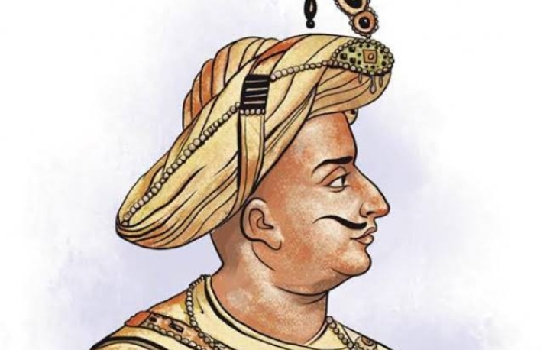
Bengaluru, Jul 28: After the Central Board of Secondary Education (CBSE) reduced the syllabi for Classes 9 to 12 due to COVID-19 pandemic, the Karnataka government has followed the suit. The Department of Public Instruction has omitted the chapters on legendary south Indian rulers Hyder Ali and Tipu Sultan from the textbooks of Class 7 in their attempt to reduce syllabus for state board schools by 30 per cent. 

The department, however, has decided to retain similar chapters on Tipu Sultan in 6th and 10th Classes, though the syllabus in text books for all classes from 1 to 10th has been trimmed. 

The trimmed textbooks uploaded on the website of the Department of State Education Research and Training (DSERT) by Karnataka state Textbook Society revealed removal of chapters on Tipu Sultan for the seventh grade.

Justifying the decision, officials said, "students study similar chapters in Class 6 and more in the 10th grade." Yet another senior official from the Text Book Society said, "Trimming does not mean we have removed half of the syllabus from textbooks. It is only keeping in mind the repetition we have condensed the chapters. In case students study about a particular dynasty in higher grades, then the same had been removed from lower grades."

A few months ago, there was an uproar over dropping of content on Tipu Sultan and MLAs from the ruling BJP also demanded the same and petitioned to the Chief Minister. Even an expert committee led by Prof Baraguru Ramachandrappa suggested to not drop any content on the historic figure. However, the department still decided to drop lessons from one of the classes while keeping the syllabus short for the next 120 active academic days.

Earlier this month, a controversy had erupted over the CBSE's decision to omit topics like federalism, secularism, citizenship, etc while reducing the syllabus for Classes 9 to 12. The education board had issued a detailed clarification later, stating that topics claimed to be dropped "are either being covered by the rationalised syllabus or in the Alternative Academic Calendar of NCERT".

"The rationalisation of syllabus up to 30 per cent has been undertaken by the Board for nearly 190 subjects of class 9 to 12 for the academic session 2020-21 as a one-time measure only. The objective is to reduce the exam stress of students due to the prevailing health emergency situation and prevent learning gaps," it said.

Last week, the Congress in Uttar Pradesh expressed its concern over 'deliberate and systematic' deletions of chapters related to the freedom struggle and the party's role in it from the Class 10-12 syllabi of the Secondary Education Board.

Comments

Add new comment

  • Coastaldigest.com reserves the right to delete or block any comments.
  • Coastaldigset.com is not responsible for its readers’ comments.
  • Comments that are abusive, incendiary or irrelevant are strictly prohibited.
  • Please use a genuine email ID and provide your name to avoid reject.
News Network
May 14,2020

Hubballi, May 14: South Western Railway (SWR) has so far ferried about 54,000 passengers, including migrant workers, students and stranded people to 11 states to reach their home towns by Shramik Special trains.

So far 40 Shramik Specials were run one each from Kabakaputtur in Mysuru and Hubballi and remaining 38 from Chikkabanavara/Malur from Bengaluru area. About 54,000 passengers were ferried to different parts of the country. Maximum Shramik Specials trains train services were run to Lucknow (9) and Danapur (7).

Shramik Specials were run to Bihar (Bakora, Danapur, Baruni, Darbhanga), West Bengal (Purila, Bankura, New Jalpaiguri), Jharkhand (Hatia, Barkakana), Rajasthan (Jaipur, Udaipur), Uttar Pradesh (Lucknow, Gorakhpur), Orissa (Bhubaneswar), Madhya Pradesh (Gwalior), Uttarakhand (Haridwar), Himachal Pradesh (Una), Tripura (Agartala) and Jammu and Kashmir (Udhampur).

SWR is transporting passengers to their destination as per the demand of the State Government with proper protocol and the receiving State Government is ready to accept them.

Comments

Add new comment

  • Coastaldigest.com reserves the right to delete or block any comments.
  • Coastaldigset.com is not responsible for its readers’ comments.
  • Comments that are abusive, incendiary or irrelevant are strictly prohibited.
  • Please use a genuine email ID and provide your name to avoid reject.