


Mekunu subsides after leaving 10 dead, 40 missing in Oman, Yemen

Arab News
May 27, 2018

Dubai, May 27: Cyclone Mekunu was downgraded to a tropical storm on Saturday after lashing eastern Yemen and southern Oman, leaving several people dead in its wake and soaking arid Oman and Yemen under 200 ml of rainfall.

Latest satellite images, analysis of weather maps and the results of numerical models of the tropical cyclone Mekunu, in the Arabian Sea, have shown that it became a second class cyclone and expected to move north to northwest, with the storm eye away from Saudi Arabia, by about 350 kilometers and the wind speed around the center of the hurricane, to be between 157 to 167 km/h, according to the General Authority of Meteorology and Environment Protection (GAMEP).

The commission’s predictions indicate that the tropical situation, in Oman and the Republic of Yemen is likely to change.

As the cyclone has turned into a tropical storm, it may affect parts of Saudi Arabia from Saturday to next Tuesday.

Southern parts of the eastern desert of the Rubu Al-khali (the Empty Quarter) and the Eastern parts of Najran will be affected by torrential rains that may lead to flash floods and active winds of up to 75 km/h, in addition to dusty weather.

GAMEP called on everyone to follow up new reports on the situation, which may change course in the coming days, through the daily weather reports and alerts issued by the early warning system on the official website and the means of social communication.

Cyclone Mekunu caused flash flooding that tore away whole roadways and submerged others in Salalah, Oman’s third-largest city, stranding drivers. Strong winds knocked over street lights and tore away roofing.

Rushing waters from the rain and storm surges flooded typically dry creek beds. The holiday destination’s now-empty tourist beaches were littered with debris and foam from the churning Arabian Sea.

Three people, including a 12-year-old girl, died in Oman, and another two bodies were recovered from the Yemeni island of Socotra. More than 30 people were still missing in Socotra, including Yemeni, Indian and Sudanese nationals.

Yemeni officials also reported damage in the country’s far east, along the border with Oman. Rageh Bakrit, the governor of Al-Mahra province, said on his official Twitter account late Friday that strong winds had blown down houses and taken out communication lines and water services. He said there were no fatalities in the province.

India’s Meteorological Department said the storm packed maximum sustained winds of 170-180 kilometers (105-111 miles) per hour with gusts of up to 200 kph (124 mph). It called the cyclone “extremely severe.”

Portions of Salalah, home to some 200,000 people, lost power as the cyclone made landfall.

Branches and leaves littered the streets. Several underpasses became standing lakes. Some cars were left abandoned on the road. Electrical workers began trying to repair lines in the city while police and soldiers in SUVs patrolled the streets. On the outskirts of the city, near the Salalah International Airport, what once was a dry creek bed had become a raging river.

The airport, closed since Thursday, will reopen early Sunday, Oman’s Public Authority for Civil Aviation said. The Port of Salalah — a key gateway for the country and for Qatar amid a regional diplomatic dispute — remained closed, its cranes secured against the pounding rain and winds.

Omani forecasters said Salalah and the surrounding area would get at least 200 millimeters (7.87 inches) of rain, over twice the city’s annual downfall. It actually received 278.2 mm, nearly three times its annual rainfall.

Authorities remained worried about flash flooding in the area’s valleys and potential mudslides down its nearby cloud-shrouded mountains. In nearby Wadi Darbat, the storm’s rains supercharged its famous waterfall.

Police and others continued their rescue efforts even as the winds and rains calmed. Capt. Tarek Al-Shanfari of the Royal Oman Police’s public relations department said there had been at least three fatalities in the storm, including the death of a 12-year-old girl who was hit in the head by a door flung open by the wind.

An Asian laborer died in a flooded valley and an Omani national in a 4x4 died when his vehicle was swept away, Al-Shanfari said.

On Socotra, authorities relocated over 230 families to sturdier buildings and other areas, including those more inland and in the island’s mountains, Yemeni security officials said.

Flash floods engulfed Socotra’s streets, cutting electricity and communication lines. Some humanitarian aid from Saudi Arabia and the United Arab Emirates arrived on the island just hours after the cyclone receded.

Yemeni security officials said rescuers recovered two bodies on Socotra, while more than 30 people remain missing. They spoke on condition of anonymity because they were not authorized to brief reporters.

The island, listed by UNESCO as a World Heritage Site, has been the focus of a dispute between the UAE and Yemen’s internationally recognized government, which are ostensibly allied against Shiite rebels known as Houthis.

Socotra has a unique ecosystem and is home to plants, snails and reptiles that can be found nowhere else.

In Oman, Mohammed Omer Baomer warned his neighbors about a torn-away chunk of road just down the street from his home after earlier getting his SUV stuck over it.

“It was a scary feeling, as if it was the end of world,” he said of the cyclone. “You can’t even go outside. You try to watch from the window and you can’t.”

Yet even as Mekunu barreled overhead, the eye of the storm provided a moment’s respite early Saturday morning. At one luxury hotel in Salalah, which already had evacuated its guests, workers sat down early for “suhoor,” a meal Muslims eat before sunrise during the holy fasting month of Ramadan. They laughed and shared plates by flashlight in a darkened ballroom, the cyclone’s wind a dull roar behind their clatter.

Critical response units

“The past two days were really very critical and difficult for everyone to survive…For me, its personally the first time I am inside a cyclone,” Dr. Naif Bazzi, General Manager of Dhofar’s Rehabilitation center told Arab News, adding that “the rate of the readiness of the systems of the government, health, emergency etc.… everything was still working during the very critical times during the cyclone.”

“The civil defense and police and army were all around, whatever you want you could have and whatever you need to do they would help you – many phone numbers for people to ask for any kind of help, everything was arranged,” the Lebanese expat added.

“It is clear that the cyclone has gone away and we now have ordinary winter weather. In Salalah, lots of trees and lamp posts displaced but the life is coming back now to the streets and Dhofar region…its calm now and everyone is going out.”

UAE not to be affected

“According to the Medium Ranged Forecast from Numerical Weather Predictions, the tropical cyclone will not reach the UAE,” the UAE’s National Center of Meteorology said in a statement.

It added that however medium and high clouds and moist air mass may lead to convective cloud formations at times in the eastern and the southern parts of the country associated with fresh winds.

Comments

Add new comment

  • Coastaldigest.com reserves the right to delete or block any comments.
  • Coastaldigset.com is not responsible for its readers’ comments.
  • Comments that are abusive, incendiary or irrelevant are strictly prohibited.
  • Please use a genuine email ID and provide your name to avoid reject.
Agencies
July 31,2020

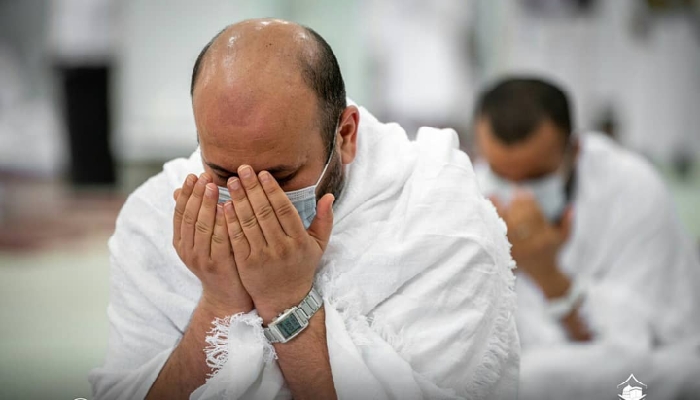
Mount Arafat, July 30: Muslim pilgrims converged Thursday on Saudi Arabia's Mount Arafat for the climax of this year's hajj, the smallest in modern times and a sharp contrast to the massive crowds of previous years.

A tight security cordon has been erected all around the foot of the rocky hill outside Mecca, also known as Jabal al-Rahma or Mount of Mercy.

Pilgrims, donning masks and observing social distancing, were brought in buses from neighbouring Mina, state television showed, as Saudi authorities impose measures to prevent a coronavirus outbreak.

They were subject to temperature checks and attended a sermon -- which state media said was translated into 10 languages -- before they set off on the climb to the summit for hours of Koran recitals and prayers to atone for their sins.

The scene was strikingly different to last year's ritual when a sea of pilgrims ascended Mount Arafat, marshalled by tens of thousands of stewards in a bid to prevent any crushes.

After sunset prayers, pilgrims will make their way down Mount Arafat to Muzdalifah, another holy site where they will sleep under the stars to prepare for the final stage of hajj, the symbolic "stoning of the devil".

It takes place on Friday and also marks the beginning of Eid al-Adha, the festival of sacrifice.

The hajj, one of the five pillars of Islam and a must for able-bodied Muslims at least once in their lifetime, is usually one of the world's largest religious gatherings.

But only up to 10,000 people already residing in the kingdom will participate in this year's ritual, compared with 2019's gathering of some 2.5 million from around the world.

"You are not our guests but those of God, the custodian of the two holy mosques (Saudi Arabia's King Salman) and the nation," Hajj Minister Mohammad Benten said in a video released by the media ministry on Wednesday.

Security cordon

A security cordon has been thrown around the holy sites to prevent any security breaches, an interior ministry spokesman said.

Riyadh faced strong criticism in 2015 when some 2,300 worshippers were killed in the deadliest stampede in the gathering's history.

But this year, those risks are greatly reduced by the much smaller crowd.

The pilgrims have all been tested for the virus, and foreign journalists were barred from this year's hajj, usually a huge global media event.

As part of the rites completed over five days in the holy city of Mecca and its surroundings, the pilgrims converged on Mount Arafat after spending the night in Mina.

A district of Mecca, Mina sits in a narrow valley surrounded by rocky mountains, and is transformed each year into a vast encampment for pilgrims.

They began the hajj on Wednesday with their first "tawaf", the circumambulation of the Kaaba, a large structure in Mecca’s Grand Mosque towards which Muslims around the world pray.

The Kaaba is draped in a black cloth embroidered in gold with Koranic verses and known as the kiswa, which is changed each year during the pilgrimage.

Pilgrims were brought inside the mosque in small batches, walking along paths marked on the floor, in sharp contrast to the normal sea of humanity that swirls around the Kaaba during hajj.

Comments

Add new comment

  • Coastaldigest.com reserves the right to delete or block any comments.
  • Coastaldigset.com is not responsible for its readers’ comments.
  • Comments that are abusive, incendiary or irrelevant are strictly prohibited.
  • Please use a genuine email ID and provide your name to avoid reject.
News Network
January 16,2020

Dubai, Jan 16: The UAE Ministry of Climate Change and Environment on Wednesday announced that it has banned the import of birds, some eggs and meat products from Hungary and Slovakia.

The ministry said the decision was taken following a notification from the World Organization for Animal Health (OIE) on the outbreak of a highly pathogenic strain of bird flu, H5N2, in the two countries.

Accordingly, the ministry has banned "the import of all species of domestic and wild live birds, ornamental birds, chicks, hatching eggs, meats and meat products and non-heat-treated wastes from Hungary and Slovakia".

It has also regulated the import of poultry meat and non-heat-treated products, requiring a health certificate for the export of meat and meat products from the two countries to release consignments into the UAE.

A health certificate will be needed for the import of eggs, the ministry added.

However, thermally-treated poultry products (meat and eggs) have been cleared for import from all parts of Hungary and Slovakia.

Kaltham Ali Kayaf, Acting Director, Animal Development & Health Department at the ministry, said: "These measures reiterate the ministry's keenness in achieving its strategic objectives including enhancing bio-security levels and eliminating pathogens before they enter the country. In doing so, the ministry prevents the bird flu virus and related risks and impacts on the country's poultry health and safety, in addition to protecting public health and well-being."

Comments

Add new comment

  • Coastaldigest.com reserves the right to delete or block any comments.
  • Coastaldigset.com is not responsible for its readers’ comments.
  • Comments that are abusive, incendiary or irrelevant are strictly prohibited.
  • Please use a genuine email ID and provide your name to avoid reject.
News Network
April 28,2020

Riyadh, Apr 28: The number of confirmed coronavirus cases in Saudi Arabia crossed the critical 20,000-mark on Tuesday with the discovery of 1,266 new cases. Eight new deaths were also recorded during the last 24 hours, bringing the virus-related death toll to 152.

Twenty-three percent of the new cases are of Saudi nationals, while 77 percent are of non-Saudi residents, Saudi Press Agency (SPA) quoted the ministry spokesman Dr. Muhammad Al-Abdel Ali as saying.

Out of the total 20,077 cases till Tuesday, 17,141 cases are active, he added. A total of 118 cases are currently critical, the spokesman said.

Out of the 1,266 new cases, 327 were reported in Makkah, 273 in Madinah, 262 in Jeddah, and 171 in Riyadh. There were 58 cases in Jubail, 35 in Dammam, 32 in Taif, 29 in Tabuk and 18 in Al-Zulfi. Additionally, nine cases were recorded in Khulais; eight in Buraidah; seven in Al-Khobar; five in Hufof; four each in Qatif and Ras Tanura; three in Adhum; two each in Al-Jafr, Al-Majaridah, Yanbu, Bisha and Diriyah; and one each in Abha, Khamis Mushayt, Baqeeq, Dhahran, Dhalum, Sabiya, Hafr Al Batin, Hail, Sakaka, Wadi Al-Dawasir and Sajr, the spokesman said.

The Kingdom saw a spike in cases when the health ministry began its field-testing efforts nearly two weeks ago, targeting suspected infection cluster areas. Since then, there has been a steady increase in daily cases.

Till Monday, around 1 million people were screened in various neighborhoods throughout the Kingdom.

Comments

Add new comment

  • Coastaldigest.com reserves the right to delete or block any comments.
  • Coastaldigset.com is not responsible for its readers’ comments.
  • Comments that are abusive, incendiary or irrelevant are strictly prohibited.
  • Please use a genuine email ID and provide your name to avoid reject.