



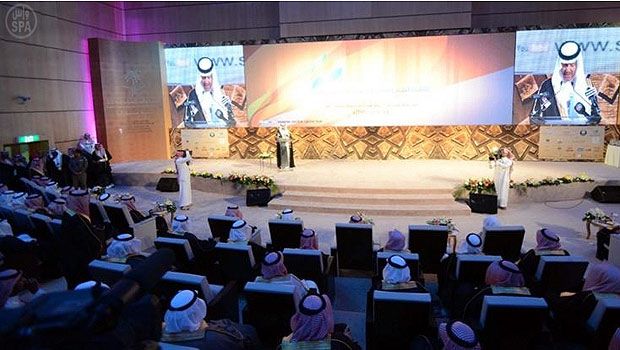
SCTA chief stresses more public spending on domestic tourism

April 7, 2012
Tourism

Riyadh, April 7: Prince Sultan bin Salman, president of Saudi Commission for Tourism and Antiquities (SCTA), underscored the significance of further developing tourism infrastructure facilities and services in order to prevent Saudis visiting foreign destinations during their vacation.


“The momentum of Saudis leaving for foreign countries having advanced tourist facilities and top standard of services with reasonable prices for all sections of society would continue unless there is more government support for this vital sector,” Prince Sultan said.


“It is the government that can invest in building infrastructure facilities and improving services by attracting investors to the domestic tourism sector,” he added.


Prince Sultan was speaking to reporters on the sidelines of the second session of the Travel and Tourism Investment Market 2012 (TTIM), which concluded here on Thursday evening.


About 140 companies and agencies participated in the high-profile event, organized by SCTA, at the Riyadh International Exhibition Center.


TTIM was held as part of the commission’s initiative to promote the Kingdom’s domestic tourism.


The four-day event, opened by Riyadh Gov. Prince Sattam on Monday, showcased various tourism agencies, hotels and transportation services displaying their products and services. This year’s event with the theme of “Tourism for everybody: Partnership toward a sustainable development” was part of SCTA’s initiative to promote domestic tourism in the Kingdom.


The SCTA chief noted that the private sector’s role in developing tourism sector comes only after that of the government. “The private sector has also been playing a great role in developing tourism projects, like in other economic sectors in the Kingdom,” he pointed out.


Prince Sultan said SCTA would announce the statistical figures about the number of Saudis who went abroad for vacationing during the recent second semester school vacation.


According to the prince, SCTA hopes that improving local tourist facilities and organizing various programs in addition to acquiring ability to compete with countries visited by Saudi holidaymakers would help realize enormous economic benefits and contain the outflow of wealth to foreign countries.


The SCTA chief noted that this would also be instrumental in creating more job opportunities for citizens in the tourism sector in addition to bringing forth great benefits so as to enable the citizens to spend their vacation within the Kingdom and know more about their country.


“The loss that surpasses the economic losses is the result of us missing opportunities to make the citizen stay in the Kingdom (to spend his vacation) and understand more (about the Kingdom), enjoy its beauty, know its history, and interact with fellow citizens,” Prince Sultan said.


“This would also leave sweet memories in their minds about their country rather than reliving memories of tourist spots outside the Kingdom,” he added.


Comments

Add new comment

  • Coastaldigest.com reserves the right to delete or block any comments.
  • Coastaldigset.com is not responsible for its readers’ comments.
  • Comments that are abusive, incendiary or irrelevant are strictly prohibited.
  • Please use a genuine email ID and provide your name to avoid reject.
Arab News
March 9,2020

Dubai, Mar 9: The eyes of the world will be on the oil markets when the big trading hubs in Europe and North America open following the end of the deal between Saudi Arabia and Russia that has helped to sustain crude at relatively high levels for the past three years.

There were big falls on Friday when ministers from the Organization of the Petroleum Exporting Countries (OPEC) failed to get a deal with non-OPEC members — the so-called OPEC+ — to extend output agreements. Brent oil was down nearly 10 percent at $45.27 going into the western weekend.

Saudi Aramco took immediate action to cut prices after the OPEC+ collapse, offering big discounts for crude deliveries from next month, when the current output restrictions end.

According to a notification sent to customers by Saudi Aramco, seen by Arab News, the Kingdom’s oil giant will cut between $4 and $8 per barrel, with the biggest discounts being offered to buyers in northwest Europe and the US.

Roger Diwan, an oil analyst at consultancy IHS Market, said: “We are likely to see the lowest oil prices of the past 20 years in the next quarter.”

West Texas Intermediate, the US oil benchmark, fell to $28.27 in November 2001.

The move raises the possibility of a “crude war” between the three biggest oil blocs — the US, Russia and the Arabian Gulf. Some analysts believe the American shale industry is more vulnerable to low prices than either the Russians or the Saudis.

Robin Mills, head of the Qamar consultancy, told Arab News: “I don’t think this was premeditated but Saudi Arabia has clearly swung quickly into action to put the Russians under pressure. But the Russians, with low debt and a flexible exchange rate, can cope with a few months of low prices.”

The boom in US shale has made the country the biggest oil producer in the world, but with high financing costs. Lower global prices would put a lot of shale companies out of business.

On the other hand, American motorists, and President Donald Trump, would be pleased to see lower fuel prices in an election year.

In Moscow, one prominent financier with ties to the Kingdom played down the long-term significance of the Vienna fallout.

Kirill Dmitriev, chief executive of the Russian Direct Investment Fund, told Arab News: “Saudi Arabia is our strategic partner, and cooperation between our two countries will continue in all areas. We will also continue to work within the framework of the Russia-Saudi Economic Council.”

One Russian official, who asked not to be named, added: “There is a good relationship between Alexander Novak, Russian energy minister, and his Saudi counterpart Prince Abdul Aziz bin Salman, and I am sure they will continue talking to each other less formally.”

Comments

Add new comment

  • Coastaldigest.com reserves the right to delete or block any comments.
  • Coastaldigset.com is not responsible for its readers’ comments.
  • Comments that are abusive, incendiary or irrelevant are strictly prohibited.
  • Please use a genuine email ID and provide your name to avoid reject.
Agencies
May 17,2020

Jerusalem, May 17: The Chinese ambassador to Israel was found dead in his home north of Tel Aviv on Sunday, Israel's Foreign Ministry said.

No cause of death was given and Israeli police said it was investigating.

Du Wei, 58, was appointed envoy in February in the midst of the coronavirus pandemic. He previously served as China's envoy to Ukraine.

He is survived by a wife and son, both of whom were not in Israel.

Israel enjoys good relations with China.

The ambassador's death comes just two days after he condemned comments by visiting U.S. Secretary of State Mike Pompeo, who denounced Chinese investments in Israel and accused China of hiding information about the coronavirus outbreak.

Comments

Add new comment

  • Coastaldigest.com reserves the right to delete or block any comments.
  • Coastaldigset.com is not responsible for its readers’ comments.
  • Comments that are abusive, incendiary or irrelevant are strictly prohibited.
  • Please use a genuine email ID and provide your name to avoid reject.
News Network
May 20,2020

Cairo, May 20: A senior Kuwaiti lawmaker has called for imposing a tax on expatriates’ remittances to shore up the country’s finances.

MP Khalil Al Saleh, the head of the parliament’s Human Resources Committee, has presented a draft law on the proposed tax to the legislature.

“Imposing fees on expatriates’ transfers will have a role in improving the state's revenues and diversify sources of income,” he told Al Rai newspaper.

Migrant workers transfer about 4.2 billion dinars annually from Kuwait, he added, citing figures from Kuwait’s Central Bank.

“This system is in effect in most countries of the world and in more than one Gulf country. Expats there have not objected to it. Allowing this money to exit the country is very dangerous and has a direct effect on economy,” MP Al Saleh said.

“We do not target brotherly expats because imposing symbolic fees on financial transfers will not affect their money, but will have a positive effect on the state’s sources,” he said. “This has become a necessity after the money transferred outside Kuwait has reached 4.2 billion dinars annually without the state [Kuwait] making any benefit from this.”

Foreign workers make up 3.3 million of Kuwait’s 4.6 million population.

Several Kuwaiti public figures have recently pushed for redrawing the demographic imbalance in the country, accusing expatriates of straining health facilities and increasing the Covid-19 threat.

Comments

Add new comment

  • Coastaldigest.com reserves the right to delete or block any comments.
  • Coastaldigset.com is not responsible for its readers’ comments.
  • Comments that are abusive, incendiary or irrelevant are strictly prohibited.
  • Please use a genuine email ID and provide your name to avoid reject.