



Syria claims troop pullout

April 11, 2012

syria


Moscow/Paris/Beirut, April 11: Syria's foreign minister told Moscow yesterday Damascus had started withdrawing troops in line with Kofi Annan's peace plan but Russia said the regime should implement the initiative more decisively.


The rare visit by Foreign Minister Walid Muallem to Moscow coincided with a deadline under the Annan plan for Syria to withdraw forces from protest cities amid Western worries the scheme is in tatters.


"I told my Russian colleague of the steps Syria is taking to show its goodwill for the implementation of the Annan plan," Muallem said after talks with Russian Foreign Minister Sergei Lavrov. "We have already withdrawn military units from different Syrian provinces," he said without giving details on locations.


Muallem also said Syria had freed some prisoners who had been arrested for participating in anti-government riots. He added that a ceasefire should begin "simultaneously" with the arrival of international observers, in another apparent diversion from the Annan peace plan championed by the West.


However, France denounced Syria's assurance that its forces were complying with a UN-backed cease-fire deal as a "blatant lie" and urged foreign governments yesterday to challenge Assad's administration.


In scarcely diplomatic language, the French Foreign Ministry spokesman said: “The Syrian foreign minister's statements, affirming an initial implementation of the Annan plan by the Damascus regime, are a fresh expression of this blatant and unacceptable lie.


“They are indicative of a feeling of impunity against which the international community absolutely must react," the spokesman, Bernard Valero, told reporters in Paris.


Citing Syrian sources and satellite images, Valero said “none of the elements” of Annan's plan had been implemented. “There is what the regime’s representatives are saying and then there is the reality," he said. "On average 100 people are dying each day and it continues. “Today, Syrian security forces are still firing on populated areas and using heavy weapons, armored vehicles and helicopters. That's the reality.”


Syrian rebels are committed to the cease-fire, a rebel spokesman said yesterday. Col. Qassem Saad Al-Deen, spokesman of the joint command of the Free Syrian Army inside Syria, said the rebels would fight on if Assad does not pull back his troops and tanks from in and around cities by tomorrow in line with the plan.


Deadly violence yesterday killed 17 people across Syria, including at least seven civilians, on the day the government is expected to pull out from protest hubs as per a UN-Arab League peace plan, monitors said. Six civilians were killed in shelling that hit the old district of Khaldiyeh, in Homs, and another was shot dead in the neighborhood of Bab Tadmur, also in the central city, said the Syrian Observatory for Human Rights. The Britain-based center said regime forces shot four people in the village of Kfar Zeita, in the central Hama province, where troops loyal to Assad carried out arrests.


The center had reported earlier that unidentified gunmen killed six soldiers in the northeastern province of Hassakeh, in an attack that occurred between the villages of Masaada and Marqada.


It also reported clashes between Assad forces and rebel fighters in the area of Mzeyreeb, in the southern province of Daraa, the cradle of the dissent movement launched a year ago.


Meanwhile, explosions were heard outside Douma, a northern suburb of the capital, the center said.


The Local Coordination Committees, one of the main opposition groups inside Syria, said "large military reinforcements" had arrived overnight on the eastern outskirts of Rastan, in the central province of Homs.

Comments

Add new comment

  • Coastaldigest.com reserves the right to delete or block any comments.
  • Coastaldigset.com is not responsible for its readers’ comments.
  • Comments that are abusive, incendiary or irrelevant are strictly prohibited.
  • Please use a genuine email ID and provide your name to avoid reject.
Agencies
July 30,2020

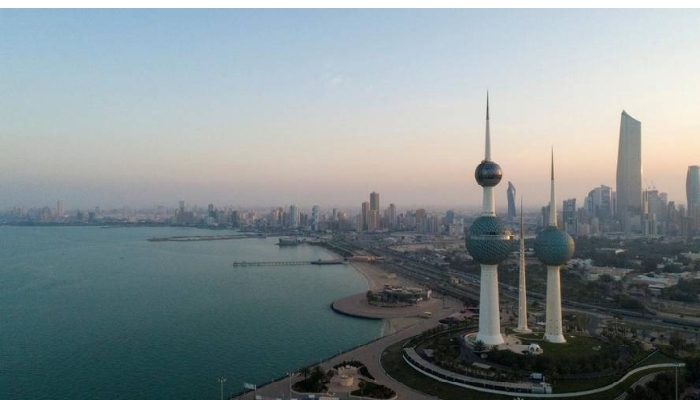
Kuwait will allow citizens and residents to travel to and from the country, starting August 1, the government communication center tweeted on early Thursday, citing a cabinet decision.

The decision excludes residents coming from Bangladesh, Philippines, India, Sri Lanka, Pakistan, Iran, Nepal.

Last month, Kuwait announced it would partially resume commercial flights from August, but does not expect to reach full capacity until a year later, as its aviation sector gradually recovers from a suspension sparked by the Covid-19 crisis.

Comments

Add new comment

  • Coastaldigest.com reserves the right to delete or block any comments.
  • Coastaldigset.com is not responsible for its readers’ comments.
  • Comments that are abusive, incendiary or irrelevant are strictly prohibited.
  • Please use a genuine email ID and provide your name to avoid reject.
News Network
March 23,2020

Dubai, Mar 23: The United Arab Emirates announced on Monday it will temporarily suspend all passenger and transit flights amid the novel coronavirus outbreak.

The Emirati authorities "have decided to suspend all inbound and outbound passenger flights and the transit of airline passengers in the UAE for two weeks as part of the precautionary measures taken to curb the spread of the COVID-19", reported the official state news agency, WAM.

It said the decision -- which is subject to review in two weeks -- will take effect in 48 hours, adding: "Cargo and emergency evacuation flights would be exempt."

The UAE, whose international airports in Abu Dhabi and Dubai are major hubs, announced on Friday its first two deaths from the COVID-19 disease, having reported more than 150 cases so far.

Monday's announcement came hours after Dubai carrier Emirates announced it would suspend all passenger flights by March 25.

But the aviation giant then reversed its decision, saying it "received requests from governments and customers to support the repatriation of travellers" and will continue to operate passenger flights to 13 destinations.

Emirates had said it will continue to fly to the United Kingdom, Switzerland, Hong Kong, Thailand, Malaysia, the Philippines, Japan, Singapore, South Korea, Australia, South Africa, the United States and Canada.

"We continue to watch the situation closely, and as soon as things allow, we will reinstate our services," said the airline's chairman and CEO, Sheikh Ahmed bin Saeed Al-Maktoum.

Gulf countries have imposed various restrictions to combat the spread of the novel coronavirus pandemic, particularly in the air transport sector.

The UAE has stopped granting visas on arrival and forbidden foreigners who are legal residents but are outside the country from returning.

Comments

Add new comment

  • Coastaldigest.com reserves the right to delete or block any comments.
  • Coastaldigset.com is not responsible for its readers’ comments.
  • Comments that are abusive, incendiary or irrelevant are strictly prohibited.
  • Please use a genuine email ID and provide your name to avoid reject.
News Network
July 23,2020

Beirut, Jul 23: The pandemic will exact a heavy toll on Arab countries, causing an economic contraction of 5.7% this year, pushing millions into poverty and compounding the suffering of those affected by armed conflict, a U.N. report said Thursday.

The U.N.'s Economic and Social Commission for Western Asia expects some Arab economies to shrink by up to 13%, amounting to an overall loss for the region of $152 billion.

Another 14.3 million people are expected to be pushed into poverty, raising the total number to 115 million — a quarter of the total Arab population, it said. More than 55 million people in the region relied on humanitarian aid before the COVID-19 crisis, including 26 million who were forcibly displaced.

Arab countries moved quickly to contain the virus in March by imposing stay-at-home orders, restricting travel and banning large gatherings, including religious pilgrimages.

Arab countries as a whole have reported more than 830,000 cases and at least 14,717 deaths. That equates to an infection rate of 1.9 per 1,000 people and 17.6 deaths per 1,000 cases, less than half the global average of 42.6 deaths, according to the U.N.

But the restrictions exacted a heavy economic toll, and authorities have been forced to ease them in recent weeks. That has led to a surge in cases in some countries, including Lebanon, Iraq and the Palestinian territories.

Wealthy Gulf countries were hit by the pandemic at a time of low oil prices, putting added strain on already overstretched budgets. Middle-income countries like Jordan and Egypt have seen tourism vanish overnight and a drop in remittances from citizens working abroad.

War-torn Libya and Syria have thus far reported relatively small outbreaks. But in Yemen, where five years of civil war had already generated the world's worst humanitarian crisis, the virus is running rampant in the government-controlled south while rebels in the north conceal its toll.

Rola Dashti, the head of the U.N. commission, said Arab countries need to “turn this crisis into an opportunity” and address longstanding issues, including weak public institutions, economic inequality and over-reliance on fossil fuels.

“We need to invest in survival, survival of people and survival of businesses,” she said.

Comments

Add new comment

  • Coastaldigest.com reserves the right to delete or block any comments.
  • Coastaldigset.com is not responsible for its readers’ comments.
  • Comments that are abusive, incendiary or irrelevant are strictly prohibited.
  • Please use a genuine email ID and provide your name to avoid reject.