‘Friday sermons should be more topical’

April 11, 2012

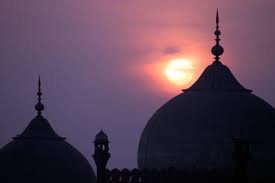
sermonDubai, April 11: FNC members took their chance yesterday to ask the Chairman of the General Authority of Islamic Affairs and Endowments about the possibility of making Friday sermons more topical and more pertinent to the UAE.

Sultan Al Shamsi (Ajman) asked: "Why can't the subjects of the Friday sermons revolve around the current reality and situation locally and internationally?"

Dr Hamdan Al Mazrouei, the authority's chairman, explained the unified Friday sermons, which are read at all mosques around the country, already took four main points into account: issues that help UAE policies, deal with local, religious, and international events, highlight ministry and government departments' concerns, and discuss timely topics.

Topics covered in the past had included traffic safety, diabetes awareness, Earth day, and human-rights day, he said.

"The authority has prepared special sermons on issues that has affected everyone such as the assault on Gaza and Palestine, and swine flu."

After the discovery of a mother who kept her psychologically disturbed son locked up in his own home for 12 years, a sermon addressed the issue of family violence.

Still, Mr Al Shamsi asked for more relevant topics, "like divorce and illnesses", as well as security issues such as "respect for the leaders and deterring people from sedition".

Dr Al Mazrouei thanked the FNC for their points and said he would present them to his colleagues.

"We would like to hear more from the public, and appreciate if they contact us directly with their thoughts," he added.


Comments

Add new comment

  • Coastaldigest.com reserves the right to delete or block any comments.
  • Coastaldigset.com is not responsible for its readers’ comments.
  • Comments that are abusive, incendiary or irrelevant are strictly prohibited.
  • Please use a genuine email ID and provide your name to avoid reject.
coastaldigest.com news network
June 29,2020

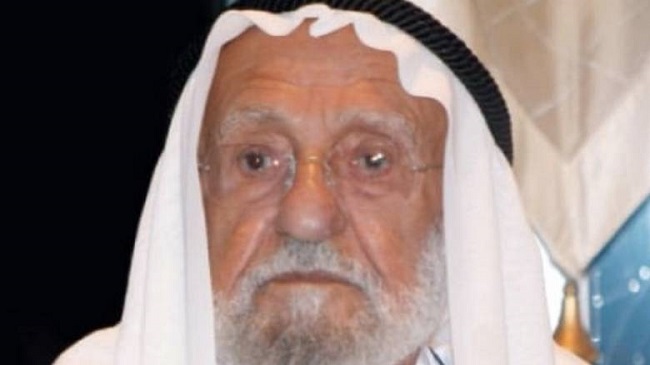
Dubai, Jun 29: Saeed bin Ahmed Al Lootah, a pioneering Emirati businessman and the founder of the world's first Islamic bank, is no more. He breathed his last on June 28.

Born in 1923, Saeed was instrumental in setting up the Dubai Islamic Bank (DIB) in 1975 to provide the community with a Sharia-compliant alternative to conventional banking.

He established several companies, organisations and societies, including the Dubai Consumer Cooperative. He also established the Islamic Education School in 1983 and the Dubai Medical College for Girls in 1986.

In 1992, Haj Saeed established the first College of Pharmacology in Dubai. Later he launched the Dubai Centre for Environmental Research, the Dubai Specialised Medical Centre, and the Medical Research Labs for health control and research into medicinal herbs and Islamic (Nabawi) medicine. He also set up an orphanage.

Saeed bin Ahmed Al Lootah was a self-made businessman who progressed from being a seafarer and trader to an accomplished tutor, author, economist, banker, entrepreneur, businessman and visionary community leader.

According to details available on the S.S. Lootah Group website, his "fervent adherence to the core values of education, cooperation and economy" helped empower "people to excel at everything they do".

"He realised the need to build permanent houses and ventured into construction. His 'capital' at that time were his skills, knowledge and hard work," the website said.

He laid the foundation of S.S.Lootah Contracting Company as a joint venture with his brother Sultan in 1956. "With the enduring values of education, cooperation and economy set as the foundations of his work, Haj Saeed started a number of businesses as well as not-for-profit education and research ventures, with an aim to serve the people of the UAE.

"Thanks to his vision and leadership, our home grown ventures continue to demonstrate unique values that extend well beyond its functional benefits - creating greater economic, social and environmental benefits for people in UAE and beyond."

Sheikh Mohammed bin Rashid Al Maktoum, Vice-President and Prime Minister of the UAE and Ruler of Dubai, took to Twitter on Sunday to offer his respects.

Sheikh Mohammed said: "He was a trader who started with nothing. His touch is visible in several aspects of the Dubai economy."

Calling the deceased a "wise and smart man", Sheikh Mohammed said: "May Allah bless his soul and grant his family the strength to endure and persevere."

Sheikh Hamdan bin Mohammed bin Rashid Al Maktoum, Crown Prince of Dubai, also paid his respects. "He combined economic leadership with charitable work. He launched charitable educational institutions and sponsored many orphans. His memory will live on. May Allah have mercy on him and grant his family patience."

Comments

Add new comment

  • Coastaldigest.com reserves the right to delete or block any comments.
  • Coastaldigset.com is not responsible for its readers’ comments.
  • Comments that are abusive, incendiary or irrelevant are strictly prohibited.
  • Please use a genuine email ID and provide your name to avoid reject.
Agencies
June 5,2020

Dubai, Jun 5: A new set of coronavirus guidelines for UAE hotels has been published by the National Emergency Crisis and Disasters Management Authority.

The guidelines, released late Thursday, require all employees to be tested for Covid-19 before reopening, and to be re-tested every 15 days.

Hotels are expected to provide an infrared thermometer and thermal camera, with employee temperatures to be tested several times per working day.

Any guest or employee showing coronavirus symptoms will not be permitted to enter hotel facilities, the guidelines stress.

Hotels must also leave a 24-hour gap between guests leaving a room, and the next guests arriving.

Facilities such as restaurants, cafes, gyms, swimming pools and beaches in hotels will resume operation under a minimum capacity.

Customers must have their temperatures taken before they enter.

The working hours of restaurants and cafes will be from 6am until 9pm, allowing four people to sit at the same table with 2.5 metres left between tables. Menus must be sterilised after each use.

Comments

Add new comment

  • Coastaldigest.com reserves the right to delete or block any comments.
  • Coastaldigset.com is not responsible for its readers’ comments.
  • Comments that are abusive, incendiary or irrelevant are strictly prohibited.
  • Please use a genuine email ID and provide your name to avoid reject.
Agencies
August 2,2020

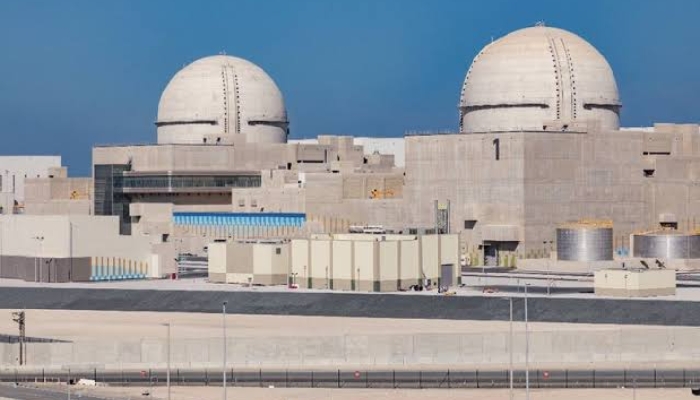
Dubai, Aug 2: The United Arab Emirates (UAE) announced on Saturday that it has started operations in the first of four reactors at the Barakah nuclear power station - the first nuclear power plant in the Arab world.

Emirates Nuclear Energy Corporation (ENEC), which is building and operating the plant with Korea Electric Power Corporation (KEPCO) said in a press release that its subsidiary Nawah Energy Company "has successfully started up Unit 1 of the Barakah Nuclear Energy Plant, located in the Al Dhafrah Region of Abu Dhabi".

That signals that Unit 1, which had fuel rods loaded in March, has achieved "criticality" - a sustained fission chain reaction.

"The start-up of Unit 1 marks the first time that the reactor safely produces heat, which is used to create steam, turning a turbine to generate electricity," said ENEC.

Barakah, which was originally scheduled to open in 2017, has been dogged by delays and is billions of dollars over budget. It has also raised myriad concerns among nuclear energy veterans who are concerned about the potential risks Barakah could visit upon the Arabian Peninsula, from an environmental catastrophe to a nuclear arms race.

Paul Dorfman, an honorary senior research fellow at the Energy Institute, University College London and founder and chair of the Nuclear Consulting Group, has criticised the Barakah reactors' "cheap and cheerful" design that he says cuts corners on safety.

Dorfman authored a report (PDF) last year detailing key safety features Barakah's reactors lack, such as a "core catcher" to literally stop the core of a reactor from breaching the containment building in the event of a meltdown. The reactors are also missing so-called Generation III Defence-In-Depth reinforcements to the containment building to shield against a radiological release resulting from a missile or fighter jet attack.

Both of these engineering features are standard on new reactors built in Europe, says Dorfman.

There have been at least 13 aerial attacks on nuclear facilities in the Middle East - more than any other region on earth.

The vulnerability of critical infrastructure in the Arabian Peninsula was further laid bare last year after Saudi Arabia's oil facilities at Abqaiq and Khurais were attacked by 18 drones and seven cruise missiles - an assault that temporarily knocked out more than half of the kingdom's oil production.

On Saturday, Dorfman reiterated his concern that there is no regional protocol in place to determine liability should an accident or incident at Barakah result in radioactive contamination spreading from the UAE to its neighbours. 

"Given Barakah has started up, because of all the well-rehearsed nuclear safety and security problems, it may be critically important that the Gulf states collectively evolve a Nuclear Accident Liability Convention, so that if anything does go wrong, victim states may have some sort of redress," Dorfman told Al Jazeera. 

The UAE has substantial oil and gas reserves, but it has made huge investments in developing alternative energy sources, including nuclear and solar.

Experts though have questioned why the UAE - which is bathed in sunlight and wind - has pushed ahead with nuclear energy - a far more expensive and riskier option than renewable energy sources.

When the UAE first announced Barakah in 2009, nuclear power was cheaper than solar and wind. But by 2012 - when the Emirates started breaking ground to build the reactors - solar and wind costs had plummeted dramatically.

Between 2009 and 2019, utility-scale average solar photovoltaic costs fell 89 percent and wind fell 43 percent, while nuclear jumped 26 percent, according to an analysis by the financial advisory and asset manager Lazard.

There are also concerns about the potential for Barakah to foment nuclear proliferation in the Middle East - a region rife with geopolitical fault lines and well-documented history of nuclear secrecy.

The UAE has sought to distance itself from the region's bad behaviour by agreeing not to enrich its own uranium or reprocess spent fuel. It has also signed up to the United Nation's nuclear watchdog's Additional Protocol, significantly enhancing inspection capabilities, and secured a 123 Agreement with the United States that allows bilateral civilian nuclear cooperation.


Comments

Add new comment

  • Coastaldigest.com reserves the right to delete or block any comments.
  • Coastaldigset.com is not responsible for its readers’ comments.
  • Comments that are abusive, incendiary or irrelevant are strictly prohibited.
  • Please use a genuine email ID and provide your name to avoid reject.