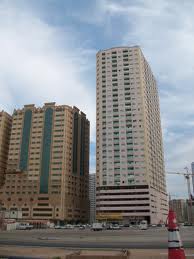
Three die from falls in 5 hours

April 13, 2012

high_building


Shrajah, April 13: Police are investigating the death of three people who allegedly fell from high buildings in different parts of Sharjah on Wednesday.

In the first incident, a 40-year-old Yemeni, identified as Samir Salih, allegedly fell from the 12th floor of the Abu Jumaizah building in Al Majaz area. The police rushed to the scene after the operation room received a call from a passerby at 7pm about the incident. The police found the man dead on the spot. Salih had been living with his parents, sisters and brothers. His family members are being questioned by the police.

In the second incident, a 29-year-old Bangladeshi died after a fall from a building near Sahara Centre while carrying out maintenance work. The police operation room received a call regarding the incident at 2.45pm. The man, identified as Ismail Mohammed Ihab, died instantly.

In the third incident, a 32-year-old Indian died after falling from a high level and being hit by an iron bar while carrying out some construction work at a villa in Al Suwaihat area. The incident took place at 5.45pm.

The police official said all accidents took place in a short span and were dealt with professionally. Anjad Patrol, forensic experts and CID officers all worked on the investigations and gathered information about the deaths. The bodies were all shifted to the forensic laboratory.


Comments

Add new comment

  • Coastaldigest.com reserves the right to delete or block any comments.
  • Coastaldigset.com is not responsible for its readers’ comments.
  • Comments that are abusive, incendiary or irrelevant are strictly prohibited.
  • Please use a genuine email ID and provide your name to avoid reject.
News Network
May 11,2020

May 11: Saudi Arabia will triple its value-added tax rate and suspend a cost of living allowance for state workers, it said on Monday, seeking to shield finances hit by low oil prices and a slump in demand for its lifeline export worsened by the new coronavirus.

Historic oil output cuts agreed by Riyadh and other major producers have given only limited support to prices after they sank on oversupply caused by a war for petroleum market share between the kingdom and its fellow oil titan Russia.

Saudi Arabia, the world's largest oil exporter, is also being hit hard by measures to fight the new coronavirus, which are likely to curb the pace and scale of economic reforms launched by Crown Prince Mohammed bin Salman.

"The cost of living allowance will be suspended as of June 1, and the value added tax will be increased to 15% from 5% as of July 1," Finance Minister Mohammed al-Jadaan said in a statement reported by the state news agency. "These measures are painful but necessary to maintain financial and economic stability over the medium to long term...and to overcome the unprecedented coronavirus crisis with the least damage possible."

The austerity measures come after the kingdom posted a $9 billion budget deficit in the first quarter.

The minister said non-oil revenues were affected by the suspension and decline in economic activity, while spending had risen due to unplanned strains on the healthcare sector and the initiatives taken to support the economy.

"All these challenges have cut state revenues, pressured public finances to a level that is hard to deal with going forward without affecting the overall economy in the medium to long term, which requires more spending cuts and measures to support non-oil revenues stability," he added.

The government has cancelled and put on hold some operating and capital expenditures for some government agencies, and cut allocations for some reform initiatives and projects worth a total 100 billion riyals ($26.6 billion), the statement said.

Central bank foreign reserves fell in March at their fastest rate in at least 20 years and to their lowest since 2011, while oil revenues in the first three months of the year fell 24% from a year earlier to $34 billion, pulling total revenues down 22%.

"The reforms are positive from a fiscal side as greater adjustment is essential. However, the tripling of VAT is unlikely to help that much in 2020 revenue wise with the expected fall in consumption," said Monica Malik, chief economist at Abu Dhabi Commercial Bank.

She said she kept unchanged her deficit forecast of 16.3% of GDP for this year, which already factors in a greater than previously announced spending cut.

About 1.5 million Saudis are employed in the government sector, according to official figures released in December.

In 2018, Saudi Arabia's King Salman ordered a monthly payment of 1,000 riyals ($267) to every state employee to compensate them for the rising living costs after the government hiked domestic gas prices and introduced value-added tax.

DIFFICULT TIMES

A committee has been formed to study all financial benefits paid to public sector employees and contractors, and will submit recommendations within 30 days, the statement said.

In late 2015, when oil prices fell from record highs, the kingdom slashed lavish bonuses, overtime payments and other benefits once considered routine perks in the public sector.

In a country without elections and with political legitimacy resting partly on distribution of oil revenue, the ability of citizens to adapt to such reforms is crucial for stability.

"Tripling the VAT will test the limits of the balance between revenues and consumption as the economy dives into a deep recession. The move will impact consumption and could also lower the expected revenues," said John Sfakianakis, a Gulf expert at the University of Cambridge.

"These are pro-austerity and pro-revenue moves rather than pro-growth ones," he said.

Hasnain Malik, head of equity strategy at Tellimer, said the VAT rise could bring about $24-$26.5 billion in additional non-oil fiscal revenue. The rise would hit consumer spending further but was a needed step towards fiscal sustainability, he said.


Comments

Add new comment

  • Coastaldigest.com reserves the right to delete or block any comments.
  • Coastaldigset.com is not responsible for its readers’ comments.
  • Comments that are abusive, incendiary or irrelevant are strictly prohibited.
  • Please use a genuine email ID and provide your name to avoid reject.
coastaldigest.com news network
August 3,2020

Sharjah, Aug 3: A 24-year-old Indian engineer has fallen to death from the sixth floor of a residential building on Eid al-Adha in the UAE's Sharjah, a media report said on Monday. 

The electrical engineer, identified with his single name Sumesh, hailed from the south Indian state of Kerala.

He lived in a building in Al Dhaid in Sharjah, from where he fell to death on Friday, the report said, adding that he was apparently talking over the phone and threw it down minutes before the incident.

Sumesh, who came to the UAE a year ago, worked as a designer in Sharjah's Muwaileh area. His roommates said that he had some "personal issues" that had been "bothering him for some time", according to the report.

"It was Eid al-Adha and our cook had made biryani for us. We were all cracking jokes and having a good time. In fact, even Cuckoo (Sumesh) was also laughing with us. He seemed happy. Nobody had anticipated this. I did sense a few times that something was troubling him and I even asked him about it, but he brushed it off," the report quoted his roommate Dileep Kumar as saying.

Shans KF, another roommate, said Sumesh was to travel to India for his annual leave but could not because of the COVID-19 pandemic.

The police have launched an investigation and moved the body to the forensic lab for an autopsy.

Comments

Add new comment

  • Coastaldigest.com reserves the right to delete or block any comments.
  • Coastaldigset.com is not responsible for its readers’ comments.
  • Comments that are abusive, incendiary or irrelevant are strictly prohibited.
  • Please use a genuine email ID and provide your name to avoid reject.
Gulf News
May 29,2020

Dubai: There aren’t that many job vacancies right now – but be prepared for a 15-20 per cent cut in salary expectations even for those positions that are still open. Businesses in the UAE are definitely not in a generous mood when it comes to hiring, with salary cuts now part of the new normal.

And they are definitely not willing to take on new hires without extracting some cost benefit from them. “We have seen major [salary] cuts across the board in hospitality, real estate, professional services and in retail,” said Vijay Gandhi, regional head at Korn Ferry Digital, the recruitment consultancy.

“And once the headcount correction is complete in [the local] financial services and energy sector, we may see more cuts in rewards and benefits in these categories as well.”

The salary cuts are slowly extending their way into the healthcare sector as well – just about every non-COVID-19 facing medical category is coming across cuts in the number of working hours and, by extension, their take home packages.

By end of June, more businesses and sectors in the UAE will have a better understanding of their short-term revenue prospects. By then, they will also have a better reading on what their staff strength should be – and whether there should be more trimming of the workforce. Or whether they should consider a few hires as well.

A long summer
So, realistically, it could be September before such decisions need to be taken. The coming weeks will then prove to be laden with anxiety for those who are expecting to land a job option after being laid off at their current employers.

There are multiple instances of recruitment decisions having been made in February/March, and then the companies rescinding those offers to the chosen candidates citing the business uncertainty.

“The decision to hire is taking longer – so job creation is now 4-6 weeks from interview and selection compared to 4-6 days in the past,” said Gandhi.

The lucky ones
Recently, free zones and other entities had made it easier for personnel on the visa of one entity being able to smoothly transfer to another if they are likely to be made redundant. “We are seeing more flexibility being offered by the authorities given the circumstances, and the visa transfer process is happening,” said Gandhi.

“But in the vast majority of cases, businesses are going to wait and watch before normal hiring activity starts. Organizations will look to hire from September.”

A few hires are still happening
Even in the business turmoil set off by COVID-19, a few categories are still offering jobs. At the entry level, logistics services personnel and drivers with experience remain in demand.

Not just “routine jobs, there have been confirmations in more technical roles such as procurement and operations in healthcare and e-commerce,” said Gandhi. “Employers should keep an eye for good talent and have the talent acquisition team actively looking for good profiles.

“As such, organizations are not only looking at “right sizing” in numbers but also “future proofing” on what kind of skilled talent will help them in the post-COVID-19 world.”

But for the candidates, the present will be about waiting around for the call to come.

Comments

Add new comment

  • Coastaldigest.com reserves the right to delete or block any comments.
  • Coastaldigset.com is not responsible for its readers’ comments.
  • Comments that are abusive, incendiary or irrelevant are strictly prohibited.
  • Please use a genuine email ID and provide your name to avoid reject.