Haj gets more expensive this year

April 29, 2012

Hajj


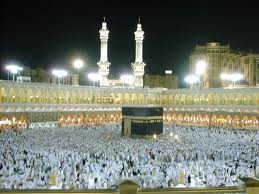
Makkah, April 29: The government has announced new Haj policy for 2012 raising expenses and placing a restriction on performing Haj only once in five years.


Religious Affairs Minister Khurshid Shah while spelling out details, said Haj expenses have been increased by Rs21,000 for economy and Rs47,000 for green category. Exchange rate rise on Saudi Rial has led to the increase, Shah said.


There will be three categories of accommodation for Haj 2012. Blue category within 900 metres without transport with a rental ceiling of 7,500 Saudi riyals (SR); green category within 2,000 metres with transport with a rental ceiling of SR5,000 per pilgrim; and white category beyond 2,000 metres with transport facility with a rental ceiling of SR3,600.


The blue category has been introduced for the first time for those pilgrims who prefer to stay very close to Haram Sharif while white category is the most economic package for majority of the pilgrims.


The green category is arranged for the pilgrims opting to stay within 2,000 metres from Haram Sharif. The blue category is introduced for the first time.


In line with the new Haj policy, the government wants private Haj operators (PHOs) to restrict intending pilgrims from performing Haj or Umrah more than once in five years.


Comments

Add new comment

  • Coastaldigest.com reserves the right to delete or block any comments.
  • Coastaldigset.com is not responsible for its readers’ comments.
  • Comments that are abusive, incendiary or irrelevant are strictly prohibited.
  • Please use a genuine email ID and provide your name to avoid reject.
Agencies
August 2,2020

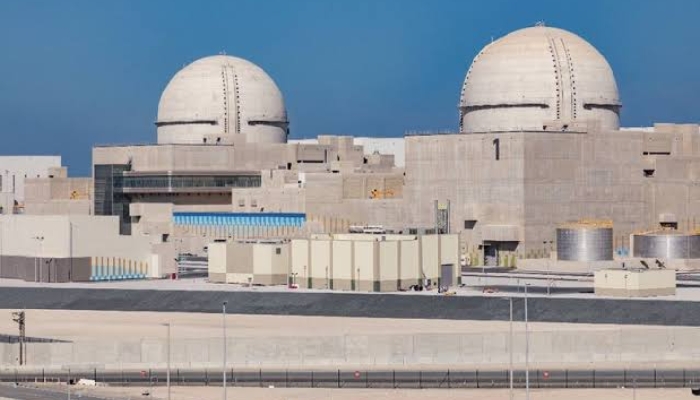
Dubai, Aug 2: The United Arab Emirates (UAE) announced on Saturday that it has started operations in the first of four reactors at the Barakah nuclear power station - the first nuclear power plant in the Arab world.

Emirates Nuclear Energy Corporation (ENEC), which is building and operating the plant with Korea Electric Power Corporation (KEPCO) said in a press release that its subsidiary Nawah Energy Company "has successfully started up Unit 1 of the Barakah Nuclear Energy Plant, located in the Al Dhafrah Region of Abu Dhabi".

That signals that Unit 1, which had fuel rods loaded in March, has achieved "criticality" - a sustained fission chain reaction.

"The start-up of Unit 1 marks the first time that the reactor safely produces heat, which is used to create steam, turning a turbine to generate electricity," said ENEC.

Barakah, which was originally scheduled to open in 2017, has been dogged by delays and is billions of dollars over budget. It has also raised myriad concerns among nuclear energy veterans who are concerned about the potential risks Barakah could visit upon the Arabian Peninsula, from an environmental catastrophe to a nuclear arms race.

Paul Dorfman, an honorary senior research fellow at the Energy Institute, University College London and founder and chair of the Nuclear Consulting Group, has criticised the Barakah reactors' "cheap and cheerful" design that he says cuts corners on safety.

Dorfman authored a report (PDF) last year detailing key safety features Barakah's reactors lack, such as a "core catcher" to literally stop the core of a reactor from breaching the containment building in the event of a meltdown. The reactors are also missing so-called Generation III Defence-In-Depth reinforcements to the containment building to shield against a radiological release resulting from a missile or fighter jet attack.

Both of these engineering features are standard on new reactors built in Europe, says Dorfman.

There have been at least 13 aerial attacks on nuclear facilities in the Middle East - more than any other region on earth.

The vulnerability of critical infrastructure in the Arabian Peninsula was further laid bare last year after Saudi Arabia's oil facilities at Abqaiq and Khurais were attacked by 18 drones and seven cruise missiles - an assault that temporarily knocked out more than half of the kingdom's oil production.

On Saturday, Dorfman reiterated his concern that there is no regional protocol in place to determine liability should an accident or incident at Barakah result in radioactive contamination spreading from the UAE to its neighbours. 

"Given Barakah has started up, because of all the well-rehearsed nuclear safety and security problems, it may be critically important that the Gulf states collectively evolve a Nuclear Accident Liability Convention, so that if anything does go wrong, victim states may have some sort of redress," Dorfman told Al Jazeera. 

The UAE has substantial oil and gas reserves, but it has made huge investments in developing alternative energy sources, including nuclear and solar.

Experts though have questioned why the UAE - which is bathed in sunlight and wind - has pushed ahead with nuclear energy - a far more expensive and riskier option than renewable energy sources.

When the UAE first announced Barakah in 2009, nuclear power was cheaper than solar and wind. But by 2012 - when the Emirates started breaking ground to build the reactors - solar and wind costs had plummeted dramatically.

Between 2009 and 2019, utility-scale average solar photovoltaic costs fell 89 percent and wind fell 43 percent, while nuclear jumped 26 percent, according to an analysis by the financial advisory and asset manager Lazard.

There are also concerns about the potential for Barakah to foment nuclear proliferation in the Middle East - a region rife with geopolitical fault lines and well-documented history of nuclear secrecy.

The UAE has sought to distance itself from the region's bad behaviour by agreeing not to enrich its own uranium or reprocess spent fuel. It has also signed up to the United Nation's nuclear watchdog's Additional Protocol, significantly enhancing inspection capabilities, and secured a 123 Agreement with the United States that allows bilateral civilian nuclear cooperation.


Comments

Add new comment

  • Coastaldigest.com reserves the right to delete or block any comments.
  • Coastaldigset.com is not responsible for its readers’ comments.
  • Comments that are abusive, incendiary or irrelevant are strictly prohibited.
  • Please use a genuine email ID and provide your name to avoid reject.
Agencies
May 17,2020

Jerusalem, May 17: The Chinese ambassador to Israel was found dead in his home north of Tel Aviv on Sunday, Israel's Foreign Ministry said.

No cause of death was given and Israeli police said it was investigating.

Du Wei, 58, was appointed envoy in February in the midst of the coronavirus pandemic. He previously served as China's envoy to Ukraine.

He is survived by a wife and son, both of whom were not in Israel.

Israel enjoys good relations with China.

The ambassador's death comes just two days after he condemned comments by visiting U.S. Secretary of State Mike Pompeo, who denounced Chinese investments in Israel and accused China of hiding information about the coronavirus outbreak.

Comments

Add new comment

  • Coastaldigest.com reserves the right to delete or block any comments.
  • Coastaldigset.com is not responsible for its readers’ comments.
  • Comments that are abusive, incendiary or irrelevant are strictly prohibited.
  • Please use a genuine email ID and provide your name to avoid reject.
News Network
April 2,2020

Dubai, Apr 2: A senior Saudi official urged more than 1 million Muslims intending to perform the hajj to delay making plans this year in comments suggesting the pilgrimage could be cancelled due to the new coronavirus pandemic.

In February, the kingdom took the extraordinary decision to close off the holy cities of Mecca and Medina to foreigners over the virus, a step which wasn’t taken even during the 1918 flu epidemic that killed tens of millions worldwide.

Restrictions have tightened in the kingdom as it grapples with over 1,500 confirmed cases of the new virus. The kingdom has reported 10 deaths so far. The Middle East has more than 71,000 confirmed cases of the virus, most of those in Iran, and over 3,300 deaths.

“The kingdom of Saudi Arabia is prepared to secure the safety of all Muslims and nationals,” Saudi Hajj and Umrah Minister Muhammad Saleh bin Taher Banten told state television. “That’s why we have requested from all Muslims around the world to hold onto signing any agreements (with tour operators) until we have a clear vision.”

Saudi Arabia has barred people from entering or exiting three major cities, including Mecca and Medina, and imposed a nighttime curfew across the country. Like other countries around the world and in the Middle East, Saudi Arabia has suspended all inbound and outbound commercial flights.

Each year, up to 2 million Muslims perform the hajj, a physically demanding and often costly pilgrimage that draws the faithful from around the world. The hajj, required of all able-bodied Muslims to perform once in their lifetime, is seen as a chance to wipe clean past sins and bring about greater humility and unity among Muslims.

Standing in Mecca in front of the cube-shaped Kaaba that Muslims pray toward five times daily, Banten also said the kingdom was already providing care for 1,200 pilgrims stuck in the holy city due to global travel restrictions. A number of them are being quarantined in hotels in Mecca, he said.

Comments

Add new comment

  • Coastaldigest.com reserves the right to delete or block any comments.
  • Coastaldigset.com is not responsible for its readers’ comments.
  • Comments that are abusive, incendiary or irrelevant are strictly prohibited.
  • Please use a genuine email ID and provide your name to avoid reject.