



2012 saw flurry of controversial fatwas in Arab world

January 1, 2013

Riyadh, Jan 1: The Arab world witnessed issuance of a flurry of religious edicts (fatwas) during 2012, most of which became controversial due to their strange nature and political dimensions.

These included a fatwa forbidding non-Palestinian Muslims from visiting Jerusalem, Islam’s third holiest city, and a ban on playing football.

Some of these fatwas seemed to have the hallmark of the Arab Spring, according to a report in Al-Hayat newspaper.qardawi
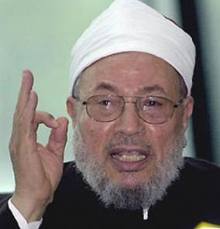
Among the most controversial fatwas, there was one by renowned Islamic scholar Sheikh Yusuf Al-Qaradawi, who is the chairman of the International Union for Muslim Scholars (IUMS).

His fatwa came as a disapproval of the Palestine President Mahmoud Abbas’s call for Arabs and Muslims to visit occupied Jerusalem, commenting that this is not accepted in Islam.

In the fatwa issued earlier in 2012, Sheikh Al-Qaradawi said: “The Palestinians are entitled to enter the holy city as they please, but the Arab and Muslim people are not.” The scholar explained that this is prohibited for the purpose of not legitimizing the Israeli occupation.

“Such a visit legitimizes the entity of the usurper of Muslim lands, and would force Muslim visitors to deal with the embassy of the enemy to get a visa.”

The Islamic Ummah as a whole should be in a position of responsibility to defend the Arab holy city, not the Palestinian people only, he said.

Earlier this year, another fatwa came from Sheikh Abdul Moneim Al-Shahat, who is also an Egyptian like Sheikh Al-Qaradawi.

Al-Shahat, spokesman of the Salafi Preaching Movement, ruled that football is forbidden in Islam in the first place.

While delivering a sermon in a mosque in Alexandria, he said: “Only three sports are allowed in Islam: javelin throw, swimming, and horseback riding. Other sports are forbidden.”

Later, he issued a clarification, saying that he was referring to professional football that has commercial value. The provocation for Al-Shahat’s fatwa was the disaster at the Port Said stadium in northern Egypt that killed around 80 football fans on February 1, 2012.

Suleiman Al-Olwan, a Saudi scholar, issued a fatwa that football players are evildoers and that the game prevents Muslims from practicing their religion and ideology.

Last week, Sheikh Muhammad Al-Saeedi, professor of Shariah at Makkah’s Umm Al-Qura University, ruled that prayer against anyone, even if it is a minister, is permissible.

The fatwa followed threats from some people to pray against Labor Minister Adel Fakieh in objection of the minister’s vigorous Saudization drive.

Most of the controversial fatwas had originated from Egypt in the second year of the Arab Spring.

Marjan Al-Gohari, a member of a Salafi jihadist group, issued a fatwa to destroy pyramids and the Sphinx.

He wanted these antiquities demolished just as Prophet Muhammad (peace be upon him) destroyed the idols he found upon his conquest of Makkah.

Another scholar, also a Salafi member in the dissolved parliament, proposed a draft law to reduce the age of marriage and fix it at 14.

The Egyptian Ifta Council issued a fatwa forbidding beating students at schools.

In Mauritania, the advisor of President Mohamed Ould Abdel Aziz issued a fatwa banning women from becoming presidents, even though they are allowed to contest the elections.

Islamic scholar and presidential advisor Aslamo Ould Sidi Al-Mustafa said: “Women can run for the presidency as long as they have no chance of winning. They can just do that for fun.”

The fatwa attracted criticism from the Association of Female Heads of Families, one of Mauritania’s most prominent rights organizations for women.

According to the association, the fatwa constitutes a flagrant violation of women’s rights as well as Mauritanian laws. Bowing to pressure from pressure groups, the government was forced to form a Supreme Council for Fatwa and Grievances and restrict issuance of individual fatwas.

In Tunisia, a scholar issued a fatwa forbidding strikes.

Sheikh Bashir bin Hussein justified his edict, issued on December 8, saying that general strikes would hamper the country’s development and economic growth.

Comments

Add new comment

  • Coastaldigest.com reserves the right to delete or block any comments.
  • Coastaldigset.com is not responsible for its readers’ comments.
  • Comments that are abusive, incendiary or irrelevant are strictly prohibited.
  • Please use a genuine email ID and provide your name to avoid reject.
News Network
April 30,2020

Riyadh, Apr 30: Saudi Arabia on Thursday recorded 1,351 new coronavirus cases in the last 24 hours, bringing the total number of infections in the country to 22,753, the Ministry of Health said in a statement.

The ministry also announced 5 more deaths and 210 new recoveries, raising the total number of fatalities and recoveries to 162 and 3,163 respectively.

Riyadh with 440 cases topped the list, followed by 392 cases in Makkah, 120 in Jeddah and 119 in Madinah.

Comments

Add new comment

  • Coastaldigest.com reserves the right to delete or block any comments.
  • Coastaldigset.com is not responsible for its readers’ comments.
  • Comments that are abusive, incendiary or irrelevant are strictly prohibited.
  • Please use a genuine email ID and provide your name to avoid reject.
News Network
January 6,2020

Dubai/Washington, Jan 6: Tens of thousands of Iranians thronged the streets of Tehran on Monday for the funeral of Quds Force commander Qassim Suleimani who was killed in a US air strike last week and his daughter said his death would bring a "dark day" for the United States.

"Crazy Trump, don't think that everything is over with my father's martyrdom," Zeinab Suleimani said in her address broadcast on state television after US President Donald Trump ordered Friday's strike that killed the top Iranian general.

Iran has promised to avenge the killing of Qassim Suleimani, the architect of Iran's drive to extend its influence across the region and a national hero among many Iranians, even many of those who did not consider themselves devoted supporters of the Islamic Republic's clerical rulers.

The scale of the crowds in Tehran shown on television mirrored the masses that gathered in 1989 for the funeral of the founder of the Islamic Republic, Ayatollah Ruhollah Khomeini.

In response to Iran's warnings, Trump has threatened to hit 52 Iranian sites, including cultural targets, if Tehran attacks Americans or US assets, deepening a crisis that has heightened fears of a major Middle East conflagration.

The coffins of the Iranian general and Iraqi militia leader Abu Mahdi al-Muhandis, who was also killed in Friday's attack on Baghdad airport, were passed across the heads of mourners massed in central Tehran, many of them chanting "Death to America".

One of the Islamic Republic's major regional goals, namely to drive US forces out of neighbouring Iraq, came a step closer on Sunday when the Iraqi parliament backed a recommendation by the prime minister for all foreign troops to be ordered out.

"Despite the internal and external difficulties that we might face, it remains best for Iraq on principle and practically," said Iraqi caretaker Prime Minister Adel Abdul Mahdi, who resigned in November amid anti-government protests.

Iraq's rival Shi'ite leaders, including ones opposed to Iranian influence, have united since Friday's attack in calling for the expulsion of US troops.

Esmail Qaani, the new head of the Quds Force, the Revolutionary Guards' unit in charge of activities abroad, said Iran would continue Suleimani's path and said "the only compensation for us would be to remove America from the region."

ALLIES AT FUNERAL

Prayers at Suleimani's funeral in Tehran, which will later move to his southern home city of Kerman, were led by Iran's Supreme Leader Ayatollah Ali Khamenei. Suleimani was widely seen as the second most powerful figure in Iran behind Khamenei.

The funeral was attended by some of Iran's allies in the region, including Ismail Haniyeh, the leader of Palestinian group Hamas who said: "I declare that the martyred commander Suleimani is a martyr of Jerusalem."

Adding to tensions, Iran said it was taking another step back from commitments under a 2015 nuclear deal with six major powers, a pact from which the United States withdrew in 2018.

Washington has since imposed tough sanctions on Iran, describing its policy as "maximum pressure" and saying it wanted to drive down Iranian oil exports - the main source of government revenues - to zero.

Talking to reporters aboard Air Force One on the way to Washington from Florida on Sunday, Trump stood by his remarks to include cultural sites on his list of potential targets, despite drawing criticism from US politicians.

"They're allowed to kill our people. They're allowed to torture and maim our people. They're allowed to use roadside bombs and blow up our people. And we're not allowed to touch their cultural sites? It doesn't work that way," Trump said.

Democratic critics of the Republican president have said Trump was reckless in authorizing the strike, and some said his comments about targeting cultural sites amounted to threats to commit war crimes. Many asked why Soleimani, long seen as a threat by US authorities, had to be killed now.

Republicans in the US Congress have generally backed Trump's move.

Trump also threatened sanctions against Iraq and said that if US troops were required to leave the country, Iraq's government would have to pay Washington for the cost of a "very extraordinarily expensive" air base there.

He said if Iraq asked US forces to leave on an unfriendly basis, "we will charge them sanctions like they've never seen before ever. It'll make Iranian sanctions look somewhat tame."

Comments

Add new comment

  • Coastaldigest.com reserves the right to delete or block any comments.
  • Coastaldigset.com is not responsible for its readers’ comments.
  • Comments that are abusive, incendiary or irrelevant are strictly prohibited.
  • Please use a genuine email ID and provide your name to avoid reject.
News Network
April 18,2020

Dubai, Apr 18: Saudi Arabia has reported 1,132 new coronavirus cases, taking the total number of confirmed COVID-19 patients to 8,274, the Ministry of Health revealed on Saturday.

The ministry has also announced five more deaths from the virus, taking to 92 the Kingdom’s death toll.

Recoveries
As for recoveries, 280 new recoveries were reported, pushing the total number of patients recovered to 1,329.

The ministry revealed that 79 per cent of today’s cases are expatriates and that 65 per cent of the cases were detected through intensified and active COVID-19 screening in densely-populated areas.

A total of 201 patients of Saturday’s cases have contracted the disease due to being in contact with existing cases, the ministry added.

The new infected cases have been placed under complete isolation and they are receiving necessary medical care, an official from the ministry said.

He affirmed that medical teams are intensifying efforts and screening tests in workers' neighbourhoods and accommodations in order to limit the spread of the disease.

Comments

Add new comment

  • Coastaldigest.com reserves the right to delete or block any comments.
  • Coastaldigset.com is not responsible for its readers’ comments.
  • Comments that are abusive, incendiary or irrelevant are strictly prohibited.
  • Please use a genuine email ID and provide your name to avoid reject.