


2012 saw flurry of controversial fatwas in Arab world

January 1, 2013

Riyadh, Jan 1: The Arab world witnessed issuance of a flurry of religious edicts (fatwas) during 2012, most of which became controversial due to their strange nature and political dimensions.

These included a fatwa forbidding non-Palestinian Muslims from visiting Jerusalem, Islam’s third holiest city, and a ban on playing football.

Some of these fatwas seemed to have the hallmark of the Arab Spring, according to a report in Al-Hayat newspaper.qardawi
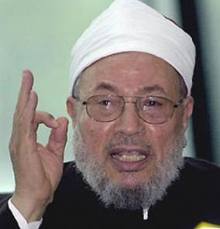
Among the most controversial fatwas, there was one by renowned Islamic scholar Sheikh Yusuf Al-Qaradawi, who is the chairman of the International Union for Muslim Scholars (IUMS).

His fatwa came as a disapproval of the Palestine President Mahmoud Abbas’s call for Arabs and Muslims to visit occupied Jerusalem, commenting that this is not accepted in Islam.

In the fatwa issued earlier in 2012, Sheikh Al-Qaradawi said: “The Palestinians are entitled to enter the holy city as they please, but the Arab and Muslim people are not.” The scholar explained that this is prohibited for the purpose of not legitimizing the Israeli occupation.

“Such a visit legitimizes the entity of the usurper of Muslim lands, and would force Muslim visitors to deal with the embassy of the enemy to get a visa.”

The Islamic Ummah as a whole should be in a position of responsibility to defend the Arab holy city, not the Palestinian people only, he said.

Earlier this year, another fatwa came from Sheikh Abdul Moneim Al-Shahat, who is also an Egyptian like Sheikh Al-Qaradawi.

Al-Shahat, spokesman of the Salafi Preaching Movement, ruled that football is forbidden in Islam in the first place.

While delivering a sermon in a mosque in Alexandria, he said: “Only three sports are allowed in Islam: javelin throw, swimming, and horseback riding. Other sports are forbidden.”

Later, he issued a clarification, saying that he was referring to professional football that has commercial value. The provocation for Al-Shahat’s fatwa was the disaster at the Port Said stadium in northern Egypt that killed around 80 football fans on February 1, 2012.

Suleiman Al-Olwan, a Saudi scholar, issued a fatwa that football players are evildoers and that the game prevents Muslims from practicing their religion and ideology.

Last week, Sheikh Muhammad Al-Saeedi, professor of Shariah at Makkah’s Umm Al-Qura University, ruled that prayer against anyone, even if it is a minister, is permissible.

The fatwa followed threats from some people to pray against Labor Minister Adel Fakieh in objection of the minister’s vigorous Saudization drive.

Most of the controversial fatwas had originated from Egypt in the second year of the Arab Spring.

Marjan Al-Gohari, a member of a Salafi jihadist group, issued a fatwa to destroy pyramids and the Sphinx.

He wanted these antiquities demolished just as Prophet Muhammad (peace be upon him) destroyed the idols he found upon his conquest of Makkah.

Another scholar, also a Salafi member in the dissolved parliament, proposed a draft law to reduce the age of marriage and fix it at 14.

The Egyptian Ifta Council issued a fatwa forbidding beating students at schools.

In Mauritania, the advisor of President Mohamed Ould Abdel Aziz issued a fatwa banning women from becoming presidents, even though they are allowed to contest the elections.

Islamic scholar and presidential advisor Aslamo Ould Sidi Al-Mustafa said: “Women can run for the presidency as long as they have no chance of winning. They can just do that for fun.”

The fatwa attracted criticism from the Association of Female Heads of Families, one of Mauritania’s most prominent rights organizations for women.

According to the association, the fatwa constitutes a flagrant violation of women’s rights as well as Mauritanian laws. Bowing to pressure from pressure groups, the government was forced to form a Supreme Council for Fatwa and Grievances and restrict issuance of individual fatwas.

In Tunisia, a scholar issued a fatwa forbidding strikes.

Sheikh Bashir bin Hussein justified his edict, issued on December 8, saying that general strikes would hamper the country’s development and economic growth.

Comments

Add new comment

  • Coastaldigest.com reserves the right to delete or block any comments.
  • Coastaldigset.com is not responsible for its readers’ comments.
  • Comments that are abusive, incendiary or irrelevant are strictly prohibited.
  • Please use a genuine email ID and provide your name to avoid reject.
News Network
May 1,2020

Dubai, May 1: Saudi Arabia has reported 1,344 new coronavirus cases in the last 24 hours, bringing the total number of infections in the country to 24,097, the Ministry of Health announced on Friday.

The ministry also announced 7 more deaths and 392 new recoveries, raising the total number of fatalities and recoveries to 169 and 3,55 respectively.

Out of the 1,344 new cases reported today, 282 were confirmed in Riyadh, 237 in Madinah, 207 in Makkah, 171 in Jubail and 124 in Jeddah in addition to 114 infections in Dammam.

Authorities continue to urge people to stay at home unless necessary despite having relaxed some restrictions and curfews at the start of Ramadan.

Citizens and residents are allowed to go out for necessary needs between 9 a.m. and 5 p.m. but must adhere to precautionary measures such as wearing a face mask and maintaining social distancing practices.

Comments

Add new comment

  • Coastaldigest.com reserves the right to delete or block any comments.
  • Coastaldigset.com is not responsible for its readers’ comments.
  • Comments that are abusive, incendiary or irrelevant are strictly prohibited.
  • Please use a genuine email ID and provide your name to avoid reject.
News Network
March 11,2020

Mar 11: Energy giant Saudi Aramco on Wednesday said it plans to raise its crude production capacity by one million barrels per day to 13 million bpd as a price war with Russia intensifies.

"Saudi Aramco announces that it received a directive from the ministry of energy to increase its maximum sustainable capacity from 12 million bpd to 13 million bpd," the company said in a statement to the Saudi Stock Exchange.

The decision comes a day after the world's top exporter, Saudi Arabia, decided to hike production by at least 2.5 million bpd to a record 12.3 million from April.

The Saudi moves come after the collapse of an oil production reduction agreement between OPEC and non-OPEC producers, including Russia.

The deal proposed by Saudi Arabia called for additional output cuts of 1.5 million bpd to cope with the severe economic impact of the coronavirus which has sharply reduced world demand for crude.

Boosting production capacity normally takes a long time and requires billions of dollars of investment.

Several years ago, the kingdom had shelved plans to boost its crude production capacity beyond 12 million bpd after demand for OPEC oil declined in the face of stiff competition from North American shale oil and other sources.

Russia on Tuesday said it was open to renewing cooperation with the OPEC cartel even as its kingpin Saudi Arabia escalated a price war with Moscow by announcing it would flood markets with new supplies.

The oil price war broke out after OPEC and a group of non-member countries dominated by Russia -- the world's second largest producer -- on Friday failed to agree on production cuts.

Saudi Arabia responded by announcing unilateral price cuts. This prompted the oil price to plummet and fuelled huge falls on stock markets around the world on Monday.

Comments

Add new comment

  • Coastaldigest.com reserves the right to delete or block any comments.
  • Coastaldigset.com is not responsible for its readers’ comments.
  • Comments that are abusive, incendiary or irrelevant are strictly prohibited.
  • Please use a genuine email ID and provide your name to avoid reject.
News Network
May 5,2020

Dubai, May 5: A Saudi ministerial decision issued on Monday allows companies in the private sector to reduce salaries by 40 per cent and allows termination of contracts owing to the economic hardships resulting from the COVID-19 pandemic, according to daily newspaper Al Sharq Awsat.

The new decision was still not published by the cabinet according to the newspaper.

The decision which the newspaper saw a copy of was signed by Saudi Ministry of Human Resources and Social Development to regulate the labour contract in the current period, allows employers to reduce the employees salaries by 40 percent of the actual effective wage for a period of 6 months, in proportion to the hours of work and allowing the termination of employee contract after 6 months of the COVID-19 circumstances.

The new decision has also included a provision in which the employer would be allowed to cut wages even he or she benefits from the subsidy provided by the goverment, such as those for helping pay workers wages or exemption from government fees.

The decision also stressed that employers are not allowed to terminate any employee, unless three conditions are met.

1.            First the passing of six months since the measures of salary cut has been taken

2.            Reducing pay, annual leave and exceptional leave were all used

3.            Company proves that its facing financial troubles due to the circumstances.

The memo, which goes into affect as soon as its published in the government’s official newspaper, ensures that the employee will receive his/her salary if on annual leave within the period of 6 months.

Comments

Add new comment

  • Coastaldigest.com reserves the right to delete or block any comments.
  • Coastaldigset.com is not responsible for its readers’ comments.
  • Comments that are abusive, incendiary or irrelevant are strictly prohibited.
  • Please use a genuine email ID and provide your name to avoid reject.