34% of expats want to leave Saudi

February 27, 2013

34_of_expats

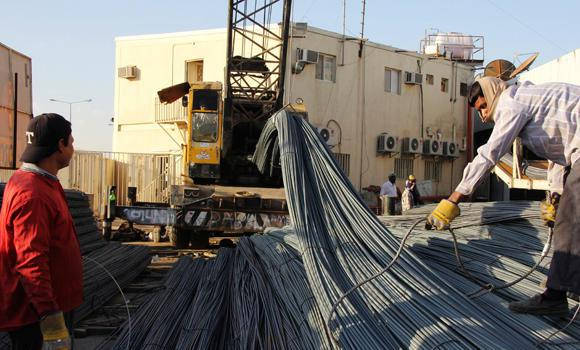
Jeddah, Feb 27: About 34 percent of foreign workers in the Kingdom seek to return home due to several reasons including rising cost of living.

An HSBC survey has confirmed that most expats in Saudi Arabia find integration difficult and raising children expensive.

“Despite the strong economy and the pull of job opportunities, it is unhealthy for the Saudi economy to let expats leave,” said economist Mohammed Shams.

“They are the driving force of the economy. I particularly mean the professional expats who have been working in Saudi Arabia for long years and they know very well how the Saudi business is developing fast.”

He added: “Such rate of expats who want to leave the Kingdom is really high. I think we should start working from now to prepare a Saudi young generation that will be able to replace those expats.”

According to the survey, the cost of raising children in Saudi Arabia is high with 70 percent of parents noticing an increased cost.

“Moving from our home country is tough, and we had hard time getting things done in the beginning,” said Lina Abu-Auof, an Egyptian teacher who came to Jeddah 10 years ago.

Mohammed Irfan, an Indian IT expert working in Jeddah, said he moved to Saudi Arabia 20 years ago and expected to gain a higher salary.

He said that although he received decent pay, he still was unable to save money. “I found that as much as I earned here, I had to spend all that on children’s school and house rent.”

Samira Qabbani, a Syrian mother of five, said that raising children in Saudi Arabia is difficult. She also stated that raising boys is much more difficult in Saudi Arabia.

“The need to keep children indoors and away from strangers is a major challenge I faced while raising my children,” she said. “In Syria, I used to leave my children to play in the garden next to our home, socialize with their relatives, and even walk to school alone.”

Comments

Add new comment

  • Coastaldigest.com reserves the right to delete or block any comments.
  • Coastaldigset.com is not responsible for its readers’ comments.
  • Comments that are abusive, incendiary or irrelevant are strictly prohibited.
  • Please use a genuine email ID and provide your name to avoid reject.
News Network
April 24,2020

Apr 24: Dubai's Supreme Committee of Crisis and Disaster Management has announced partial easing of restrictions on public movement in the emirate starting from Friday amid the COVID-19 outbreak.

The announcement is in line with the decisions of the Ministry of Health and Prevention and the National Emergency Crisis and Disaster Management Authority (NCEMA), a statement released late on Thursday said.

The move, which coincides with the start of the fasting month of Ramzan, will allow increased freedom of movement while ensuring the continuation of strict precautionary and preventive measures, the statement said.

The Committee has also outlined a new set of guidelines on movement and a list of exempted commercial activities and vital sectors, it added.

The decision to reduce restrictions on movement in Dubai follows a careful assessment of the current situation and analysis of reports from various authorities working to combat the pandemic, the committee said.

Underlining the emirate’s success in countering the spread of the virus, it said that stringent measures undertaken over the last three weeks have significantly helped to mitigate the crisis.

It further stressed that despite the partial easing of restrictions on movement, people will not be allowed to hold public or private gatherings and those who breach the guidelines will face legal action.

The need to ensure the safety and wellbeing of the community cannot be underestimated, the Committee stressed.

"Despite the difficult circumstances the world is facing today, the UAE has set an example for dealing with the crisis. This was also made possible through the commitment of all individuals and institutions both in the private and public sector,” the committee said in the statement.

“All measures undertaken by the country have been driven by the objective of safeguarding everyone’s safety and wellbeing,” it added.

Public transport (bus and metro), restaurants and cafes (except for buffet and shisha), retail sector (malls, high-street outlets and souqs), wholesale sector and maintenance shops will be allowed to operate under certain conditions, it said.

Shopping malls, markets and commercial outlets will be open daily from 12 pm to 10 pm. Restaurants and shops are allowed to operate at a maximum of 30 per cent capacity at shopping malls, it said.

Malls and retail outlets are not allowed to hold entertainment events to avoid congestion and crowding, it added.

Restaurants and cafés too have been allowed to operate but are not permitted to serve shisha and buffet. Dine-in customers are allowed but should occupy only a maximum of 30 per cent of the outlet’s capacity and only single-use cutlery can be used at restaurants and cafes, it said.

However, family entertainment facilities, cinemas, changing rooms and prayer rooms will not be allowed to operate. Hotels will be allowed to operate without opening pools, gyms, sauna and massage parlours.

A maximum of 30 per cent of the workforce of all organisations will be allowed to work from their offices while the rest will be required to work from home.

As part of the first phase of easing of restrictions, the stringent curbs on public movement will now be limited to the period between 10 pm to 6 am. During this period, the public will be allowed to leave their homes only for medical emergencies.

Individuals will be able to leave their homes between 6 am and 10 pm without a permit.

The public will be required to strictly follow precautionary measures which include maintaining physical distance from others as per guidelines and wearing a face mask. Those who do not wear a mask will be subject to a fine of AED 1,000.

Members of the public have also been allowed to exercise outside their homes provided they do not leave their area of residence. They can undertake activities such as walking, running or cycling for 1-2 hours each time. Only a maximum of three people can exercise at the same time.

Permission has also been granted to allow visit first and second degree relatives as long as gatherings are restricted to not more than five people. However, visiting high-risk individuals (individuals above 60 years and those with underlying medical conditions) should be avoided.


Comments

Add new comment

  • Coastaldigest.com reserves the right to delete or block any comments.
  • Coastaldigset.com is not responsible for its readers’ comments.
  • Comments that are abusive, incendiary or irrelevant are strictly prohibited.
  • Please use a genuine email ID and provide your name to avoid reject.
News Network
May 7,2020

Dubai, May 7: Saudi Arabia will emerge as the victor of the oil price war that sent global crude markets into a spin last month, according to two experts in the energy industry.

Jason Bordoff, professor and founding director of the Center for Global Energy policy at New York’s Columbia University, said: “While 2020 will be remembered as a year of carnage for oil nations, at least one will most likely emerge from the pandemic stronger, both economically and geopolitically: Saudi Arabia.”

Writing in the American publication Foreign Policy, Bordoff said that the Kingdom’s finances can weather the storm from lower oil prices as a result of the drastically reduced demand for oil in economies under pandemic lockdowns, and that it will end up with higher oil revenues and a bigger share of the global market once it stabilizes.

Bordoff’s view was reinforced by Sir Mark Moody-Stuart, former chairman of Royal Dutch Shell and one of the longest-standing directors of Saudi Aramco. In an interview with the Gulf Intelligence energy consultancy, he said that low-cost oil producers such as Saudi Arabia would emerge from the pandemic with increased market share.

“Oil is the only commodity where the lowest-cost producers have contained their production and allowed high-cost producers to benefit. When demand recovers this year or next, we will emerge from it with the lowest-cost producers having increased their market share,” Moody-Stuart said.

Bordfoff said that it would take years for the high-cost American shale industry to recover to pre-pandemic levels of output. “Depending on how long oil demand remains depressed, US oil production is projected to decline from its pre-coronavirus peak of around 13 million barrels per day.

“Shale's heady growth in recent years (with production growing by about 1 million to 1.5 million barrels per day each year) also reflected irrational exuberance in financial markets. Many US companies struggling with uneconomical production only managed to stay afloat with infusions of cheap debt. One quarter of US shale oil production may have been uneconomic even before prices crashed,” he said.

Moody-Stuart said that recent statements about cuts to the Saudi Arabian budget as a result of falling oil revenues were “an important step to wean the population of the Kingdom off an entitlement feeling. It means that everybody is joining in it.”

The former Shell boss said that other big oil companies would follow Shell’s recent decision to cut its dividend for the first time in more than 70 years. But he added that Aramco would stick by its commitment to pay $75 billion of dividends this year.

“When a company looks at its forecasts it looks ahead for one year, so for this year it (the dividend) is fine,” he said.

Bordoff added that Saudi Arabia’s action in cutting oil production in response to the pandemic would improve its global position.

“Saudi Arabia has improved its standing in Washington. Following intense pressure from the White House and powerful senators, the Kingdom’s willingness to oblige by cutting production will reverse some of the damage done when it was blamed for the oil crash after it surged production in March,” he said.

“Only a few weeks ago, the outlook for Saudi Arabia seemed bleak. But looking out a few years, it’s difficult to see the Kingdom in anything other than a strengthened position,” Bordoff said.

Comments

Add new comment

  • Coastaldigest.com reserves the right to delete or block any comments.
  • Coastaldigset.com is not responsible for its readers’ comments.
  • Comments that are abusive, incendiary or irrelevant are strictly prohibited.
  • Please use a genuine email ID and provide your name to avoid reject.
Gulf News
May 29,2020

Dubai: There aren’t that many job vacancies right now – but be prepared for a 15-20 per cent cut in salary expectations even for those positions that are still open. Businesses in the UAE are definitely not in a generous mood when it comes to hiring, with salary cuts now part of the new normal.

And they are definitely not willing to take on new hires without extracting some cost benefit from them. “We have seen major [salary] cuts across the board in hospitality, real estate, professional services and in retail,” said Vijay Gandhi, regional head at Korn Ferry Digital, the recruitment consultancy.

“And once the headcount correction is complete in [the local] financial services and energy sector, we may see more cuts in rewards and benefits in these categories as well.”

The salary cuts are slowly extending their way into the healthcare sector as well – just about every non-COVID-19 facing medical category is coming across cuts in the number of working hours and, by extension, their take home packages.

By end of June, more businesses and sectors in the UAE will have a better understanding of their short-term revenue prospects. By then, they will also have a better reading on what their staff strength should be – and whether there should be more trimming of the workforce. Or whether they should consider a few hires as well.

A long summer
So, realistically, it could be September before such decisions need to be taken. The coming weeks will then prove to be laden with anxiety for those who are expecting to land a job option after being laid off at their current employers.

There are multiple instances of recruitment decisions having been made in February/March, and then the companies rescinding those offers to the chosen candidates citing the business uncertainty.

“The decision to hire is taking longer – so job creation is now 4-6 weeks from interview and selection compared to 4-6 days in the past,” said Gandhi.

The lucky ones
Recently, free zones and other entities had made it easier for personnel on the visa of one entity being able to smoothly transfer to another if they are likely to be made redundant. “We are seeing more flexibility being offered by the authorities given the circumstances, and the visa transfer process is happening,” said Gandhi.

“But in the vast majority of cases, businesses are going to wait and watch before normal hiring activity starts. Organizations will look to hire from September.”

A few hires are still happening
Even in the business turmoil set off by COVID-19, a few categories are still offering jobs. At the entry level, logistics services personnel and drivers with experience remain in demand.

Not just “routine jobs, there have been confirmations in more technical roles such as procurement and operations in healthcare and e-commerce,” said Gandhi. “Employers should keep an eye for good talent and have the talent acquisition team actively looking for good profiles.

“As such, organizations are not only looking at “right sizing” in numbers but also “future proofing” on what kind of skilled talent will help them in the post-COVID-19 world.”

But for the candidates, the present will be about waiting around for the call to come.

Comments

Add new comment

  • Coastaldigest.com reserves the right to delete or block any comments.
  • Coastaldigset.com is not responsible for its readers’ comments.
  • Comments that are abusive, incendiary or irrelevant are strictly prohibited.
  • Please use a genuine email ID and provide your name to avoid reject.