



Burmese refugees to receive job training in Saudi Arabia

March 25, 2013

Burmese_refugees

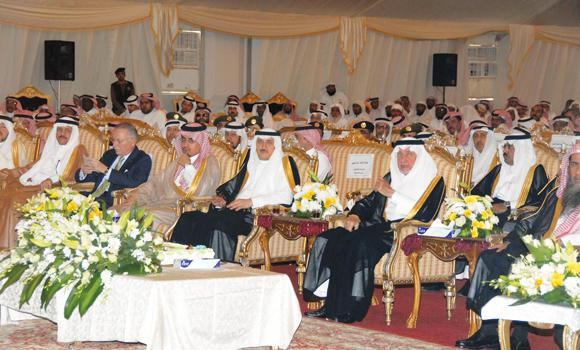
Jeddah, Mar 25: Makkah Gov. Prince Khaled Al-Faisal yesterday distributed free residency permits (iqamas) to the first applicants of the Burmese community in a historic move to legalize the status of nearly 500,000 refugees in the Kingdom.

“This is one of the beautiful moments in my life,” said Prince Khaled while addressing a ceremony at Kudai near Makkah. He thanked Custodian of the Two Holy Mosques King Abdullah for issuing his instructions to correct the residency status of a huge group of expatriates who have been living in the Kingdom for several years.

“It was one of the first proposals I presented to King Abdullah after becoming the governor of Makkah,” Prince Khaled said to the applause of the large gathering including OIC Secretary-General Ekmeleddin Ihsanoglu and Burmese community leaders. “King Abdullah ordered the formation of a ministerial committee for the development of disorganized residential districts in Makkah to improve the situation of Burmese Muslims living in those districts,” he said.

“This is one of the unique experiments in the world,” the governor said, adding that the Kingdom has taken drastic measures to tackle the problem. “We are not just building new homes to develop these districts. We also rehabilitate some 400,000 to 500,000 people living there,” he pointed out.

Prince Khaled said the government would provide Burmese community members with health care, social services, education and develop their residential areas as part of a comprehensive program. “We’ll also train them to get jobs,” he pointed out.

Under the Labor Ministry’s Nitaqat (naturalization) program, the employment of four Burmese is equal to one foreigner. This incentive was given to encourage private companies to employ more Burmese to meet their labor requirements. “You cannot see such a comprehensive rehabilitation program anywhere in the world,” the governor said.

“This is an unprecedented incident in the world,” said Mohammed Tayeb, director general of the Foreign Ministry’s office in the Makkah region, while commending the government’s efforts to issue four-year iqamas to Burmese citizens free of charge and provide them with educational, health and social services.

Mohammed Rauf Rafi, secretary-general of European Rohingya Council in the Kingdom, said there are about 350,000 Burmese Muslims in Makkah, Jeddah and Madinah. Saudi authorities intend to issue iqamas to all Burmese within four to six months. He disclosed plans to open a media center for the Rohingyas at the Organization of Islamic Cooperation.

Comments

Add new comment

  • Coastaldigest.com reserves the right to delete or block any comments.
  • Coastaldigset.com is not responsible for its readers’ comments.
  • Comments that are abusive, incendiary or irrelevant are strictly prohibited.
  • Please use a genuine email ID and provide your name to avoid reject.
News Network
June 23,2020

Riyadh, June 23: Saudi Arabia has decided to go ahead with the Hajj pilgrimage with strict health measures and protocols in an effort to prevent the spread of covid-19.

Minister of Health Dr. Tawfiq Al-Rabiah and Minister of Hajj and Umrah Dr. Muhammad Saleh Benten today addressed a joint virtual press conference today. 

Minister of Hajj expected that number of domestic pilgrims performing the pilgrimage this year will not be more than 10,000. He also confirmed that no pilgrims from outside the Kingdom will be allowed to perform Hajj this year.

Dr. Al-Rabiah said pilgrims should be less than 65 years of age and not suffering from any chronic diseases.

The Hajj pilgrimage, which is one of the five pillars of Islam and a must for able-bodied Muslims at least once in their lifetime, will this year only welcome a “limited number” of people from inside the Kingdom, authorities had said on Monday.

Every year, about 2.5 million pilgrims visit the holiest sites of Islam in Makkah and Madinah, which could make it a possible breeding ground for the disease.

To prevent COVID-19 from spreading among pilgrims, the health ministry, in collaboration with the Ministry of Hajj and Umrah, has developed the plan to ensure the safety of all visitors.

“We have worked with the Ministry of Health to develop preventative and precautionary measures and protocols that are needed to ensure a safe Hajj season,” Benten said.

Protocols:

1. No more than 10,000 people will be allowed to perform the Hajj pilgrimage.

2. All pilgrims will be tested before they reach the holy sites.

3. Only those under the age of 65 will be allowed to perform Hajj this year.

4. All pilgrims will be asked to self-quarantine after they complete the Hajj rituals.

5. All workers and volunteers will be tested before the Hajj pilgrimage begins.

6. The health status of all pilgrims will be monitored daily.

7. A hospital has been prepared for any emergency that occurs during the pilgrimage.

8. Social distancing measures will be enforced.

Comments

SAN
 - 
Tuesday, 23 Jun 2020

Please check its 1000 or 10,000

Add new comment

  • Coastaldigest.com reserves the right to delete or block any comments.
  • Coastaldigset.com is not responsible for its readers’ comments.
  • Comments that are abusive, incendiary or irrelevant are strictly prohibited.
  • Please use a genuine email ID and provide your name to avoid reject.
Agencies
June 29,2020

Protests condemning the Israeli plan to annex parts of the occupied West Bank are set to take place in the United States and Europe on the same day prime minister Benjamin Netanyahu plans to begin the process.

The demonstrations will be held on Wednesday in Chicago, San Diego, Brooklyn, Los Angeles and San Francisco. Other Western cities will also witness similar protests, including Toronto, Madrid and Valencia.

Students for Justice in Palestine, Jewish Voice for Peace, and American Muslims for Palestine are among the pro-Palestinian groups organizing the protests.

The Samidoun Palestinian Prisoner Solidarity Network, one of the organizers, urged "direct actions and popular mobilizations in [Palestinian] refugee camps, cities and villages," and professed "loyalty to the martyrs" on its call for the events.

Another group, Al-Awda or the Palestinian Right to Return Coalition, decried "72 years of genocide, ethnic cleansing and dispossession" of Palestinians.

It also tied their demonstrations to the protests against anti-black racism in the US and beyond.

"We demand the defunding and dismantling of US police alongside the defunding and dismantling of Zionist colonialism and racist Israeli apartheid," Al-Awda said on its website.

Netanyahu has set July 1 as the date for the start of cabinet discussions on the annexation plan.

He has been driven ahead by US President Donald Trump, who unveiled a “peace” plan for the Middle East in January that effectively sidelines the Palestinians altogether.

The plan, which Trump himself has described as the “deal of the century,” envisions Jerusalem al-Quds as “Israel’s undivided capital” and allows the Tel Aviv regime to annex settlements in the occupied West Bank and the Jordan Valley. The plan also denies Palestinian refugees the right of return to their homeland, among other controversial terms.

The Palestinians want the West Bank as part of a future independent Palestinian state with East Jerusalem al-Quds as its capital.

Comments

Add new comment

  • Coastaldigest.com reserves the right to delete or block any comments.
  • Coastaldigset.com is not responsible for its readers’ comments.
  • Comments that are abusive, incendiary or irrelevant are strictly prohibited.
  • Please use a genuine email ID and provide your name to avoid reject.
Agencies
July 31,2020

Mount Arafat, July 30: Muslim pilgrims converged Thursday on Saudi Arabia's Mount Arafat for the climax of this year's hajj, the smallest in modern times and a sharp contrast to the massive crowds of previous years.

A tight security cordon has been erected all around the foot of the rocky hill outside Mecca, also known as Jabal al-Rahma or Mount of Mercy.

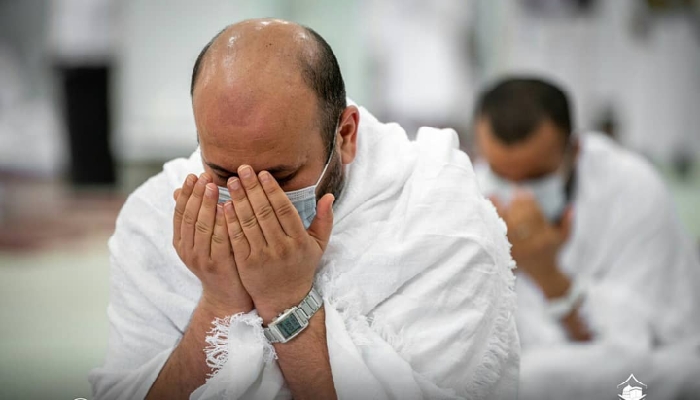
Pilgrims, donning masks and observing social distancing, were brought in buses from neighbouring Mina, state television showed, as Saudi authorities impose measures to prevent a coronavirus outbreak.

They were subject to temperature checks and attended a sermon -- which state media said was translated into 10 languages -- before they set off on the climb to the summit for hours of Koran recitals and prayers to atone for their sins.

The scene was strikingly different to last year's ritual when a sea of pilgrims ascended Mount Arafat, marshalled by tens of thousands of stewards in a bid to prevent any crushes.

After sunset prayers, pilgrims will make their way down Mount Arafat to Muzdalifah, another holy site where they will sleep under the stars to prepare for the final stage of hajj, the symbolic "stoning of the devil".

It takes place on Friday and also marks the beginning of Eid al-Adha, the festival of sacrifice.

The hajj, one of the five pillars of Islam and a must for able-bodied Muslims at least once in their lifetime, is usually one of the world's largest religious gatherings.

But only up to 10,000 people already residing in the kingdom will participate in this year's ritual, compared with 2019's gathering of some 2.5 million from around the world.

"You are not our guests but those of God, the custodian of the two holy mosques (Saudi Arabia's King Salman) and the nation," Hajj Minister Mohammad Benten said in a video released by the media ministry on Wednesday.

Security cordon

A security cordon has been thrown around the holy sites to prevent any security breaches, an interior ministry spokesman said.

Riyadh faced strong criticism in 2015 when some 2,300 worshippers were killed in the deadliest stampede in the gathering's history.

But this year, those risks are greatly reduced by the much smaller crowd.

The pilgrims have all been tested for the virus, and foreign journalists were barred from this year's hajj, usually a huge global media event.

As part of the rites completed over five days in the holy city of Mecca and its surroundings, the pilgrims converged on Mount Arafat after spending the night in Mina.

A district of Mecca, Mina sits in a narrow valley surrounded by rocky mountains, and is transformed each year into a vast encampment for pilgrims.

They began the hajj on Wednesday with their first "tawaf", the circumambulation of the Kaaba, a large structure in Mecca’s Grand Mosque towards which Muslims around the world pray.

The Kaaba is draped in a black cloth embroidered in gold with Koranic verses and known as the kiswa, which is changed each year during the pilgrimage.

Pilgrims were brought inside the mosque in small batches, walking along paths marked on the floor, in sharp contrast to the normal sea of humanity that swirls around the Kaaba during hajj.

Comments

Add new comment

  • Coastaldigest.com reserves the right to delete or block any comments.
  • Coastaldigset.com is not responsible for its readers’ comments.
  • Comments that are abusive, incendiary or irrelevant are strictly prohibited.
  • Please use a genuine email ID and provide your name to avoid reject.