Saudi Arabia set to make call on Skype, Viber and WhatsApp blocks

March 27, 2013

Wapp

Jeddah, Mar 27: An agreement is expected to be reached between the Saudi telecommunication sector and operators of WhatsApp, Viber and Skype, Al Arabiya reported Tuesday, after the Saudi government threatened to block the messaging applications earlier in the week.

A source told Al Arabiya that the Saudi Communications and Information Technology Commission (CITC) officially requested the Saudi Telecommunications Company (STC) to find a technical solution that will enable the government to monitor WhatsApp, Viber and Skype this week.

Abdulrahman Mazi, the managing director of the National Information Systems Company, said that local telecommunications companies and IP providers in Saudi Arabia will be obliged to block the applications if no agreement is reached.

The government will study the possibility of blocking the mentioned applications if it fails to reach a decision with the operators, the source added.

However, the process of blocking the applications will take three to four months, he said.

Mazil told Al Arabiya that the licenses of IP providers in Saudi Arabia oblige them to disclose any type of data when the government requests so, especially for security reasons.

He added that the Kingdom request to monitor these applications is not new; several countries such as the United States and the United Kingdom have taken the same step.

If the agreement is reached, Mazi said the income of Saudi telecommunication companies will increase. The step might add a monthly charge of SR10 ($2.5) for the users of these services.

Comments

Add new comment

  • Coastaldigest.com reserves the right to delete or block any comments.
  • Coastaldigset.com is not responsible for its readers’ comments.
  • Comments that are abusive, incendiary or irrelevant are strictly prohibited.
  • Please use a genuine email ID and provide your name to avoid reject.
News Network
March 6,2020

Riyadh, Mar 6: Saudi Arabia on Thursday emptied Islam's holiest site for sterilisation over fears of the new coronavirus, an unprecedented shutdown state media said will last while the year-round Umrah pilgrimage is suspended.

The kingdom halted the pilgrimage for its own citizens and residents on Wednesday, on top of restrictions announced last week on foreign pilgrims to stop the disease from spreading.

State television relayed images of an empty white-tiled area surrounding the Kaaba -- a large black cube structure inside Mecca's Grand Mosque -- which is usually packed with tens of thousands of pilgrims.

As a "precautionary measure", the area will remain closed as long as the umrah suspension lasts but prayers will be allowed inside the mosque, state-run Saudi Press Agency cited a mosque official as saying.

Additionally, the Grand Mosque and the Prophet's Mosque in the city of Medina will be closed an hour after the evening "Isha" prayer and will reopen an hour before the dawn "Fajr" prayer to allow cleaning and sterilisation, the official added.

A group of cleaners was seen scrubbing and mopping the tiles around the Kaaba, a structure draped in gold-embroidered gold cloth towards which Muslims around the world pray.

A Saudi official told news agency the decision to close the area was "unprecedented".

On Wednesday, Saudi Arabia suspended the umrah for its own citizens and residents over fears of the coronavirus spreading to Islam's holiest cities.

The move came after authorities last week suspended visas for the umrah and barred citizens from the six-nation Gulf Cooperation Council from entering Mecca and Medina.

Saudi Arabia on Thursday declared three new coronavirus cases, bringing the total number of reported infections to five.

The umrah, which refers to the Islamic pilgrimage to Mecca that can be undertaken at any time of year, attracts millions of Muslims from across the globe annually.

The decision to suspend the umrah mirrors a precautionary approach across the Gulf to cancel mass gatherings from concerts to sporting events.

It comes ahead of the holy fasting month of Ramadan starting in late April, which is a favoured period for pilgrimage.

It is unclear how the coronavirus will affect the hajj, due to start in late July.

Some 2.5 million faithful travelled to Saudi Arabia from across the world in 2019 to take part in the hajj, which is one of the five pillars of Islam as Muslim obligations are known.

The event is a massive logistical challenge for Saudi authorities, with colossal crowds cramming into relatively small holy sites, making attendees vulnerable to contagion.

Already reeling from slumping oil prices, the kingdom risks losing billions of dollars annually from religious tourism as it tightens access to the sites.

Comments

Add new comment

  • Coastaldigest.com reserves the right to delete or block any comments.
  • Coastaldigset.com is not responsible for its readers’ comments.
  • Comments that are abusive, incendiary or irrelevant are strictly prohibited.
  • Please use a genuine email ID and provide your name to avoid reject.
Agencies
August 2,2020

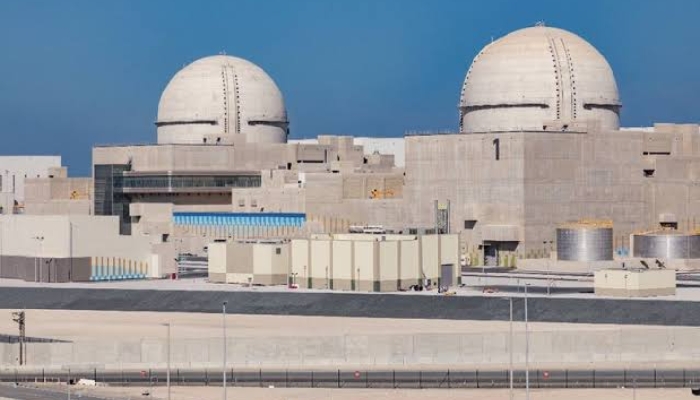
Dubai, Aug 2: The United Arab Emirates (UAE) announced on Saturday that it has started operations in the first of four reactors at the Barakah nuclear power station - the first nuclear power plant in the Arab world.

Emirates Nuclear Energy Corporation (ENEC), which is building and operating the plant with Korea Electric Power Corporation (KEPCO) said in a press release that its subsidiary Nawah Energy Company "has successfully started up Unit 1 of the Barakah Nuclear Energy Plant, located in the Al Dhafrah Region of Abu Dhabi".

That signals that Unit 1, which had fuel rods loaded in March, has achieved "criticality" - a sustained fission chain reaction.

"The start-up of Unit 1 marks the first time that the reactor safely produces heat, which is used to create steam, turning a turbine to generate electricity," said ENEC.

Barakah, which was originally scheduled to open in 2017, has been dogged by delays and is billions of dollars over budget. It has also raised myriad concerns among nuclear energy veterans who are concerned about the potential risks Barakah could visit upon the Arabian Peninsula, from an environmental catastrophe to a nuclear arms race.

Paul Dorfman, an honorary senior research fellow at the Energy Institute, University College London and founder and chair of the Nuclear Consulting Group, has criticised the Barakah reactors' "cheap and cheerful" design that he says cuts corners on safety.

Dorfman authored a report (PDF) last year detailing key safety features Barakah's reactors lack, such as a "core catcher" to literally stop the core of a reactor from breaching the containment building in the event of a meltdown. The reactors are also missing so-called Generation III Defence-In-Depth reinforcements to the containment building to shield against a radiological release resulting from a missile or fighter jet attack.

Both of these engineering features are standard on new reactors built in Europe, says Dorfman.

There have been at least 13 aerial attacks on nuclear facilities in the Middle East - more than any other region on earth.

The vulnerability of critical infrastructure in the Arabian Peninsula was further laid bare last year after Saudi Arabia's oil facilities at Abqaiq and Khurais were attacked by 18 drones and seven cruise missiles - an assault that temporarily knocked out more than half of the kingdom's oil production.

On Saturday, Dorfman reiterated his concern that there is no regional protocol in place to determine liability should an accident or incident at Barakah result in radioactive contamination spreading from the UAE to its neighbours. 

"Given Barakah has started up, because of all the well-rehearsed nuclear safety and security problems, it may be critically important that the Gulf states collectively evolve a Nuclear Accident Liability Convention, so that if anything does go wrong, victim states may have some sort of redress," Dorfman told Al Jazeera. 

The UAE has substantial oil and gas reserves, but it has made huge investments in developing alternative energy sources, including nuclear and solar.

Experts though have questioned why the UAE - which is bathed in sunlight and wind - has pushed ahead with nuclear energy - a far more expensive and riskier option than renewable energy sources.

When the UAE first announced Barakah in 2009, nuclear power was cheaper than solar and wind. But by 2012 - when the Emirates started breaking ground to build the reactors - solar and wind costs had plummeted dramatically.

Between 2009 and 2019, utility-scale average solar photovoltaic costs fell 89 percent and wind fell 43 percent, while nuclear jumped 26 percent, according to an analysis by the financial advisory and asset manager Lazard.

There are also concerns about the potential for Barakah to foment nuclear proliferation in the Middle East - a region rife with geopolitical fault lines and well-documented history of nuclear secrecy.

The UAE has sought to distance itself from the region's bad behaviour by agreeing not to enrich its own uranium or reprocess spent fuel. It has also signed up to the United Nation's nuclear watchdog's Additional Protocol, significantly enhancing inspection capabilities, and secured a 123 Agreement with the United States that allows bilateral civilian nuclear cooperation.

Comments

Add new comment

  • Coastaldigest.com reserves the right to delete or block any comments.
  • Coastaldigset.com is not responsible for its readers’ comments.
  • Comments that are abusive, incendiary or irrelevant are strictly prohibited.
  • Please use a genuine email ID and provide your name to avoid reject.
KT
May 18,2020

May 18: As the UAE authorities have asked all residents to avoid gatherings, it is clear that - for the first time - it's going to be a #StayHome Eid. But experts say that although it will be different, the celebration will be just as meaningful.

It is important to remember that the Eid prayer can be performed at home either individually or with family members under the sane roof, said Dr Mohammed Eyada Ayoub Alkobaisi, a Grand Mufti with the Islamic Affairs and Charitable Activities Department in Dubai.

Dr Alkobaisi said this prayer is a highly recommended Sunnah or practice urged by the Prophet Muhammad (Peace be upon him).

"Eid Prayer must be performed openly, unless we are prevented for an acceptable reason, such as fear for self, wellbeing, property, etc." Under the current circumstances, prayers can be offered from home, he said.

But what the faithful will likely miss is listening to the khutbah or the sermon of Eid with a crowd. The sight of people pouring out into the streets and coming together for prayer and worship would not be unfolding this time.

Dr Sheikh Mohamed Ashmawy, an Islamic researcher, said that in this time of Covid, doing away with several Eid traditions would be necessary for everyone's safety.

"The ban is is line with the ongoing preventive measures to curb the spread of Covid-19," he said.

However, it doesn't mean people can't celebrate and exchange heartfelt greetings, he added.

"We can greet each other remotely on the phone or via social media networks."

Islamic researcher Sheikh Mohamed Wasfi said audio-visual smart apps have made communication much easier, even bringing people closer than before.

"Of course, families and friends wish to hug, shake hands and see each other personally, but this will be a big risk these days," he said.

Sheikh Asadullah Del Mohamed, an imam, reminded that banquets, parties and visits are discouraged to avoid crowds and gathering.

Recently, 30 people from two families tested positive for the virus after breaking social distancing rules and holding a gathering.

Faithful's sentiments

Ibrahim Abdelkader, an Egyptian auditor, said that while it would be sad to spend Eid Al Fitr at home, he understood that it is for everyone's safety.

"Better to stay home than be sorry," said Ahmad Jamil, a Syrian resident.

Rashid Saeed, an Emirati national, said people are advised to just check on each other by phone or video and voice call apps.

"While Eid prayers is banned in congregation, it's not acceptable at all for some people to carelessly gather and exchange visits," he said.

Abdullah Al Saleh, an Emirati national, said he and all his relatives used to gather for breakfast after the Eid prayer - but this time, they are ready to do it in their own homes.

Mohamed Ibrahim, another Emirati, said he would surely miss seeing his kids happily prancing around with their new clothes and enjoying the outdoors like every year.

"But, I agree as it is for their health, safety and wellbeing," he said.

THINGS TO REMEMBER IN CELEBRATING EID THIS YEAR

>Perform the Eid prayer at home, individually or with family members living with you

>Exchange greetings with loved ones and friends via phone calls or online

>No hugs

>No handshakes

>No gatherings

>No visits to other homes

Comments

Add new comment

  • Coastaldigest.com reserves the right to delete or block any comments.
  • Coastaldigset.com is not responsible for its readers’ comments.
  • Comments that are abusive, incendiary or irrelevant are strictly prohibited.
  • Please use a genuine email ID and provide your name to avoid reject.