Saudi: New Shoura proposal for gratuity welcomed

April 1, 2013
shouracouncil
Riyadh, Apr 1: Saudis across the Kingdom have welcomed the new Shoura Council proposal to increase end of service benefits (ESB) of civil servants, saying it would encourage public servants to work hard and improve the living conditions of retirees.

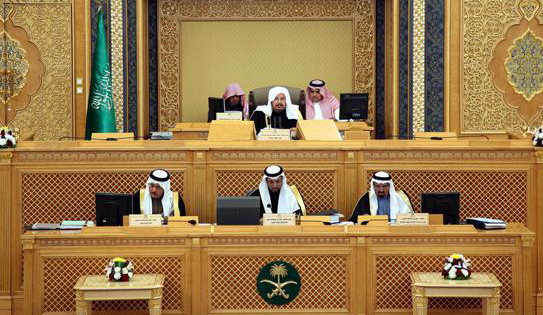
A Shoura meeting, chaired by Vice President Muhammad Al-Jafri, approved the proposal made by a former member Ehsan Abdul Jawad and instructed the Human Resources Committee to study the matter further.

“The majority of Shoura members supported the proposal to amend Article 53 of the Civil Service Law that deals with rights and benefits of civil servants,” said Fahad Al-Hamad, assistant to the president.

Under the new amendment, retirees would get a gratuity of half month’s salary for the first five years of service and one month's salary for every subsequent year. At present, public servants are getting only six months’ salaries following retirement.

Al-Hamad said the new proposal would help retirees live comfortably with their families and would help them settle their financial commitments.

“It will also help balance the difference between the salary they received before retirement and the pension,” he said, adding that public servants who have worked for several years deserved such compensation at the end of service.

Abdulelah Saaty, dean of the College of Business in Rabigh, lauded the proposal, saying it is big a motivation for civil servants across the country. “Public servants deserve such a scheme,” he told Arab News. He hoped the Shoura and the Cabinet would endorse the amended law.

“The newly proposed gratuity is already there in the Labor Law,” Saaty said, adding that expats have been receiving it for the past several years.

He said the proposal would benefit the country’s 1.2 million civil servants. Some public employees, such as those working for the education sector, already benefit from the scheme.

Saaty did not agree with the view of some Shoura members that the new scheme would encourage public servants to apply for early retirements in order to create jobs for young Saudis.

“People may stay long in service to get more money,” he said. “Life expectancy among Saudis has increased to 74 and the new scheme will help them lead a decent life.”

The number of Saudi retirees reached 571,367 by the end of 2012.

Comments

Add new comment

  • Coastaldigest.com reserves the right to delete or block any comments.
  • Coastaldigset.com is not responsible for its readers’ comments.
  • Comments that are abusive, incendiary or irrelevant are strictly prohibited.
  • Please use a genuine email ID and provide your name to avoid reject.
News Network
March 18,2020

Riyadh, Mar 18: Private-sector businesses in Saudi Arabia on Wednesday were ordered to introduce enforced remote working for all employees for 15 days in an attempt to prevent the spread of the coronavirus.

Businesses that require staff to be physically present to ensure they continue to operate — including those in vital or sensitive sectors such as electricity, water and communications — must reduce the number of workers in their offices to the bare minimum. This can be no more than 40 percent of the total number of staff.

In such cases precautionary measures set by the Ministry of Health must be followed. At offices, and staff accommodation, with more than 50 workers, an area at the entrance must be provided where temperatures can be taken and symptoms checked.

Employers must also set up a mechanism for workers to report any symptoms, such as high temperature, coughing or shortness of breath, or contact they have had with infected individuals or people who recently returned from other countries without following proper Ministry of Health quarantine procedures.

Inside offices, a safe amount of space between employees must be maintained at all times. In addition, all health clubs and nurseries provided by employers must close.

Pregnant women and new mothers, people suffering from respiratory diseases, those with immune-system problems or chronic conditions, cancer patients and employees above the age of 55 are to be given 14 days compulsory paid leave, which will not be deducted from their annual entitlement.

Businesses that are excluded from the new measures include pharmacies and supermarkets, and their suppliers. Private-sector organizations that provide services to government agencies must contact them before suspending workplace attendance. Any other business that considers it impossible to operate with only 40 percent of staff in the workplace must submit an exemption request to the authority that supervises it.

Comments

Add new comment

  • Coastaldigest.com reserves the right to delete or block any comments.
  • Coastaldigset.com is not responsible for its readers’ comments.
  • Comments that are abusive, incendiary or irrelevant are strictly prohibited.
  • Please use a genuine email ID and provide your name to avoid reject.
Agencies
August 2,2020

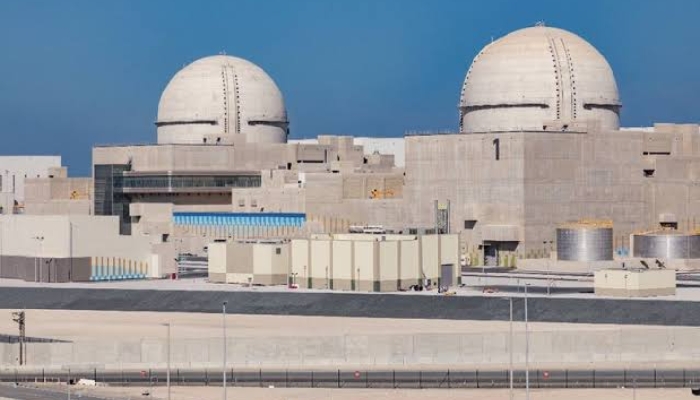
Dubai, Aug 2: The United Arab Emirates (UAE) announced on Saturday that it has started operations in the first of four reactors at the Barakah nuclear power station - the first nuclear power plant in the Arab world.

Emirates Nuclear Energy Corporation (ENEC), which is building and operating the plant with Korea Electric Power Corporation (KEPCO) said in a press release that its subsidiary Nawah Energy Company "has successfully started up Unit 1 of the Barakah Nuclear Energy Plant, located in the Al Dhafrah Region of Abu Dhabi".

That signals that Unit 1, which had fuel rods loaded in March, has achieved "criticality" - a sustained fission chain reaction.

"The start-up of Unit 1 marks the first time that the reactor safely produces heat, which is used to create steam, turning a turbine to generate electricity," said ENEC.

Barakah, which was originally scheduled to open in 2017, has been dogged by delays and is billions of dollars over budget. It has also raised myriad concerns among nuclear energy veterans who are concerned about the potential risks Barakah could visit upon the Arabian Peninsula, from an environmental catastrophe to a nuclear arms race.

Paul Dorfman, an honorary senior research fellow at the Energy Institute, University College London and founder and chair of the Nuclear Consulting Group, has criticised the Barakah reactors' "cheap and cheerful" design that he says cuts corners on safety.

Dorfman authored a report (PDF) last year detailing key safety features Barakah's reactors lack, such as a "core catcher" to literally stop the core of a reactor from breaching the containment building in the event of a meltdown. The reactors are also missing so-called Generation III Defence-In-Depth reinforcements to the containment building to shield against a radiological release resulting from a missile or fighter jet attack.

Both of these engineering features are standard on new reactors built in Europe, says Dorfman.

There have been at least 13 aerial attacks on nuclear facilities in the Middle East - more than any other region on earth.

The vulnerability of critical infrastructure in the Arabian Peninsula was further laid bare last year after Saudi Arabia's oil facilities at Abqaiq and Khurais were attacked by 18 drones and seven cruise missiles - an assault that temporarily knocked out more than half of the kingdom's oil production.

On Saturday, Dorfman reiterated his concern that there is no regional protocol in place to determine liability should an accident or incident at Barakah result in radioactive contamination spreading from the UAE to its neighbours. 

"Given Barakah has started up, because of all the well-rehearsed nuclear safety and security problems, it may be critically important that the Gulf states collectively evolve a Nuclear Accident Liability Convention, so that if anything does go wrong, victim states may have some sort of redress," Dorfman told Al Jazeera. 

The UAE has substantial oil and gas reserves, but it has made huge investments in developing alternative energy sources, including nuclear and solar.

Experts though have questioned why the UAE - which is bathed in sunlight and wind - has pushed ahead with nuclear energy - a far more expensive and riskier option than renewable energy sources.

When the UAE first announced Barakah in 2009, nuclear power was cheaper than solar and wind. But by 2012 - when the Emirates started breaking ground to build the reactors - solar and wind costs had plummeted dramatically.

Between 2009 and 2019, utility-scale average solar photovoltaic costs fell 89 percent and wind fell 43 percent, while nuclear jumped 26 percent, according to an analysis by the financial advisory and asset manager Lazard.

There are also concerns about the potential for Barakah to foment nuclear proliferation in the Middle East - a region rife with geopolitical fault lines and well-documented history of nuclear secrecy.

The UAE has sought to distance itself from the region's bad behaviour by agreeing not to enrich its own uranium or reprocess spent fuel. It has also signed up to the United Nation's nuclear watchdog's Additional Protocol, significantly enhancing inspection capabilities, and secured a 123 Agreement with the United States that allows bilateral civilian nuclear cooperation.


Comments

Add new comment

  • Coastaldigest.com reserves the right to delete or block any comments.
  • Coastaldigset.com is not responsible for its readers’ comments.
  • Comments that are abusive, incendiary or irrelevant are strictly prohibited.
  • Please use a genuine email ID and provide your name to avoid reject.
News Network
May 5,2020

Dubai, May 5: A Saudi ministerial decision issued on Monday allows companies in the private sector to reduce salaries by 40 per cent and allows termination of contracts owing to the economic hardships resulting from the COVID-19 pandemic, according to daily newspaper Al Sharq Awsat.

The new decision was still not published by the cabinet according to the newspaper.

The decision which the newspaper saw a copy of was signed by Saudi Ministry of Human Resources and Social Development to regulate the labour contract in the current period, allows employers to reduce the employees salaries by 40 percent of the actual effective wage for a period of 6 months, in proportion to the hours of work and allowing the termination of employee contract after 6 months of the COVID-19 circumstances.

The new decision has also included a provision in which the employer would be allowed to cut wages even he or she benefits from the subsidy provided by the goverment, such as those for helping pay workers wages or exemption from government fees.

The decision also stressed that employers are not allowed to terminate any employee, unless three conditions are met.

1.            First the passing of six months since the measures of salary cut has been taken

2.            Reducing pay, annual leave and exceptional leave were all used

3.            Company proves that its facing financial troubles due to the circumstances.

The memo, which goes into affect as soon as its published in the government’s official newspaper, ensures that the employee will receive his/her salary if on annual leave within the period of 6 months.

Comments

Add new comment

  • Coastaldigest.com reserves the right to delete or block any comments.
  • Coastaldigset.com is not responsible for its readers’ comments.
  • Comments that are abusive, incendiary or irrelevant are strictly prohibited.
  • Please use a genuine email ID and provide your name to avoid reject.