



A preview of future vision - 'Our Dubai : Our Life'

April 12, 2013

Dubai, Apr 12: His Highness Shaikh Mohammed bin Rashid Al Maktoum, Vice -President and Prime Minister of the UAE and Ruler of Dubai, accompanied by Shaikh Hamdan Bin Mohammed bin Rashid Al Maktoum, Crown Prince of Dubai and VIPs, today viewed the concept for the implementation of the project named “Our Dubai: Our Life” which formulates a future vision for the emirate.

His Highness Shaikh Mohammed bin Rashid also viewed the design of “Dubai Monument” which is meant to bear witness to the vision of the leadership and the people and to express the renewable and interactive vision of Dubai as embodied in social and cultural harmony among the all cultures and members of the community and in its incessant progress.

Our_Dubai__Our_Life

Shaikh Mohammed was briefed on the details of the plan by Aisha Abdullah Miran, Assistant Secretary General of the Dubai Executive Council who said that the idea came up to the team of the General Secretariat to forge the future vision for Dubai to transform it into the city of the world rather than the global city.

Miran noted that all nationals and residents in the emirate are invited to take part in the formulation of this vision with their thoughts and opinions to enrich the content of the project and to reflect the positive interaction among all segments of the community in Dubai, which is part of the diversified and secure society of the UAE.

The idea also proposes launching the process of designing of the “Dubai Monument” as an international competition among Emirati and internationally renowned artists to come up with the design that is in harmony with Dubai’s vision beyond 2015.

Shaikh Mohammed praised the efforts and thoughts of the work team of “Our Dubai: Our Life” who presented him with an album of paintings by 4th-grade students of the Al Ittihad Private School in Jumeirah, Dubai, which reflects their vision for their city.

During the meeting which was held at the headquarters of the Executive Council , Shaikh Mohammed also was briefed on “Galagolia”, the 250-page debut novel by the young Emirati director Dubai Abullah Belhoul who is now recognised as the as youngest Emirati writer.

It took the young author 4 years to produce the English-language book which features Maitha Bin Humaid who lost her father and finds a portal to Galagolia, a new world, and learns that, all along, she had known nothing about her life and that she has inherited the throne to Galagolia.

Shaikh Mohammed bin Rashid admired the novel and praised the creativity of the young author who is still under 16 years.

Dubai Abdullah Belhoul presented two copies of her novel to Shaikh Mohammed bin Rashid.

Shaikh Mohammed was accompanied by Shaikh Ahmed bin Saeed Al Maktoum, Chairman of Dubai Aviation Authority and Chairman of Emirates Group, Shaikh Saeed bin Maktoum bin Juma Al Maktoum, Mohammed Ibrahim Al Shaibani, Director-General of Dubai Ruler’s Court, Abdulla Abdul Rahman Al Shaibani, the Secretary General of Dubai Executive Council, Khalifa Saeed Suleiman, Director General of the Department of Protocol and Hospitality in Dubai, members of the Secretariat Council’s team.

Comments

Add new comment

  • Coastaldigest.com reserves the right to delete or block any comments.
  • Coastaldigset.com is not responsible for its readers’ comments.
  • Comments that are abusive, incendiary or irrelevant are strictly prohibited.
  • Please use a genuine email ID and provide your name to avoid reject.
Agencies
June 18,2020

Riyadh, Jun 18: Minister of Tourism Ahmed Al-Khateeb said that Saudi Arabia will resume tourist activities at the end of Shawwal (June 21) after a hiatus of more than three months due to lockdown measures imposed following the outbreak of coronavirus pandemic.

The minister made the remarks during a television interview after chairing the emergency meeting of the Arab Ministerial Council for Tourism on Wednesday. He said that the current indications are positive and that the Kingdom is ready to launch the summer program, which will be a boost for domestic tourism.

“It was revealed in a research study carried out by the Tourism Authority that 80 percent of Saudi citizens want to take advantage of domestic tourism. We will launch the domestic tourism program for the public after having made necessary coordination with the Ministry of Health and the concerned higher authorities,” he said.

Several Arab tourism ministers and officials of the relevant organizations attended the meeting, which discussed the challenges that the region’s tourism sector is facing due to the pandemic. Al-Khateeb pointed out that the Arab Ministerial Council for Tourism, headed by Saudi Arabia, held the virtual session in exceptional circumstances to discuss ways to get out of this pandemic and revitalize the tourism sector.

“Saudi Arabia has initiated a package of financial stimulus activities with a total value of more than $61 billion to protect jobs and businesses and reduce the economic burden of the crisis. The domestic tourism sector has benefited from it as one of the important economic sectors, as it covered 60 percent of salaries of Saudi employees in the private sector for a period of three months,” he added.

Comments

Add new comment

  • Coastaldigest.com reserves the right to delete or block any comments.
  • Coastaldigset.com is not responsible for its readers’ comments.
  • Comments that are abusive, incendiary or irrelevant are strictly prohibited.
  • Please use a genuine email ID and provide your name to avoid reject.
Agencies
July 31,2020

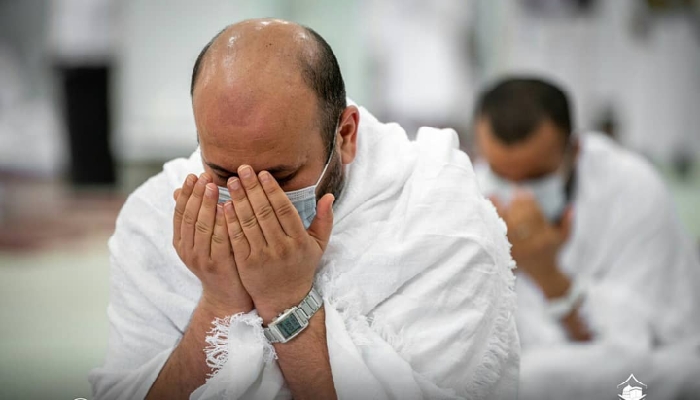
Mount Arafat, July 30: Muslim pilgrims converged Thursday on Saudi Arabia's Mount Arafat for the climax of this year's hajj, the smallest in modern times and a sharp contrast to the massive crowds of previous years.

A tight security cordon has been erected all around the foot of the rocky hill outside Mecca, also known as Jabal al-Rahma or Mount of Mercy.

Pilgrims, donning masks and observing social distancing, were brought in buses from neighbouring Mina, state television showed, as Saudi authorities impose measures to prevent a coronavirus outbreak.

They were subject to temperature checks and attended a sermon -- which state media said was translated into 10 languages -- before they set off on the climb to the summit for hours of Koran recitals and prayers to atone for their sins.

The scene was strikingly different to last year's ritual when a sea of pilgrims ascended Mount Arafat, marshalled by tens of thousands of stewards in a bid to prevent any crushes.

After sunset prayers, pilgrims will make their way down Mount Arafat to Muzdalifah, another holy site where they will sleep under the stars to prepare for the final stage of hajj, the symbolic "stoning of the devil".

It takes place on Friday and also marks the beginning of Eid al-Adha, the festival of sacrifice.

The hajj, one of the five pillars of Islam and a must for able-bodied Muslims at least once in their lifetime, is usually one of the world's largest religious gatherings.

But only up to 10,000 people already residing in the kingdom will participate in this year's ritual, compared with 2019's gathering of some 2.5 million from around the world.

"You are not our guests but those of God, the custodian of the two holy mosques (Saudi Arabia's King Salman) and the nation," Hajj Minister Mohammad Benten said in a video released by the media ministry on Wednesday.

Security cordon

A security cordon has been thrown around the holy sites to prevent any security breaches, an interior ministry spokesman said.

Riyadh faced strong criticism in 2015 when some 2,300 worshippers were killed in the deadliest stampede in the gathering's history.

But this year, those risks are greatly reduced by the much smaller crowd.

The pilgrims have all been tested for the virus, and foreign journalists were barred from this year's hajj, usually a huge global media event.

As part of the rites completed over five days in the holy city of Mecca and its surroundings, the pilgrims converged on Mount Arafat after spending the night in Mina.

A district of Mecca, Mina sits in a narrow valley surrounded by rocky mountains, and is transformed each year into a vast encampment for pilgrims.

They began the hajj on Wednesday with their first "tawaf", the circumambulation of the Kaaba, a large structure in Mecca’s Grand Mosque towards which Muslims around the world pray.

The Kaaba is draped in a black cloth embroidered in gold with Koranic verses and known as the kiswa, which is changed each year during the pilgrimage.

Pilgrims were brought inside the mosque in small batches, walking along paths marked on the floor, in sharp contrast to the normal sea of humanity that swirls around the Kaaba during hajj.

Comments

Add new comment

  • Coastaldigest.com reserves the right to delete or block any comments.
  • Coastaldigset.com is not responsible for its readers’ comments.
  • Comments that are abusive, incendiary or irrelevant are strictly prohibited.
  • Please use a genuine email ID and provide your name to avoid reject.
News Network
May 20,2020

Cairo, May 20: A senior Kuwaiti lawmaker has called for imposing a tax on expatriates’ remittances to shore up the country’s finances.

MP Khalil Al Saleh, the head of the parliament’s Human Resources Committee, has presented a draft law on the proposed tax to the legislature.

“Imposing fees on expatriates’ transfers will have a role in improving the state's revenues and diversify sources of income,” he told Al Rai newspaper.

Migrant workers transfer about 4.2 billion dinars annually from Kuwait, he added, citing figures from Kuwait’s Central Bank.

“This system is in effect in most countries of the world and in more than one Gulf country. Expats there have not objected to it. Allowing this money to exit the country is very dangerous and has a direct effect on economy,” MP Al Saleh said.

“We do not target brotherly expats because imposing symbolic fees on financial transfers will not affect their money, but will have a positive effect on the state’s sources,” he said. “This has become a necessity after the money transferred outside Kuwait has reached 4.2 billion dinars annually without the state [Kuwait] making any benefit from this.”

Foreign workers make up 3.3 million of Kuwait’s 4.6 million population.

Several Kuwaiti public figures have recently pushed for redrawing the demographic imbalance in the country, accusing expatriates of straining health facilities and increasing the Covid-19 threat.

Comments

Add new comment

  • Coastaldigest.com reserves the right to delete or block any comments.
  • Coastaldigset.com is not responsible for its readers’ comments.
  • Comments that are abusive, incendiary or irrelevant are strictly prohibited.
  • Please use a genuine email ID and provide your name to avoid reject.