



Strife casts shadow on Eid-ul-Fitr in Egypt, Yemen, Afghan

August 9, 2013

Muslims_celebrate

Cairo, Aug 9: Millions of Muslims paid respects at ancestral graves, shared festive family meals and visited beaches and amusement parks Thursday to mark the end of the fasting month of Ramadan, but violence and political tension overshadowed holiday joy in hotspots like Egypt, Yemen and Afghanistan.

The three-day Eid Al-Fitr holiday, which caps Ramadan, also highlighted the long-running divide between Sunni and Shiite Muslims.

Many Sunnis began celebrating Thursday, while Shiites were to mark the holiday Friday, based on different views about sighting the moon.

In recent months, sectarian tensions have risen between Sunnis and Shiites, with the two sides increasingly lined up on opposite sides of Syria’s civil war.

Ramadan and Eid Al-Fitr are a time of increased religious devotion, and some Muslims said they’re particularly distraught over discord among the faithful during the holiday season.

In Egypt, where rival political camps have been facing off since the military ousted President Muhammad Mursi last month, worshipper Medhat Abdel Moneam said he doesn’t like to see Muslims quarreling.

Abdel Moneam was among hundreds of Mursi opponents performing prayers in Cairo’s Tahrir Square.

“I am very sad about what is going on in Egypt,” he said of the intensifying showdown between Mursi’s Muslim Brotherhood and interim rulers backed by the military. “Today is Eid, and the Egyptian people are divided into two sides, two different thoughts, and it’s a shame because both sides are Muslims.”

Mursi supporters, camped out at two other sites in Cairo, said they will not give up until Mursi is reinstated. “Whoever thought that the revolution would come to an end once Ramadan is over was wrong,” said Mohammed el-Beltagy, a top Muslim Brotherhood figure.

Protesters at one of the pro-Mursi sit-ins set up an amusement park for children with trampolines, slides and water games.

For many of the world’s hundreds of millions of Muslims, Eid Al-Fitr begins with a cemetery visit to pay respects to ancestors. In parts of the Middle East, people typically place palm fronds on graves.

In other holiday customs, children get haircuts, new clothes and toys, while well-off families slaughter animals and distribute the meat to the poor. Relatives visit each other, gather for festive meals, such as lamb and rice sprinkled with pine nuts, or spend the day in parks or on beaches.

In eastern Afghanistan, a bomb planted in a cemetery killed seven women and seven children from an extended family as they visited a relative’s grave as part of Eid observances.

There was no claim of responsibility, but a man whose daughter was killed in the blast blamed Taleban insurgents. Afghan President Hamid Karzai condemned the attack and urged the Taleban to lay down their arms.

In northern Iraq, police closed many streets in the mainly Sunni city of Mosul to prevent car bombs during the holiday. Bombings are part of Iraq’s ongoing sectarian strife, and violence has picked up in recent months.

Mosul resident Mohammed Al-Samak said he planned to take his wife and five children to an amusement park later in the day despite the potential risk.

“We are aware that the security situation in Mosul is bad, but we cannot stay home all the time,” he said. “The family and I decided to have a nice Eid, away from fear and sadness.”

In Syria, devastated by civil war, rebels fired rockets and mortar shells Thursday at an upscale neighborhood in the capital, Damascus, where President Bashar Assad attended Eid prayers.

At least two rebel brigades claimed to have hit Assad’s motorcade on its way to a mosque, but this appeared to be untrue. Two opposition figures said the route was hit but not the convoy itself. State TV broadcast images of Assad praying at the mosque.

Syria’s brutal war, in its third year, has killed more than 100,000 people and uprooted millions, with no end in sight.

In tent camps that have sprung up in neighboring countries, Syrian refugees marked the holiday with a mix of hope and despair.

“We wish in this Eid that God liberates Syria and to return safely to our country,” said Ibrahim Ismail, a refugee from Damascus, after he performed holiday prayers with others in Jordan’s sprawling Zaatari camp.

Yet, he said, “we feel truly said because we are not at home, we are displaced.”

In the Palestinian territories, rival leaders Mahmoud Abbas in the West Bank and Ismail Haniyeh in the Gaza Strip used holiday speeches to stake out their opposing views on the negotiations with Israel that resumed last week.

Abbas, the Western-backed Palestinian president, said he hoped that by next year’s holiday, “our people will achieve their hope of freedom and independence.” Abbas is embarking on a new attempt, after a five-year freeze, to negotiate the terms of a Palestinian state with Israel.

Haniyeh, the top leader of the Islamic militant Hamas organization in Gaza, urged Abbas to walk away from the negotiations, noting that 20 years of intermittent talks have delivered no results. “From here, we reaffirm our rejection of negotiations,” he told worshippers.

In Yemen, security was tight Thursday in the capital, Sanaa, a day after the government announced it had foiled an Al-Qaeda plot to take over key cities in the south and attack strategic ports and gas facilities.

Multiple checkpoints were set up across Sanaa, and tanks and other military vehicles guarded vital institutions.

In Kosovo, a former hotspot, about 100 ethnic Albanian Muslims were driven by police escort Thursday into the Serb-run part of the town of Mitrovica to visit family graves.

The town was split into a northern part controlled by Serbs and a southern part run by Albanians at the end of the 1998-99 Kosovo war. Since then the two sides have lived apart and in enmity.

Comments

Add new comment

  • Coastaldigest.com reserves the right to delete or block any comments.
  • Coastaldigset.com is not responsible for its readers’ comments.
  • Comments that are abusive, incendiary or irrelevant are strictly prohibited.
  • Please use a genuine email ID and provide your name to avoid reject.
Agencies
July 14,2020

Dubai, Jul 14: The UAE-based parents of children under 12 stranded in India are in a tight spot with multiple airlines refusing to accept unaccompanied minors.

Starting July 12, Indians wanting to return to the UAE have been given a 15-day window to travel back on the condition that they have valid residency permits. They also have to produce a negative Covid-19 test result.

But parents of minors said they are feeling helpless as children are unable to avail of the travel opportunity despite having return permits.

"It has been more than three months since my daughter has been stuck in India. We have GDRFA approval for her but the airlines are not accepting her booking, saying she is under 12," Poonam Sapre, a Dubai-based mother, told Khaleej Times.

Her daughter Eva Sapre, 10, is in Hyderabad and is awaiting a reunion with her parents.

"She is just 10 and it has already taken an emotional toll on her. She is eager to come back and is asking me every day about her return. This is so frustrating."

Barring Emirates and Etihad, other airlines including flydubai, Air Arabia and Air India Express are not accepting unaccompanied minors. With India extending the travel freeze till July 31, normal flights are yet to resume and only special flights are allowed between India and UAE under a bilateral agreement.

Sapre said only flydubai is flying the Hyderabad-Dubai route, and the carrier has restrictions on minors travelling alone. "My daughter is too young to fly through indirect routes," claims the mother.

When Khaleej Times reached out to the airlines for comment, they confirmed that such rules on unaccompanied minors were already in place even before Covid-19 travel restrictions came into effect.

Another Dubai-based distressed parent, who did not want to be named, said her eight-year-old son is in Kerala and is unable to fly due to airline policies on unaccompanied minors.

"I called up Air India Express and they said this has been their rule even before the Covid-19 outbreak. I am appealing to them to re-consider and make an exception during these trying times so that our children can come home safely," she said.

Faced with this eventuality, some parents are forced to fly out of the UAE so they can accompany their children on the flight back home.

An Indian mother, who is currently in Mumbai, said she flew out of Dubai on Monday morning solely for the purpose of bringing back her twin daughters, aged 10.

"I had no choice. Ideally, they could have travelled together, but under these circumstances I thought it best to get them with me personally," said the mother.

Comments

Add new comment

  • Coastaldigest.com reserves the right to delete or block any comments.
  • Coastaldigset.com is not responsible for its readers’ comments.
  • Comments that are abusive, incendiary or irrelevant are strictly prohibited.
  • Please use a genuine email ID and provide your name to avoid reject.
Agencies
July 31,2020

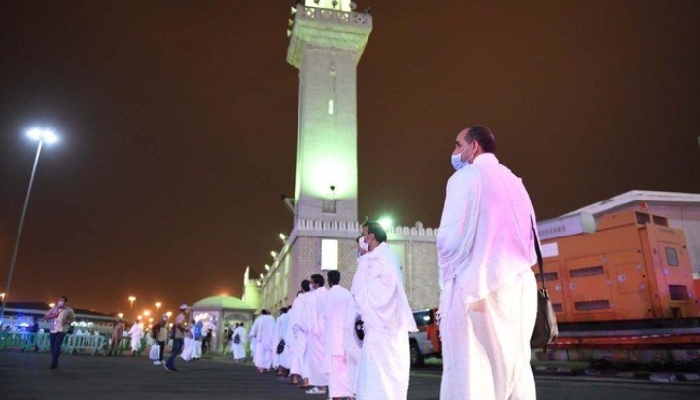
Jeddah, Jul 31: Hajj 2020 pilgrims arrived in Muzdalifah Thursday night to rest after spending the day in Arafat.

Earlier, the pilgrims scaled Mount Arafat to pray and repent, as a highly unusual Hajj approached its climax. They listened to a sermon delivered by Sheikh Abdullah Al-Manea and prayed Dhuhr and Asr prayers together at the Al-Namirah Mosque in Arafat.

This year’s pilgrimage is the smallest in modern times, after the number of participants was greatly restricted to prevent the spread of the coronavirus. 

Tight security was in place around the foot of the rocky hill outside Makkah, also known as Jabal Al-Rahma or Mount of Mercy, in preparation for the high point of the annual ritual.

Video footage shown on state television showed the pilgrims setting off on their climb to the summit. They wore face masks and observed strict social-distancing rules imposed by Saudi authorities.As sprinklers sprayed water on them to provide relief from the summer desert heat, the pilgrims raised their palms as they climbed the slopes of the hill — the site of Prophet Muhammad’s last sermon. When they reached the top they recited holy verses and prayed for forgiveness for their sins.

Earlier, the pilgrims were taken in buses from Mina to Mount Arafat. Strict precautionary measures were in place, with each group accompanied by security teams, ambulances and civil defense vehicles. 

When they arrived, their temperatures were checked before they entered Namirah Mosque to hear a sermon that was translated into 10 languages.

“The camps were set up for pilgrims in Arafat early on,” said Minister of Hajj and Umrah Muhammad Salih Bentin. The sermon at Namirah Mosque was delivered by Sheikh Abdullah Al-Manea, who led the pilgrims in noon and afternoon prayers.

“During Hajj this year, we reiterate that it is essential for pilgrims, as well as everyone assisting them, to adhere to the precautionary regulations that have been implemented,” Al-Manea, a member of the Council of Senior Scholars, said during his sermon. “This is to be done for their own safety.

“Precautions have been put in place to protect lives against the damage that the pandemic can cause, and also to actualize Islam’s teachings pertaining to safeguarding human life by Allah’s permission.”

The stay in Arafat is described as the pinnacle of Hajj and Muslims around the world reflect the actions of pilgrims by asking for forgiveness and praying for their deepest desires.
Pilgrims left Arafat in coaches for Muzdalifah after sunset and will pray the Maghrib and Isha prayers there.

After sunset prayers, the pilgrims made their way down Mount Arafat to Muzdalifah, where they will spend the night before the final Hajj ritual, the symbolic stoning of the devil. 

This year, each pilgrim received sanitized pebbles in advance of the event on Friday, which is the first day of Eid Al-Adha.
This year the Kingdom faced the unprecedented challenge of ensuring pilgrims attending Hajj were protected as much as possible from the risks of the coronavirus.

They will then sleep, pray the Fajr prayer there tomorrow and then leave for Mina.

Comments

Add new comment

  • Coastaldigest.com reserves the right to delete or block any comments.
  • Coastaldigset.com is not responsible for its readers’ comments.
  • Comments that are abusive, incendiary or irrelevant are strictly prohibited.
  • Please use a genuine email ID and provide your name to avoid reject.
News Network
April 20,2020

Riyadh, Apr 20: Six more people have died in Saudi Arabia after contracting coronavirus as 1,122 new coronavirus cases were reported on Monday.

The Saudi health ministry said that total number of cases in the Kingdom had increased to 10,484. It also recorded 92 new recoveries, raising the total to 1,490.

The ministry said precautionary measures shall remain to limit the virus spread.

Comments

Add new comment

  • Coastaldigest.com reserves the right to delete or block any comments.
  • Coastaldigset.com is not responsible for its readers’ comments.
  • Comments that are abusive, incendiary or irrelevant are strictly prohibited.
  • Please use a genuine email ID and provide your name to avoid reject.