‘No objection to pilgrim quota cut’

August 17, 2013

Pilgrim_quotaMakkah, Aug 17: Haj Minister Bandar Hajjar has denied allegations that some countries had raised objections to the 20 percent reduction in the allocation of number of pilgrims allowed for Haj.

Hajjar said the ministry had finalized the allocation of the number of pilgrims that can be accommodated for Haj for various countries, because of the ongoing expansion works undertaken in the Grand Mosque, particularly the Al-Mataf project.

As for the implementation of stringent procedures being adopted because some countries were going through extraordinary circumstances.

The ministry met with all Haj missions and informed them about the strict procedures, and received assurances from them that they would comply with these rules, the minister said.

The instructions mainly focus on the fact that pilgrims should perform their rites without indulging in activities that would affect pilgrims’ safety and security.”

The minister also pointed out that special arrangements had been made for the smooth entry of Syrian pilgrims. The ministry has signed an agreement with the Syrian National Council to facilitate Syrian pilgrims’ crossing through Jordan, Turkey and Lebanon.

The ministry is still working on putting in place a general scheme for the pilgrims’ city in Madinah and Makkah. It is also making all efforts to serve pilgrims from the minute they arrive in the Kingdom until they leave for their countries, he added.

The Haj Ministry has sought cooperation of the ministers of Islamic affairs and holy sites in neighboring countries that still use old buses to transport pilgrims, which in the past led to accidents resulting in loss of life and injuries. The ministries in other Arab countries were asked to transport their pilgrims only up to Makkah in vehicles that are checked for their road worthiness and safety.

Public transport for pilgrims that work under the umbrella of the general union for motorists are subject to various tests to make sure they are safe to transport pilgrims.

The Umrah season was quite successful, and pilgrims left for their countries after performing Umrah rites smoothly and easily, Hajjar said.

The minister said a meeting will be held soon to give final touches to the ministry’s preparations for this year’s Haj.

The preparations were announced during the Ministry’s Eid reception for its employees in Al-Azeziyah neighborhood.

The reception was attended by Secretary-General of the Ministry of Haj Hatem Qadi, the ministry’s press spokesman, and Eisa Rawas, the ministry’s secretary-general for Umrah affairs.

Comments

Add new comment

  • Coastaldigest.com reserves the right to delete or block any comments.
  • Coastaldigset.com is not responsible for its readers’ comments.
  • Comments that are abusive, incendiary or irrelevant are strictly prohibited.
  • Please use a genuine email ID and provide your name to avoid reject.
Agencies
August 4,2020

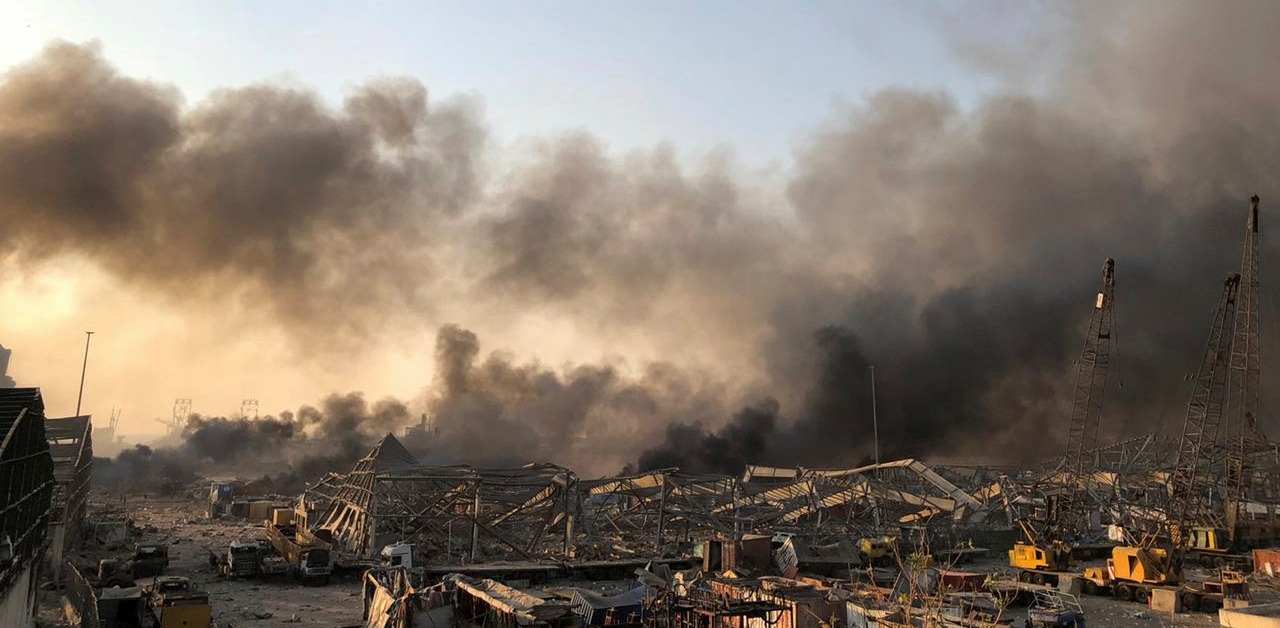
Beirut, Aug 4: A massive explosion has shaken the Lebanese capital of Beirut, with a very high number of casualties expected.

A warehouse at the Beirut Port caught fire on Tuesday afternoon, triggering a huge explosion, Lebanon’s official National News Agency (NNA) reported.

Several smaller explosions were heard before the bigger one occurred.

Abbas Ibrahim, the head of Lebanon’s General Security, said that “highly explosive materials” confiscated earlier had been stored at the site.

Footage shared on social media captured the moment of the bigger explosion, with a colossal shock wave seen traveling fast across several hundreds of meters and shrouding the area in thick smoke.

The blast left enormous material damage to the surrounding buildings and structures. But it was not immediately known how big an area was affected.

There was also no immediate casualty count. Graphic amateur video from the scene showed bodies strewn on the ground, with their clothes blown off.

The NNA said rescue operations were underway. Ambulances were seen heading toward the scene in central Beirut.

Lebanese LBC television channel quoted Lebanon’s Health Minister Hamad Hasan as saying that the blast had caused a “very high number of injuries” and “extensive damage.”

Beirut Governor Marwan Abboud said an unspecified number of firefighters dispatched to extinguish the initial fire had been killed in the explosion.

“As they were putting out the fire, the explosion took place and we’ve [lost them],” he said, breaking down on live TV.

The explosion comes at a time when the Arab country is passing through its worst economic and financial crisis in decades, and amid rising tensions with Israel.

Comments

Add new comment

  • Coastaldigest.com reserves the right to delete or block any comments.
  • Coastaldigset.com is not responsible for its readers’ comments.
  • Comments that are abusive, incendiary or irrelevant are strictly prohibited.
  • Please use a genuine email ID and provide your name to avoid reject.
Agencies
July 31,2020

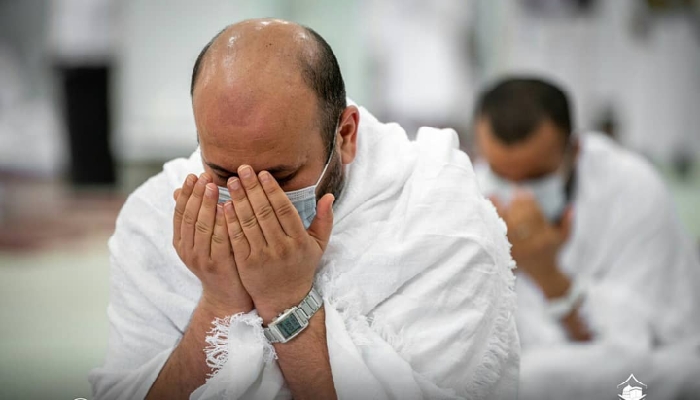
Mount Arafat, July 30: Muslim pilgrims converged Thursday on Saudi Arabia's Mount Arafat for the climax of this year's hajj, the smallest in modern times and a sharp contrast to the massive crowds of previous years.

A tight security cordon has been erected all around the foot of the rocky hill outside Mecca, also known as Jabal al-Rahma or Mount of Mercy.

Pilgrims, donning masks and observing social distancing, were brought in buses from neighbouring Mina, state television showed, as Saudi authorities impose measures to prevent a coronavirus outbreak.

They were subject to temperature checks and attended a sermon -- which state media said was translated into 10 languages -- before they set off on the climb to the summit for hours of Koran recitals and prayers to atone for their sins.

The scene was strikingly different to last year's ritual when a sea of pilgrims ascended Mount Arafat, marshalled by tens of thousands of stewards in a bid to prevent any crushes.

After sunset prayers, pilgrims will make their way down Mount Arafat to Muzdalifah, another holy site where they will sleep under the stars to prepare for the final stage of hajj, the symbolic "stoning of the devil".

It takes place on Friday and also marks the beginning of Eid al-Adha, the festival of sacrifice.

The hajj, one of the five pillars of Islam and a must for able-bodied Muslims at least once in their lifetime, is usually one of the world's largest religious gatherings.

But only up to 10,000 people already residing in the kingdom will participate in this year's ritual, compared with 2019's gathering of some 2.5 million from around the world.

"You are not our guests but those of God, the custodian of the two holy mosques (Saudi Arabia's King Salman) and the nation," Hajj Minister Mohammad Benten said in a video released by the media ministry on Wednesday.

Security cordon

A security cordon has been thrown around the holy sites to prevent any security breaches, an interior ministry spokesman said.

Riyadh faced strong criticism in 2015 when some 2,300 worshippers were killed in the deadliest stampede in the gathering's history.

But this year, those risks are greatly reduced by the much smaller crowd.

The pilgrims have all been tested for the virus, and foreign journalists were barred from this year's hajj, usually a huge global media event.

As part of the rites completed over five days in the holy city of Mecca and its surroundings, the pilgrims converged on Mount Arafat after spending the night in Mina.

A district of Mecca, Mina sits in a narrow valley surrounded by rocky mountains, and is transformed each year into a vast encampment for pilgrims.

They began the hajj on Wednesday with their first "tawaf", the circumambulation of the Kaaba, a large structure in Mecca’s Grand Mosque towards which Muslims around the world pray.

The Kaaba is draped in a black cloth embroidered in gold with Koranic verses and known as the kiswa, which is changed each year during the pilgrimage.

Pilgrims were brought inside the mosque in small batches, walking along paths marked on the floor, in sharp contrast to the normal sea of humanity that swirls around the Kaaba during hajj.

Comments

Add new comment

  • Coastaldigest.com reserves the right to delete or block any comments.
  • Coastaldigset.com is not responsible for its readers’ comments.
  • Comments that are abusive, incendiary or irrelevant are strictly prohibited.
  • Please use a genuine email ID and provide your name to avoid reject.
News Network
January 6,2020

Dubai/Washington, Jan 6: Tens of thousands of Iranians thronged the streets of Tehran on Monday for the funeral of Quds Force commander Qassim Suleimani who was killed in a US air strike last week and his daughter said his death would bring a "dark day" for the United States.

"Crazy Trump, don't think that everything is over with my father's martyrdom," Zeinab Suleimani said in her address broadcast on state television after US President Donald Trump ordered Friday's strike that killed the top Iranian general.

Iran has promised to avenge the killing of Qassim Suleimani, the architect of Iran's drive to extend its influence across the region and a national hero among many Iranians, even many of those who did not consider themselves devoted supporters of the Islamic Republic's clerical rulers.

The scale of the crowds in Tehran shown on television mirrored the masses that gathered in 1989 for the funeral of the founder of the Islamic Republic, Ayatollah Ruhollah Khomeini.

In response to Iran's warnings, Trump has threatened to hit 52 Iranian sites, including cultural targets, if Tehran attacks Americans or US assets, deepening a crisis that has heightened fears of a major Middle East conflagration.

The coffins of the Iranian general and Iraqi militia leader Abu Mahdi al-Muhandis, who was also killed in Friday's attack on Baghdad airport, were passed across the heads of mourners massed in central Tehran, many of them chanting "Death to America".

One of the Islamic Republic's major regional goals, namely to drive US forces out of neighbouring Iraq, came a step closer on Sunday when the Iraqi parliament backed a recommendation by the prime minister for all foreign troops to be ordered out.

"Despite the internal and external difficulties that we might face, it remains best for Iraq on principle and practically," said Iraqi caretaker Prime Minister Adel Abdul Mahdi, who resigned in November amid anti-government protests.

Iraq's rival Shi'ite leaders, including ones opposed to Iranian influence, have united since Friday's attack in calling for the expulsion of US troops.

Esmail Qaani, the new head of the Quds Force, the Revolutionary Guards' unit in charge of activities abroad, said Iran would continue Suleimani's path and said "the only compensation for us would be to remove America from the region."

ALLIES AT FUNERAL

Prayers at Suleimani's funeral in Tehran, which will later move to his southern home city of Kerman, were led by Iran's Supreme Leader Ayatollah Ali Khamenei. Suleimani was widely seen as the second most powerful figure in Iran behind Khamenei.

The funeral was attended by some of Iran's allies in the region, including Ismail Haniyeh, the leader of Palestinian group Hamas who said: "I declare that the martyred commander Suleimani is a martyr of Jerusalem."

Adding to tensions, Iran said it was taking another step back from commitments under a 2015 nuclear deal with six major powers, a pact from which the United States withdrew in 2018.

Washington has since imposed tough sanctions on Iran, describing its policy as "maximum pressure" and saying it wanted to drive down Iranian oil exports - the main source of government revenues - to zero.

Talking to reporters aboard Air Force One on the way to Washington from Florida on Sunday, Trump stood by his remarks to include cultural sites on his list of potential targets, despite drawing criticism from US politicians.

"They're allowed to kill our people. They're allowed to torture and maim our people. They're allowed to use roadside bombs and blow up our people. And we're not allowed to touch their cultural sites? It doesn't work that way," Trump said.

Democratic critics of the Republican president have said Trump was reckless in authorizing the strike, and some said his comments about targeting cultural sites amounted to threats to commit war crimes. Many asked why Soleimani, long seen as a threat by US authorities, had to be killed now.

Republicans in the US Congress have generally backed Trump's move.

Trump also threatened sanctions against Iraq and said that if US troops were required to leave the country, Iraq's government would have to pay Washington for the cost of a "very extraordinarily expensive" air base there.

He said if Iraq asked US forces to leave on an unfriendly basis, "we will charge them sanctions like they've never seen before ever. It'll make Iranian sanctions look somewhat tame."

Comments

Add new comment

  • Coastaldigest.com reserves the right to delete or block any comments.
  • Coastaldigset.com is not responsible for its readers’ comments.
  • Comments that are abusive, incendiary or irrelevant are strictly prohibited.
  • Please use a genuine email ID and provide your name to avoid reject.