



NRIs warned against taking cash to India

September 6, 2013

Cash_to_India

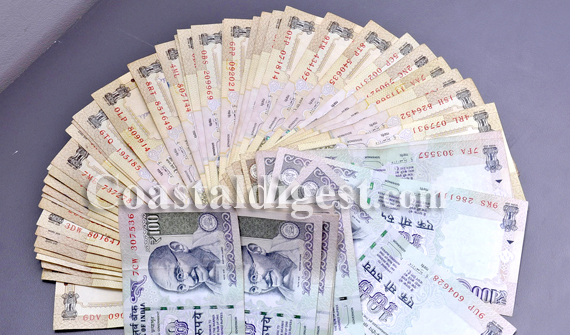
Dubai, Sep 6: The Central Bank of the UAE has asked banks and exchange houses operating in the country to advise their customers travelling to India to abide by the laws on carrying cash to India.

In a notice issued on Tuesday, the Central Bank also asked the banks and money exchangers to warn their customers of the consequences of failing to do so.

“The penalties stipulated in the new law include confiscation of money, prosecution and imprisonment,” the notice said.

It advised the firms that the Indian Central Board of Excise and Customs (CBEC) had implemented a new Law on 22/05/2013, criminalising bringing cash in Indian currency into India.

As per the law, foreign travellers to India are strictly prohibited from carrying cash in Indian currency into India, while Indian nationals are permitted to carry cash not exceeding Rs7,500.

The law also stipulates that all travellers to India must declare all cash in foreign currencies they might be bringing into India, including the UAE dirham, where its value exceeds $5,000. Foreigners should also make a declaration when the aggregate value of all foreign bills in the form of currency notes, financial instruments, travellers’ cheques etc. is equal to or exceeds $10,000, the notice added.

The Central Bank’s move follows another advisory issued by the Indian Embassy in Abu Dhabi in March. The mission advised non-redident Indians staying in the UAE against carrying Indian currency notes when they visit their homeland.

According to the mission, there is a general misconception that NRIs are allowed to carry Indian currency and there had been some instances when NRIs were found carrying large amounts of cash in the form of Indian currency while visiting India and faced problems at the airport.

“In some cases, the currency being carried by NRIs has even been found to be counterfeit,” the Embassy had said.

Its counterpart in Oman had also issued a similar advisory after “cases of counterfeit Indian currency involving Omani visitors” which the mission described as a cause for concern for the Indian government.

When contacted, Indian Ambassador to the UAE M.K. Lokesh denied the Embassy requesting the UAE Central Bank to issue any advisory on the law.

Promoth Manghat, vice-president of global operations at UAE Exchange, confirmed receiving the notice from the Central Bank. “We have already started informing our customers about this law when they come for Indian currency. The new law hasn’t had much of impact in the market.”

A section of the Indian expatriates feels they should also be allowed to carry a minimum amount of cash in Indian currency for emergency use after landing in India. However, officials point out that NRIs can exchange the UAE Dirham or any other foreign currencies with the Indian rupee on arrival in India, where there is a better system to check counterfeit Indian currency.

Comments

Add new comment

  • Coastaldigest.com reserves the right to delete or block any comments.
  • Coastaldigset.com is not responsible for its readers’ comments.
  • Comments that are abusive, incendiary or irrelevant are strictly prohibited.
  • Please use a genuine email ID and provide your name to avoid reject.
News Network
July 1,2020

Riyadh, Jul 1: Saudis braced Wednesday for a tripling in value added tax, another unpopular austerity measure after the twin shocks of coronavirus and an oil price slump triggered the kingdom's worst economic decline in decades.

Retailers in the country reported a sharp uptick in sales this week of everything from gold and electronics to cars and building materials, as shoppers sought to stock up before VAT is raised to 15 percent.

The hike could stir public resentment as it weighs on household incomes, pushing up inflation and depressing consumer spending as the kingdom emerges from a three-month coronavirus lockdown.

"Cuts, cuts, cuts everywhere," a Saudi teacher in Riyadh told AFP, bemoaning vanishing subsidies as salaries remain stagnant.

"Air conditioner, television, electronic items," he said, rattling off a list of items he bought last week ahead of the VAT hike.

"I can't afford these things from Wednesday."

With its vast oil wealth funding the Arab world's biggest economy, the kingdom had for decades been able to fund massive spending with no taxes at all.

It only introduced VAT in 2018, as part of a push to reduce its dependence on crude revenues.

Then, seeking to shore up state finances battered by sliding oil prices and the coronavirus crisis, it announced in May that it would triple VAT and halt a cost-of-living monthly allowance to citizens.

The austerity push underscores how Saudi Arabia's once-lavish spending is becoming a thing of the past, with the erosion of the welfare system leaving a mostly young population to cope with reduced incomes and a lifestyle downgrade.

That could pile strain on a decades-old social contract whereby citizens were given generous subsidies and handouts in exchange for loyalty to the absolute monarchy.

The rising cost of living may prompt many to ask why state funds are being lavished on multi-billion-dollar projects and overseas assets, including the proposed purchase of English football club Newcastle United.

Shopping malls in the kingdom have drawn large crowds in recent days as retailers offered "pre-VAT sales" and discounts before the hike kicks in.

A gold shop in Riyadh told AFP it saw a 70 percent jump in sales in recent weeks, while a car dealership saw them tick up by 15 percent.

Once the new rate is in place, businesses are predicting depressed sales of everything from cars to cosmetics and home appliances.

Capital Economics forecast inflation will jump up to six percent year-on-year in July, from 1.1 percent in May, as a result.

"The government ended the country's lockdown (in June) and there are signs that economic activity has started to recover," Capital Economics said in a report.

"Nonetheless, we expect the recovery to be slow-going as fiscal austerity measures bite."

The kingdom also risks losing its edge against other Gulf states, including its principal ally the United Arab Emirates, which introduced VAT at the same time but has so far refrained from raising it beyond five percent.

"Saudi Arabia is taking massive risks with contractionary fiscal policies," said Tarek Fadlallah, chief executive officer of the Middle East unit of Nomura Asset Management.

But the kingdom has few choices as oil revenue declines.

Its finances have taken another blow as authorities massively scaled back this year's hajj pilgrimage, from 2.5 million pilgrims last year to around a thousand already inside the country, and suspended the lesser umrah because of coronavirus.

Together the rites rake in some $12 billion annually.

The International Monetary Fund warned the kingdom's GDP will shrink by 6.8 percent this year -- its worst performance since the 1980s oil glut.

The austerity drive would boost state coffers by 100 billion riyals ($26.6 billion), according to state media.

But the measures are unlikely to plug the kingdom's huge budget deficit.

The Saudi Jadwa Investment group forecasts the shortfall will rise to a record $112 billion this year.

Comments

Add new comment

  • Coastaldigest.com reserves the right to delete or block any comments.
  • Coastaldigset.com is not responsible for its readers’ comments.
  • Comments that are abusive, incendiary or irrelevant are strictly prohibited.
  • Please use a genuine email ID and provide your name to avoid reject.
News Network
January 3,2020

Hong Kong, Jan 3: Oil prices soared more than four per cent Friday following claims that the US had killed a top Iranian general, ratcheting up tensions between the foes and fuelling fears of a conflict in the crude-rich region.

The head of Iran's Quds Force, Qasem Soleimani, was hit in an attack on Baghdad international airport early Friday, according to Hased, a powerful Iraqi paramilitary force linked to Tehran.

Brent surged 4.4 per cent to USD 69.16 and WTI jumped 4.3 per cent to 63.84.

“Oil prices still have room for further upside as many analysts are still having to upgrade their demand forecasts to include a rather calm period on the trade front,” Moya said, referring to the warming trade relation between China and the United States.

“President Trump is likely to take a break on being ‘tariff man’ until we get beyond the presidential election in November.”

Comments

Add new comment

  • Coastaldigest.com reserves the right to delete or block any comments.
  • Coastaldigset.com is not responsible for its readers’ comments.
  • Comments that are abusive, incendiary or irrelevant are strictly prohibited.
  • Please use a genuine email ID and provide your name to avoid reject.
Gulf News
April 12,2020

Hyderabad, Apr 12: In the backdrop of rising tide of anti-Muslim hatred and Islamophobia on the social media, a company in Dubai sacked an employee from Hyderabad for his hate-filled posts on Facebook.

Bala Krishna Nakka from Hyderabad, who was working as Chief Accountant at Dubai’s Moro Hub Data Solutions Company, was sacked after his Facebook went viral evoking widespread condemnation. The man had posted images on his Facebook page which showed Muslims as suicide bombers wearing bombs in the form of coronavirus cells.

It triggered demands both on Facebook and Twitter for action against him. In a quick response the company announced that the person was being sacked from his job, as the company had zero tolerance towards hate propaganda.

Moro Hub said in a statement: “At Moro, we take a zero tolerance attitude to material that is or may be deemed Islamophoic or hate speech. The tweets that we have been alerted to do not, in any way, reflect Moro’s brand values.”

Since the outbreak of coronavirus in India, a more intense hate propaganda has been unleashed by right wing elements on social media targeting India’s Muslim minority, some of whom are based in Gulf region.

As both the mainstream media, especially Indian TV channels, as well as social media users, have unleashed a campaign linking the spread of virus to a Muslim missionary organisation, the Tableeghi Jamaat, in India, a fresh war of words has broken out on social media.

While some activists have taken up it on themselves to highlight the hate propaganda and draw the attention of employers to such hate mongers, the right wing social media handles have also launched their own counter-offensives against such activists.

Comments

Add new comment

  • Coastaldigest.com reserves the right to delete or block any comments.
  • Coastaldigset.com is not responsible for its readers’ comments.
  • Comments that are abusive, incendiary or irrelevant are strictly prohibited.
  • Please use a genuine email ID and provide your name to avoid reject.