




NRIs warned against taking cash to India

September 6, 2013

Cash_to_India

Dubai, Sep 6: The Central Bank of the UAE has asked banks and exchange houses operating in the country to advise their customers travelling to India to abide by the laws on carrying cash to India.

In a notice issued on Tuesday, the Central Bank also asked the banks and money exchangers to warn their customers of the consequences of failing to do so.

“The penalties stipulated in the new law include confiscation of money, prosecution and imprisonment,” the notice said.

It advised the firms that the Indian Central Board of Excise and Customs (CBEC) had implemented a new Law on 22/05/2013, criminalising bringing cash in Indian currency into India.

As per the law, foreign travellers to India are strictly prohibited from carrying cash in Indian currency into India, while Indian nationals are permitted to carry cash not exceeding Rs7,500.

The law also stipulates that all travellers to India must declare all cash in foreign currencies they might be bringing into India, including the UAE dirham, where its value exceeds $5,000. Foreigners should also make a declaration when the aggregate value of all foreign bills in the form of currency notes, financial instruments, travellers’ cheques etc. is equal to or exceeds $10,000, the notice added.

The Central Bank’s move follows another advisory issued by the Indian Embassy in Abu Dhabi in March. The mission advised non-redident Indians staying in the UAE against carrying Indian currency notes when they visit their homeland.

According to the mission, there is a general misconception that NRIs are allowed to carry Indian currency and there had been some instances when NRIs were found carrying large amounts of cash in the form of Indian currency while visiting India and faced problems at the airport.

“In some cases, the currency being carried by NRIs has even been found to be counterfeit,” the Embassy had said.

Its counterpart in Oman had also issued a similar advisory after “cases of counterfeit Indian currency involving Omani visitors” which the mission described as a cause for concern for the Indian government.

When contacted, Indian Ambassador to the UAE M.K. Lokesh denied the Embassy requesting the UAE Central Bank to issue any advisory on the law.

Promoth Manghat, vice-president of global operations at UAE Exchange, confirmed receiving the notice from the Central Bank. “We have already started informing our customers about this law when they come for Indian currency. The new law hasn’t had much of impact in the market.”

A section of the Indian expatriates feels they should also be allowed to carry a minimum amount of cash in Indian currency for emergency use after landing in India. However, officials point out that NRIs can exchange the UAE Dirham or any other foreign currencies with the Indian rupee on arrival in India, where there is a better system to check counterfeit Indian currency.

Comments

Add new comment

  • Coastaldigest.com reserves the right to delete or block any comments.
  • Coastaldigset.com is not responsible for its readers’ comments.
  • Comments that are abusive, incendiary or irrelevant are strictly prohibited.
  • Please use a genuine email ID and provide your name to avoid reject.
News Network
March 31,2020

Mar 30: the UAE Cabinet approved a series of new initiatives, foremost among which was the automatic extension of residence permits expiring from March 1.

The residence visas would be extended for a renewable period of three months without any fees to ease the economic impact of the Covid-19 crisis on residents, official news agency WAM reported.

The Cabinet has also waived the administrative fines associated with infractions on the services provided by the Federal Authority of Identity and Citizenship, starting April 1 and lasting for a renewable period of three months.

The initiatives also entail granting a temporary license to use digital solutions for remotely notarising and completing judicial transactions.

Government services expiring from March 1 will also be extended from April 1 for a renewable period of three months. The decision applies to all federal government services, including documents, permits, licenses and commercial registers.

The UAE has introduced a slew of initiatives to control the spread of the Covid-19 virus, including the online renewal of driving licences and vehicle’s registration cards.

The country’s telecom regulator, Telecommunications Regulatory Authority (TRA), also issued a directive that no mobile service with expired ID documents will be disconnected or suspended in the UAE.

The UAE has reported a total of 611 Covid-19 infections and five related deaths in the country.

A national sterilisation programme is underway that will continue until Saturday April 4, concluding on the morning of Sunday, April 5.

Carried out daily from 8pm until 6am the following morning, the programme will include the disinfection of private and public facilities.

Comments

Add new comment

  • Coastaldigest.com reserves the right to delete or block any comments.
  • Coastaldigset.com is not responsible for its readers’ comments.
  • Comments that are abusive, incendiary or irrelevant are strictly prohibited.
  • Please use a genuine email ID and provide your name to avoid reject.
Agencies
July 31,2020

Mount Arafat, July 30: Muslim pilgrims converged Thursday on Saudi Arabia's Mount Arafat for the climax of this year's hajj, the smallest in modern times and a sharp contrast to the massive crowds of previous years.

A tight security cordon has been erected all around the foot of the rocky hill outside Mecca, also known as Jabal al-Rahma or Mount of Mercy.

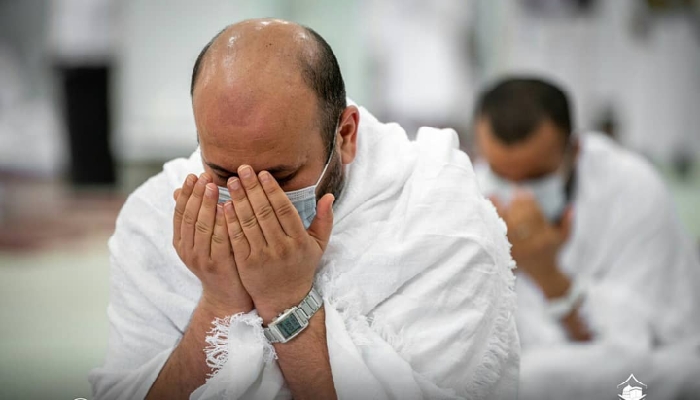
Pilgrims, donning masks and observing social distancing, were brought in buses from neighbouring Mina, state television showed, as Saudi authorities impose measures to prevent a coronavirus outbreak.

They were subject to temperature checks and attended a sermon -- which state media said was translated into 10 languages -- before they set off on the climb to the summit for hours of Koran recitals and prayers to atone for their sins.

The scene was strikingly different to last year's ritual when a sea of pilgrims ascended Mount Arafat, marshalled by tens of thousands of stewards in a bid to prevent any crushes.

After sunset prayers, pilgrims will make their way down Mount Arafat to Muzdalifah, another holy site where they will sleep under the stars to prepare for the final stage of hajj, the symbolic "stoning of the devil".

It takes place on Friday and also marks the beginning of Eid al-Adha, the festival of sacrifice.

The hajj, one of the five pillars of Islam and a must for able-bodied Muslims at least once in their lifetime, is usually one of the world's largest religious gatherings.

But only up to 10,000 people already residing in the kingdom will participate in this year's ritual, compared with 2019's gathering of some 2.5 million from around the world.

"You are not our guests but those of God, the custodian of the two holy mosques (Saudi Arabia's King Salman) and the nation," Hajj Minister Mohammad Benten said in a video released by the media ministry on Wednesday.

Security cordon

A security cordon has been thrown around the holy sites to prevent any security breaches, an interior ministry spokesman said.

Riyadh faced strong criticism in 2015 when some 2,300 worshippers were killed in the deadliest stampede in the gathering's history.

But this year, those risks are greatly reduced by the much smaller crowd.

The pilgrims have all been tested for the virus, and foreign journalists were barred from this year's hajj, usually a huge global media event.

As part of the rites completed over five days in the holy city of Mecca and its surroundings, the pilgrims converged on Mount Arafat after spending the night in Mina.

A district of Mecca, Mina sits in a narrow valley surrounded by rocky mountains, and is transformed each year into a vast encampment for pilgrims.

They began the hajj on Wednesday with their first "tawaf", the circumambulation of the Kaaba, a large structure in Mecca’s Grand Mosque towards which Muslims around the world pray.

The Kaaba is draped in a black cloth embroidered in gold with Koranic verses and known as the kiswa, which is changed each year during the pilgrimage.

Pilgrims were brought inside the mosque in small batches, walking along paths marked on the floor, in sharp contrast to the normal sea of humanity that swirls around the Kaaba during hajj.

Comments

Add new comment

  • Coastaldigest.com reserves the right to delete or block any comments.
  • Coastaldigset.com is not responsible for its readers’ comments.
  • Comments that are abusive, incendiary or irrelevant are strictly prohibited.
  • Please use a genuine email ID and provide your name to avoid reject.
News Network
July 5,2020

Riyadh, Jul 5: Custodian of the Two Holy Mosques King Salman has approved the extension of the validity of the expired iqama (residency permit) and exit and reentry visas of expatriates who are outside the Kingdom for a period of three months without any fee.

The iqama of expatriates inside the Kingdom as well as the visa of visitors who are in the Kingdom of which the validity expires during the period of suspension of entry and exit from the Kingdom will also be extended for a period of three months without any charge.

The validity of final exit visas as well as exit and reentry visas issued for expatriates, who are in the Kingdom, but were not used during the lockdown period will be extended for a period of three months without any fee, the Saudi Press Agency reported quoting an official source at the Ministry of Interior.

The ministry source said that these measures were taken as part of the continuous efforts made by the government of King Salman to mitigate the effects of the coronavirus pandemic on individuals as well as on private sector establishments and investors, economic activities in the Kingdom, following the adoption of the preventive measures to stem the spread of the pandemic.

The beneficiaries of the King’s order include all expatriates who are outside the Kingdom on exit and reentry visas, which expired during the lockdown period and after lifting of the lockdown.

These expatriates are not in a position to return to the Kingdom due to the enforcement of suspension of international flight service and temporary ban on entry and exit from the Kingdom.

The beneficiaries also include those expatriates who are still in the Kingdom after issuance of final exit visas or exit and reentry visas but could not travel because of the suspension of entry and exit from the Kingdom.

Comments

Add new comment

  • Coastaldigest.com reserves the right to delete or block any comments.
  • Coastaldigset.com is not responsible for its readers’ comments.
  • Comments that are abusive, incendiary or irrelevant are strictly prohibited.
  • Please use a genuine email ID and provide your name to avoid reject.