


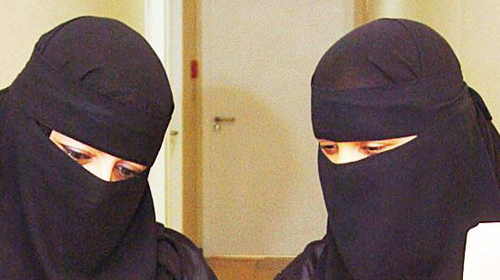
Saudi women granted licenses to practice law

October 7, 2013

Saudi_women_copy

Jeddah, Oct 7: Four Saudi women were granted licenses on Sunday by the Ministry of Justice to practice law in the Kingdom’s courts.

Up until the implementation of this decision, Saudi women who graduated from law school were previously employed as legal consultants, but were banned from practicing law in the courtroom and were not given attorney status. They also could not own and operate law firms.

Female lawyers have often complained about their inability to use their law degrees despite years of studying and, in some cases, earning a doctorate in law.

The ministry’s move could have a wide-ranging impact on Saudi Arabia’s domestic court system. Women in divorce and custody cases have long battled a system that favors fathers and husbands.

Saudi female clients will now have an opportunity to be represented by women who can empathize with their plight.

“The ministry’s decision to grant Saudi female lawyers licenses to open their own law offices will help female lawyers work without facing obstacles, especially since there are many women who prefer to deal with female lawyers,” Feriyal Al-Kinj, a female Saudi lawyer, told Arab News.

The ministry awarded a license to Arwa Al-Hujaili, a King Abdulaziz University graduate from Jeddah, to become a legal trainee in April. Al-Hujaili can practice law once she completes her three-year internship.

What remains to be determined is whether these female lawyers will be protected against discrimination in the courtroom and whether they will be allowed to travel freely to perform their jobs.

Al-Kinj said the ministry should establish special halls for women in courts, adding that there are 2,500 Saudi women who work as legal consultants in the Kingdom.

“Around 50 percent of my clients are male,”she said.

Bayan Zahran, a female Saudi lawyer, said: “This license will be granted to female lawyers after they fulfill the requirements to practice law in the country’s courts. Such a step represents the full support of Custodian of the Two Holy Mosques King Abdullah to Saudi women.

“This license can contribute to helping female lawyers to work within this profession. Female lawyers will be able to work independently from male lawyers.”

Comments

Add new comment

  • Coastaldigest.com reserves the right to delete or block any comments.
  • Coastaldigset.com is not responsible for its readers’ comments.
  • Comments that are abusive, incendiary or irrelevant are strictly prohibited.
  • Please use a genuine email ID and provide your name to avoid reject.
Agencies
May 7,2020

A patient in hospital with Covid-19 has given birth to a healthy baby boy in Dubai.

The 25-year-old Indian was admitted to Al Zahra Hospital after testing positive on May 2.

Although the baby was not due to arrive until May 19, the woman went into labour three days later and delivered a healthy boy weighing 3.8kg.

The parents are yet to name the child, who has also been tested for the virus.

“When we first received the Covid-19 positive diagnosis, we were afraid for the health of both my wife and the baby,” said the boy’s father, who did not want to give his name.

“Thankfully with the help of the doctors and nurses at Al Zahra Hospital, my son was born with no complications and my wife remains in stable condition.

“We couldn’t be more grateful.”

Despite arriving two weeks early, both mother and child are doing well but will only be allowed to leave the hospital to return to their home in Dubai after they return three negative tests on the trot.

“The contractions started very suddenly and it all happened very quickly,” said Al Zahra Hospital nursing director Maysoon Yousef.

“The delivery took about 10 to 15 minutes which is something we do not see very often.

“There were no complications and both the mother and baby are in good condition.”

Strict measures are in place to ensure hygiene for those inside the hospital, as well as visitors.

The new mum and her son are in the same room as the baby needs to be nursed.

According to the Centres for Disease Control and Prevention, a US national public health institute, there is no evidence that suggests the virus can be transmitted through breastfeeding.

New mothers infected with the virus should wear a mask, wash their hands before and after touching the baby.

“We operate by the latest Covid-19 international and local guidelines when it comes to the management of our maternity patients and otherwise,” said Dr Ghassan Lutfi, head of obstetrics and gynaecology at the hospital.

“We take strict measures to guarantee that there is no risk of cross contamination and that all our patients are in safe hands.”

Comments

Add new comment

  • Coastaldigest.com reserves the right to delete or block any comments.
  • Coastaldigset.com is not responsible for its readers’ comments.
  • Comments that are abusive, incendiary or irrelevant are strictly prohibited.
  • Please use a genuine email ID and provide your name to avoid reject.
News Network
April 24,2020

Apr 24: Dubai's Supreme Committee of Crisis and Disaster Management has announced partial easing of restrictions on public movement in the emirate starting from Friday amid the COVID-19 outbreak.

The announcement is in line with the decisions of the Ministry of Health and Prevention and the National Emergency Crisis and Disaster Management Authority (NCEMA), a statement released late on Thursday said.

The move, which coincides with the start of the fasting month of Ramzan, will allow increased freedom of movement while ensuring the continuation of strict precautionary and preventive measures, the statement said.

The Committee has also outlined a new set of guidelines on movement and a list of exempted commercial activities and vital sectors, it added.

The decision to reduce restrictions on movement in Dubai follows a careful assessment of the current situation and analysis of reports from various authorities working to combat the pandemic, the committee said.

Underlining the emirate’s success in countering the spread of the virus, it said that stringent measures undertaken over the last three weeks have significantly helped to mitigate the crisis.

It further stressed that despite the partial easing of restrictions on movement, people will not be allowed to hold public or private gatherings and those who breach the guidelines will face legal action.

The need to ensure the safety and wellbeing of the community cannot be underestimated, the Committee stressed.

"Despite the difficult circumstances the world is facing today, the UAE has set an example for dealing with the crisis. This was also made possible through the commitment of all individuals and institutions both in the private and public sector,” the committee said in the statement.

“All measures undertaken by the country have been driven by the objective of safeguarding everyone’s safety and wellbeing,” it added.

Public transport (bus and metro), restaurants and cafes (except for buffet and shisha), retail sector (malls, high-street outlets and souqs), wholesale sector and maintenance shops will be allowed to operate under certain conditions, it said.

Shopping malls, markets and commercial outlets will be open daily from 12 pm to 10 pm. Restaurants and shops are allowed to operate at a maximum of 30 per cent capacity at shopping malls, it said.

Malls and retail outlets are not allowed to hold entertainment events to avoid congestion and crowding, it added.

Restaurants and cafés too have been allowed to operate but are not permitted to serve shisha and buffet. Dine-in customers are allowed but should occupy only a maximum of 30 per cent of the outlet’s capacity and only single-use cutlery can be used at restaurants and cafes, it said.

However, family entertainment facilities, cinemas, changing rooms and prayer rooms will not be allowed to operate. Hotels will be allowed to operate without opening pools, gyms, sauna and massage parlours.

A maximum of 30 per cent of the workforce of all organisations will be allowed to work from their offices while the rest will be required to work from home.

As part of the first phase of easing of restrictions, the stringent curbs on public movement will now be limited to the period between 10 pm to 6 am. During this period, the public will be allowed to leave their homes only for medical emergencies.

Individuals will be able to leave their homes between 6 am and 10 pm without a permit.

The public will be required to strictly follow precautionary measures which include maintaining physical distance from others as per guidelines and wearing a face mask. Those who do not wear a mask will be subject to a fine of AED 1,000.

Members of the public have also been allowed to exercise outside their homes provided they do not leave their area of residence. They can undertake activities such as walking, running or cycling for 1-2 hours each time. Only a maximum of three people can exercise at the same time.

Permission has also been granted to allow visit first and second degree relatives as long as gatherings are restricted to not more than five people. However, visiting high-risk individuals (individuals above 60 years and those with underlying medical conditions) should be avoided.

Comments

Add new comment

  • Coastaldigest.com reserves the right to delete or block any comments.
  • Coastaldigset.com is not responsible for its readers’ comments.
  • Comments that are abusive, incendiary or irrelevant are strictly prohibited.
  • Please use a genuine email ID and provide your name to avoid reject.
News Network
May 21,2020

Dubai, May 21: Around 10,000 Iranian health workers have been infected with the new coronavirus, the semi-official ILNA news agency quoted a deputy health minister as saying on Thursday.

Health services are stretched thin in Iran, the Middle East country hardest hit by the respiratory pandemic, with 7,249 deaths and a total of 129,341 infections. The Health Ministry said in April that over 100 health workers had died of COVID-19.

No more details on infections among health workers were immediately available.

Earlier on Thursday, Health Minister Saeed Namaki appealed to Iranians to avoid travelling during the Eid al-Fitr religious holiday later this month to avoid the risk of a new surge of coronavirus infections, state TV reported.

Iranians often travel to different cities around the country to mark the end of the Muslim holy fasting month of Ramadan, something Namaki said could lead to a disregard of social distancing rules and a fresh outbreak of COVID-19.

"I am urging you not to travel during the Eid. Definitely, such trips mean new cases of infection...People should not travel to and from those high-risk red areas," Namaki was quoted by state television as saying.

"Some 90% of the population in many areas has not yet contracted the disease. In the case of a new outbreak, it will be very difficult for me and my colleagues to control it."

A report by parliament's research centre suggested that the actual tally of infections and deaths in Iran might be almost twice that announced by the health ministry.

However, worried that measures to limit public activities could wreck an economy which has already been battered by U.S. sanctions, the government has been easing most restrictions on normal life in late April.

Infected cases have been on a rising trajectory for the past two weeks. However, President Hassan Rouhani said on Wednesday that Iran was close to curbing the outbreak.

Comments

Add new comment

  • Coastaldigest.com reserves the right to delete or block any comments.
  • Coastaldigset.com is not responsible for its readers’ comments.
  • Comments that are abusive, incendiary or irrelevant are strictly prohibited.
  • Please use a genuine email ID and provide your name to avoid reject.