



Growing Israeli passion for business with India

December 10, 2012
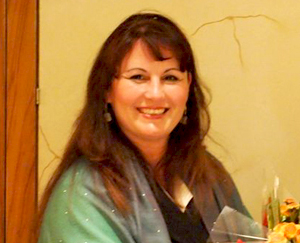
Anat-Bernstein-Reich

Bilateral trade between India and Israel has gone up from a mere $120 million to $5 billion since the two nations formally established relations in 1992, but as president of the Israel-India Friendship Association (IIFA) she sees a much higher potential.

"I want to show the beauty of India to the world," says Bernstein-Reich, who serves as co-producer of the "Bharati Show - The Wonder that is India", a Bollywood style show that has gone all around the world over the last several years.

She also runs a five-session course on doing business with India with a Hindi class and bits of history, politics and culture thrown in.

There Israeli business people learn to say phrases like "Kya haal hai?" (How are you?), "Phir milenge" (See you later), the meaning of things like "Diwali, Ganesh and Bindi" and even the Indian craze about the game of cricket.

"Once they understand culture they can do business," Bernstein-Reich tells a group of visiting Indian and Indian-American journalists and policy leaders as she lists a wide range of areas that can take Israeli-Indian trade to a projected $15 billion in a few years.

Dan Catarivas, director of the division of foreign trade and international relations at the Manufacturers Association of Israel and a former government official, agrees seeing "much more potential" in the India-Israel-US trade relationship, particularly in the area of high technology.

Noting that Israel was in the process of negotiating a Free Trade Agreement with India, Catarivas said while transfer of technology to China was fraught with risks because of US restrictions, there was no such danger in working with India in hi-tech and IT areas.

Eitan Yudilevich, executive director of the Israel-US Binational Industrial Research and Development Foundation (BIRD), which promotes strategic partnerships between Israeli and American companies in various technological fields, concurs.

Yudilevich, a former head of the missiles division at Rafael Advanced Defence systems, the Israeli authority for development of weapons and military technology, who played a key role in the development of Israel's famous Iron dome, suggests the Singapore model for hi-tech trade with India.

This would have military cooperation spilling over or providing a spin-off in civilian areas, he says, noting that the Israelis were keen on going to India, shopping for partners there as long as the Americans don't mind.

Currently India is the largest customer of Israeli military equipment and Israel is the second-largest military partner of India after the Russian Federation. The military business between the two nations is worth around $9 billion.

Diamonds are another area of major trade between the two nations, but there is great scope for expansion in areas of agriculture, solar energy, energy, water treatment, desalination, clean technology and much more.

The only problem is their business culture, says Bernstein-Reich. While Israelis come straight to the point, Indians like to negotiate endlessly and reopen settled issues, she says and thus advises her clients: "Leave some room for bargaining."



Comments

Add new comment

  • Coastaldigest.com reserves the right to delete or block any comments.
  • Coastaldigset.com is not responsible for its readers’ comments.
  • Comments that are abusive, incendiary or irrelevant are strictly prohibited.
  • Please use a genuine email ID and provide your name to avoid reject.
Agencies
July 24,2020

Pune, Jul 24: Agile and dexterous, 85-year-old Shantabai Pawar wields sticks with absolute ease as she displays 'lathi-kathi' on the streets of Pune.

A video of her, displaying her skills in the Indian martial art form for livelihood, has gone viral on social media.

Pawar told media persons that she learnt the art form when she was only eight and has been practising it since then. The ancient martial art s believed to be linked to Dombari community, a nomadic tribe in Maharashtra.

"I have been pursuing the art of lathi-kathi since I was eight. I have never left it. It is part of me and it is an honour to practice it. My father taught me this. He taught me to work hard," Pawar told media persons.

In the video, the sari-clad octogenarian takes a warrior-like stride and effortlessly rotates a stick several times in a second in her hand and around her head and then does it with two sticks together with a smile on her face. She also tosses a stick in the air and catches it with ease.

The assembled gathering is impressed and enthused.

"People come and say, 'Well done Daadi!' I practice it to earn money for my children and grandchildren," she said.

Pawar leaves her home in the morning in the conditions created by coronavirus and performs the art form on roads and streets.

"I go to various areas to perform the art form and people give money," she said.

The artiste also uses thali and stick to gather the attention of people as most of them are indoors due to conditions created by COVID-19.

Senior citizens have been advised against venturing out due to their greater susceptibility to coronavirus but Pawar said she is not afraid to step out.

"People do advise me to not go out due to fear of COVID-19 but I am not scared. Whenever I step out, I pray to my God and he has kept me safe so far," she said.

Aishwarya Kale, a dancer and the person who uploaded the video on social media, said that it is "only an artist who can understand what help another artist needs".

"I was in that area shopping for some items and it was then I saw her performing and thought that I should film her and upload her video on social media. But I never thought that the video would go viral and she would receive financial help not just from people in the country but overseas as well," Kale told media persons.

"She is now getting honour for her craft that she couldn't get in the last 85 years. I feel good that through my small video, her art form has become viral," she added. 

Comments

Add new comment

  • Coastaldigest.com reserves the right to delete or block any comments.
  • Coastaldigset.com is not responsible for its readers’ comments.
  • Comments that are abusive, incendiary or irrelevant are strictly prohibited.
  • Please use a genuine email ID and provide your name to avoid reject.
News Network
May 30,2020

May 30: Patients undergoing surgery after contracting the novel coronavirus are at an increased risk of postoperative death, according to a new study published in The Lancet journal which may lead to better treatment guidelines for COVID-19.

In the study, the scientists, including those from the University of Birmingham in the UK, examined data from 1,128 patients from 235 hospitals from a total of 24 countries.

Among COVID-19 patients who underwent surgery, they said the death rates approach those of the sickest patients admitted to intensive care after contracting the virus.

The scientists noted that SARS-CoV-2 infected patients who undergo surgery, experience substantially worse postoperative outcomes than would be expected for similar patients who do not have the infection.

According to the study, the 30-day mortality among these patients was nearly 24 per cent.

The researchers noted that mortality was disproportionately high across all subgroups, including those who underwent elective surgery (18.9 per cent), and emergency surgery (25.6 per cent).

Those who underwent minor surgery, such as appendicectomy or hernia repair (16.3 per cent), and major surgery such as hip surgery or for colon cancer also had higher mortality rates (26.9 per cent), the study said.

According to the study, the mortality rates were higher in men versus women, and in patients aged 70 years or over versus those aged under 70 years.

The scientists said in addition to age and sex, risk factors for postoperative death also included having severe pre-existing medical problems, undergoing cancer surgery, undergoing major procedures, and undergoing emergency surgery.

"We would normally expect mortality for patients having minor or elective surgery to be under 1 per cent, but our study suggests that in SARS-CoV-2 patients these mortality rates are much higher in both minor surgery (16.3%) and elective surgery (18.9%)," said study co-author Aneel Bhangu from the University of Birmingham.

Bhangu said these mortality rates are greater than those reported for even the highest-risk patients before the pandemic.

Citing an example from the 2019 UK National Emergency Laparotomy Audit report, he said the 30-day mortality was 16.9 per cent in the highest-risk patients.

Based on an earlier study across 58 countries, Bhangu said the 30-day mortality was 14.9 per cent in patients undergoing high-risk emergency surgery.

"We recommend that thresholds for surgery during the SARS-CoV-2 pandemic should be raised compared to normal practice," he said.

"For example, men aged 70 years and over undergoing emergency surgery are at particularly high risk of mortality, so these patients may benefit from their procedures being postponed," Bhangu added.

The study also noted that patients undergoing surgery are a vulnerable group at risk of SARS-CoV-2 exposure in hospital.

It noted that the patients may also be particularly susceptible to subsequent pulmonary complications, due to inflammatory and immunosuppressive responses to surgery and mechanical ventilation.

The scientists found that overall in the 30 days following surgery 51 per cent of patients developed a pneumonia, acute respiratory distress syndrome, or required unexpected ventilation.

Nearly 82 per cent of the patients who died had experienced pulmonary complications, the researchers said.

"Worldwide an estimated 28.4 million elective operations were cancelled due to disruption caused by COVID-19," said co-author Dmitri Nepogodiev from the University of Birmingham.

"Our data suggests that it was the right decision to postpone operations at a time when patients were at risk of being infected with SARS-CoV-2 in hospital," Nepogodiev said.

According to the researchers, there's now an urgent need for investment by governments and health providers in to measures which ensure that as surgery restarts patient safety is prioritised.

They said this includes the provision of adequate personal protective equipment (PPE), establishment of pathways for rapid preoperative SARS-CoV-2 testing, and consideration of the role of dedicated 'cold' surgical centres.

Comments

Add new comment

  • Coastaldigest.com reserves the right to delete or block any comments.
  • Coastaldigset.com is not responsible for its readers’ comments.
  • Comments that are abusive, incendiary or irrelevant are strictly prohibited.
  • Please use a genuine email ID and provide your name to avoid reject.
Agencies
June 7,2020

New Delhi, Jun 7: The Government of India (GoI) must strengthen the laws to protect animals, said People for the Ethical Treatment of Animals (PETA) India CEO Dr Manilal Valliyate on Sunday, following an elephant's death in Kerala and cow injured due to ingestion of explosives in Himachal Pradesh.

"Such incidents are not just restricted to certain regions but are happening all across the country. PETA receives more than 100 similar cases every day. People send in their complaints to us, not just for cows and elephants but for so many other animals as well," he said.

The PETA chief urged the GoI to strengthen the laws established to protect animals.

"As per the current laws set out against animal cruelty, the perpetrator would only be charged Rs 50,000 as a fine. That is equivalent to no punishment at all," added PETA India CEO.

He expressed his anguish against municipal agencies as well, saying that they are not doing "serious" work. He also highlighted how cows are left on the roads to wander, after milking them, to feed on garbage, in several parts of the country.

"These injustices against animals through explosives has been going on for quite a while. But for the first time, it has received such public attention," he said.

After a pregnant elephant was fed cracker-filled pineapple and her eventual death on May 27 in Kerala's Palakkad district, a pregnant cow sustained fatal injuries on May 25 due to accidental ingestion of explosives in Dadh village of Bilaspur district of Himachal Pradesh.

One person has been arrested in the Dadh village for allegedly hurting the cow.

Comments

Add new comment

  • Coastaldigest.com reserves the right to delete or block any comments.
  • Coastaldigset.com is not responsible for its readers’ comments.
  • Comments that are abusive, incendiary or irrelevant are strictly prohibited.
  • Please use a genuine email ID and provide your name to avoid reject.