



Growing Israeli passion for business with India

December 10, 2012
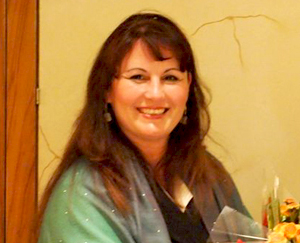
Anat-Bernstein-Reich

Bilateral trade between India and Israel has gone up from a mere $120 million to $5 billion since the two nations formally established relations in 1992, but as president of the Israel-India Friendship Association (IIFA) she sees a much higher potential.

"I want to show the beauty of India to the world," says Bernstein-Reich, who serves as co-producer of the "Bharati Show - The Wonder that is India", a Bollywood style show that has gone all around the world over the last several years.

She also runs a five-session course on doing business with India with a Hindi class and bits of history, politics and culture thrown in.

There Israeli business people learn to say phrases like "Kya haal hai?" (How are you?), "Phir milenge" (See you later), the meaning of things like "Diwali, Ganesh and Bindi" and even the Indian craze about the game of cricket.

"Once they understand culture they can do business," Bernstein-Reich tells a group of visiting Indian and Indian-American journalists and policy leaders as she lists a wide range of areas that can take Israeli-Indian trade to a projected $15 billion in a few years.

Dan Catarivas, director of the division of foreign trade and international relations at the Manufacturers Association of Israel and a former government official, agrees seeing "much more potential" in the India-Israel-US trade relationship, particularly in the area of high technology.

Noting that Israel was in the process of negotiating a Free Trade Agreement with India, Catarivas said while transfer of technology to China was fraught with risks because of US restrictions, there was no such danger in working with India in hi-tech and IT areas.

Eitan Yudilevich, executive director of the Israel-US Binational Industrial Research and Development Foundation (BIRD), which promotes strategic partnerships between Israeli and American companies in various technological fields, concurs.

Yudilevich, a former head of the missiles division at Rafael Advanced Defence systems, the Israeli authority for development of weapons and military technology, who played a key role in the development of Israel's famous Iron dome, suggests the Singapore model for hi-tech trade with India.

This would have military cooperation spilling over or providing a spin-off in civilian areas, he says, noting that the Israelis were keen on going to India, shopping for partners there as long as the Americans don't mind.

Currently India is the largest customer of Israeli military equipment and Israel is the second-largest military partner of India after the Russian Federation. The military business between the two nations is worth around $9 billion.

Diamonds are another area of major trade between the two nations, but there is great scope for expansion in areas of agriculture, solar energy, energy, water treatment, desalination, clean technology and much more.

The only problem is their business culture, says Bernstein-Reich. While Israelis come straight to the point, Indians like to negotiate endlessly and reopen settled issues, she says and thus advises her clients: "Leave some room for bargaining."



Comments

Add new comment

  • Coastaldigest.com reserves the right to delete or block any comments.
  • Coastaldigset.com is not responsible for its readers’ comments.
  • Comments that are abusive, incendiary or irrelevant are strictly prohibited.
  • Please use a genuine email ID and provide your name to avoid reject.
Agencies
June 19,2020

Denser places, assumed by many to be more conducive to the spread of the coronavirus that causes COVID-19, are not linked to higher infection rates, say researchers.

The study, led by Johns Hopkins University, published in the Journal of the American Planning Association, also found that dense areas were associated with lower COVID-19 death rates.

"These findings suggest that urban planners should continue to practice and advocate for compact places rather than sprawling ones, due to the myriad well-established benefits of the former, including health benefits," says study lead author Shima Hamidi from Johns Hopkins Bloomberg School of Public Health in the US.

For their analysis, the researchers examined SARS-CoV-2 infection rates and COVID-19 death rates in 913 metropolitan counties in the US.

When other factors such as race and education were taken into account, the authors found that county density was not significantly associated with county infection rate.

The findings also showed that denser counties, as compared to more sprawling ones, tended to have lower death rates--possibly because they enjoyed a higher level of development including better health care systems.

On the other hand, the research found that higher coronavirus infection and COVID-19 mortality rates in counties are more related to the larger context of metropolitan size in which counties are located.

Large metropolitan areas with a higher number of counties tightly linked together through economic, social, and commuting relationships are the most vulnerable to the pandemic outbreaks.

According to the researchers, recent polls suggest that many US citizens now consider an exodus from big cities likely, possibly due to the belief that more density equals more infection risk.

Some government officials have posited that urban density is linked to the transmissibility of the virus.

"The fact that density is unrelated to confirmed virus infection rates and inversely related to confirmed COVID-19 death rates is important, unexpected, and profound," said Hamidi.

"It counters a narrative that, absent data and analysis, would challenge the foundation of modern cities and could lead to a population shift from urban centres to suburban and exurban areas," Hamidi added.

The analysis found that after controlling for factors such as metropolitan size, education, race, and age, doubling the activity density was associated with an 11.3 per cent lower death rate.

The authors said that this is possibly due to faster and more widespread adoption of social distancing practices and better quality of health care in areas of denser population.

The researchers concluded that a higher county population, a higher proportion of people age 60 and up, a lower proportion of college-educated people, and a higher proportion of African Americans were all associated with a greater infection rate and mortality rate.

Comments

Add new comment

  • Coastaldigest.com reserves the right to delete or block any comments.
  • Coastaldigset.com is not responsible for its readers’ comments.
  • Comments that are abusive, incendiary or irrelevant are strictly prohibited.
  • Please use a genuine email ID and provide your name to avoid reject.
News Network
April 17,2020

Paris, Apr 17: Even as virologists zero in on the virus that causes COVID-19, a very basic question remains unanswered: do those who recover from the disease have immunity?

There is no clear answer to this question, experts say, even if many have assumed that contracting the potentially deadly disease confers immunity, at least for a while.

"Being immunised means that you have developed an immune response against a virus such that you can repulse it," explained Eric Vivier, a professor of immunology in the public hospital system in Marseilles.

"Our immune systems remember, which normally prevents you from being infected by the same virus later on."

For some viral diseases such a measles, overcoming the sickness confers immunity for life.

But for RNA-based viruses such as Sars-Cov-2 -- the scientific name for the bug that causes the COVID-19 disease -- it takes about three weeks to build up a sufficient quantity of antibodies, and even then they may provide protection for only a few months, Vivier told AFP.

At least that is the theory. In reality, the new coronavirus has thrown up one surprise after another, to the point where virologists and epidemiologists are sure of very little.

"We do not have the answers to that -- it's an unknown," Michael Ryan, executive director of the World Health Organization's Emergencies Programme said in a press conference this week when asked how long a recovered COVID-19 patient would have immunity.

"We would expect that to be a reasonable period of protection, but it is very difficult to say with a new virus -- we can only extrapolate from other coronaviruses, and even that data is quite limited."

For SARS, which killed about 800 people across the world in 2002 and 2003, recovered patients remained protected "for about three years, on average," Francois Balloux director of the Genetics Institute at University College London, said.

"One can certainly get reinfected, but after how much time? We'll only know retroactively."

A recent study from China that has not gone through peer review reported on rhesus monkeys that recovered from Sars-Cov-2 and did not get reinfected when exposed once again to the virus.

"But that doesn't really reveal anything," said Pasteur Institute researcher Frederic Tangy, noting that the experiment unfolded over only a month.

Indeed,several cases from South Korea -- one of the first countries hit by the new coronavirus -- found that patients who recovered from COVID-19 later tested positive for the virus.

But there are several ways to explain that outcome, scientists cautioned.

While it is not impossible that these individuals became infected a second time, there is little evidence this is what happened.

More likely, said Balloux, is that the virus never completely disappeared in the first place and remains -- dormant and asymptomatic -- as a "chronic infection", like herpes.

As tests for live virus and antibodies have not yet been perfected, it is also possible that these patients at some point tested "false negative" when in fact they had not rid themselves of the pathogen.

"That suggests that people remain infected for a long time -- several weeks," Balloux added. "That is not ideal."

Another pre-publication study that looked at 175 recovered patients in Shanghai showed different concentrations of protective antibodies 10 to 15 days after the onset of symptoms.

"But whether that antibody response actually means immunity is a separate question," commented Maria Van Kerhove, Technical Lead of the WHO Emergencies Programme.

"That's something we really need to better understand -- what does that antibody response look like in terms of immunity."

Indeed, a host of questions remain.

"We are at the stage of asking whether someone who has overcome COVID-19 is really that protected," said Jean-Francois Delfraissy, president of France's official science advisory board.

For Tangy, an even grimmer reality cannot be excluded.

"It is possible that the antibodies that someone develops against the virus could actually increase the risk of the disease becoming worse," he said, noting that the most serious symptoms come later, after the patient had formed antibodies.

For the moment, it is also unclear whose antibodies are more potent in beating back the disease: someone who nearly died, or someone with only light symptoms or even no symptoms at all. And does age make a difference?

Faced with all these uncertainties, some experts have doubts about the wisdom of persuing a "herd immunity" strategy such that the virus -- unable to find new victims -- peters out by itself when a majority of the population is immune.

"The only real solution for now is a vaccine," Archie Clements, a professor at Curtin University in Perth Australia, told AFP.

At the same time, laboratories are developing a slew of antibody tests to see what proportion of the population in different countries and regions have been contaminated.

Such an approach has been favoured in Britain and Finland, while in Germany some experts have floated the idea of an "immunity passport" that would allow people to go back to work.

"It's too premature at this point," said Saad Omer, a professor of infectious diseases at the Yale School of Medicine.

"We should be able to get clearer data very quickly -- in a couple of months -- when there will be reliable antibody tests with sensitivity and specificity."

One concern is "false positives" caused by the tests detecting antibodies unrelated to COVID-19.

The idea of immunity passports or certificates also raises ethical questions, researchers say.

"People who absolutely need to work -- to feed their families, for example -- could try to get infected," Balloux.

Comments

Add new comment

  • Coastaldigest.com reserves the right to delete or block any comments.
  • Coastaldigset.com is not responsible for its readers’ comments.
  • Comments that are abusive, incendiary or irrelevant are strictly prohibited.
  • Please use a genuine email ID and provide your name to avoid reject.
Agencies
January 25,2020

New Delhi, Jan 25: The Patiala House court on Saturday started hearing a plea filed by the Nirbhaya convicts that alleged that the Tihar Jail administration have "not presented the papers on time".

The Public Prosecutor informed the court that Tihar Jail authorities have already supplied the relevant documents. He further informed that these are mere delaying tactics adopted by the convicts.

Advocate A.P. Singh, lawyer for three of the four death row convicts in the Nirbhaya gang-rape case had moved an application before the court seeking directions to the Tihar Jail authorities to supply him the relevant documents in order to exercise the remaining legal remedies available with the death row convicts -- Vinay Pawan and Akshay.

The Public Prosecutor also told the court that he spoke to the jail authorities over the phone and a report in this regard will be filed shortly as the jail officials were on their way to the court.

The judge demanded from the convicts lawyer to show what he has filed.

The convicts lawyer, A.P. Singh, said that he received some documents, but has still not been supplied with the personal diary of one of the convict -- Vinay Kumar Sharma and also the medical documents.

Judge then asked the lawyer to wait for until the report arrives form the Tihar Jail.

On this, the convicts lawyer said he was not questioning the intention of the jail. "I know the jail has been changed. It isn't there fault, too," he said.

The Public Prosecutor refuted the allegation saying that the defence counsel was trying to defeat the speed of law.

"We have supplied all the documents to the counsel. We have supplied all the documents except the painting and some other documents. We have nothing apart from that," public prosecutor said.

Singh, in his plea filed before the Patiala House Court sought urgent orders of the court in order to file a mercy petition of Vinay Sharma and in relation to requests for documents for convicts Vinay Sharma, Pawan Kumar Gupta and Akshay Kumar Singh.

He further said that the convicts undertook several steps to obtain relevant information necessary for filing the mercy petitions. In regular interval, the convicts requested the concerned authority to supply documents pertaining to their medical records from 2012 to 2015 and 2019-2020, records of cellular confinement, records of the amount earned in prison through labour, records of educational and reformative activities like Tihar Olympics and Painting, etc.

The Supreme court had recently dismissed the curative petition for the other two convicts -- Vinay Kumar Sharma (26) and Mukesh Singh (32).

The court had recently issued death warrant against the convicts and fixed 6 a.m. on February 1 as the date and time of execution of the death penalty.

The 23-year-old victim in the case was brutally gang raped and tortured on December 16, 2012, which later led to her death. All the six accused were arrested and charged with sexual assault and murder. One of the accused was a minor and appeared before a juvenile justice court, while another accused committed suicide in Tihar Jail.

Four of the convicts were sentenced to death by a trial court in September 2013, and the verdict was confirmed by the Delhi High Court in March 2014 and subsequently upheld by the Supreme Court in May 2017, which also dismissed their review petitions.

A Juvenile involved in the crime was convicted by a juvenile justice board and released from a reformation home after serving a three-year term.

Hearing in a different case, Chief Justice of India S.A. Bobde on Thursday said a condemned person cannot fight the death penalty endlessly and it was important for the capital punishment to reach its finality.

The death penalty, he noted, cannot be questioned at every turn by the convict.

Comments

Add new comment

  • Coastaldigest.com reserves the right to delete or block any comments.
  • Coastaldigset.com is not responsible for its readers’ comments.
  • Comments that are abusive, incendiary or irrelevant are strictly prohibited.
  • Please use a genuine email ID and provide your name to avoid reject.