



RSS: Rapist Suraksha Sangh / Rapist Security Society

[email protected] (Shuddhabrata Sengupta for http://kafila.org)
January 4, 2013

RSS: Rapist Suraksha Sangh/Rapist Security Society

The RSS supremo Mohan Bhagwat (or to call him out in the way he is referred to in the Sangh – Sarsanghchalak Param Pujya Shri Mohan-ji Bhagwat-ji) has now joined the pavilion of eminent Bharatiya moustachioed misogynists. In a breathtakingly revealing statement, he has told us that rapes happen in India, not in Bharat. What he means is that rape only occurs in urban areas where the influence of Paschatya Sanskriti (western culture) leads women astray into being raped by men unable to help or control themselves in the face of the assault of women, out and about, by day and night, defying Mohan Bhageat's Sangh-mandated Lakshman Rekha.

When an upper-caste landlord in a village claims his 'droit de seigneur' (land-owner's claim) with a Dalit woman, it is not rape, it is a yagya, a time honoured shastric ritual. When husbands persuade minor wives on their 'suhaag raat' with a few disciplinary measures that leave them with black eyes and sore limbs, it is not rape, it is the carrying out of an Upanishadic injunction. When swamijis, babajis, acharyas and prachaks have their way with ignorant and nabalik shishyas, it is not rape, it is the partaking of the naivedyam of a woman's body. It is the realisation of a 'pushp ki abhilasha', even if the pushp gets pushed around a little bit in the process.Yo-Yo Honey Singh, that other eminent Yug-Purush echoed Shri Mohan Bhagwat when he asserted in his prayer, C***t Vol.1, that he would cure the waywardness of the Indian woman's sex organs by strictly traditional, bharatiya and shastric methods.Yo Yo Mohan Bhagwat. Param Pujya Honey Singh. Sambhavami Yuge-Yuge.

These gentlemen truly deserve Mardangi Maryada Medals (MMM) or Paurush Pratiraksha Puraskars (PPP). In these beleagured times, when Bharatiya masculinity has faced such severe stress and strain, it is only real self-serving (swaysmsevak) men like Mohan Bhagwat and Globally yet Traditionally Bharatiya International Villagers like Yo-Yo ji Honey ji Singh ji who can hold up its otherwise flaccid standard against the corrosive attack of urban femininity.mohan
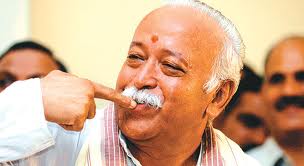
Hey Bharat-Purush, gird your loins, hoist your petards, tackle your gaandiv, gather your legions. Mohan Bhagwat has sounded the panchajanya. the battle is joined, you have able and eminent warlords. S.O.P. Shri Abhijit Mukherjee of the Congress Party will lead the charge against dented and painted enemies. Shri Narendra Modi and Shri Raman Singh (both BJP chief ministers in Gujatar and Chhattisgarh) will demonstrate how well rape either by righteous rioters or by counter-insurgent policemen can defend Hindu honour and national security. Comrade Anisur Rehman of the CPI (M) will defeat all his female adversaries designs by buying and selling them. Shri Naveen Jindal of the Congress Party will handle the war-chest and rally the troops of the brave Khap irregulars. Shri Shahshi Tharoor of the Congress Party will tweet the name of every woman fallen in the battle-field. Shri Botsa Satyanarayan of the Congress will secure the hours after midnight so that no wayward women are about. Yo-Yo Honey Singh will lead the yuddha-ghosh, the martial music band. Janaab Akbaruddin Owaisi of the Majlis-Ittehadul-Muslimeen will behead errant women writers. Baba Ramdev ji will straighten all queer women with yogic power. Shri Kailash Vijayvargiya (Cabinet Minister in BJP ruled Madhya Pradesh where he is – Minister of Industries & Employment, Information Technology, Commerce, Rural Industry, Science & Technology and a passionate leader who continuously strives for development while advocating that women will not find themselves raped only if they stay within the Lakshman Rekha of Bharatiya Sanskriti will map the battle-field. You need all the strength that you can get.

Many years ago, almost twenty years ago, I was a young and nervous assistant working on a documentary film on the RSS called 'The Boys in the Branch' (directed by Lalit Vachani, 1993). The film was shot in Nagpur, partly in a sort of 'commune' where some young men in their late teens, an elite crop from various RSS shakhas (branches), were being groomed for future leadership within the organization. We also shot extensively within the RSS headquarters, Hedgewar Bhavan, in Mahal, Nagpur. We interviewed Mohan Bhagwat, who gave a chillingly lyrical account of how a particular game-exercise helped a young swayam-sevak mentally prepare himself for the ultimate sacrifice by linking death to re-incarnation, through a series of calisthenic metaphors and manoeuvres, such that death itself could become a move in a game. During this time, I got to be friends, In a way, with some of the boys. Occasionally, I would spend a night with them in their 'house'. They would cook, sing, play the flute, ask me about Delhi, about girls, about whether i had any Muslim friends, and what they were 'really' like. I never made a secret of what my politics was, or the fact that I had a 'communist' upbringing because of my family. But sort of grudgingly at first, and less grudgingly later, they gave me a sort of 'enemy respect'. More importantly, because I was someone close to them in age, and a total outsider, they sort of trusted me with their secrets. I have never betrayed those confidences, even as I sometimes wondered what happened to some of those who spoke to me, mainly off camera, after the shoots were done.

One day, one of the boys asked to see me and the director, in our hotel room. He came late in the evening and talked for many hours. He spoke about being sexually abused by senior functionaries within the RSS for several years, inside the RSS headquarters, beginning around the time when he was eleven years old. I strongly felt that we should not record his testimony, because I was aware that even if we protected his identity in the film, there was no way by which his anonymity could be safeguarded, especially within the RSS headquarters. Basically, he would be 'disappeared' in a way that I don't even want to think about. We talked long into the night. He left, and told me he felt better after having talked, without shame, to someone his own age who could listen without standing in judgment. He told me that he was leaving Nagpur. I never saw him again. I have no idea where he is, and I don't really want to know. But I think of him sometimes, wonder how he is doing, whether he found the kind of love and affection and respect that he wanted. Whether he has any nightmares. I wish him well, and hope he is as far away from the enclaves of Bharat presided over by the RSS as it is possible for him to be. I do not remember his name. He is another unknown citizen.

The RSS wants to be to be an arbiter of public and private conduct to 'Bharat'. It wants to be what the Vatican thinks it is within the domain of Roman Catholic orthodoxy. Both are citadels of misogyny and homophobia. Both conceal under their knickers and robes the darkest secrets of abuse and violence. The sexual abuse of minors is statutory rape in most jurisdictions. The yagya of statutory rape has a time honoured place in the dungeons within the citadels of Bharatiya and other kinds of purity. Perhaps it is time that this pretence at purity was shown up to be what it actually is.

Sambhavami Yuge Yuge.

Comments

Add new comment

  • Coastaldigest.com reserves the right to delete or block any comments.
  • Coastaldigset.com is not responsible for its readers’ comments.
  • Comments that are abusive, incendiary or irrelevant are strictly prohibited.
  • Please use a genuine email ID and provide your name to avoid reject.
Agencies
March 16,2020

While Google is still working on a coronavirus screening and tracking website, Microsoft Bing team has already launched a web portal for tracking COVID-19 infections worldwide.

The website, accessible at bing.com/covid, provides up-to-date infection statistics for each country.

The COVID-19 Tracker currently lists 168,835 as total confirmed cases, 84,558 active cases, 77,761 recovered cases and 6,516 deaths.

There are at least 3,244 confirmed cases of novel coronavirus in the US and at least 61 deaths.

"Lots of Bing folks worked (from home) this past week to create a mapping and authoritative news resource for COVID19 info," Michael Schechter, General Manager for Bing Growth and Distribution at Microsoft, was quoted as saying in a ZDNet report on Sunday.

An interactive map allows site visitors to click on the country to see the specific number of cases and related articles from a variety of publishers.

Data is being aggregated from sources like the World Health Organization (WHO), the US Centers for Disease Control and Prevention (CDC), and the European Centre for Disease Prevention and Control (ECDC).

Microsoft announced the website two days after US President Donald Trump said Google has begun working on COVID-19-related portal for US citizens.

Google's website is being built by Verily, a subsidiary of Alphabet focused on healthcare services.

"More than 1,700 engineers are currently working on the site", Trump said during a press briefing last week.

The tool will triage people who are concerned about their COVID-19 risk into testing sites based on guidance from public health officials and test availability.

Initially, there was some confusion on Google's coronavirus portal but the company later announced that it is "partnering with the US Government in developing a nationwide website that includes information about COVID-19 symptoms, risk, and testing information."

Comments

Add new comment

  • Coastaldigest.com reserves the right to delete or block any comments.
  • Coastaldigset.com is not responsible for its readers’ comments.
  • Comments that are abusive, incendiary or irrelevant are strictly prohibited.
  • Please use a genuine email ID and provide your name to avoid reject.
Agencies
May 17,2020

As millions of people get hooked to online dating platforms, their proliferation has led to online romance scams becoming a modern form of fraud that have spread in several societies along with the development of social media like Facebook Dating, warn researchers.

For example, extra-marital dating app Gleeden has crossed 10 lakh users in India in COVID-19 times while dating apps like Tinder and Bumble have gained immense popularity.

According to researchers from University of Siena and Scotte University Hospital led by Dr Andrea Pozza, via a fictitious Internet profile, the scammer develops a romantic relationship with the victim for 6-8 months, building a deep emotional bond to extort economic resources in a manipulative dynamic.

"There are two notable features: on the one hand, the double trauma of losing money and a relationship, on the other, the victim's shame upon discovery of the scam, an aspect that might lead to underestimation of the number of cases," the authors wrote in a paper published in the journal Clinical Practice & Epidemiology in Mental Health.

Around 1,400 dating sites/chats have been created over the last decade in North America alone. In the UK, 23 per cent of Internet users have met someone online with whom they had a romantic relationship for a certain period and even 6 per cent of married couples met through the web.

"The online dating industry has given rise to new forms of pathologies and crime, said the authors.

The results showed that 63 per cent of social media users and 3 per cent of the general population reported having been a victim at least once.

Women, middle-aged people, and individuals with higher tendencies to anxiety, romantic idealization of affective relations, impulsiveness and susceptibility to relational addiction are at higher risk of being victims of the scam.

Online romance scams are, in other words, relationships constructed through websites for the purpose of deceiving unsuspecting victims in order to extort money from them.

The scammer always acts empathetically and attempts to create the impression in the victim that the two are perfectly synced in their shared view of life.

"The declarations of the scammer become increasingly affectionate and according to some authors, a declaration of love is made within two weeks from initial contact," the study elaborated.

After this hookup phase, the scammer starts talking about the possibility of actually meeting up, which will be postponed several times due to apparently urgent problems or desperate situations such as accidents, deaths, surgeries or sudden hospitalizations for which the unwitting victim will be manipulated into sending money to cover the momentary emergency.

Using the strategy of "testing-the-water", the scammer asks the victim for small gifts, usually to ensure the continuance of the relationship, such as a webcam, which, if successful, leads to increasingly expensive gifts up to large sums of money.

When the money arrives from the victim, the scammer proposes a new encounter.

The request for money can also be made to cover the travel costs involved in the illusory meeting. In this phase, the victim may start having second thoughts or showing doubt about the intentions of the partner and gradually decide to break off the relationship.

"In other cases, the fraudulent relationship continues or even reinforces itself as the victim, under the influence of ambivalent emotions of ardor and fear of abandonment and deception, denies or rationalizes doubts to manage their feelings," said the study.

In some cases, the scammer may ask the victim to send intimate body photos that will be used as a sort of implicit blackmail to further bind the victim to the scammer.

Once the scam is discovered, the emotional reaction of the victim may go through various phases: feelings of shock, anger or shame, the perception of having been emotionally violated (a kind of emotional rape), loss of trust in people, a sensation of disgust towards oneself or the perpetrator of the crime and a feeling of mourning.

"Understanding the psychological characteristics of victims and scammers will allow at-risk personality profiles to be identified and prevention strategies to be developed," the authors suggested.

Comments

Add new comment

  • Coastaldigest.com reserves the right to delete or block any comments.
  • Coastaldigset.com is not responsible for its readers’ comments.
  • Comments that are abusive, incendiary or irrelevant are strictly prohibited.
  • Please use a genuine email ID and provide your name to avoid reject.
Agencies
March 15,2020

Cybercriminals continue to exploit public fear of rising coronavirus cases through malware and phishing emails in the guise of content coming from the Centers for Disease Control and Prevention (CDC) in the US and World Health Organisation (WHO), says cybersecurity firm Kaspersky.

In the APAC region, Kaspersky has detected 93 coronavirus-related malware in Bangladesh, 53 in the Philippines, 40 in China, 23 in Vietnam, 22 in India and 20 in Malaysia. 

Single-digit detections were monitored in Singapore, Japan, Indonesia, Hong Kong, Myanmar, and Thailand. 

Along with the consistent increase of 2019 coronavirus cases comes the incessant techniques cybercriminals are using to prey on public panic amidst the global epidemic, the company said in a statement. 

Kaspersky also detected emails offering products such as masks, and then the topic became more commonly used in Nigerian spam emails. Researchers also found scam emails with phishing links and malicious attachments.

One of the latest spam campaigns mimics the World Health Organisation (WHO), showing how cybercriminals recognise and are capitalising on the important role WHO has in providing trustworthy information about the coronavirus.

"We would encourage companies to be particularly vigilant at this time, and ensure employees who are working at home exercise caution. 

"Businesses should communicate clearly with workers to ensure they are aware of the risks, and do everything they can to secure remote access for those self-isolating or working from home," commented David Emm, principal security researcher.

Some malicious files are spread via email. 

For example, an Excel file distributed via email under the guise of a list of coronavirus victims allegedly sent from the World Health Organisation (WHO) was, in fact, a Trojan-Downloader, which secretly downloads and installs another malicious file. 

This second file was a Trojan-Spy designed to gather various data, including passwords, from the infected device and send it to the attacker.

Comments

Add new comment

  • Coastaldigest.com reserves the right to delete or block any comments.
  • Coastaldigset.com is not responsible for its readers’ comments.
  • Comments that are abusive, incendiary or irrelevant are strictly prohibited.
  • Please use a genuine email ID and provide your name to avoid reject.