



Native Bapa: A hip-hop song from Kerala challenges narrative on terrorism

[email protected] (Abdul Basith, TwoCircles)
January 7, 2013

Okulam

Kozhikode, Jan 7: The first hip-hop song of the band Mappila Lahala – Native Bapa - launched online on the New Year eve has been listed among the popular videos of Youtube with more than 100,000 views in just six days. The album quite effectively questions the global trend of branding anything and everything related to Muslim names to terror and vehemently criticises the media culture forming such a public consciousness.

It was in October 2008 four Muslim youths from Kerala were allegedly gunned down by security forces in Kupwara district of Jammu and Kashmir. It was soon after this that one among the mothers of these youths from the Kannur district of Kerala stated that - 'she doesn't want to see her son's body as he is a traitor'. The statement was since then widely celebrated by media and political parties in Kerala and in no time she turned into an icon of Kerala Muslim mothers.

It was years after that she expressed her inner pain before a few media sections in Kerala saying that, she had to make that statement under those testing circumstances, where police broke into her home late nights and even neighbours and relatives having an eye of suspicion over her. The grievous mother went on to state that no mother could have objected to having a final glance at her dear son and what she did was out of desperation.

The team Mappila Lahala, a Kozhikode based music movement formed out of the evening coffee discussions of a few friends; having set the dreams of doing music with a purpose and visuals with a vision decided to go ahead with their first project –a musical video album titled Native Bapa, by taking a revisit into this 2008 incident through the eyes of a father.

We are a musical movement engaging in multiple genres of music upholding collective self respect of the oppressed, says the team comprising academician, students and professionals. The work though has its cultural background in Malabar, is multi lingual with English lyrics and lyrics in Malayalam made special with the local Kozhikodan slang associated with the Mappilas of Malabar.

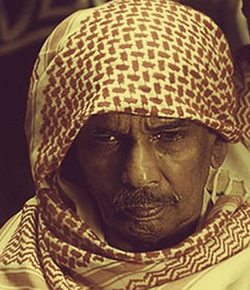
Mamu Koya well renowned in the Malayalam film industry for his genuine usage of the local Kozhikodan slangs plays the father's role in the album. The lyrics featuring him mock at the state machinery, media attempt to demonize anything and everything related to Islam. The album moves forward with the monologues of this poor father – the 'Native Bapa' ['Bapa' – a deglamorised way of addressing a father among the Mappila Muslims]. 'Native Bapa' played by Mamu Koya gets introduced into the album as a reluctant secularist and his words convey immense grief and anger against the stereotyping of Muslim lives with terror and he narrates it sarcastically through the story of his personal life.

He expresses his painful concerns and elements of doubt which forces him to think otherwise on the stories fed through media and police with regards to his son, Kunju, branded as a terrorist. Despite all these justifications in favour of his son, he too towards the end of the album quite unwillingly and filled with pain agrees to the general perceptions with regards to his son, saying that 'he too don't want to see his son's body as he is a traitor'. The actor Mamu Koya quite successfully brings to screen the mental and physical tortures meted up on the family by the state and the media, and ends the narratives registering his disagreement to the stereotypes by again sarcastically referring to the term 'bomb'.

The rap portion of the song is in English and so the team Mappila Lahala prefers to call their work by the name Mappila Hip hop. The whole song has its English sub titles and is the first of its kind in Kerala.

Hip hop has a history of resistance and so bringing in these rap elements in to the Mappila narratives, the team succeeds in putting up a formidable resistance against such stereotypes. So the album is not all about the narratives of the grievous father and instead features the voice of the youth, who believes that the 'Rebel is the only loyal'. The rap portion of the video album, with its immense energy and revolutionary content responds to the very same issues addressed by the father from the angle of a rebellious youth, who wants the peace to prevail.

The youth who hops with the rap portion of the music rejects terrorism saying that Islam is peace in the definition and asks us to take away all our prejudices based on what media feeds us. As the lines says,

Bombing innocents, I'll call you a terrorist

I don't care if you are an Al-Qaeda militant

or if the world calls you the US president…

The rap portion of the album is performed by a medical student Harris; part of the Kozhikode based 'Street Academics', whom with the Team Mappila Lahala collaborated to produce its first project Native Bapa.

The Album is directed by Muhsin Parari a graduate in English and Islamic Jurisprudence and he says, "Majority in the community meekly stomachs the police version because they fear any attempt to question the official story will land them in trouble. We want to assert that only a rebel is the real loyal”.

It was Muhsin who penned the poem titled “Native Bapa” which later grew into this song.

Muhsin told TwoCircles.net that the team Mappila Lahala's next project will be a rock version of K Satchithanandan's poem Kozhipanku and thoughts are on progress with regards to giving a hip hop treatment to Kambalathu Govindan Nair's Mappila song on the historical 1921 Malabar riots against the British invasion.

We are used to the Hip hop versions of films songs in languages like Hindi, Malayalam and Tamil and never in the history have they made use of the political possibilities of hip-hop. Native Bapa stands apart as the first of its kind on that regard.

Comments

Add new comment

  • Coastaldigest.com reserves the right to delete or block any comments.
  • Coastaldigset.com is not responsible for its readers’ comments.
  • Comments that are abusive, incendiary or irrelevant are strictly prohibited.
  • Please use a genuine email ID and provide your name to avoid reject.
Agencies
June 12,2020

Mumbai, Jun 12: Following an overwhelming response for the mega rights issue of Mukesh Ambani-owned Reliance Industries, the partly paid-up rights shares are set to debut on stock exchanges on June 15.

The biggest ever Rs 53,124 crore rights issue was subscribed 1.59 times and received bids worth Rs 84,000 crore on June 3.

Reliance said the rights issue saw a huge investor interest, including from lakhs of small investors and thousands of institutional investors, both Indian and foreign.

In 2019, Ambani said in the Reliance's annual general meeting that the company will be net zero debt by March 2021. The company is on course to achieve its target ahead of the deadline.

"In spite of the COVID-19 crisis and the lockdowns, the due-diligence by Saudi Aramco for the planned investment in the O2C business is on track as both the parties are committed and actively engaged," he said recently.

"With a strong visibility to these equity infusions, Reliance is set to achieve net zero debt status ahead of its own aggressive timeline. We believe rights issue was a part of the company's strategy of deleveraging its balance sheet," said Ambani. 

Comments

Add new comment

  • Coastaldigest.com reserves the right to delete or block any comments.
  • Coastaldigset.com is not responsible for its readers’ comments.
  • Comments that are abusive, incendiary or irrelevant are strictly prohibited.
  • Please use a genuine email ID and provide your name to avoid reject.
Agencies
June 27,2020

Mumbai, Jun 27: The Bombay High Court observed that COVID-19 patients from poor and indigent sections cannot be expected to produce documentary proof to avail subsidised or free treatment while getting admitted to hospitals.

The court on Friday was hearing a plea filed by seven residents of a slum rehabilitation building in Bandra, who had been charged ₹ 12.5 lakh by K J Somaiya Hospital for COVID-19 treatment between April 11 and April 28.

The bench of Justices Ramesh Dhanuka and Madhav Jamdar directed the hospital to deposit ₹10 lakh in the court.

The petitioners had borrowed money and managed to pay ₹10 lakh out of ₹12.5 lakh that the hospital had demanded, after threatening to halt their discharge if they failed to clear the bill, counsel Vivek Shukla informed the court.

According to the plea, the petitioners were also overcharged for PPE kits and unused services.

On June 13, the court had directed the state charity commissioner to probe if the hospital had reserved 20% beds for poor and indigent patients and provided free or subsidised treatment to them.

Last week, the joint charity commissioner had informed the court that although the hospital had reserved such beds, it had treated only three poor or indigent persons since the lockdown.

It was unfathomable that the hospital that claimed to have reserved 90 beds for poor and indigent patients had treated only three such persons during the pandemic, advocate Shukla said.

He further argued that COVID-19 patients, who are in distress, cannot be expected to produce income certificate and such documents as proof.

However, senior advocate Janak Dwarkadas, who represented the hospital, said the petitioners did not belong to economically weak or indigent categories and had not produced documents to prove the same.

A person who is suffering from a disease like COVID-19 cannot be expected to produce certificates from a tehsildar or social welfare officer before seeking admission in the hospital, the bench noted and asked the hospital to deposit ₹10 lakh in court within two weeks.

Comments

Add new comment

  • Coastaldigest.com reserves the right to delete or block any comments.
  • Coastaldigset.com is not responsible for its readers’ comments.
  • Comments that are abusive, incendiary or irrelevant are strictly prohibited.
  • Please use a genuine email ID and provide your name to avoid reject.
Agencies
March 13,2020

Amid the rapid spread of the novel coronavirus (COVID-19), which has infected 73 people in India and killed more than 4,500 individuals globally, doctors have advised that in addition to regularly washing hands, one should also disinfect their smartphone every 90 minutes with alcohol-based hand sanitizer.

Ravi Shekhar Jha, Head of Department at Fortis Escorts Hospital in Faridabad said the best method to disinfect your smartphone is to use regular doctor spirit or the alcohol-based hand sanitizer at least every 90 minutes.

"Avoid touching your eyes, mouth, or nose. The best option is to use a phone cover or a Bluetooth device and try to touch your phone as less as possible. We would also recommend cleaning your phone at least twice a day," Jha told IANS.

According to research, published in 2018 by Insurance2Go, a gadget insurance provider, revealed that smartphone screens have three times more germs than a toilet seat.

One in 20 smartphone users was found to clean their phones less than every six months, said the study.

"In the time of fear of coronavirus, smartphones should also be disinfected with alcohol-based sanitizer rub. Pour few drops of sanitizer on a tiny clean cotton pad and rub it safely on your entire phone," said Jyoti Mutta, Senior Consultant, Microbiology, Sri Balaji Action Medical Institute in New Delhi.

"You can repeat this process every evening coming back home after an entire day out at work and once in the morning before going out," Mutta added.

"Maintain basic cleanliness, and try to avoid using other's phones especially if suffering from respiratory illness or flu-like symptoms as there is no other way to disinfect these regular gadgets," she stressed.

Another study from the University of Surrey in the UK, also found that the home button on your smartphone may be harbouring millions of bacteria - some even harmful.

The World Health Organisation (WHO) declared the novel coronavirus as a global pandemic on Wednesday. The death toll of COVID-19 has crossed the 4,500 marks and confirmed cases globally have touched one lakh as per the reports.

According to Suranjeet Chatterjee, Senior Consultant in Internal Medicine Department of Indraprastha Apollo Hospitals in New Delhi, "We should frequently wash our hands, cover our coughs and it is important to adapt to other good hygiene habits that are most important in such a situation."

"Coronavirus and other germs can live on surfaces like glass, metal or plastics and phones are bacteria-ridden. It is necessary that we sanitize our hands frequently and make sure that our hands are clean all the time," Chatterjee told IANS.

"The emphasis should be laid on sanitising our hands rather than sanitizing the phone - once in a while the phone can be sanitized under the guidance of the makers of the phone," Chatterjee stressed.

According to the global health agency, the most effective way to protect yourself against coronavirus is by frequently cleaning of your hands with alcohol-based hand rub or washing them with soap and water.

The WHO's report showed the virus infects people of all ages, among which older people and those with underlying medical conditions are at a higher risk of getting infected.

People should eat only well-cooked food, avoid spitting in public, and avoid close contact, the WHO said, adding that it is important for people to seek medical care at the earliest if they become sick.

Comments

Add new comment

  • Coastaldigest.com reserves the right to delete or block any comments.
  • Coastaldigset.com is not responsible for its readers’ comments.
  • Comments that are abusive, incendiary or irrelevant are strictly prohibited.
  • Please use a genuine email ID and provide your name to avoid reject.