



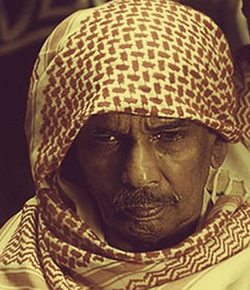
Native Bapa: A hip-hop song from Kerala challenges narrative on terrorism

[email protected] (Abdul Basith, TwoCircles)
January 7, 2013

Okulam

Kozhikode, Jan 7: The first hip-hop song of the band Mappila Lahala – Native Bapa - launched online on the New Year eve has been listed among the popular videos of Youtube with more than 100,000 views in just six days. The album quite effectively questions the global trend of branding anything and everything related to Muslim names to terror and vehemently criticises the media culture forming such a public consciousness.

It was in October 2008 four Muslim youths from Kerala were allegedly gunned down by security forces in Kupwara district of Jammu and Kashmir. It was soon after this that one among the mothers of these youths from the Kannur district of Kerala stated that - 'she doesn't want to see her son's body as he is a traitor'. The statement was since then widely celebrated by media and political parties in Kerala and in no time she turned into an icon of Kerala Muslim mothers.

It was years after that she expressed her inner pain before a few media sections in Kerala saying that, she had to make that statement under those testing circumstances, where police broke into her home late nights and even neighbours and relatives having an eye of suspicion over her. The grievous mother went on to state that no mother could have objected to having a final glance at her dear son and what she did was out of desperation.

The team Mappila Lahala, a Kozhikode based music movement formed out of the evening coffee discussions of a few friends; having set the dreams of doing music with a purpose and visuals with a vision decided to go ahead with their first project –a musical video album titled Native Bapa, by taking a revisit into this 2008 incident through the eyes of a father.

We are a musical movement engaging in multiple genres of music upholding collective self respect of the oppressed, says the team comprising academician, students and professionals. The work though has its cultural background in Malabar, is multi lingual with English lyrics and lyrics in Malayalam made special with the local Kozhikodan slang associated with the Mappilas of Malabar.

Mamu Koya well renowned in the Malayalam film industry for his genuine usage of the local Kozhikodan slangs plays the father's role in the album. The lyrics featuring him mock at the state machinery, media attempt to demonize anything and everything related to Islam. The album moves forward with the monologues of this poor father – the 'Native Bapa' ['Bapa' – a deglamorised way of addressing a father among the Mappila Muslims]. 'Native Bapa' played by Mamu Koya gets introduced into the album as a reluctant secularist and his words convey immense grief and anger against the stereotyping of Muslim lives with terror and he narrates it sarcastically through the story of his personal life.

He expresses his painful concerns and elements of doubt which forces him to think otherwise on the stories fed through media and police with regards to his son, Kunju, branded as a terrorist. Despite all these justifications in favour of his son, he too towards the end of the album quite unwillingly and filled with pain agrees to the general perceptions with regards to his son, saying that 'he too don't want to see his son's body as he is a traitor'. The actor Mamu Koya quite successfully brings to screen the mental and physical tortures meted up on the family by the state and the media, and ends the narratives registering his disagreement to the stereotypes by again sarcastically referring to the term 'bomb'.

The rap portion of the song is in English and so the team Mappila Lahala prefers to call their work by the name Mappila Hip hop. The whole song has its English sub titles and is the first of its kind in Kerala.

Hip hop has a history of resistance and so bringing in these rap elements in to the Mappila narratives, the team succeeds in putting up a formidable resistance against such stereotypes. So the album is not all about the narratives of the grievous father and instead features the voice of the youth, who believes that the 'Rebel is the only loyal'. The rap portion of the video album, with its immense energy and revolutionary content responds to the very same issues addressed by the father from the angle of a rebellious youth, who wants the peace to prevail.

The youth who hops with the rap portion of the music rejects terrorism saying that Islam is peace in the definition and asks us to take away all our prejudices based on what media feeds us. As the lines says,

Bombing innocents, I'll call you a terrorist

I don't care if you are an Al-Qaeda militant

or if the world calls you the US president…

The rap portion of the album is performed by a medical student Harris; part of the Kozhikode based 'Street Academics', whom with the Team Mappila Lahala collaborated to produce its first project Native Bapa.

The Album is directed by Muhsin Parari a graduate in English and Islamic Jurisprudence and he says, "Majority in the community meekly stomachs the police version because they fear any attempt to question the official story will land them in trouble. We want to assert that only a rebel is the real loyal”.

It was Muhsin who penned the poem titled “Native Bapa” which later grew into this song.

Muhsin told TwoCircles.net that the team Mappila Lahala's next project will be a rock version of K Satchithanandan's poem Kozhipanku and thoughts are on progress with regards to giving a hip hop treatment to Kambalathu Govindan Nair's Mappila song on the historical 1921 Malabar riots against the British invasion.

We are used to the Hip hop versions of films songs in languages like Hindi, Malayalam and Tamil and never in the history have they made use of the political possibilities of hip-hop. Native Bapa stands apart as the first of its kind on that regard.

Comments

Add new comment

  • Coastaldigest.com reserves the right to delete or block any comments.
  • Coastaldigset.com is not responsible for its readers’ comments.
  • Comments that are abusive, incendiary or irrelevant are strictly prohibited.
  • Please use a genuine email ID and provide your name to avoid reject.
News Network
June 18,2020

Beijing, Jun 18:  Besides washing hands and wearing masks, it is also important to close the toilet lid before flushing to contain the spread of COVID-19, as per a new study.

According to a new study cited by The Washington Post, scientists who simulated toilet water and airflows, have found that flushing a toilet can generate a plume of virus-containing aerosol particles that is widespread and can linger in the air long enough to be inhaled by others. The novel coronavirus has been found in the faeces of COVID-19 patients, but it remains unknown whether such clouds could contain enough virus to infect a person.

"Flushing will lift the virus up from the toilet bowl," co-author Ji-Xiang Wang, who researches fluids at Yangzhou University in Yangzhou, China, said in an email. Wang stressed that bathroom users "need to close the lid first and then trigger the flushing process" and wash hands properly if the closure is not possible. As one flushes the toilet with the lids open, bits of faecal matter swish around so violently that they can be propelled into the air, become aerosolised and then settle on the surroundings.

Experts call it the "toilet plume".Age-old studies have been made to understand the potential for airborne transmission of infectious disease via sewage, and the toilet plume's role. Scientists who have seeded toilet bowls with bacteria and viruses have found contamination of seats, flush handles, bathroom floors and nearby surfaces. This is one reason we are told to wash our hands after visiting the toilet. Public bathrooms are well known to contribute to the spread of viruses that transmit via ingestion, such as the noroviruses that haunt cruise ships. However, their role in the transmission of respiratory viruses has not been established, said Charles P Gerba, a microbiologist at the University of Arizona."The risk is not zero, but how great a risk it is, we do not know. The big unknown is how much virus is infectious in the toilet when you flush it ... and how much virus does it take to cause an infection," said Gerba, who has studied the intersection of toilets and infectious disease for 45 years.

A study published in March in the journal Gastroenterology found significant amounts of coronavirus in the stool of patients and determined that viral RNA lasted in faeces even after the virus cleared from the patients` respiratory tracts. While another study in the journal Lancet found coronavirus in faeces up to a month after the illness had passed.

Scientists around the world are now studying sewage to track the spread of the virus. According to the researchers, the presence of the virus in excrement and the gastrointestinal tract raises the prospect of transmission via toilets, because many COVID-19 patients experience diarrhoea or vomiting.

A study of air samples in two hospitals in Wuhan, China found that although coronavirus aerosols in isolation wards and ventilated patient rooms were very low, "it was higher in the toilet areas used by the patients".The Centers for Disease Control and Prevention (CDC) says it remains "unclear whether the virus found in faeces may be capable of causing COVID-19," and "there has not been any confirmed report of the virus spreading from faeces to a person".For now, the CDC characterises the risk as low based on observations from previous outbreaks of other coronaviruses such as severe acute respiratory syndrome (SARS) and the Middle East respiratory syndrome (MERS). Wang decided to use computer models to simulate toilet plumes while isolating at home, as per Chinese government orders and thinking about how a fluids researcher "could contribute to the global fight against the virus".

Published in the journal Physics of Fluids, the study found that flushing of both single-inlet toilets, which push water into the bowl from one port, and annular-inlet toilets, which pour water into the bowl from the rim's surrounding edge with even greater energy, results in "massive upward transport of virus".

Particles can reach heights of more than three feet and float in the air for more than a minute, it found. The paper recommends not just lid-closing and hand-washing, it urges manufacturers to produce toilets that close and self-clean automatically. It also suggests that toilet-users should wipe down the seat. Gerba, however, said seats should not be a major concern.

Research has found that public and household toilet seats are typically the cleanest surfaces in restrooms, he said, probably because so many people already wipe them off before using them. Also, he said of SARS-CoV-2, the virus that causes COVID-19, "I don't think it's butt-borne, so I don`t think you have to worry."Gerba, who has been studying coronavirus transmission for two decades to investigate the role of a toilet flushing in a SARS outbreak stresses "flush and run" when using a public toilet without a lid. Gerba also said that people should wash hands well post-flushing and use hand sanitiser after leaving the restroom. "Choose well-ventilated bathrooms if possible and do not hang around the restroom in any case," added Gerba.

Comments

Add new comment

  • Coastaldigest.com reserves the right to delete or block any comments.
  • Coastaldigset.com is not responsible for its readers’ comments.
  • Comments that are abusive, incendiary or irrelevant are strictly prohibited.
  • Please use a genuine email ID and provide your name to avoid reject.
Agencies
February 5,2020

San Francisco, Feb 5: After a German artist, Simon Weckert, demonstrated how he "hacked" Google Maps with 99 smartphones and a wagon to create "virtual traffic jams" on the streets of Berlin, Google responded to the incident saying it "appreciates" creative use of maps.

Admitting that it has not quite cracked travelling by wagon, the tech giant also hinted that it might use cases like this to improve how its maps work.

"We appreciate seeing creative uses of Google Maps like this as it helps us make maps work better over time," 9to5Google quoted a Google spokesperson as saying.

In a YouTube video, Weckert showed that he put 99 smartphones with Google Maps onto a small wagon cart and then wheeled that cart around various streets in Berlin, including outside the Google office, Android Authority reported on Monday.

The smartphones "apparently fooled Google Maps" into thinking that there was a high concentration of users on those streets.

Because the second-hand phones were in a cart, Maps was further tricked into believing that the traffic was slow-moving.

As a result, the navigation app started showing virtual traffic jams by turning green streets to red in the online navigational tool, showcasing how digital technology can have a real impact on the real world.

"Traffic data in Google Maps is refreshed continuously thanks to information from a variety of sources, including aggregated anonymised data from people who have location services turned on and contributions from the Google Maps community," the Google spokesperson said.

"We've launched the ability to distinguish between cars and motorcycles in several countries including India, Indonesia and Egypt, though we haven't quite cracked travelling by wagon," the statement added. After a German artist, Simon Weckert, demonstrated how he "hacked" Google Maps with 99 smartphones and a wagon to create "virtual traffic jams" on the streets of Berlin, Google responded to the incident saying it "appreciates" creative use of maps.

Admitting that it has not quite cracked travelling by wagon, the tech giant also hinted that it might use cases like this to improve how its maps work.

"We appreciate seeing creative uses of Google Maps like this as it helps us make maps work better over time," 9to5Google quoted a Google spokesperson as saying.

In a YouTube video, Weckert showed that he put 99 smartphones with Google Maps onto a small wagon cart and then wheeled that cart around various streets in Berlin, including outside the Google office, Android Authority reported on Monday.

The smartphones "apparently fooled Google Maps" into thinking that there was a high concentration of users on those streets.

Because the second-hand phones were in a cart, Maps was further tricked into believing that the traffic was slow-moving.

As a result, the navigation app started showing virtual traffic jams by turning green streets to red in the online navigational tool, showcasing how digital technology can have a real impact on the real world.

"Traffic data in Google Maps is refreshed continuously thanks to information from a variety of sources, including aggregated anonymised data from people who have location services turned on and contributions from the Google Maps community," the Google spokesperson said.

"We've launched the ability to distinguish between cars and motorcycles in several countries including India, Indonesia and Egypt, though we haven't quite cracked travelling by wagon," the statement added.

Comments

Add new comment

  • Coastaldigest.com reserves the right to delete or block any comments.
  • Coastaldigset.com is not responsible for its readers’ comments.
  • Comments that are abusive, incendiary or irrelevant are strictly prohibited.
  • Please use a genuine email ID and provide your name to avoid reject.
Agencies
April 4,2020

Kozhikode, Apr 4: In a bid to maintain the lockdown amid COVID-19 outbreak, Police in Kozhikode is monitoring the situation using drone cameras and making sure that people are not breaking the law.

The police have so far arrested 41 persons who were out on a morning walk on Saturday during the lockdown in the backdrop of coronavirus outbreak.

The SHO of Town South Police Station informed that the accused were later released on bail.
At least 295 cases have been reported in the state so far.

Talking about COVID-19 testing, State Health Minister KK Shailaja told media: "Nine labs are conducting polymerase chain reaction (PCR) tests in Kerala. We've received 2000 rapid test kits and will start rapid tests from tomorrow. If a person tests positive in rapid test, we need to confirm it with PCR test."

The total number of COVID-19 positive cases in India climbed to 3072 on Saturday, according to Ministry of Health and Family Welfare.

Comments

Add new comment

  • Coastaldigest.com reserves the right to delete or block any comments.
  • Coastaldigset.com is not responsible for its readers’ comments.
  • Comments that are abusive, incendiary or irrelevant are strictly prohibited.
  • Please use a genuine email ID and provide your name to avoid reject.