


Modi govt bars first class travel, five-star hotel meetings for officials

October 31, 2014

New Delhi, Oct 31: Unveiling an austerity drive to cut non-plan expenditure by 10 per cent, the Narendra Modi government has barred bureaucrats from travelling first class on overseas visits and have been asked to use video conferencing as much as possible.

With an aim to restrict fiscal deficit to 4.1 per cent of GDP in 2014-15, the Finance Ministry has barred officials from holding meetings in five-star hotels and put a freeze on fresh appointments and filling up posts lying vacant for over one year.
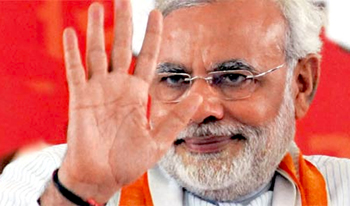
Modi govt“While officers are entitled to various classes of air travel depending on seniority, utmost economy would need to be observed while exercising the choice keeping the limitations of budget in mind. However, there would no bookings in the first class,” said the office memorandum.

The facility of Video Conferencing, it said, “may be used effectively”.

The Finance Ministry said purchase of new vehicles to meet operational requirement of defence forces, Paramilitary forces and security organisations are permitted but ban on purchase of any other vehicles would continue. “Such measures are intended at promoting fiscal discipline, without restricting the operational efficiency of the government. In the context of the current fiscal situation, there is a need to continue to rationalise expenditure and optimise available resources,” it said. The government proposes to lower the fiscal deficit to 3 per cent of GDP by 2016-17. The deficit which had touched a high of 5.7 per cent in 2011-12, was brought down to 4.8 per cent in 2012-13 and further to 4.5 per cent in 2013-14 by way of austerity measures.

“The task before me is very challenging because we need to revive growth, particularly in manufacturing sector and infrastructure,” Finance Minister Arun Jaitley had said in his budget speech. He added that choice has to be made whether or not to be victims of mere populism and wasteful expenditure. The Finance Ministry said that the “mandatory 10 per cent cut” in plan expenditure will exclude interest payments, repayment of debt, defence, capital, salaries, pensions and grants to the state. “No re-appropriation of funds to augment the non-plan heads of expenditure on which cuts have been imposed, shall be allowed during the current fiscal,” it said.

It said the austerity measures would also apply to autonomous bodies, adding that no fresh commitments would be made over and above what was provided in the Budget. Only seminars and conferences that are absolutely essential should be organised, it said, adding that “holding of exhibitions/seminars/conferences abroad is strongly discouraged except in case of exhibitions for trade promotions.” It said in all cases of air travel the lowest air fare tickets available for entitled class are to be purchased. “No companion free ticket on domestic/international travel is to be availed of,” it added.

Referring to jobs in government departments, it said there will be a total ban on new posts and those that have remained vacant for more than a year will not be filled except “under very rare and unavoidable circumstances”. The Finance Ministry has also asked the departments to avoid bunching up expenditure in the last quarter to ensure that there is no infructuous or wasteful spending. It said the Secretaries would be responsible to ensure compliance of the austerity measures and the Financial Advisors would be required to submit reports to the Finance Ministry on a quarterly basis.

The non-plan expenditure of government deals with outlay on subsidies, interest payment, salary, among others.

For the current fiscal, the government has proposed a Plan expenditure of Rs 5.75 lakh crore, while that for non-Plan expenditure is over Rs 12.19 lakh crore.

Total budgeted expenditure estimates, including Plan and non-Plan stand at Rs 17,94,892 crore, higher than revised estimates for 2013-14 at Rs 15,90,434 crore.

Comments

Add new comment

  • Coastaldigest.com reserves the right to delete or block any comments.
  • Coastaldigset.com is not responsible for its readers’ comments.
  • Comments that are abusive, incendiary or irrelevant are strictly prohibited.
  • Please use a genuine email ID and provide your name to avoid reject.
Agencies
May 5,2020

Jammu and Kashmir, May 5: Awarding the prestigious Pulitzer Prize to three Indian photographers, the Pulitzer Board at Columbia University claimed that it was for their work in Kashmir as "India revoked its independence".

The award to Channi Anand, Mukhtar Khan and Dar Yasin in the feature photography category for their pictures for the Associated Press was announced on Monday.

The prizes, considered the most prestigious for US journalism, are associated with the university's Graduate School of Journalism where the judging is done and is announced, although this year it was done remotely.

Besides a certificate, the prizes carry a cash award of $15,000, except the public service category for which a gold medal is awarded.

The public service prize went to The Anchorage Daily News for a series that dealt with policing in Alaska state.

In making the award to the three, the Board said on its website that it was "for striking images of life in the contested territory of Kashmir as India revoked its independence, executed through a communications blackout".

Besides making the false claim about "independence" of Kashmir being "revoked", the board that includes several leading journalists did not explain how their photographs could have reached the AP within hours of the incidents recorded "through a communication blackout".

India's Central government only revoked Article 370 of the Constitution that gave Jammu and Kashmir a special status and it was not independent.

Indian journalists were allowed to operate in Kashmir, while only non-Indian journalists were barred.

The wording of the award announcement calls into question the credibility of the Pulitzer Board that gives out what are considered prestigious journalism awards.

The portfolio of pictures by the three on the Pulitzer web site included one of a masked person attacking a police vehicle and another of masked people with variants of the Kashmir flag, besides photos of mourners and protesters.

One of the finalists for the Pulitzer Prize for explanatory journalism was a reporter of Indian descent at The Los Angeles Times, Swetha Kannan, who was nominated for her work with two colleagues on the seas rising due to climate change.

Comments

Add new comment

  • Coastaldigest.com reserves the right to delete or block any comments.
  • Coastaldigset.com is not responsible for its readers’ comments.
  • Comments that are abusive, incendiary or irrelevant are strictly prohibited.
  • Please use a genuine email ID and provide your name to avoid reject.
News Network
July 18,2020

New Delhi, Jul 18: The Covid-19 lockdown-led reduction in air pollution levels across five Indian cities, including Delhi and Mumbai, may have prevented about 630 premature deaths, and saved USD 690 million in health costs in the country, according to a new study.

Scientists, including those from the University of Surrey in the UK, assessed the levels of harmful fine particulate matter (PM2.5) from vehicles and other sources in five Indian cities -- Delhi, Mumbai, Kolkata, Chennai and Hyderabad -- since the beginning of the lockdown period.

The study, published in the journal Sustainable Cities and Society, compared these lockdown PM2.5 figures from 25 March up until 11 May, with those from similar periods of the preceding five years, and found that the measure reduced pollution levels in all these places.

According to the scientists, during this period, the levels of these harmful air pollutants reduced by 10 per cent in Mumbai, and by up to 54 per cent in Delhi.

"The percentage reduction for the other cities ranged from 24 to 32 per cent, which was slightly smaller than the measured values for Delhi and Mumbai," the scientists noted in the study.

"While the reduction in PM2.5 pollution may not be surprising, the size of the reduction should make us all take notice of the impact we have been having on the planet," said Prashant Kumar, a co-author of the study from the University of Surrey.

The scientists said these reductions in PM2.5 were comparable to those reported in other cities across the world, such as in Austria's capital Vienna (60 per cent), and Shanghai (42 per cent) in China.

They also calculated the monetary value of the reduced mortality due to air pollution and found that the lowered levels of PM2.5 may have saved 630 people from premature death, and USD 690 million in health costs in India.

Coronavirus India update: State-wise total number of confirmed cases, deaths on July 17

According to the researchers, the present lockdown situation offers observational opportunities regarding potential control systems and regulations for improved urban air quality.

They said an integrated approach might help in understanding the overall impacts of Covid-19 lockdown-style interventions and support the implementation of relevant policy frameworks.

"This is an opportunity for us all to discuss and debate what the 'new normal' should look like - particularly when it comes to the quality of the air we breathe," Kumar said.

Comments

Add new comment

  • Coastaldigest.com reserves the right to delete or block any comments.
  • Coastaldigset.com is not responsible for its readers’ comments.
  • Comments that are abusive, incendiary or irrelevant are strictly prohibited.
  • Please use a genuine email ID and provide your name to avoid reject.
News Network
January 18,2020

Mumbai, Jan 18: Maharashtra Tourism Minister Aaditya Thackeray on Friday said shops, restaurants, malls and pubs will remain open 24 hours on an experimental basis in a few areas of Mumbai from January 26.

The areas where these establishments will remain open all night are Fort and Kala Ghoda in south Mumbai and Bandra Kurla Complex in the west.

Thackeray had batted for all-night-open eateries and other establishments in the city during the earlier BJP-Shiv Sena regime too.

Comments

Add new comment

  • Coastaldigest.com reserves the right to delete or block any comments.
  • Coastaldigset.com is not responsible for its readers’ comments.
  • Comments that are abusive, incendiary or irrelevant are strictly prohibited.
  • Please use a genuine email ID and provide your name to avoid reject.