



Modi govt bars first class travel, five-star hotel meetings for officials

October 31, 2014

New Delhi, Oct 31: Unveiling an austerity drive to cut non-plan expenditure by 10 per cent, the Narendra Modi government has barred bureaucrats from travelling first class on overseas visits and have been asked to use video conferencing as much as possible.

With an aim to restrict fiscal deficit to 4.1 per cent of GDP in 2014-15, the Finance Ministry has barred officials from holding meetings in five-star hotels and put a freeze on fresh appointments and filling up posts lying vacant for over one year.
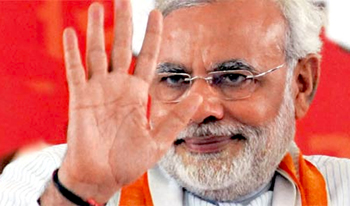
Modi govt“While officers are entitled to various classes of air travel depending on seniority, utmost economy would need to be observed while exercising the choice keeping the limitations of budget in mind. However, there would no bookings in the first class,” said the office memorandum.

The facility of Video Conferencing, it said, “may be used effectively”.

The Finance Ministry said purchase of new vehicles to meet operational requirement of defence forces, Paramilitary forces and security organisations are permitted but ban on purchase of any other vehicles would continue. “Such measures are intended at promoting fiscal discipline, without restricting the operational efficiency of the government. In the context of the current fiscal situation, there is a need to continue to rationalise expenditure and optimise available resources,” it said. The government proposes to lower the fiscal deficit to 3 per cent of GDP by 2016-17. The deficit which had touched a high of 5.7 per cent in 2011-12, was brought down to 4.8 per cent in 2012-13 and further to 4.5 per cent in 2013-14 by way of austerity measures.

“The task before me is very challenging because we need to revive growth, particularly in manufacturing sector and infrastructure,” Finance Minister Arun Jaitley had said in his budget speech. He added that choice has to be made whether or not to be victims of mere populism and wasteful expenditure. The Finance Ministry said that the “mandatory 10 per cent cut” in plan expenditure will exclude interest payments, repayment of debt, defence, capital, salaries, pensions and grants to the state. “No re-appropriation of funds to augment the non-plan heads of expenditure on which cuts have been imposed, shall be allowed during the current fiscal,” it said.

It said the austerity measures would also apply to autonomous bodies, adding that no fresh commitments would be made over and above what was provided in the Budget. Only seminars and conferences that are absolutely essential should be organised, it said, adding that “holding of exhibitions/seminars/conferences abroad is strongly discouraged except in case of exhibitions for trade promotions.” It said in all cases of air travel the lowest air fare tickets available for entitled class are to be purchased. “No companion free ticket on domestic/international travel is to be availed of,” it added.

Referring to jobs in government departments, it said there will be a total ban on new posts and those that have remained vacant for more than a year will not be filled except “under very rare and unavoidable circumstances”. The Finance Ministry has also asked the departments to avoid bunching up expenditure in the last quarter to ensure that there is no infructuous or wasteful spending. It said the Secretaries would be responsible to ensure compliance of the austerity measures and the Financial Advisors would be required to submit reports to the Finance Ministry on a quarterly basis.

The non-plan expenditure of government deals with outlay on subsidies, interest payment, salary, among others.

For the current fiscal, the government has proposed a Plan expenditure of Rs 5.75 lakh crore, while that for non-Plan expenditure is over Rs 12.19 lakh crore.

Total budgeted expenditure estimates, including Plan and non-Plan stand at Rs 17,94,892 crore, higher than revised estimates for 2013-14 at Rs 15,90,434 crore.

Comments

Add new comment

  • Coastaldigest.com reserves the right to delete or block any comments.
  • Coastaldigset.com is not responsible for its readers’ comments.
  • Comments that are abusive, incendiary or irrelevant are strictly prohibited.
  • Please use a genuine email ID and provide your name to avoid reject.
Agencies
August 8,2020

New Delhi, Aug 8: Former Union Minister Rajiv Pratap Rudy on Saturday said that it is unfair and unfortunate to blame the pilots or the Airports Authority of India (AAI) for the Kerala place crash which took place on Friday evening.

"It is very unfortunate and unfair when experts come under television channel and they try to put blame on the Airports Authority of India or the pilots. Airport authority in an institution which has had survived various tests of time for the last 65 to 70 years, or pre-independence, so it is unfair to blame them," he said.

While speaking to news agency, Rajiv Pratap Rudy said that the 737 Boeing aircraft is reliable and the pilots were experienced, and it was wrong to blame them.

He further said that there are many possibilities on what could have happened, and said, "It is an accident and we need to find the facts."
Rajiv Pratap Rudy also expressed his deepest condolences to the family members of those who lost their lives in the plane crash. "This accident is terrible and heart-rending. 

I offer my deepest condolences to the family members of the captain and first officer, and the families of passengers who died and were injured," he said.

At least 18 people died when a plane carrying 190 passengers came from Dubai met with an accident at Karipur airport in Kozhikode on Friday evening, as per the Directorate General of Civil Aviation (DGCA).

"Eighteen people, including two pilots, have lost their lives. It is unfortunate. 127 people are at hospitals, others have been released," said Puri on the Air India Express flight that crash-landed on Friday evening.

Air India Express Dubai-Kozhikode IX-1344 flight, carrying 190 people on board from Dubai under the Vande Bharat Mission, skidded off the runway at Karipur Airport in Kozhikode at 7.41 pm on Friday in which several people sustained injuries.

Comments

Add new comment

  • Coastaldigest.com reserves the right to delete or block any comments.
  • Coastaldigset.com is not responsible for its readers’ comments.
  • Comments that are abusive, incendiary or irrelevant are strictly prohibited.
  • Please use a genuine email ID and provide your name to avoid reject.
Agencies
March 14,2020

New Delhi, Mar 14: The number of novel coronavirus cases in India rose to 83 on Saturday, which includes one death each from Delhi and Karnataka, the Union Health Ministry said.

While a 76-year-old man from Kalaburagi who had recently returned from Saudi Arabia died on Thursday, a 68-year-old woman in Delhi who had tested positive for coronavirus passed away at Ram Manohar Lohia (RML) Hospital on Friday night.

The woman, whose son with a travel history abroad had tested positive, died because of co-morbidity (diabetes and hypertension), the Health Ministry said, adding that she had tested positive for COVID-19.

Delhi has reported seven positive cases and Uttar Pradesh 11 so far. Karnataka has six coronavirus patients while Maharashtra has 14 and Ladakh three.

Besides, Rajasthan, Tamil Nadu, Jammu and Kashmir, Andhra Pradesh and Punjab have reported one case each. Telangana has reported two.

Kerala has recorded 19 cases, including three patients who were discharged last month after they recovered from the contagious infection with flu-like symptoms.

The total number of 84 confirmed cases includes 17 foreigners -- 16 Italian tourists and a Canadian, the ministry officials said.

Amid rising coronavirus cases in India, the government has asked people not to panic, saying no community transmission of the virus has been observed and there has only been a few cases of local transmission so far and that is "not a health emergency" in India at present.

With the World Health Organisation (WHO) declaring COVID-19 a pandemic, a Health Ministry official said over 4,000 people who had come in contact with the 83 positive cases have been identified through contract tracing and were being tracked while 42,000 people across the country are under community surveillance.

He said all essential facilities like community surveillance, quarantine, isolation wards, adequate personal protective equipment (PPEs), trained manpower, rapid response teams are being strengthened further in all the states and union territories.

The Centre as part of its measures to contain the spread of the disease on Friday announced that people will be allowed to travel through 19 of 37 land border checkposts from Saturday midnight and services of the Indo-Bangladesh cross border passenger trains and buses will continue to remain suspended till April 15.

Only four Indo-Nepal border checkposts will remain operational, and for citizens of Bhutan and Nepal visa-free entry to the country will continue, Home Ministry Additional Secretary Anil Malik had said.

He said the decision on closing the Kartarpur Corridor is under consideration

The government on Wednesday suspended all visas, barring a few categories like diplomatic and employment, in an attempt to prevent the spread of coronavirus.

It has asked Indian nationals to avoid all non-essential travel abroad.

All incoming international passengers returning to India should self-monitor their health and follow the required do's and dont's as detailed by the government.

Comments

Add new comment

  • Coastaldigest.com reserves the right to delete or block any comments.
  • Coastaldigset.com is not responsible for its readers’ comments.
  • Comments that are abusive, incendiary or irrelevant are strictly prohibited.
  • Please use a genuine email ID and provide your name to avoid reject.
News Network
May 7,2020

May 7: India is projected to record the highest number of births in the 9 months since COVID-19 was declared a pandemic in March, with more than 20 million babies expected to be born in the country between March and December, according to top UN body.

The United Nations Children's Fund (UNICEF) warned that pregnant mothers and babies born during the pandemic across the world were threatened by strained health systems and disruptions in services.

An estimated 116 million babies will be born under the shadow of COVID-19 pandemic, UNICEF said on Wednesday, ahead of Mother's Day, observed on May 10.

These babies are projected to be born up to 40 weeks after COVID-19 was recognised as a pandemic on March 11.

The highest numbers of births in the 9 months since the pandemic was declared are expected to occur in India, where 20.1 million babies are projected to be born between March 11 and December 16. Other countries with the expected highest numbers of births during this period are China (13.5 million), Nigeria (6.4 million), Pakistan (5 million) and Indonesia (4 million), it said.

"Most of these countries had high neonatal mortality rates even before the pandemic and may see these levels increase with COVID-19 conditions," UNICEF said.

It is estimated that there will be 24.1 million births in India for the January-December 2020 period.

UNICEF warned that COVID-19 containment measures can disrupt life-saving health services such as childbirth care, putting millions of pregnant mothers and their babies at great risk.

Even wealthier countries are affected by this crisis. In the US, the sixth-highest country in terms of the expected number of births, over 3.3 million babies are projected to be born between March 11 and December 16.

"New mothers and newborns will be greeted by harsh realities," UNICEF said, adding they include global containment measures such as lockdowns and curfews; health centres overwhelmed with response efforts; supply and equipment shortages; and a lack of sufficient skilled birth attendants as health workers, including midwives, are redeployed to treat COVID-19 patients.

"Millions of mothers all over the world embarked on a journey of parenthood in the world as it was. They now must prepare to bring a life into the world as it has become – a world where expecting mothers are afraid to go to health centres for fear of getting infected, or missing out on emergency care due to strained health services and lockdowns," UNICEF Executive Director Henrietta Fore said.

"It is hard to imagine how much the coronavirus pandemic has recast motherhood" Fore said.

UNICEF said its analysis was based on data from World Population Prospects 2019 of the UN Population Division.

An average full-term pregnancy typically lasts a complete 9 months, or 39 to 40 weeks. For the purposes of this estimate, the number of births for a 40-week period in 2020 was calculated.

The 40-week period of March 11 to December 16 is used in this estimate based upon the WHO's March 11 assessment that COVID-19 can be characterised as a pandemic.

UNICEF warned that although evidence suggests that pregnant mothers are not more affected by COVID-19 than others, countries need to ensure they still have access to antenatal, delivery and postnatal services.

Similarly, sick newborns need emergency services as they are at high risk of death. New families require support to start breastfeeding, and to get medicines, vaccines and nutrition to keep their babies healthy, it said.

"This is a particularly poignant Mother's Day, as many families have been forced apart during the coronavirus pandemic, but it is also a time for unity, a time to bring everyone together in solidarity. We can help save lives by making sure that every pregnant mother receives the support she needs to give birth safely in the months to come," Fore said.

Issuing an urgent appeal to governments and health care providers to save lives in the coming months, UNICEF said efforts must be made to help pregnant women receive antenatal checkups, skilled delivery care, postnatal care services, and care related to COVID-19 as needed.

Ensure health workers are provided with the necessary personal protective equipment and get priority testing and vaccination once a COVID-19 vaccine becomes available so that can deliver high quality care to all pregnant women and newborn babies during the pandemic, it said.

While it is not yet known whether the virus is transmitted from a mother to her baby during pregnancy and delivery, UNICEF advised all pregnant women to follow precautions to protect themselves from exposure to the virus.

Closely monitor themselves for symptoms of COVID-19 and seek advice from the nearest designated facility if they have concerns or experience symptoms. Pregnant women should also take the same precautions to avoid COVID -19 infection as other people: practice physical distancing, avoid physical gatherings and use online health services, it said.

UNICEF said even before COVID-19 pandemic, an estimated 2.8 million pregnant women and newborns died every year, or 1 every 11 seconds, mostly of preventable causes.

The agency called for immediate investment in health workers with the right training, who are equipped with the right medicines to ensure every mother and newborn is cared for by a safe pair of hands to prevent and treat complications during pregnancy, delivery and birth.

Comments

Add new comment

  • Coastaldigest.com reserves the right to delete or block any comments.
  • Coastaldigset.com is not responsible for its readers’ comments.
  • Comments that are abusive, incendiary or irrelevant are strictly prohibited.
  • Please use a genuine email ID and provide your name to avoid reject.