


Modi's demonetisation move 'gamble', will set precedent: Chinese media

November 26, 2016

Beijing, Nov 26: Terming Prime Minister Narendra Modi's demonetisation move as "very bold", China's official media today said it was a "gamble" that would create a precedent irrespective of whether it succeeds or fails and China will draw lessons from its impact on corruption.
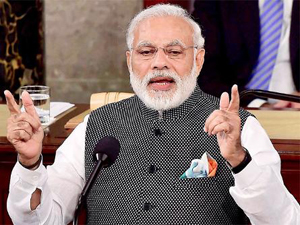
modi1"Modi's move is very bold. We cannot imagine what would happen in China if the country bans its 50 and 100 yuan notes," said an editorial in the state-run Global Times titled 'Modi takes a gamble with money reform'. 100 yuan is China's highest currency note.

"To prevent a leak of information jeopardising the implementation of the demonetisation reform, the roll out of the plan had to be kept confidential. Modi is in a dilemma as the reform aims to render the black money useless but the process goes against the governance principle of winning support of the public before initiating a new policy," the editorial said.

"As more than 90 per cent of transactions in India are made with cash, banning 85 per cent of the currency in circulation brings a lot of trouble to people's daily life" sparking fierce criticism including from "former Prime Minister Manmohan Singh who termed it as organised loot", it said.

"Demonetisation can crackdown on corruption and shadow economy but it is obviously unable to solve the deeper social and political issues that help breed the aforementioned problems," the editorial said.

However, it stated that as far as the root causes of corruption exist, the problems will always resurface. "In other words, the Modi government wishes to turn a long and arduous reform into a one-off deal," it said.

"Demonetisation is a gamble for Modi. He bet on both the execution ability of the government and the tolerance level of the Indian society, hoping that the benefits of this reform can outrun the negative social impacts and low morale," the editorial said.

It asserted that the "Western-style" democratic system of India allows little room for such bold moves.

"However, he is really carrying it out, and will create a precedent no matter he succeeds or fails," it said. "Reform is always difficult and requires more than just courage. Modi's demonetisation came with good intention but whether it can succeed depends on the efficiency of the system and the cooperation of the entire society. More and more people are growing pessimistic about the ability of Modi's government to control the process," the editorial said.

Noting that China's reform and opening-up has been going on for nearly 40 years, the editorial said it had ups and downs but remained largely stable. "Its success is based on broad public support," it said.

"The strong execution capabilities of the Communist Party of China are built on the consensus of the entire country. By observing India's reforms we will draw lessons, which would in turn help us understand our own reforms," it said.

Comments

Add new comment

  • Coastaldigest.com reserves the right to delete or block any comments.
  • Coastaldigset.com is not responsible for its readers’ comments.
  • Comments that are abusive, incendiary or irrelevant are strictly prohibited.
  • Please use a genuine email ID and provide your name to avoid reject.
News Network
May 23,2020

Karachi, May 23: Ninety-seven people were killed and two survived when a passenger plane crashed into homes in Pakistan's southern city of Karachi, health officials said Saturday.

The Pakistan International Airlines (PIA) plane had made multiple approaches to land at the city's airport when it came down in a residential area, damaging buildings and sparking a rescue operation that lasted into the night.

All passengers and crew had been accounted for and the bodies of those killed had been recovered from the crash site, the Sindh Health Ministry said, adding that 19 had been identified.

A local hospital earlier reported it had received the bodies of people killed on the ground.

The site remained cordoned off on Saturday morning.

The crash sent plumes of smoke were into the air as rescue workers and residents searched the debris for people and as firefighters tried to extinguish the flames.

An AFP reporter witnessed charred bodies being loaded into ambulances.

PIA said the plane lost contact with air traffic control just after 2:30 pm (0930 GMT) travelling from Lahore to Karachi.

The disaster comes as Pakistanis prepare to celebrate the end of Ramadan and the beginning of Eid al-Fitr, with many travelling back to their homes in cities and villages.

Comments

Add new comment

  • Coastaldigest.com reserves the right to delete or block any comments.
  • Coastaldigset.com is not responsible for its readers’ comments.
  • Comments that are abusive, incendiary or irrelevant are strictly prohibited.
  • Please use a genuine email ID and provide your name to avoid reject.
Agencies
June 9,2020

Wuhan, Jun 9: China on Tuesday dismissed as "incredibly ridiculous" a Harvard study, which pointed to a surge in traffic outside Wuhan hospitals from August 2019 suggesting that the coronavirus hit the area far earlier than reported.

A whitepaper on coronavirus released by China on Sunday said the virus was first noticed on December 17 and Chinese virologists confirmed human-to-human transmission on January 19, prompting authorities to impose lockdown of Wuhan from January 23.

US President Donald Trump and leaders of several countries have accused China of not being transparent in reporting the deadly disease, leading to huge human casualties and economic crisis across the world.

The new study by Harvard researchers says satellite images show an increase in traffic outside five hospitals in Wuhan from late August to December.

The traffic spike coincided with a rise in online searches for information on symptoms like "cough" and "diarrhoea".

China said the study was "ridiculous" and based on "superficial" information, BBC reported.

It is believed that the virus first appeared in China some time in November. Authorities reported a cluster of pneumonia cases with an unknown cause to the World Health Organization (WHO) on December 31.

"Clearly, there was some level of social disruption taking place well before what was previously identified as the start of the novel coronavirus pandemic," Dr John Brownstein, who led the research, told ABC news.

The study has not been peer-reviewed.

The researchers examined commercial satellite data from outside five Wuhan hospitals, comparing data from late summer and autumn 2018 to the same time period in 2019.

In one case, researchers counted 171 cars parked at one of Wuhan''s largest hospitals, Tianyou Hospital, in October 2018.

Satellite data from the same time in 2019 showed 285 vehicles in the same place, an increase of 67 per cent.

A surge in online searches for words associated with the symptoms of coronavirus on the Chinese search engine Baidu seemed to emerge at the same time.

"This is all about a growing body of information pointing to something taking place in Wuhan at the time," Dr Brownstein said.

"Many studies are still needed to fully uncover what took place and for people to really learn about how these disease outbreaks unfold and emerge in populations. So this is just another point of evidence," he said.

Asked for her reaction at the media briefing, Chinese Foreign Ministry spokeswoman Hua Chunying dismissed the findings as "incredibly ridiculous".

"I think it is ridiculous, incredibly ridiculous, to come up with this conclusion based on superficial observations such as traffic volume," she said.

"(I have) Not seen the research you mentioned. If the conclusion is drawn based on traffic volumes (and) other superficial observations, it won’t be a sound conclusion," she said and referred to the allegations about the COVID-19 originating from the Wuhan Institute of Virology (WIV) by Trump.

"That allegation was proved to be wrong," she said.

When pointed out that China says it respects science based inquiry and Harvard is one of the top universities in the world, Hua said, "on the origin of virus there are lot of conspiracy theories against China”.

"That is very unfair. At the moment, the pressing task is to enhance coordination to contain the spread of the virus. Someday, I am sure the truth will be out. China deserves a fair and objective evaluation," she said and referred to the whitepaper released by the Chinese government detailing evolution of coronavirus in Wuhan and how Beijing handled the situation.

Recently, the World Health Assembly (WHA), the decision-making body of Geneva-based World Health Organization (WHO), passed a resolution to probe the origin of the virus. China also backed the resolution.

As of Monday, the overall confirmed cases on the mainland had reached 83,043, including 58 patients who were still being treated, with no one in severe condition, China’s National Health Commission, (NHC) said.

Altogether 78,351 people had been discharged after recovery and 4,634 people had died of the disease, it said.

Comments

Add new comment

  • Coastaldigest.com reserves the right to delete or block any comments.
  • Coastaldigset.com is not responsible for its readers’ comments.
  • Comments that are abusive, incendiary or irrelevant are strictly prohibited.
  • Please use a genuine email ID and provide your name to avoid reject.
Agencies
August 7,2020

Russia boasts that it's about to become the first country to approve a Covid-19 vaccine, with mass vaccinations planned as early as October using shots that are yet to complete clinical trials -- and scientists worldwide are sounding the alarm that the headlong rush could backfire.

Moscow sees a Sputnik-like propaganda victory, recalling the Soviet Union's launch of the world's first satellite in 1957.

But the experimental Covid-19 shots began first-in-human testing on a few dozen people less than two months ago, and there's no published scientific evidence yet backing Russia's late entry to the global vaccine race, much less explaining why it should be considered a front-runner.

“I'm worried that Russia is cutting corners so that the vaccine that will come out may be not just ineffective, but also unsafe,” said Lawrence Gostin, a global public health law expert at Georgetown University. “It doesn't work that way... Trials come first. That's really important.”

According to Kirill Dmitriev, head of Russia's Direct Investment Fund that bankrolled the effort, a vaccine developed by the Gamaleya research institute in Moscow may be approved in days, before scientists complete what's called a Phase 3 study.

That final-stage study, usually involving tens of thousands of people, is the only way to prove if an experimental vaccine is safe and really works.

Health Minister Mikhail Murashko said members of “risk groups,” such as medical workers, may be offered the vaccine this month.

He didn't clarify whether they would be part of the Phase 3 study that is said to be completed after the vaccine receives “conditional approval.”

Deputy Prime Minister Tatyana Golikova promised to start “industrial production” in September, and Murashko said mass vaccination may begin as early as October.

Dr Anthony Fauci, the top US infectious disease specialist, questioned the fast-track approach last week.

“I do hope that the Chinese and the Russians are actually testing a vaccine before they are administering the vaccine to anyone, because claims of having a vaccine ready to distribute before you do testing I think is problematic at best," he said.

Questions about this vaccine candidate come after the US, Britain and Canada last month accused Russia of using hackers to steal vaccine research from Western labs.

Delivering a vaccine first is a matter of national prestige for the Kremlin as it tries to assert the image of Russia as a global power capable of competing with the US and China.

The notion of being “the first in the world” dominated state news coverage of the effort, with government officials praising reports of the first-step testing.

In April, President Vladimir Putin ordered state officials to shorten the time of clinical trials for a variety of drugs, including potential coronavirus vaccines.

According to Russia's Association of Clinical Trials Organizations, the order set “an unattainable bar” for scientists who, as a result, "joined in on the mad race, hoping to please those at power.”

The association first raised concern in late May, when professor Alexander Gintsburg, head of the Gamaleya institute, said he and other researchers tried the vaccine on themselves.

The move was a “crude violation of the very foundations of clinical research, Russian law and universally accepted international regulations" the group said in an open letter to the government, urging scientists and health officials to adhere to clinical research standards.

But a month later, the Health Ministry authorized clinical trials of the Gamaleya product, with what appeared to be another ethical issue.

Human studies started June 17 among 76 volunteers. Half were injected with a vaccine in liquid form and the other half with a vaccine that came as soluble powder.

Some in the first half were recruited from the military, which raised concerns that servicemen may have been pressured to participate.

Some experts said their desire to perform well would affect the findings. “It's no coincidence media reports we see about the trials among the military said no one had any side effects, while the (other group) reported some," said Vasily Vlassov, a public health expert with Moscow's Higher School of Economics.

As the trials were declared completed and looming regulatory approval was announced last week, questions arose about the vaccine's safety and effectiveness.

Government assurances the drug produced the desired immune response and caused no significant side effects were hardly convincing without published scientific data describing the findings.

The World Health Organization said all vaccine candidates should go through full stages of testing before being rolled out.

“There are established practices and there are guidelines out,” WHO spokesman Christian Lindmeier said Tuesday.

“Between finding or having a clue of maybe having a vaccine that works, and having gone through all the stages, is a big difference.”

Offering an unsafe compound to medical workers on the front lines of the outbreak could make things worse, Georgetown's Gostin said, adding: “What if the vaccine started killing them or making them very ill?”

Vaccines that are not properly tested can cause harm in many ways — from a negative impact on health to creating a false sense of security or undermining trust in vaccinations, said Thomas Bollyky, director of the global health program at the Council on Foreign Relations. 

Comments

Add new comment

  • Coastaldigest.com reserves the right to delete or block any comments.
  • Coastaldigset.com is not responsible for its readers’ comments.
  • Comments that are abusive, incendiary or irrelevant are strictly prohibited.
  • Please use a genuine email ID and provide your name to avoid reject.