



Modi's second state visit to UAE begins

Agencies
February 10, 2018

Abu Dhabi, Feb 10: Today will mark a watershed moment for the UAE-India relations with Indian Prime Minister Narendra Modi arriving in Abu Dhabi for his second state visit.

The two countries are expected to sign as many as 14 agreements during the two-day visit starting February 10, shifting gears of the strategic partnership in a gamut of areas including space technology, skills development, finance and defence cooperation and investments.

Modi's two-day visit on February 10 and 11 will also see work starting on the construction of the first Hindu temple in Abu Dhabi, fulfilling the long-pending wish of the Hindu community in the Capital.

Modi first visited the UAE in August 2015 becoming the first Indian Prime Minister to visit the emirates in 34 years after Indira Gandhi.

Modi will arrive in Abu Dhabi today evening from Palestine. He will meet His Highness Sheikh Mohamed bin Zayed Al Nahyan, Crown Prince of Abu Dhabi and Deputy Supreme Commander of the UAE Armed Forces, and will attend a state banquet.

On Sunday morning, Modi will visit Wahat Al Karama (Martyrs' Memorial) and pay tribute to the martyred war heroes of the UAE. He will then proceed to Dubai where he will deliver a keynote address at the 6th World Government Summit, in which India is the chief guest country.

Modi will also address a 1,800-strong gathering of the Indian community at the Dubai Opera, which is expected to be a scaled down version of his public address in 2015. More than 50,000 Indians had thronged the International Cricket Stadium in Dubai to listen to their Prime Minister on his first visit.

The Opera event is significant as Modi will flag off the laying of the foundation stone of the first Hindu temple in Abu Dhabi, which will happen simultaneously and will be live-streamed into the iconic Dubai Opera auditorium.

Indian Ambassador to the UAE Navdeep Singh Suri said the latest visit by the Indian PM will mark the dawn of a new era in the India-UAE relations.

"During the year, we have seen major UAE investments into India, a significant increase in defence and security cooperation, a transformation in our energy ties from a buyer-seller relationship to a strategic partnership."

New trajectory in UAE-India ties

Since Modi's first visit, the trajectory of the India-UAE ties have hit a renewed pace with two countries forging a new era of cooperation through the signing of a comprehensive strategic partnership agreement.

During Modi's tenure, Sheikh Mohamed bin Zayed Al Nahyan visited India twice - in February 2016 and January 2017.

The two governments signed 17 bilateral agreements in January 2016, and 14 agreements in February 2017. 

The UAE targets to invest $75 billion in India's infrastructure development. UAE's investments in India is also soaring. In October last year, the Abu Dhabi Investment Authority (Adia) signed an agreement with India's National Investment and Infrastructure Fund to invest $1 billion in India. DP World has signed a Memorandum of Understanding (MoU) with India's National Infrastructure and Investment Fund (NIIF) in May 2017 to invest $1 billion in India.

The UAE is home to more than 3.5 million Indians - the biggest Indian diaspora in the world, and 1,706 flights weekly operate between the two countries.

Comments

An Indian
 - 
Saturday, 10 Feb 2018

Before commencing construction work of Hindu Temple in Abu Dhabi, the UAE government must have put condition to Modi to solve the Babri Masjid issue.

Add new comment

  • Coastaldigest.com reserves the right to delete or block any comments.
  • Coastaldigset.com is not responsible for its readers’ comments.
  • Comments that are abusive, incendiary or irrelevant are strictly prohibited.
  • Please use a genuine email ID and provide your name to avoid reject.
Agencies
August 2,2020

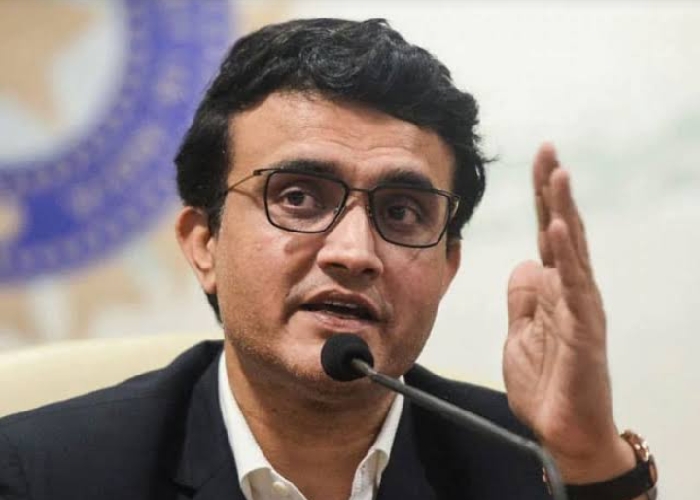
New Delhi, Aug 2: BCCI president Sourav Ganguly on Sunday said the Women's IPL or the Challenger series, as it is better known, is "very much on", ending speculation about the parent body not having a plan for Harmanpreet Kaur and her team.

The men's IPL will be held between September 19 and November 8 or 10 (final date yet to be locked in) in the UAE due to the surge in Covid-19 cases in India. The women's IPL will also be fit in to the schedule, according to the BCCI chief.

"I can confirm to you that the women's IPL is very much on and we do have a plan in place for the national team also," Ganguly told PTI ahead of the IPL Governing Council meeting later on Sunday.

The BCCI president, who is awaiting a Supreme Court verdict on waiver of the cooling-off period to continue in the position, did not divulge details but another senior official privy to the development said that women's Challenger will be held during the last phase of IPL like last year.

"The women's Challenger series is likely to be held between November 1-10 and there could be a camp before that," the source said.

The former India captain also said that the centrally contracted women players will have a camp which has been delayed due to the prevailing situation in the country.

"We couldn't have exposed any of our cricketers -- be it male or female to health risk. It would have been dangerous," Ganguly said.

"The NCA also remained shut because of Covid-19. But we have a plan in place and we will have a camp for women, I can tell you that," he added.

The BCCI's cricket operations team is chalking up a schedule where Indian women are likely to have two full-fledged white-ball series against South Africa and the West Indies before playing the ODI World Cup in New Zealand. 

Comments

Add new comment

  • Coastaldigest.com reserves the right to delete or block any comments.
  • Coastaldigset.com is not responsible for its readers’ comments.
  • Comments that are abusive, incendiary or irrelevant are strictly prohibited.
  • Please use a genuine email ID and provide your name to avoid reject.
News Network
June 9,2020

Jun 9: Prime Minister Narendra Modi wants all 1.3 billion Indians to be “vocal for local” — meaning, to not just use domestically made products but also to promote them. As an overseas citizen living in Hong Kong, I’m doing my bit by very vocally demanding Indian mangoes on every trip to the grocery. But half the summer is gone, and not a single slice so far.

My loss is due to India’s COVID-19 lockdown, which has severely pinched logistics, a perennial challenge in the huge, infrastructure-starved country. But more worrying than the disruption is the fruity political response to it. Rather than being a wake-up call for fixing supply chains, the pandemic seems to be putting India on an isolationist course. Why?

Granted that the liberal view that trade is good and autarky bad isn’t exactly fashionable anywhere right now. What makes India’s lurch troublesome is that the pace and direction of economic nationalism may be set by domestic business interests. The Indian liberals, many of whom are Western-trained academics, authors and — at least until a few years ago — policy makers, want a more competitive economy. They will be powerless to prevent the slide.

Modi’s call for a self-reliant India has been echoed by Home Minister Amit Shah, the cabinet’s unofficial No. 2, in a television interview. If Indians don’t buy foreign-made goods, the economy will see a jump, he said. The strategy — although it’s too nebulous yet to call it that — has a geopolitical element. A military standoff with China is under way, apparently triggered by India’s completion of a road and bridge near the common border in the tense Himalayan region of Ladakh. It’s very expensive to fight even a limited war there. With India’s economy flattened by COVID, New Delhi may be looking for ways to restore the status quo and send Beijing a signal.

Economic boycotts, such as Chinese consumers’ rejection of Japanese goods over territorial disputes in the East China Sea, are well understood as statecraft. In these times, it’s not even necessary to name an enemy. An undercurrent of popular anger against China, the source of both the virus and India’s biggest bilateral trade deficit, is supposed to do the job. But is it ever that easy?

A hastily introduced policy to stock only local goods in police and paramilitary canteens became a farcical exercise after the list of banned items ended up including products by the local units of Colgate-Palmolive Co., Nestle SA, and Unilever NV, which have had significant Indian operations for between 60 and 90 years, as well as Dabur India Ltd., a New Delhi-based maker of Ayurveda brands. The since-withdrawn list demonstrates the practical difficulty of bureaucrats trying to find things in a globalized world that are 100% indigenous.

Free-trade champions fret that the prime minister, whom they saw as being on their side six years ago, is acting against their advice to dismantle statist controls on land, labor and capital to help make the country more competitive. Engage with the world more, not less, they caution. But Modi also has to satisfy the Rashtriya Swayamsevak Sangh, the umbrella Hindu organisation that gets him votes. Its backbone of small traders, builders and businessmen — the RSS admits only men — was losing patience with the anemic economy even before the pandemic. Now, they’re in deep trouble, because India’s broken financial system won’t deliver even state-guaranteed loans to them.

The U.S.-China tensions — over trade, intellectual property, COVID responsibility and Hong Kong’s autonomy — offer a perfect backdrop. A dire domestic economy and trouble at the border provide the foreground. Big business will dial economic nationalism up and down to hit a trifecta of goals: Block competition from the People's Republic; make Western rivals fall in line and do joint ventures; and tap deep overseas capital markets. The first goal is being achieved with newly placed restrictions on investment from any country that shares a land border with India. The second aim is to be realized by corporate lobbying to influence India's whimsical economic policies. As for the third objective, with the regulatory environment becoming tougher for U.S.-listed Chinese companies like Alibaba Group Holding Ltd., an opportunity may open up for Indian firms.

All this may bring India Shenzhen-style enclaves of manufacturing and trade, but it will concentrate economic power in fewer hands, something that worries liberals. They’re moved by the suffering of India’s low-wage workers, who have borne the brunt of the COVID shutdown. But when their vision of a more just society and fairer income distribution prompts them to make common cause with the ideological Left, they’re quickly repelled by the Marxist voodoo that all cash, property, bonds and real estate held by citizens or within the nation “must be treated as national resources available during this crisis.” Who will invest in a country that does that instead of just printing money?

At the same time, when liberals look to the business class, they see a sudden swelling of support for ideas like a universal basic income. They wonder if this isn’t a ploy by industry to outsource part of the cost of labor to the taxpayer. Slogans like Modi’s vocal-for-local stir the pot and thicken the confusion. The value-conscious Indian consumer couldn’t give two hoots for calls to buy Indian, but large firms will know how to exploit economic nationalism. One day soon, I’ll get my mangoes — from them.

Comments

Add new comment

  • Coastaldigest.com reserves the right to delete or block any comments.
  • Coastaldigset.com is not responsible for its readers’ comments.
  • Comments that are abusive, incendiary or irrelevant are strictly prohibited.
  • Please use a genuine email ID and provide your name to avoid reject.
Agencies
February 7,2020

Washington DC, Feb 7: United States on Thursday asked all countries to speak out against mistreatment of Muslims living in China especially in Xinjiang region by Chinese authorities.

Alice G. Wells, Principal Deputy Assistant Secretary for the Bureau of South and Central Asian Affairs, while talking to reporters appreciated the steps taken by Central Asian states to ensure that no ethnic Kazakh, Uighur, Kyrgyz is refouled to China and that the human rights of individuals who reach Central Asia are observed.

"As a matter of principle we urge all countries, not just Central Asian countries, to speak out against human rights abuses that are evident against Muslims in all of China but certainly in Xinjiang. And the countries of Central Asia, several of the countries of Central Asia have deep first-hand knowledge of those abuses given the direct impact it has on their own populations who have loved ones, family members, that are swept up in these detention centers," Wells said.

"We appreciate steps by Central Asian states to ensure that no ethnic Kazakh, Uighur, Kyrgyz is refouled to China, that the human rights of individuals who reach Central Asia are observed. And we also appreciate I think what countries like Kazakhstan can do to promote the free and safe travel of compatriots, ethnic compatriots across the border," she added.

China has been accused of oppressing the Uighurs by sending them to mass detention camps, interfering in their religious activities and sending the community to undergo some form of forceful re-education or indoctrination. However, Pakistan has stayed mum over this issue.

As many as 1 million people, or about 7 per cent of Xinjiang's Muslim population, have been incarcerated in a sprawling network of "political re-education" camps, according to US and UN studies.

In 2018, the New York-based Human Rights Watch released a report accusing Beijing of a "systematic campaign of human rights violations" against Uighur Muslims in Xinjiang.

Beijing says its camps in Xinjiang are "vocational training centres."

Last year, several documents leaked revealed details about Beijing's fears about religious extremism and its wholesale crackdown on Uighurs.

The US had called on the Chinese government to "immediately release all of those who are arbitrarily detained and to end its draconian policies that have terrorised its own citizens in Xinjiang."

Comments

Add new comment

  • Coastaldigest.com reserves the right to delete or block any comments.
  • Coastaldigset.com is not responsible for its readers’ comments.
  • Comments that are abusive, incendiary or irrelevant are strictly prohibited.
  • Please use a genuine email ID and provide your name to avoid reject.