



Money was transferred online to bribe voters during polls: EC

June 8, 2014

New Delhi, Jun 8: Innovative methods like transfer of funds through the RTGS banking system and concealment of currency wads inside car bonnets were detected by Election Commission (EC) as it took steps to curb the use of black money during the just-concluded Lok Sabha polls.

The poll panel's election expenditure monitoring wing, under its Director General (Expenditure) PK Dash, seized total cash of Rs 313 crore and 2.25 crore litres of liquor along with other illegal inducements for bribing voters during the recently held parliamentary and Assembly polls.

"As a fear was created among miscreants, they were constantly changing methods. For example, since vehicles were being checked, it was noticed that some carried cash in the bonnet of the vehicle and, when it was recovered, the currency notes were burnt and the teams seized half-burnt notes.
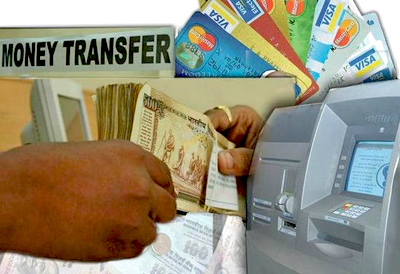
Money online"Similarly, Rs 8.31 crore in cash being carried on the roofs of buses in five bags was also seized. Cash was being transferred through Real Time Gross Settlement (RTGS) to accounts of voters. Several innovative methods were being adopted to avoid being caught by the checking teams," Dash said.

Under RBI rules, the minimum amount that can be sent through the RTGS system is Rs 2 lakh.

Dash said that notwithstanding the innovative means, EC and its teams were able to effectively contain black money use in the polls.

Talking about the recent raising of the ceiling of expenditure for candidates for Lok Sabha and Assembly polls, Dash said the current limit of Rs 70 lakh for Lok Sabha candidates and Rs 28 lakh for Assembly poll contestants was "adequate".

Dash said EC's evaluation was that 80 per cent of the candidates show less than 90 per cent of the ceiling amount in their election expense statements after the polls are over.

"During the all-party meeting held just before Lok Sabha polls, it was demanded that the existing ceiling of 40 lakh be revised. Hence, the Commission recommended that it be raised to Rs 70 lakh. This was done keeping in view the inflation rate, increase in number of voters and, consequently, the number of polling stations and also changes in method of campaigning due to changes in information, communication and technology techniques.

"Some argue that the current ceiling of Rs 70 lakh is not sufficient, while others say that the limit is too high and will lead to corrupt practices as many cannot afford (to spend) Rs 70 lakh in view of the low average income of people. The question arises here what should be the ceiling? The reality is quite different. Eighty per cent of the candidates show less than 90 per cent of the ceiling in their election expense account," he said.

He said the candidates have a good sum which they are allowed to spend under the ceiling as the expenditure incurred by parties during campaigning is not added to their contestants' accounts. The ceiling for candidates is applicable only for expenses incurred by them from the date of filing of their nominations.

Dash, who has headed the exclusive EC wing since its inception in 2010, said that raising the expenditure ceiling for candidates would not serve any purpose.

"Parties can spend any amount as, under existing laws, there is no ceiling on their expenses. In view of this, I consider the existing ceiling is adequate for the candidates who campaign by just means.

"On the contrary, even if the ceiling is raised, it will not be sufficient for those who indulge in distribution of cash, liquor and bribes.

"I raise a question for those who demand a higher ceiling. Will those who indulge in distribution of bribe and liquor at all show such expenses in their accounts? The answer is obviously no as these are corrupt practises and they use black money for such illegal activities," he said.

The DG said it was a "tough challenge" to control the use of money power in elections as India has a "cash economy".

He added that EC's maiden step of creating a pool of various intelligence and enforcement agencies to curb black money use during polls had paid off.

"It was the first time that such a step was taken. It was very effective as they (agencies) shared real-time information and took prompt action. It helped in coordination among the departments. The seizure figure shows effectiveness of the measures," he said.

Dash said the counter action against black money was meticulously planned.

"More than 11,000 flying squads were formed (covering) all constituencies to attend to the complaints of bribery along with a similar number of static surveillance teams to check transport of cash, liquor and (inducements). The entire checking was done in the presence of an executive magistrate and was also video-graphed, which can be made available to any member of the public," he said.

CCTVs were installed at all liquor distilleries and warehouses for close monitoring. Sale of liquor and storage was monitored on a day-to-day basis and if there was any increase in sale or stocks at any outlet on any day compared to last day and last year, it was kept under strict watch, he said.

Chartered aircrafts were also kept under surveillance, the top EC officer said, adding that video teams were deployed to record all major expenses like big public rallies in case of candidates who had the potential to spend more.

"Income Tax department kept close watch on the movement of black money in the constituencies. Banks were asked to send cash withdrawal reports every day to election officials," he said.

Comments

Add new comment

  • Coastaldigest.com reserves the right to delete or block any comments.
  • Coastaldigset.com is not responsible for its readers’ comments.
  • Comments that are abusive, incendiary or irrelevant are strictly prohibited.
  • Please use a genuine email ID and provide your name to avoid reject.
Agencies
August 7,2020

Kottayam, Aug 7: A trial court in Kottayam on Friday granted bail to Bishop Franco Mulakkal, accused of raping a nun in Kerala, with stringent conditions and directed him to be present on the dates of hearing of the case.

The Additional Sessions Court had cancelled the bail granted to the Bishop on July 13 for failing to appear for the trial and issued a Non Bailable Warrant against him.

Mulakkal was present in the Court on Friday when it considered the matter.

Granting bail, the court directed him not to leave the state till the chargesheet is read out to him on August 13 and to be present in court on the dates of hearing of the case.

The Court also directed him to offer fresh sureties and bail bonds.

On July 13, Mulakkal’s counsel had informed the court that his client could not appear as he had been in self quarantine due to his primary contact with a COVID-19 infected person.

The next day, the former Jalandhar Bishop had tested positive for coronavirus.

The prosecution informed the Court that Mulakkal had not produced the COVID negative certificate, to which the Court observed that the state Health Department can take necessary action on this issue.

The Supreme Court on Wednesday had directed Mulakkal to face trial as it dismissed his plea seeking discharge in the rape case lodged against him by the nun belonging to a congregation under Jalandhar diocese, saying there was no merit in his petition.

A bench of Chief Justice S A Bobde, A S Bopanna and V Ramasubramanian had told the counsel for Bishop that the court is not saying anything on merit, but is dismissing the plea on the issue of discharge from the case.

Mulakkal, in his plea had challenged the July 7 Kerala High Court order, dismissing his discharge plea in the rape case filed by the nun.

The High Court had asked the deposed Bishop of Jalandhar diocese to stand for trial in the rape case, which was registered on the basis of a complaint filed by the nun.

The senior priest of the Roman Catholic Church had filed the revision petition following the dismissal of his discharge plea by a trial court in March this year.

The rape case against the Bishop was registered by police in Kottayam district.

In her complaint to the police in June, 2018, the nun had alleged that she was subjected to sexual abuse by the bishop during the period between 2014 and 2016.

The bishop, who was arrested by the Special Investigation team, which probed the case, charged him with wrongful confinement, rape, unnatural sex and criminal intimidation.

Comments

Add new comment

  • Coastaldigest.com reserves the right to delete or block any comments.
  • Coastaldigset.com is not responsible for its readers’ comments.
  • Comments that are abusive, incendiary or irrelevant are strictly prohibited.
  • Please use a genuine email ID and provide your name to avoid reject.
News Network
February 27,2020

New Delhi, Feb 27: Congress leader Priyanka Gandhi Vadra on Thursday attacked the government over the transfer of Delhi High Court Judge S Muralidhar, saying the Centre's attempts to "muzzle" justice and "break people's faith in an upright judiciary are deplorable".

Delhi HC Judge S Muralidhar was transferred to the Punjab and Haryana High Court, days after the Supreme Court collegium made the recommendation.

"The midnight transfer of Justice Muralidhar isn't shocking given the current dispensation, but it is certainly sad & shameful," Priyanka Gandhi tweeted. "Millions of Indians have faith in a resilient & upright judiciary, the government’s attempts to muzzle justice & break their faith are deplorable," she said.

The judge was hearing the Delhi violence case and the late evening notification came on the day when a bench headed by him expressed "anguish" over the Delhi Police's failure to register FIRs against alleged hate speeches by three BJP leaders.

Comments

Add new comment

  • Coastaldigest.com reserves the right to delete or block any comments.
  • Coastaldigset.com is not responsible for its readers’ comments.
  • Comments that are abusive, incendiary or irrelevant are strictly prohibited.
  • Please use a genuine email ID and provide your name to avoid reject.
Agencies
June 29,2020

New Delhi, Jun 29: Fuel prices rose on Monday again after a days pause with oil marketing companies increasing the pump price of petrol by 5 paisa and diesel by 13 paisa per litre in Delhi.

In the national capital, petrol price on Monday stood at Rs 80.43 per litre while that of diesel at Rs 80.53 a litre.

With this increase, fuel prices have moved up on 22 of the last 23 days (with no rise on Sunday). Petrol prices, however, were unchanged for an additional day in between after the daily revision based on dynamic pricing was reinstated by OMCs.

Since the daily price revision resumed on June 7, petrol price has increased Rs 9.17 and diesel rose by Rs 11.14 in the national capital. In the other cities the magnitude of increase was similar.

During the past 23 days, the quantum of price hike gradually declined from around 60 paise raise for a few days, immediately post the resumption of daily price revision, to less than 20 paise during the past few days and now even less than 10 paisa per litre.

In a historic development, the price of diesel surged above that of petrol in the national capital during this period. It continues to remain higher even though on Saturday the quantum of petrol price hike was higher than that of diesel.

Officials in oil marketing companies said that it is hard to predict which of the two fuels will be priced higher in the Capital as the gap between the two is almost negligible. But petrol prices have shown more volatility in international markets that may take it ahead once again in coming days.

Apart from Delhi, the retail prices of petrol and diesel have followed the traditional path in other metros with petrol being priced at a premium of between Rs 5 and 8 per litre. The difference between the auto fuel prices in Delhi and other metros is because of the taxation structure.

While both petrol and diesel are at similar levels of taxes (state and centre) in Delhi, it is higher for petrol in many other Indian cities.

Globally diesel is priced a tad higher than petrol. In India too, the base price of diesel is slightly higher than petrol but taxation at central and state levels changed the complexion of retail prices.

If the price of petroleum products and crude hold their positions in global markets, then petrol and diesel prices rise may stop for a longer period and we may even see marginal fall in prices.

Fuel prices have been increasing since June 7 when oil companies began the daily price revision mechanism after a hiatus of 82 days during the lockdown.

Comments

Add new comment

  • Coastaldigest.com reserves the right to delete or block any comments.
  • Coastaldigset.com is not responsible for its readers’ comments.
  • Comments that are abusive, incendiary or irrelevant are strictly prohibited.
  • Please use a genuine email ID and provide your name to avoid reject.