



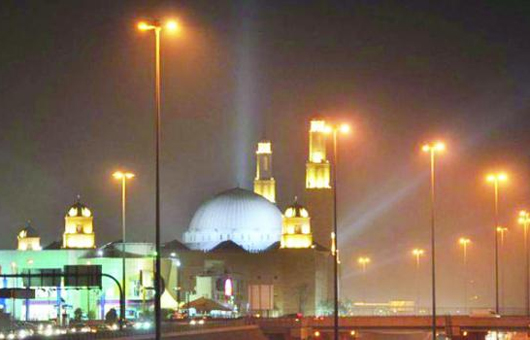
Mosques are ready for itikaf

July 19, 2014

Mosques itikafRiyadh, Jul 19: Two large mosques in the capital have made extensive arrangements for Muslims who would like to perform “itikaf” (meditative seclusion) during the last 10 of the holy month of Ramadan.

The management of the Al-Rajhi Mosque at Exit 17 and the King Khalid Mosque in Ummul Hammam had instructed the mosque authorities to make arrangements for those men and women who want to perform itikaf to provide accommodation and meals during stay in the mosques.

Those who stay in the mosques for the purpose of itikaf will be allowed accommodation and served meals during suhoor and iftar. Religious discourses have been arranged for the worshippers to spend their time usefully inside the mosques.

In an earlier message, Grand Mufti Sheikh Abdul Aziz Al-Asheikh said the worshipping act of itikaf can be done at any mosque and should not be confined to the Grand Mosque.

Itikaf is a spiritual retreat in Islamic ritual in which believers seclude themselves from others to engage solely in acts of worship and keep away from worldly dealings, especially during Ramadan.

“The entire city of Makkah is holy; believers may go to other mosques in Makkah for seclusion. They should not abandon their duties toward their families, We urge them to take care of their wives and children, while also engaging in nightly prayers and engaging in acts of worship,” the grand mufti said.

The Prophet’s Mosque in Madinah, has made preparations to accommodate 14,000 worshippers in the mosque for seclusion. The administration has doubled the facilities for worshippers and prospective stayers are registered online.

Those performing the act of seclusion in Makkah , have been advised to take three to four pairs of clothes for the 10 day period. Women should carry an extra abaya and hijab in case the regular one gets dirty.

Though it's hot in Makkah, one might feel a chill if one's clothes are too thin, especially in an air-conditioned hall. Cotton clothes help as they keep you cool during the day and warm at night.

People intending to perform itikaf are also advised to take special personal care and make provision for deodorant, oud, hand wipes, lots of tissue papers, small shopping bags, comb, small mirror, extra pair of glasses, tablets for headache and flu, face masks, tooth brush, tooth paste etc.

People performing itikaf generally remain on the first floor of Masjid Al-Haram (not the ground floor) because it's not as packed as it is downstairs. But it is still very crowded in Ramadan.

If worshippers enter the Haram Mosque through Gate No. 84 (one of the mini gates next to the huge King Fahd Gate) and go straight up using the stairs, they would come right to a female cabin (there are many more to the right and left). Ahead of the female cabin there's the men's area.

The great thing about this area is that there are ablution areas right behind so one does not have to go to bathrooms for wudhu. Also, if one leaves the mosque through Gate No. 84, the female bathrooms are straight ahead. So are the restaurants.

Comments

Add new comment

  • Coastaldigest.com reserves the right to delete or block any comments.
  • Coastaldigset.com is not responsible for its readers’ comments.
  • Comments that are abusive, incendiary or irrelevant are strictly prohibited.
  • Please use a genuine email ID and provide your name to avoid reject.
News Network
May 20,2020

Cairo, May 20: A senior Kuwaiti lawmaker has called for imposing a tax on expatriates’ remittances to shore up the country’s finances.

MP Khalil Al Saleh, the head of the parliament’s Human Resources Committee, has presented a draft law on the proposed tax to the legislature.

“Imposing fees on expatriates’ transfers will have a role in improving the state's revenues and diversify sources of income,” he told Al Rai newspaper.

Migrant workers transfer about 4.2 billion dinars annually from Kuwait, he added, citing figures from Kuwait’s Central Bank.

“This system is in effect in most countries of the world and in more than one Gulf country. Expats there have not objected to it. Allowing this money to exit the country is very dangerous and has a direct effect on economy,” MP Al Saleh said.

“We do not target brotherly expats because imposing symbolic fees on financial transfers will not affect their money, but will have a positive effect on the state’s sources,” he said. “This has become a necessity after the money transferred outside Kuwait has reached 4.2 billion dinars annually without the state [Kuwait] making any benefit from this.”

Foreign workers make up 3.3 million of Kuwait’s 4.6 million population.

Several Kuwaiti public figures have recently pushed for redrawing the demographic imbalance in the country, accusing expatriates of straining health facilities and increasing the Covid-19 threat.

Comments

Add new comment

  • Coastaldigest.com reserves the right to delete or block any comments.
  • Coastaldigset.com is not responsible for its readers’ comments.
  • Comments that are abusive, incendiary or irrelevant are strictly prohibited.
  • Please use a genuine email ID and provide your name to avoid reject.
News Network
April 20,2020

Apr 20: Eight Indians, including two engineers, have died due to the novel coronavirus in Saudi Arabia, according to a media report on Sunday.

Mohammed Aslam Khan, an electrical engineer in Makkah, and Azmatullah Khan, an engineer at the Makkah Haram power station, have died due to the COVID-19, Saudi Gazette reported.

Aslam Khan, aged 51, who hailed from Meerut in Uttar Pradesh, was admitted to King Faisal Hospital, Makkah on April 3, following worsening of his condition after being infected with fever and throat pain.

He had been on ventilator for more than two weeks and breathed his last on Saturday night, the paper said.

Khan is survived by wife and a daughter and a son. His wife and children are under self-imposed home quarantine.

Azmatullah Khan, from Telangana, died of coronavirus on Friday.

Mujeeb Pukkottoor, a prominent Indian social worker and general secretary of Makkah chapter of Kerala Muslim Cultural Center, told the paper that the body of Khan was buried in Makkah on Sunday.

Khan, aged 65, had been working with Saudi Binladin Group for the last 32 years.

Fakre Alam, an employee at the Haram Project of Saudi Binladin Group in Makkah, died on Sunday due to infection, the paper said.

Barkt Ali Abdullatif Fakir, an electrical technician working in Medina, also died of coronavirus, it said.

According to the Saudi Ministry of Health’s daily report published on April 14, the number of coronavirus infected cases among workers of Saudi Binladin Group in various parts of the Kingdom stood at 117, and these included 70 cases in Makkah.

The first two Indian fatalities were reported from Medina and Riyadh earlier this month with the death of Shebnaz Pala Kandiyil (29) and Safvan Nadamal (41), both from Kerala.

Mohammed Sadiq, from Hyderabad, working in Jeddah and Suleman Sayyid Junaid (Maharashtra) are other Indians who died due to COVID-19 in the Gulf kingdom, the paper said.

Shebnaz from Panoor in Kannoor district died on April 3 and his body was buried in Medina on April 7. He came back to the Kingdom March 3 after his marriage in January.

Safvan, a taxi driver from Chemmad in Malappuram district, died on April 2 and was buried in Riyadh on April 8.

Comments

Add new comment

  • Coastaldigest.com reserves the right to delete or block any comments.
  • Coastaldigset.com is not responsible for its readers’ comments.
  • Comments that are abusive, incendiary or irrelevant are strictly prohibited.
  • Please use a genuine email ID and provide your name to avoid reject.
News Network
June 23,2020

Riyadh, Jun 23: Authorities in Saudi Arabia have decided to allow a limited number of citizens and residents who are already in the Kingdom to do this year’s Haj.

In a statement on Monday, the Ministry of Haj and Umrah said that in light of the continuation of the coronavirus pandemic and the risks of infections spreading in crowded spaces and large gatherings, it has been decided that Haj for this year (1441 H/ 2020 AD) will be held whereby a very limited number of pilgrims from various nationalities who already reside in Saudi Arabia, would be able to perform it.

“The decision was taken to ensure Haj is performed in a safe manner from a public health perspective while observing all preventative measures and the necessary social distancing protocols to protect human beings from the risks associated with this pandemic and in accordance with the teachings of Islam in preserving the lives of human beings, the statement added.

“The government of the Custodian of the Two Holy Mosques is honored to serve millions of Haj and Umrah pilgrims annually and it confirms that this decision stems from the top priority it accords maintaining the safety of pilgrims on its land until they depart to their home countries.”

“We ask Allah the Almighty to protect all countries from this pandemic and keep all humans protected and safe, the statement said.

Saudi Arabia’s top priority is to always enable Muslim pilgrims to perform Haj and Umrah rites safely and securely and the Kingdom has been keen since the beginning of the pandemic to take all necessary precautionary measures to protect pilgrims, including by suspending the entry of Umrah pilgrims while ensuring the safety of the pilgrims already present at the holy sites, the statement further added.

Commenting on the Haj decision, the Saudi Human Rights Commission said that Saudi Arabia believes in the universal right to health. Limiting Haj not only protects the Kingdom but also many pilgrims and the communities they call home around the world.

Comments

Add new comment

  • Coastaldigest.com reserves the right to delete or block any comments.
  • Coastaldigset.com is not responsible for its readers’ comments.
  • Comments that are abusive, incendiary or irrelevant are strictly prohibited.
  • Please use a genuine email ID and provide your name to avoid reject.