Muslim graveyards say no to 'Pak terrorists', cops conduct burial

Agencies
September 20, 2018

Jammu, Sept 20: Authorities in Jammu gave Islamic burial to three slain terrorists after the Muslim graveyards denied space to them.

The three terrorists, belonging to the Jaish-e-Mohammad outfit, were Pakistan nationals, who were smoked out during a fierce gun-battle with the security forces on September 13 in Dirthi village in the Kakryal area of Reasi district.

According to sources in Jammu and Kashmir Police, their bodies lay unclaimed in a mortuary for two days when the authorities decided to give them an Islamic burial. But no cemetery gave space to the terrorists, saying their ideology did not commensurate with the tenets of Islam.

To avoid the confrontation, the administration called a Muslim cleric, who performed their last rites, after which the corpses were buried at a secret location on the night of September 17, four days after the perpetrators were killed.

The rather soft face of the security faces has come forth even as they are going all out against terrorism in the Kashmir Valley.
Earlier bodies of terrorists of Sunjwan terror attack in February were buried at an undisclosed location after Muslim cemeteries refused to give them space.

Comments

Add new comment

  • Coastaldigest.com reserves the right to delete or block any comments.
  • Coastaldigset.com is not responsible for its readers’ comments.
  • Comments that are abusive, incendiary or irrelevant are strictly prohibited.
  • Please use a genuine email ID and provide your name to avoid reject.
News Network
June 20,2020

New Delhi, Jun 20: A rare celestial event, annular solar eclipse, which is popularly known as the "ring of fire" eclipse, will be visible this Sunday in India.

It will be the first solar eclipse of this year takes place on the summer solstice, which is the longest day in the Northern Hemisphere.

While people living along the path annular eclipse passing through Anupgarh, Suratgarh, Sirsa, Jakhal, Kurukshetra, Yamunanagar, Dehradun, Tapowan and Joshimath will be able to see the annular phase, people in rest of India can witness a partial eclipse, said the Ministry of Science and Technology.

When Moon comes between the Sun and Earth, the shadow falls on the surface of the Earth. The Sun is entirely covered by the Moon for a brief period. Those places that are engulfed by the dark, dense umbral shadow of the Moon experience the total solar eclipse. In the regions that plunge into the soft diffused penumbral shadow of the Moon experience the partial eclipse.

"Annular solar eclipse is a particular case of the total solar eclipse. Like the total solar eclipse, the Moon is aligned with the Sun. However, on that day, the apparent size of the Moon happens to be a wee smaller than the Sun. Hence the Moon covers the central part of the Sun, and the rim of the Sun appear like a 'ring of fire' in the sky for a very brief moment" explains Samir Dhurde of The Inter-University Centre for Astronomy and Astrophysics, Pune.

During the solar eclipse, the apparent size of the Moon is smaller than that of the Sun by 1 per cent, the expert said.

Allying rumours that the eclipse will mark the end of coronavirus, Aniket Sule, Chairperson, Public Outreach and Education Committee of the Astronomical Society of India, said: "Solar eclipse is caused when the Moon comes in front of the Sun for a short time. As seen from Earth eclipses occur somewhere in the Earth 2 to 5 times a year. Eclipses do not impact microorganisms on Earth. Likewise there no danger in eating of stepping out during an eclipse. No mysterious rays come out of the Sun during an eclipse."

Comments

Add new comment

  • Coastaldigest.com reserves the right to delete or block any comments.
  • Coastaldigset.com is not responsible for its readers’ comments.
  • Comments that are abusive, incendiary or irrelevant are strictly prohibited.
  • Please use a genuine email ID and provide your name to avoid reject.
News Network
February 12,2020

Feb 12: China on Wednesday reported another drop in the number of new cases of a viral infection and 97 more deaths, pushing the total dead past 1,100 as postal services worldwide said delivery was being affected by the cancellation of many flights to China.

The National Health Commission said 2,015 new cases had been reported over the last 24 hours, declining for a second day. The total number of cases in mainland China reached 44,653, although many experts say a large number of others infected have gone uncounted.

The additional deaths raised the mainland toll to 1,113. Two people have died elsewhere, one in Hong Kong and one in the Philippines.

In the port city of Tianjin, just southeast of Beijing, a cluster of cases has been traced to a department store in Baodi district. One-third of Tianjin’s 104 confirmed cases are in Baodi, the Xinhua state news agency reported.

A salesperson working in the store’s small home appliance section became the first individual in the cluster to be diagnosed on Jan. 31, Xinhua said. The store was already closed at that point, then disinfected on Feb. 1. Nevertheless, several more diagnoses soon followed.

The next to have their infections confirmed were also salespeople at the store. They had not visited Wuhan recently and, with the exception of one married couple, the patients worked in different sections of the store and did not know one another, according to Xinhua.

Japan’s Health Ministry said that 39 new cases have been confirmed on a cruise ship quarantined at Yokohama, bringing the total to 174 on the Diamond Princess.

The U.S. Postal Service said that it was “experiencing significant difficulties” in dispatching letters, parcels and express mail to China, including Hong Kong and Macau.

Both the U.S. and Singapore Post said in notes to their global counterparts that they are no longer accepting items destined for China, “until sufficient transport capacity becomes available.”

The Chinese mail service, China Post, said it was disinfecting postal offices, processing centers and vehicles to ensure the virus doesn’t spread via the mail and to protect staff.

It said the crisis is also impacting mail that transits China to other destinations including North Korea, Kazakhstan, Kyrgyzstan, Mongolia, Tajikistan, Turkmenistan, Uzbekistan and Vietnam.

The World Health Organization has named the disease caused by the virus as COVID-19, avoiding any animal or geographic designation to avoid stigmatization and to show the illness comes from a new coronavirus discovered in 2019.

The illness was first reported in December and connected to a food market in the central Chinese city of Wuhan, where the outbreak has largely been concentrated.

Zhong Nanshan, a leading Chinese epidemiologist, said that while the virus outbreak in China may peak this month, the situation at the center of the crisis remains more challenging.

“We still need more time of hard working in Wuhan,” he said, describing the isolation of infected patients there a priority.

“We have to stop more people from being infected,” he said. “The problem of human-to-human transmission has not yet been resolved.”

Without enough facilities to handle the number of cases, Wuhan has been building prefabricated hospitals and converting a gym and other large spaces to house patients and try to isolate them from others.

China’s official media reported Tuesday that the top health officials in Hubei province, of which Wuhan is the capital, have been relieved of their duties. No reasons were given, although the province’s initial response was deemed slow and ineffective. Speculation that higher-level officials could be sacked has simmered, but doing so could spark political infighting and be a tacit admission of responsibility.

The virus outbreak has become the latest political challenge for the party and its leader, Xi Jinping, who despite accruing more political power than any Chinese leader since Mao Zedong, has struggled to handle crises on multiple fronts. These include a sharply slowing domestic economy, the trade war with the U.S. and pushback on China’s increasingly aggressive foreign policies.

China is struggling to restart its economy after the annual Lunar New Year holiday was extended to try to curb the spread of the virus. About 60 million people are under virtual quarantine and many others are still working at home.

In Hong Kong, the diagnosis of four people living in an apartment building prompted worried comparisons with the deadly SARS pandemic of 17 years ago.

More than 100 people were evacuated from the building after a 62-year-old woman diagnosed with the virus was found living 10 floors directly below a man who was earlier confirmed with the virus.

Health officials called it a precautionary measure and sought to assuage fears of an epidemic, dismissing similarities to the SARS community outbreak at the Amoy Gardens housing estate in 2003.


Comments

Add new comment

  • Coastaldigest.com reserves the right to delete or block any comments.
  • Coastaldigset.com is not responsible for its readers’ comments.
  • Comments that are abusive, incendiary or irrelevant are strictly prohibited.
  • Please use a genuine email ID and provide your name to avoid reject.
Agencies
July 30,2020

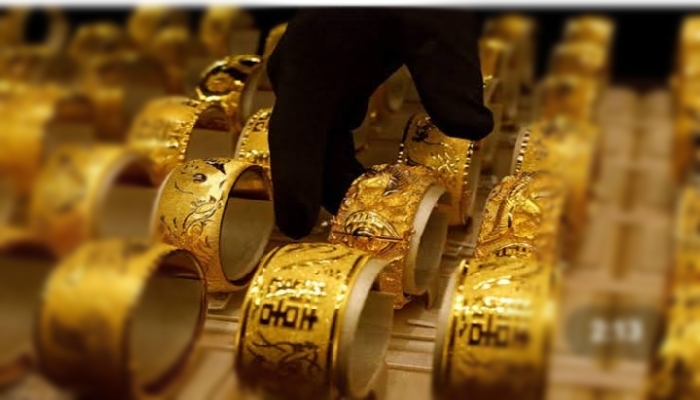
New Delhi, Jul 30: India's gold demand in 2020 is expected to fall to the lowest level in 26 years with domestic bullion prices hitting a record high and as falling disposable incomes could curtail retail purchases, the World Gold Council (WGC) said on Thursday.

Lower demand by the world's second-biggest bullion consumer could limit a rally in global prices, which hit a record high earlier this month, although it could also reduce India's trade deficit and support the ailing rupee.

"Fast rising gold prices could act as headwinds," said Somasundaram PR, the managing director of WGC's Indian operations.

Local gold futures have jumped 35% so far this year after rising a quarter in 2019.

India's gold consumption in the first half of 2020 plunged 56% on-year to 165.6 tonnes. Meanwhile, the coronavirus-triggered lockdown also slashed demand by 70% in the June quarter to 63.7 tonnes, the lowest in more than a decade, the WGC said in a report published on Thursday.

Millions of Indians have lost their jobs or taken a pay cut after the country imposed a lockdown on its 1.3 billion people to curb the spread of the virus that has infected more than 1.5 million Indians.

Consumption is generally high during the June quarter due to weddings and key festivals such as Akshaya Tritiya, but lockdown restrictions kept shoppers indoors this year.

The weak demand in the first half could drag down India's gold consumption in 2020 to the lowest since 1994, when demand stood at 415 tonnes, Somasundaram said, adding that it is still difficult to provide an estimate for full-year demand as the coronavirus crisis is still unfolding.

"Indian demand has previously jumped as much as 300 tonnes in a quarter. Latent demand could come out in the second half," Somasundaram said.

Comments

Add new comment

  • Coastaldigest.com reserves the right to delete or block any comments.
  • Coastaldigset.com is not responsible for its readers’ comments.
  • Comments that are abusive, incendiary or irrelevant are strictly prohibited.
  • Please use a genuine email ID and provide your name to avoid reject.