


Kathmandu, Apr 27: The death toll from the 7.9 magnitude temblor that struck Nepal was on Monday placed at 3,815, with Kathmandu accounting for nearly 1,000 deaths.
The home ministry said in a statement another 6,515 people had been injured. The Saturday earthquake, the worst to hit Nepal after 1934, had its epicentre in Gorkha district.
The highest death toll of 1,021 among all districts was reported from Sindhupalchowk, about 65 km from here. Kathmandu, where damage to property was maximum, saw 920 fatalities.
Nuwakot district accounted for 422 deaths, Dhading 299, Bhaktapur 240, Gorkha 223, Kavre 193, Lalitpur 157 and Rasuwa district 150.
The other fatalities were reported from Dolakha (46), Makawanpur (33), Ramechap (26), Solu (21), Okhaldunga (16), Sindhuli (9), Sunsari (7), Chitwan and Bara (5 each), Lamjung (4), Parsa (3), Kaski, Bhojpur and Mornag (2 each) and Saptari, Dhanusha, Taplegunj, Sarhahi, Rauthat,

Earlier
Nepal earthquake toll rises above 3,600
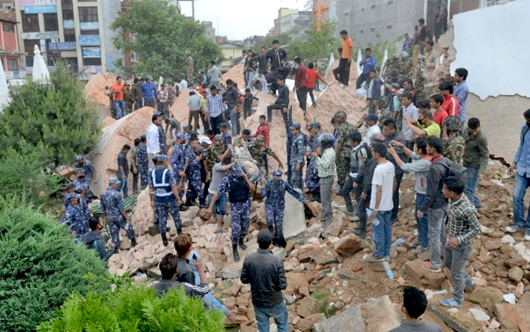
Kathmandu, Apr 27: Rescue workers today intensified efforts to locate survivors trapped under tonnes of rubble of flattened homes and buildings in earthquake-hit Nepal amid concerns that death toll could rise from more than 3,600 with rescue teams reaching remote mountainous areas.
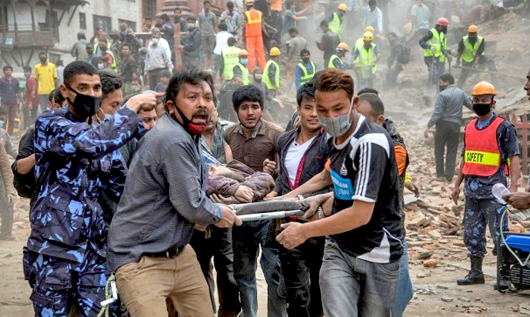
Racing against time, multi-national rescue teams with sniffer dogs and advanced equipment are desperately trying to locate survivors as hundreds of people are still missing.
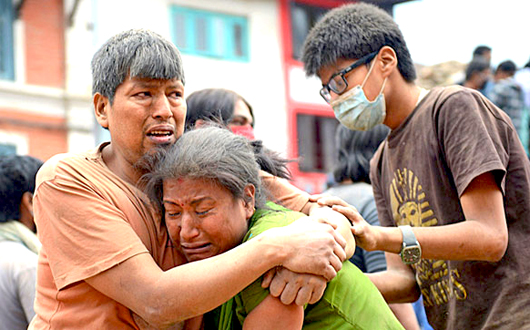
More than 700 disaster relief experts drawn from the National Disaster Relief Force have been deployed by India.
In a statement, Nepalese police today said the death toll had risen to 3,617 people. That does not include the 22 people killed in the avalanche on Mount Everest.
Nepalese Home ministry's national disaster management division said more than 6,830 people were injured.
1,053 people are reported killed in the Kathmandu Valley alone and 875 in Sindhupalchowk, it said.
Officials and aid agencies have warned that the casualties could rise as rescue teams reach remote mountainous areas of western Nepal.
"Villages are routinely affected by landslides, and it's not uncommon for entire villages of 200, 300, up to 1,000 people to be completely buried by rock falls," aid agency World Vision spokesman Matt Darvas said.
The blocked roads, downed power lines and overcrowded hospitals along with fresh tremors are hampering rescue efforts to locate survivors of the Saturday's 7.8 magnitude quake that had its impact in several cities in Bihar, West Bengal and UP northeast India.
It was also felt in Southern and Western parts of India, China, Bhutan and as far as Pakistan and Bangladesh.
Officials said five Indians, including the daughter of an Indian embassy employee, were among those killed in the quake.
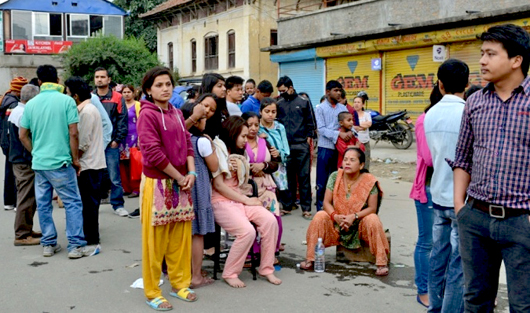
Tens of thousands of people were forced to spend the two consecutive nights sleeping in open in makeshift plastic tents barely shielding them from the pouring rain.
Earlier:
Nepal quake: Death toll crosses 3,200; sick and wounded lay out in the open
Kathmandu, Apr 27: Thousands of desperate Nepalese huddled under tents and sought scarce food and medical supplies on Monday, two days after a massive quake killed more than 3,200 people and overwhelmed authorities struggled to cope with the disaster.
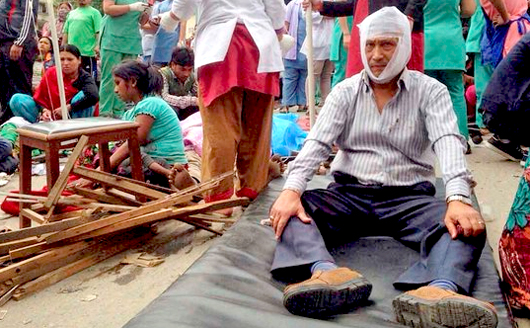
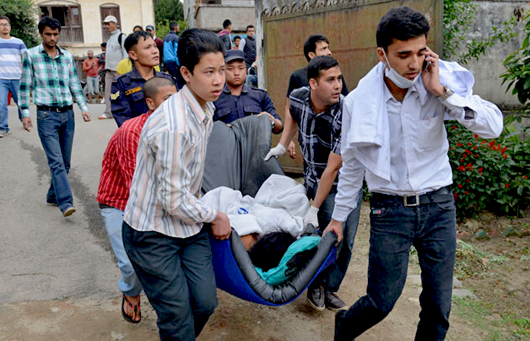
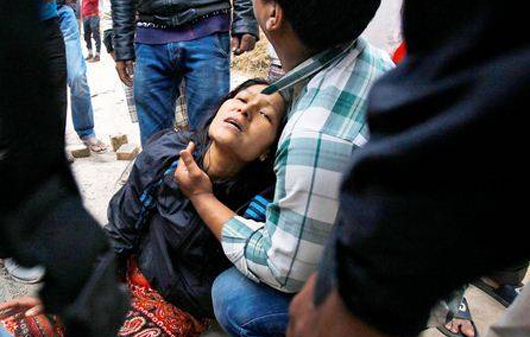
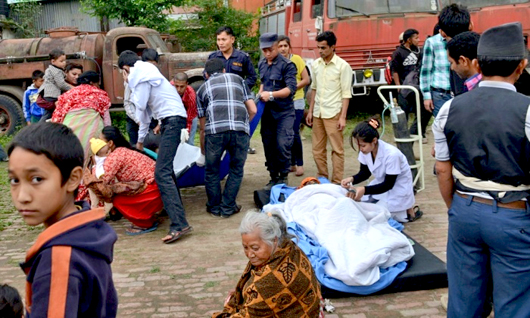
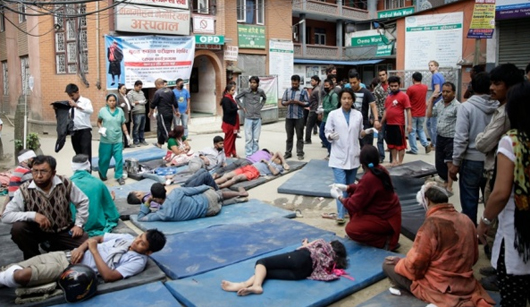
The sick and wounded lay out in the open in the capital, Kathmandu, unable to find beds in the devastated city's hospitals. Surgeons set up an operating theater inside a tent in the grounds of Kathmandu Medical College.
"We are overwhelmed with rescue and assistance requests from all across the country," said Deepak Panda, a member of the country's disaster management.
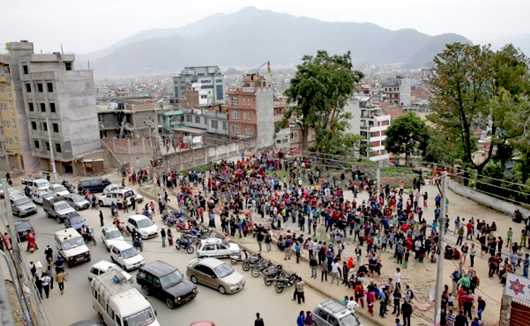
Across Kathmandu and beyond, exhausted families whose homes were either flattened or at risk of collapse laid mattresses out on streets and erected tents to shelter from rain.
People queued for water dispensed from the back of trucks, while the few stores still open had next to nothing on their shelves. Crowds jostled for medicine at one pharmacy.
High in the Himalayas, hundreds of foreign and Nepalese climbers remained trapped after a huge avalanche ripped through the Mount Everest base camp, killing 17 people in the single worst disaster to hit the world's highest mountain.
A total of 3,218 people were confirmed killed in the 7.9 magnitude quake, a police official said on Monday, the worst in Nepal since 1934 when 8,500 died. More than 6,500 were injured.
Another 66 were killed across the border in India and at least another 20 in Tibet, China's state news agency said.
The toll is likely to climb as rescuers struggle to reach remote regions in the impoverished, mountainous country of 28 million people and as bodies buried under rubble are recovered.
"The rescue workers are in a really bad shape. We are all about to collapse. We have worked two straight nights," said home ministry official Laxmi Prasad Dhakal.
With so many people sleeping in the open with no power or water and downpours forecast, fears mounted of major food and water shortages. Across Nepal, hundreds of villages have been left to fend for themselves.
"There is no electricity, no water. Our main challenge and priority is to restore electricity and water," Dhakal said.
"The next big challenge is the supply of food. Shopkeepers are unable to go in and open their shops. So people are facing difficulty buying food."Several countries rushed to send aid and personnel.
India flew in medical supplies and members of its National Disaster Response Force. China sent a 60-strong emergency team. Pakistan's army said it was sending four C-130 aircraft with a 30-bed hospital, search and rescue teams and relief supplies.
A Pentagon spokesman said a U.S. military aircraft with 70 personnel left the United States on Sunday and was due in Kathmandu on Monday. Australia, Britain and New Zealand said they were sending specialist urban search-and-rescue teams to Kathmandu at Nepal's request.
Britain, which believes several hundred of its nationals are in Nepal, was also delivering supplies and medics.
However, there has been little sign of international assistance on the ground so far, with some aid flights prevented from landing by aftershocks that closed Kathmandu's main airport several times on Sunday.
AVALANCHE TERROR
In the Himalayas, hundreds of climbers felt tremors on Sunday powerful enough to send snow and boulders cascading towards them. Another was felt early on Monday.
The huge and deadly avalanche on Saturday triggered by the earthquake caused panic at the Everest base camp, a sprawling "city" of tents from where mountaineers set off for the world's highest peak.
"It was a monstrous sound, like the demons had descended on the mountain," Khile Sherpa, a Nepalese guide, told Reuters, recalling the moment the avalanche hit.
He was one of the lucky few airlifted to the relative safety of Kathmandu but the disaster has underlined the woeful state of Nepal's medical facilities.
Nepal has only 2.1 physicians and 50 hospital beds for every 10,000 people, according to a 2011 World Health Organization report.
"The earthquake has exposed that Nepal's best public hospital infrastructure has crumbled at a time when it should serve more people in a hurry," said Sarvendra Moongla, a senior surgeon at Bir Hospital's Trauma Center in Kathmandu, which opened in February.
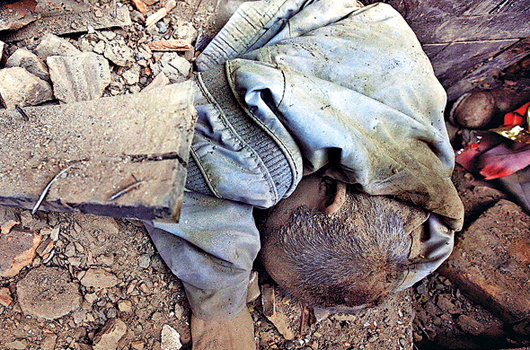
At the Tribhuvan University Teaching Hospital, bodies, including that of a boy aged about seven, were heaped in a dark room. The stench of death was overpowering.
Rajiv Biswas, Asia Pacific chief economist at business research firm IHS, said long-term reconstruction costs in Nepal using proper building standards for an earthquake zone could be more than $5 billion, or around 20 percent of the country's GDP.
"With housing construction standards in Nepal being extremely low ... the impact of the earthquake has been devastating based on initial reports," he said in an early analysis of the likely damage.
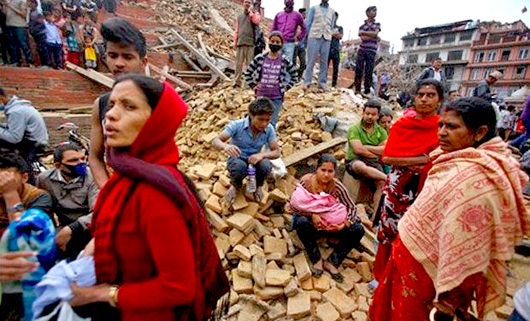
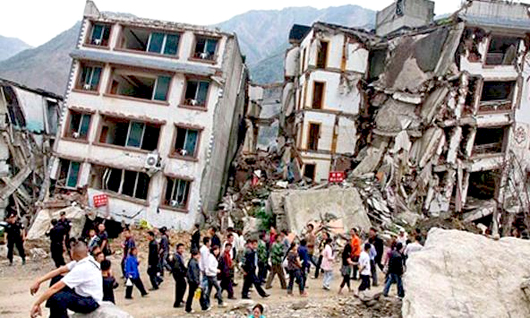
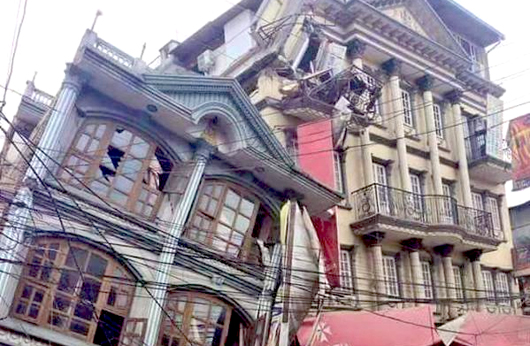
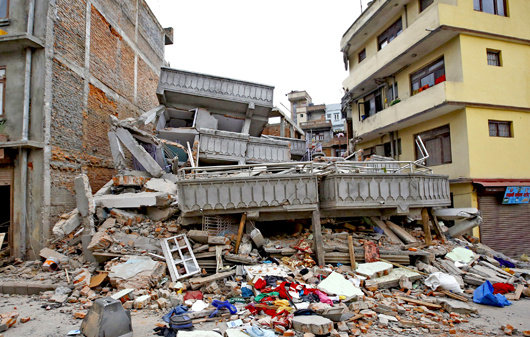
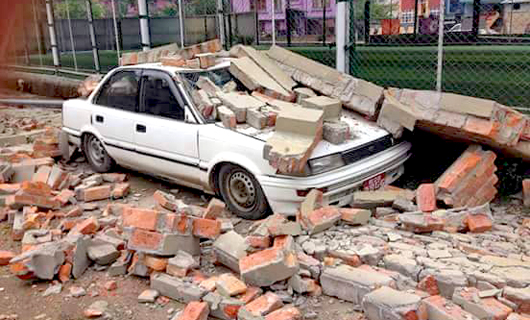
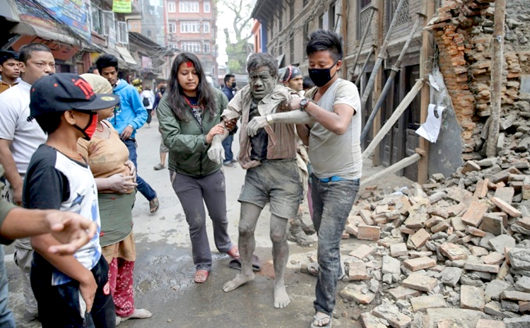
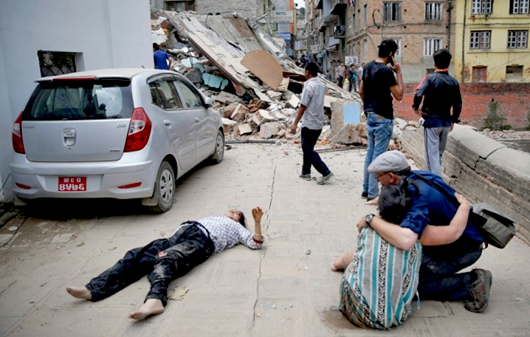
In crowded Kathmandu, many buildings were flattened or badly damaged.
Among the capital's landmarks destroyed in the earthquake was the 60-metre (200-foot) Dharahara Tower, built in 1832 for the queen of Nepal.
Earlier post:
Death toll crosses 2,000 in Nepal quake as fresh jolts felt
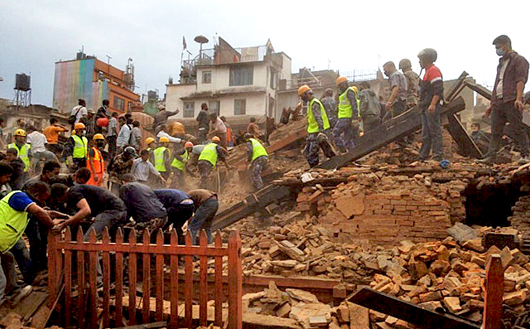
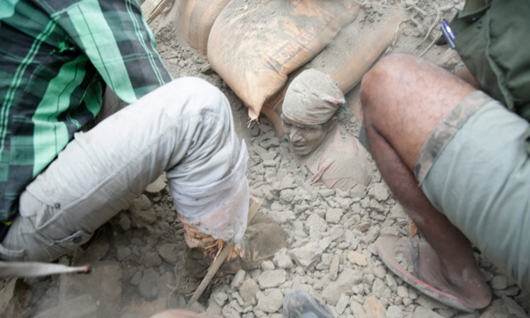
Kathmandu, Apr 26: Rescuers today dug with bare hands and heavy equipment through tonnes of rubble for survivors as toll from the devastating temblor crossed the 2,000-mark in Nepal's worst quake in over 80 years, with fresh aftershocks triggering panic and hampering relief efforts.
A strong 6.7-magnitude aftershock sent people running for open spaces as they struggled with the devastation caused by yesterday's massive 7.9-magnitude temblor that displaced and injured thousands besides causing a deadly avalanche on the Mount Everest claiming 17 lives.
"The latest figure says more than 2,000 people have died and several thousands have been wounded and more counts are coming," said Narayan Khatkar, Nepal's Urban Development Minister.
A police official told media here that 2,123 people were killed.Over 5,000 people were also injured in the earthquake and the dozen aftershocks that continued till today, with the strongest measuring 6.7 on the Richter Scale.Climbers on Mount Everest said they saw fresh series of avalanches and a big landslide in the base camp.
International teams, including from India, have touched down quake-hit Nepal that has declared a state of emergency in the wake of the disaster caused, the worst in over 80 years of Nepal's recorded history.
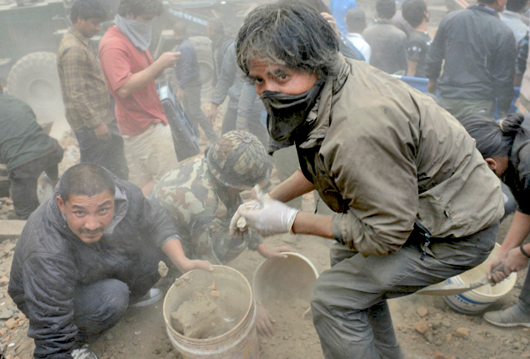
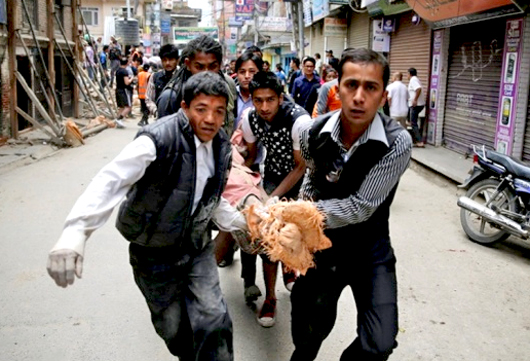
Rescuers have been hunting for survivors under heaps of debris with bare hands as well as heavy equipment though the efforts have been hampered due to fresh tremors and thunderstorms.
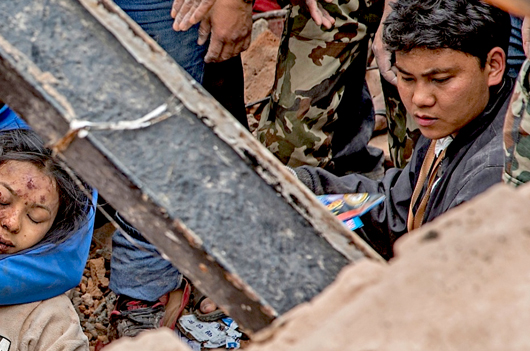
Locals and tourists sifted through mounds of debris for survivors. Cheers rose when people were found alive, thought mostly bodies were pulled out.
The earthquake and the aftershocks left behind a trail of death and destruction, flattening houses and buildings, including the iconic Dharhara tower and the landmark Darbar Square in the heart of the capital, trapping scores of people.
Thousands of people spent last night in the open in chilly weather, anticipating more aftershocks.
1,053 people are reported killed in the Kathmandu Valley alone. Officials fear the death toll could rise as desperate search for survivors continued.
According to initial reports related to today's aftershock, a tunnel caved in at the Trishuli Hydel Project and around 60 labourers are feared trapped.
MI-17 helicopters of the Indian Air Force (IAF) have carried out five casualty evacuation sorties and the injured have been moved to military hospitals.
As many as 17 Mount Everest climbers, including foreigners, were reportedly killed in an avalanche triggered by the earthquake.
The latest aftershock hit at a shallow depth of 10 kilometres at 12:39 IST, according to the US Geological Survey.
The aftershock was registered 17 kilometres south of Kodari - 114 kilometres north of here - near the Tibet Autonomous Region of China.
The tremors - that were felt also in India including its national capital - sent people running for open spaces.
According to reports, the route to the base camp has been destroyed and the IAF choppers were trying to rescue the survivors, around 100 in number including foreigners who were said to be safe.
A climber Jim Davidson said he felt the aftershock at Camp One on Mount Everest.
"Just had our biggest aftershock yet here at C1 on Everest. Smaller than original quake but glacier shook & avalanches," he tweeted.
An Indian attempting to climb all the highest peaks in the seven continents, 54-year-old Ankur Bahl is also stuck at Camp II on Mount Everest along with 11 other fellow climbers.
Bahl had moved to Camp II from Camp I yesterday but is now stranded due to the earthquake, his friends in New Delhi said.
Two Indians, including the daughter of an Indian embassy employee, were among those killed in the powerful earthquake, an Indian embassy official said.
A house in the Indian Embassy complex collapsed, killing the daughter of a CPWD employee. Death of another Indian was reported at Bir Hospital here.
Over 550 Indians have been evacuated by the IAF from earthquake-hit Nepal even as India stepped up its relief and rescue mission with 10 flights and 12 helicopters scheduled to carry specialists and equipment to Kathmandu today.
The Tribhuvan International Airport, that was closed down yesterday following the quake, was opened briefly, only to be shut down again due to fresh tremors.
IndiGo, SpiceJet flights could not land here and were forced to return as Air Traffic Control personnel at the airport were evacuated following fresh aftershocks.
Many hospitals in Nepal are struggling to cope with the large number of injured.
Nepal Prime Minister Sushil Koirala, who was on a visit to Indonesia, had to cut short his trip in the wake of the disaster.
The Nepalese government has declared a national crisis and established a fund of Rs 500 million for the reconstruction of the damaged infrastructure.
Many areas in the country have no electricity for the past 24 hours and authorities say the situation is likely to continue for the next few days.
Offers of help poured in from around the world, with the US, the European Union as well the United States saying they were sending in disaster response teams.
"The United Nations is supporting the Government of Nepal in coordinating international search and rescue operations and is preparing to mount a major relief effort," UN Secretary- General Ban said in a statement today.

Comments
Add new comment