Mangalore: CFI's State Conference on Feb 27

[email protected] (CD Network)
February 25, 2011

cfi

Mangalore, February 25: The first ever state level conference of Campus Front of India (CFI) will be held on Sunday, February 27 under the theme “Students for Social Change” at Nehru Maidan here.

Announcing this to media persons at Press Club here on Friday, Abdul Rahman, Organising Chairman of the Conference said that the main objective of the conference is to empower the students in particular and campus in general.

He said CFI has been working towards creating awareness on social justice and movements among the students. It also mobilise the students to work with social responsibility.

CFI is aimed at preparing a responsible generation from the Indian campuses, he said.

The conference will start after hoisting the flag at Nehru Maidan by Muhammad Shakir, State President, CFI at 9 am.

In the technical sessions of the conference which is scheduled to be held at Don Bosco Hall near Jyothi at 10 am, activists and scholars are expected to address the students.

Under the theme “Where India is heading?” Shivasundar, popular columnist and Human Rights activist will speak on “Six decades of Indian Democracy”, Pattabhirama Somayaji, Lecturer of Mangalore University will speak on “Neoliberal Assault on Education”

Dr Shridhar, HOD of Vijaya College Bangalore will speak on “Terrorism: Myth Exposed” while Prof Udaya Barkur, Chairman of History Department Mangalore University will deliver lecture on “Saffronisation of the History”

At 3 pm, a large number of students across the state will take out a huge rally from Jyothi Circle to Nehru Maidan comprising of Bike show, Scout march and Daff.

A drama “College Seatu, Laksha Notu” depicting the ill effects of donation and problems faced by students will be staged at 4 pm.

At Nehru Maidan, a galore of scholars and activists including Gowri Lankesh, Chief Editor of Lankesh pathrike, Abdussalam Puthige, Chief Editor of Varhabharathi, Pattabhirama Somayaji, Shivasundar, Prof P Koya, Chief Editor of Thejas Daily, KM Shareef, General Secretary of Popular Front of India, Illyas Muhammad Thumbay, State President, Anees Ahmed, Chairman, National Advisory Committee of CFI, Majeed Kodlipet, State President of SDPI, Shahida Thasnim, General Secretary of National Women's Front, Hasan Farook, Tamilnadu CFI President, Ajmal Ismaeel, Kerala State President and others will participate.

Muhammad Shakir, State President, CFI, Imran Khan, State General Secretary, Thufail Ahmed, State Secretary, Nasir Hussain, Chief Convener of the conference and Hyder Habib, District President of CFI were present at the press meet.

Comments

Add new comment

  • Coastaldigest.com reserves the right to delete or block any comments.
  • Coastaldigset.com is not responsible for its readers’ comments.
  • Comments that are abusive, incendiary or irrelevant are strictly prohibited.
  • Please use a genuine email ID and provide your name to avoid reject.
Media Release
February 14,2020

Veteran journalist P. Sainath has said that the nation is in a crisis. And this crisis is not limited to just the rural area. It has become a national crisis at various areas such as agriculture, education, economy, job creation etc.

He was delivering the endowment lecture on the topic ‘Indian democracy at the post-liberalization and post-truth era’ at Media Manthan 2020 organized by the PG department of journalism and mass communication at St Aloysius College (Autonomous). 

Mr Sainath said that the many policies adopted in the 90s led to India becoming unusually unequal. Referring to the speech Ambedkar had made at the Constituent Assembly while handing over the draft of the Constitution, Mr Sainath said, “Ambedkar had warned about the weakness of Indian democracy that liberty without equality allows the supremacy of a few over the multitude. Liberty, equality and fraternity must be kept together as we cannot have one without the other.” 

Mr Sainath stated that the agrarian crisis was no longer about the loss of productivity, employment or about farmer suicide; it was a societal, civilizational crisis. Commenting on the lopsided policies such as cow-slaughter ban, he explained how cow slaughter ban had adversely affected many industries due to their interdependency. While Muslims who slaughtered cows were rendered helpless, the cattle traders who were mostly OBCs lost their earnings as the cattle prices crashed. An important industry like Kolhapur sandals industry in Maharashtra went bankrupt as a result of the cow slaughter ban in Maharashtra. He said the policymakers had no idea how the rural industries were interconnected. Demonetisation too devastated the rural economy as 98 percent of rural transactions happen through cash. 

Mr Sainath also spoke about the crisis of inequality which affects the Dalits and the Adivasis far more than anyone else as 90 percent of the rural households take home less than Rs 10,000/- per month. “Women are yet another group whose labour is never counted in the gross domestic product. Women and girls globally do unpaid work which amounts to about 12.5 billion working hours per year. Monetarily speaking, this is worth 10.8 trillion dollars,” Mr Sainath added. 

Speaking about the crisis of jobs Mr Sainath said that major companies were laying off employees just to create more profits for the investors and the adoption of artificial intelligence in the industry would further destroy millions of jobs.

Rector of St Aloysius College Institutions Fr Dionysius Vaz SJ, Principal Dr (Fr) Praveen Martis SJ, HOD of Journalism and Mass Communication department Dr (Fr) Melwyn Pinto SJ were present.

‘Veerappan and Vijay Mallya’s business models are interesting!’

Addressing the gathering during his endowment lecture on Friday, Mr Sainath made an interesting comment on the so called ‘revenue model’. “Whenever I visit IIMs and IITs for lectures on my PARI project, the students there ask me what my revenue model for my project is. I tell them that I do not have a revenue model. In fact, journalism does not begin with a revenue model. Gandhiji, Ambedkar, Bhagat Singh were all great journalists. But they did not have a revenue model,” Mr Sainath said.

On a lighter note, he said that the best revenue model that he liked was that of forest brigand Veerappan and liquor baron Vijay Mallya. “Veerappan ruled the forest for forty years and from the top ministers to the villagers he could dictate terms and liver royally. Similarly, Mallya’s revenue model was to steal the banks and run away abroad and live like a king,” Mr Sainath added.

Journalism is not and can never be a business. It is a calling, he opined. While newspaper can be a business, television can be a business, journalism per se cannot be reduced to a business. “Unfortunately today, journalists are recruited on a contract basis and they have no bargaining power; and there are no unions to fight for their cause. Hence, they are at the mercy of the corporate media houses for their survival and are made to write stories that cannot be called journalism,” Mr Sainath said.

Answering a question as to the pressures he faced as a journalist, he said that external pressures from the government or others could be very well handled. It is the internal pressures from once own media house that journalists find it difficult to manage.


Comments

Add new comment

  • Coastaldigest.com reserves the right to delete or block any comments.
  • Coastaldigset.com is not responsible for its readers’ comments.
  • Comments that are abusive, incendiary or irrelevant are strictly prohibited.
  • Please use a genuine email ID and provide your name to avoid reject.
News Network
March 28,2020

Gadag, Mar 28: At a time when the adminsitration is insisting on social diatancing due to COVID-19 outbreak, scores of people gathered in large numbers at an Agricultural Produce Market Committee (APMC) market in Gadag district to buy essential commodities.

Both men and women could be seen standing in large groups near the vendors to buy fruits and vegetables. Some of the customers were also heard bargaining with the sellers in the morning today.

A couple of days back, Prime Minister Narendra Modi emphasised that social distancing is the only way to counter the spread of COVID-19, saying the virus does not discriminate and it can infect anyone.

Interacting with the people of Varanasi through video conferencing, the Prime Minister had stated that some people, despite being empowered with knowledge, are not pay heed to warning which is unfortunate.

He said the 'Mahabharata' war was won in 18 days and the war against coronavirus will take 21 days and the aim is to win it.

According to the Union Health Ministry, there are 873 confirmed cases of COVID-19 in India.

Comments

Add new comment

  • Coastaldigest.com reserves the right to delete or block any comments.
  • Coastaldigset.com is not responsible for its readers’ comments.
  • Comments that are abusive, incendiary or irrelevant are strictly prohibited.
  • Please use a genuine email ID and provide your name to avoid reject.
coastaldigest.com news network
August 7,2020

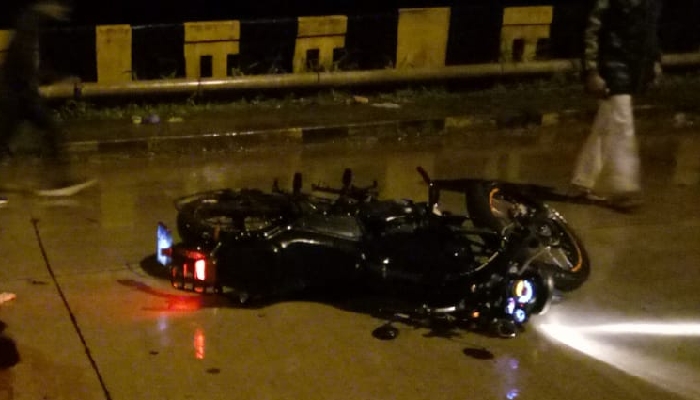
Mangaluru, Aug 7: A youth died on the spot in a ghastly road mishap on Netravati Bridge near Thokkottu on the outskirts of the city today evening.

Police sources said that the face of the youth, who was riding a motorbike, has been damaged beyond recognition. He died on the spot. 

More details about the mishap are yet to be known. A case has been registered at Mangaluru Traffic police station.

Comments

Add new comment

  • Coastaldigest.com reserves the right to delete or block any comments.
  • Coastaldigset.com is not responsible for its readers’ comments.
  • Comments that are abusive, incendiary or irrelevant are strictly prohibited.
  • Please use a genuine email ID and provide your name to avoid reject.