Mangalore needs Lankesh's ideals'

[email protected] (CD Network, Photos by Ahmed Anwar)
March 11, 2012

lank

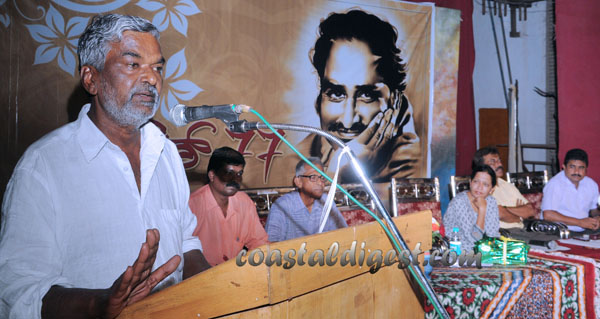
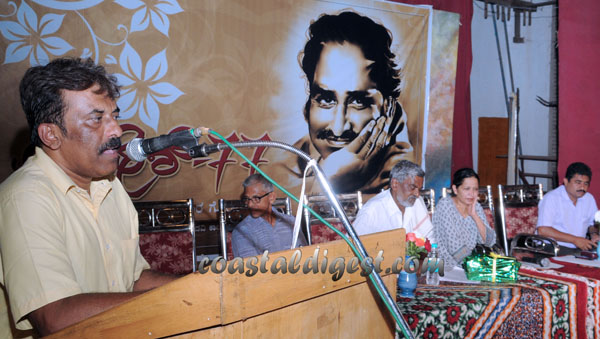
Mangalore, March 11: Karnataka misses P Lankesh badly today, for it has been subjected to unfair and unjust rule of the BJP government, said Devanoor Mahadeva, noted Kannada litterateur and social activist.

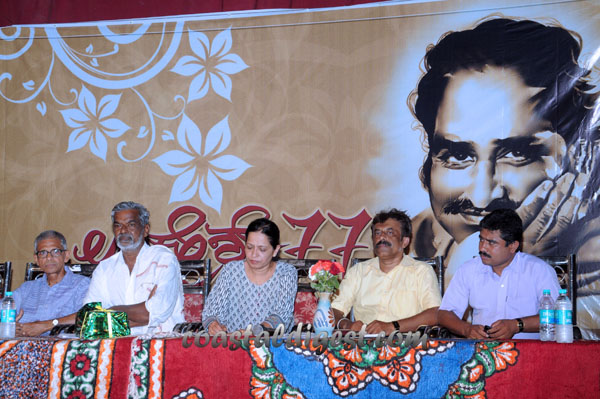
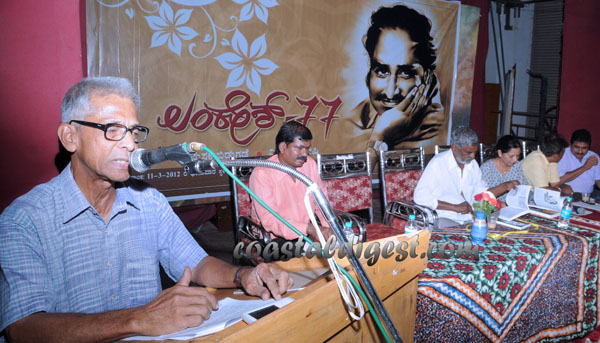
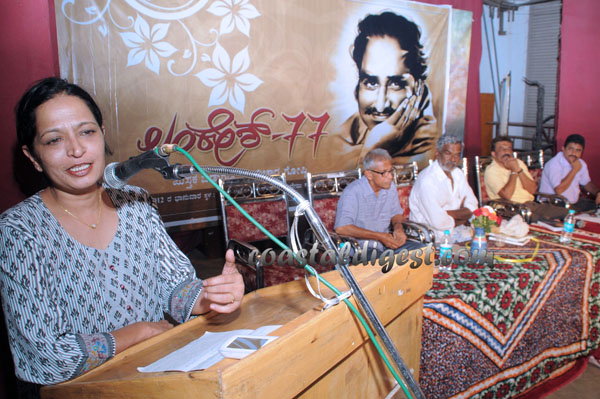
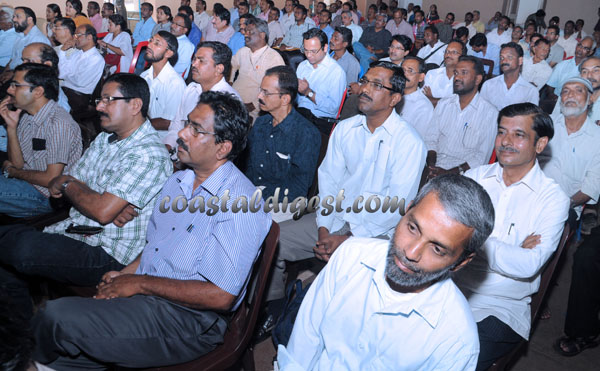
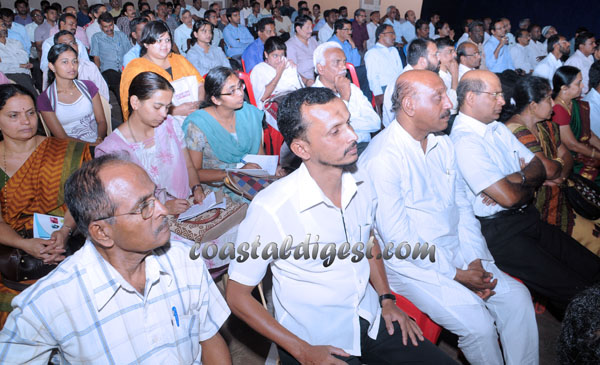
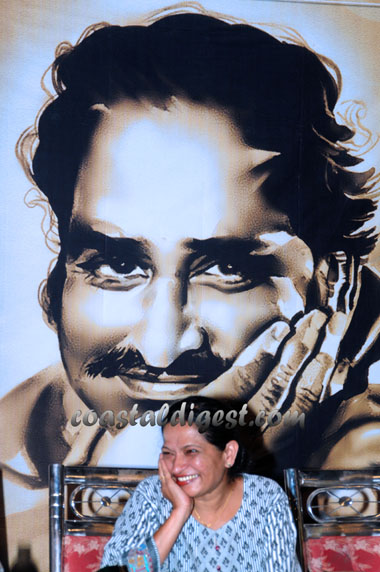
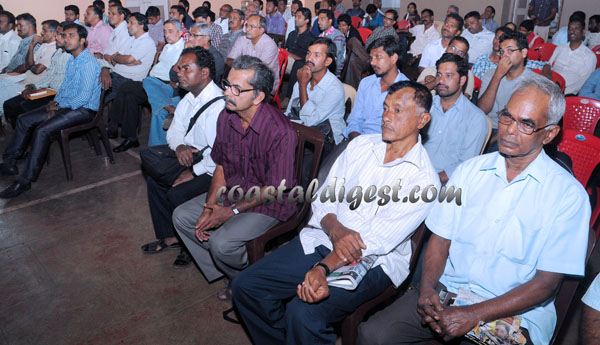
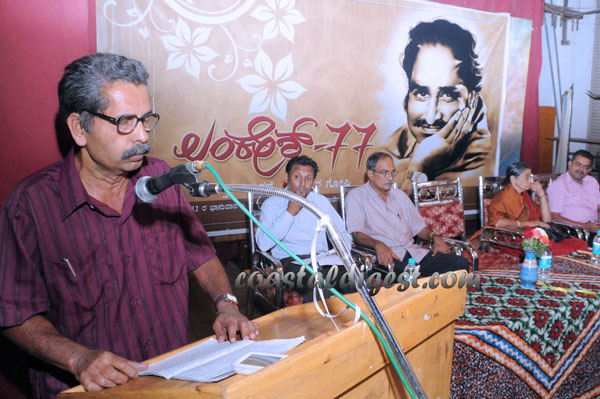
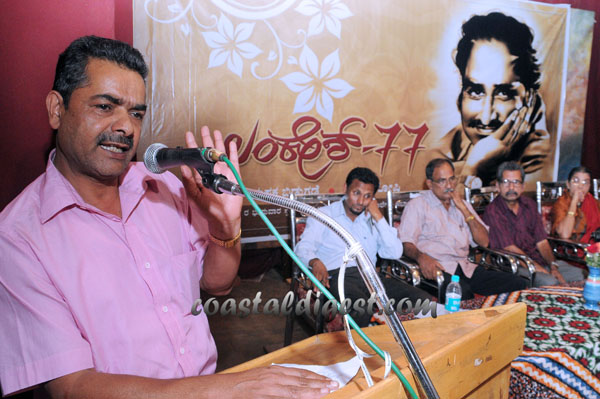
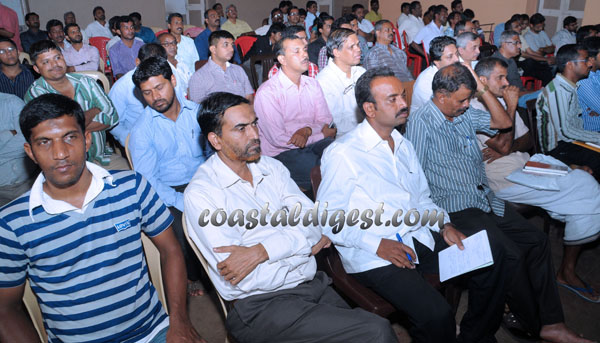
He was speaking at 'Lankesh-77' organized by the Gowri Lankesh Patrike in Mangalore on Sunday, as part of Lankesh's 77th birth anniversary.

Lankesh, Mr. Mahadeva said, strived to address the injustices of governments and urged that the journalistic values that he believed in are a necessity today to oppose the ruling BJP government in the state. “Today Karnataka is suffering at the hands of the BJP. The first thing they did after coming to power is kill the sense of shame. Today, no matter what they do, they are not shameful about it and are trying to justify it and making it acceptable in the society. They chant 'culture' all the time but have killed it on the floor of the House in the Assembly themselves”, he said.

Gowri Lankesh, Chief Editor of Gowri Lankesh Patrike and daughter of P Lankesh, who presided over the inaugural session, said in her address that whether it was P Lankesh or whether it is the current unit of the Patrike, do not consider journalism and activism as two different things. She also said that she decided to hold the programme in Mangalore this time around because she felt Mangalore needs Lankesh's ideals and his stand on issues ranging from communalism to development. “We all know Mangalore is being treated as the Gujarat laboratory. Mangalore is in need of the values and principles that P Lankesh followed in order to combat growing communalism”, she said.

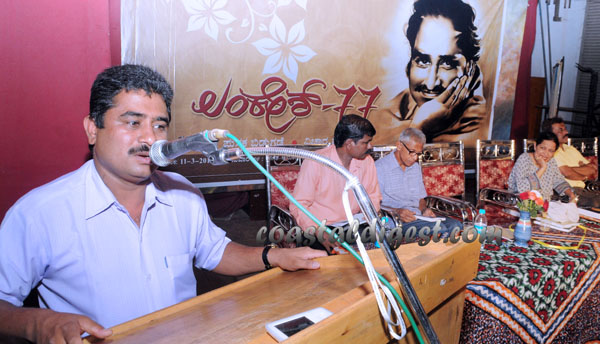
Speaking on the occasion Parvatheesh, Editor, Gowri Lankesh Patrike, said that P Lankesh's unique qualities included spotting the barbarism hidden behind the veils of issues that seemingly appear beautiful.

K L Ashok, Secretary, Karnataka Komu Souharda Vedike, expressing his thoughts on P Lankesh said that Lankesh brought about a change in thinking circles with his works. “He would say no matter what field you are in, do not be corrupt. But today wherever we see, be it politics, literature or even journalism, there is corruption. When we see as to where our values have gone and which way we are heading towards, we feel Lankesh's absence. However, the Gowri Lankesh Patrike is still fighting in that direction and is still a hope for the hopeless”, he said.

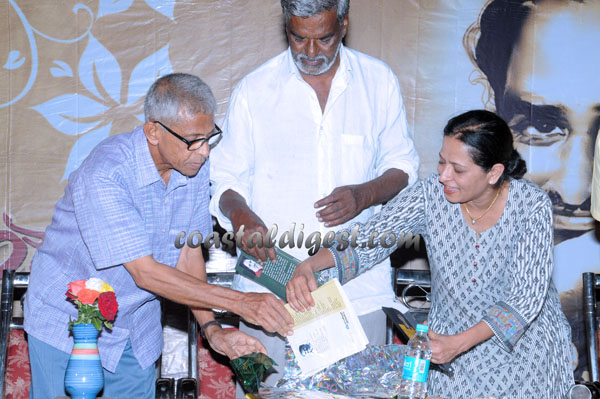
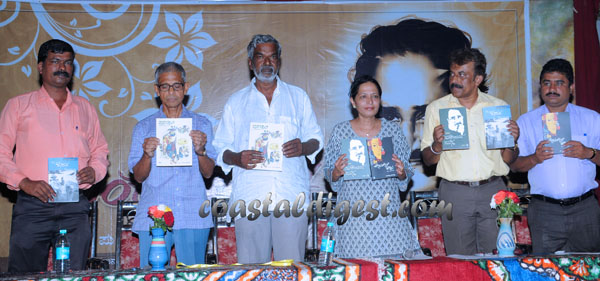
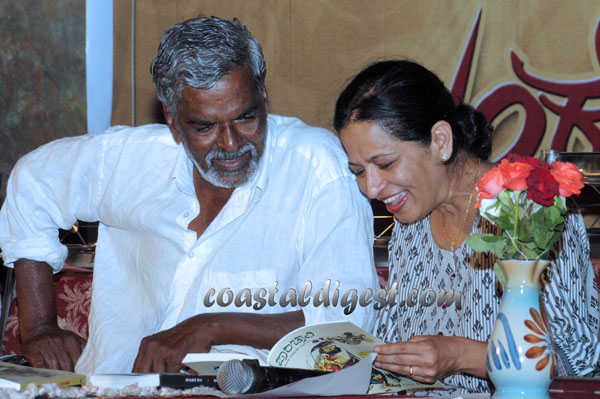
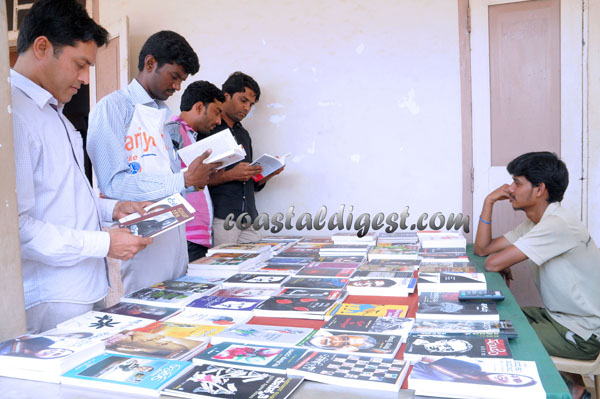
Suresh Bhat Bakrabail, peace activist, released and commented on the book “Panchali”. Three other books “Nanna Preetiya Bharatha” by Jim Corbett, “Mareyuva Munna” and “Helutene Kela” were also released on the occasion.

Following the inaugural session, a session on the theme 'Crises faced by Coastal Karnataka' was held. G Rajashekhar, President, Udupi chapter of Karnataka Komu Souharda Vedike, presented a paper on the topic. Writer Sara Aboobakkar presided over the session.

The afternoon session (session 2) will focus on “Turmoil in Karnataka”. K Phaniraj, activist, will present a paper on the topic. Rajaram Tolpady will preside over the session.

LNK_a2

LNK_3

LNK_4

LNK_5

LNK_6

LNK_7

LNK_8

LNK_9

LNK_10

LNK_11

LNK_12

LNK_13

LNK_14

LNK_15

LNK_16

LNK_17

LNK_18

Comments

Add new comment

  • Coastaldigest.com reserves the right to delete or block any comments.
  • Coastaldigset.com is not responsible for its readers’ comments.
  • Comments that are abusive, incendiary or irrelevant are strictly prohibited.
  • Please use a genuine email ID and provide your name to avoid reject.
Ram Puniyani
January 14,2020

In the beginning of January 2020 two very disturbing events were reported from Pakistan. One was the attack on Nankana Sahib, the holy shrine where Sant Guru Nanak was born. While one report said that the place has been desecrated, the other stated that it was a fight between two Muslim groups. Prime Minister of Pakistan Imran Khan condemned the incident and the main accused Imran Chisti was arrested. The matter related to abduction and conversion of a Sikh girl Jagjit Kaur, daughter of Pathi (One who reads Holy Guru Granth Sahib in Gurudwara) of the Gurudwara. In another incident one Sikh youth Ravinder Singh, who was out on shopping for his marriage, was shot dead in Peshawar.

While these condemnable attacks took place on the Sikh minority in Pakistan, BJP was quick enough to jump to state that it is events like this which justify the Citizenship Amendment Act (CAA). Incidentally CAA is the Act which is discriminatory and relates to citizenship with Religion, which is not as per the norms of Indian constitution. There are constant debates and propaganda that population of Hindus has come down drastically in Pakistan and Bangla Desh. Amit Shah, the Home minister stated that in Pakistan the population of Hindus has come down from 23% at the time of partition to 3.7% at present. And in Bangla Desh it has come down from 22% to present 8%.

While not denying the fact that the religious minorities are getting a rough deal in both these countries, the figures which are presented are totally off the mark. These figures don’t take into consideration the painful migrations, which took place at the time of partition and formation of Bangla Desh later. Pakistan census figures tell a different tale. Their first census was held in 1951. As per this census the overall percentage of Non Muslim in Pakistan (East and West together) was 14.2%, of this in West Pakistan (Now Pakistan) it was 3.44 and in Eat Pakistan it was 23.2. In the census held in Pakistan 1998 it became 3.72%. As far as Bangla Desh is concerned the share of Non Muslims has gone down from 23.2 (1951) to 9.6% in 2011.

The largest minority of Pakistan is Ahmadis, (https://minorityrights.org/country/pakistan/) who are close to 4 Million and are not recognised as Muslims in Pakistan. In Bangla Desh the major migrations of Hindus from Bangla Desh took place in the backdrop of Pakistan army’s atrocities in the then East Pakistan.

As far as UN data on refugees in India it went up by 17% between 2016-2019 and largest numbers were from Tibet and Sri Lanka.  (https://www.un.org/en/development/desa/population/migration/publication…)

The state of minorities is in a way the index of strength of democracy. Most South Asian Countries have not been able to sustain democratic values properly. In Pakistan, the Republic began with Jinnah’s classic speech where secularism was to be central credo of Pakistan. This 11th August speech was in a way what the state policy should be, as per which people of all faiths are free to practice their religion. Soon enough the logic of ‘Two Nation theory” and formation of Pakistan, a separate state for Muslim took over. Army stepped in and dictatorship was to reign there intermittently. Democratic elements were suppressed and the worst came when Zia Ul Haq Islamized the state in collusion with Maulanas. The army was already a strong presence in Pakistan. The popular formulation for Pakistan was that it is ruled by three A’s, Army, America and Allah (Mullah).

Bangla Desh had a different trajectory. Its very formation was a nail in the coffin of ‘two nation theory’; that religion can be the basis of a state. Bangla Desh did begin as a secular republic but communal forces and secular forces kept struggling for their dominance and in 1988 it also became Islamic republic. At another level Myanmar, in the grip of military dictatorship, with democratic elements trying to retain their presence is also seeing a hard battle. Democracy or not, the army and Sanghas (Buddhist Sang has) are strong, in Myanmar as well. The most visible result is persecution of Rohingya Muslims.

Similar phenomenon is dominating in Sri Lanka also where Budhhist Sanghas and army have strong say in the political affairs, irrespective of which Government is ruling. Muslim and Christian minorities are a big victim there, while Tamils (Hindus, Christians etc.) suffered the biggest damage as ethnic and religious minorities. India had the best prospect of democracy, pluralism and secularism flourishing here. The secular constitution, the outcome of India’s freedom struggle, the leadership of Gandhi and Nehru did ensure the rooting of democracy and secularism in a strong way.

India so far had best democratic credentials amongst all the south Asian countries. Despite that though the population of minorities rose mainly due to poverty and illiteracy, their overall marginalisation was order of the day, it went on worsening with the rise of communal forces, with communal forces resorting to identity issues, and indulging in propaganda against minorities.

While other South Asian countries should had followed India to focus more on infrastructure and political culture of liberalism, today India is following the footsteps of Pakistan. The retrograde march of India is most visible in the issues which have dominated the political space during last few years. Issues like Ram Temple, Ghar Wapasi, Love Jihad, Beef-Cow are now finding their peak in CAA.

India’s reversal towards a polity with religion’s identity dominating the political scene was nicely presented by the late Pakistani poetess Fahmida Riaz in her poem, Tum bhi Hum Jaise Nikle (You also turned out to be like us). While trying to resist communal forces has been an arduous task, it is becoming more difficult by the day. This phenomenon has been variously called, Fundamentalism, Communalism or religious nationalism among others. Surely it has nothing to do with the religion as practiced by the great Saint and Sufi traditions of India; it resorts mainly to political mobilization by using religion as a tool.


Comments

Ashi
 - 
Tuesday, 14 Jan 2020

If Malaysia implement similar NRC/CAA, India and China are the loser.

Add new comment

  • Coastaldigest.com reserves the right to delete or block any comments.
  • Coastaldigset.com is not responsible for its readers’ comments.
  • Comments that are abusive, incendiary or irrelevant are strictly prohibited.
  • Please use a genuine email ID and provide your name to avoid reject.
News Network
April 24,2020

Thiruvananthapuram, Apr 24: Kerala Chief Minister Pinarayi Vijayan on Thursday said that there is no community spread or the expected phase three spread of coronavirus in the state so far but the threat continues.

Speaking to media persons here on Thursday, Vijayan said that Kasargod, Kannur, Kozhikode, and Malappuram districts will be in the red zone with full restrictions.

"All the other ten districts in the State will be in the orange zone. With the detection of new cases today, the status of Kottayam and Idukki districts have been changed from green to orange. The district administration will decide on the hotspot areas to be closed," he said.

He said there would be an increase in the number of random tests in the red zones.

"In an effort to confirm that there is no community spread in the State, random antibody tests would be conducted among health workers, police personnel, home delivery persons, volunteers and migrant labourers," he added.

The Chief Minister said that COVID-19 labs set up at the Pariyaram Government Medical College at Kannur and the Kottayam Medical College have got the approval from the ICMR for coronavirus testing. The lab at Kannur Medical College will start functioning from Friday.

The UV sterilised lab, spread over 2,200 sq ft is equipped with four real-time PCR machines. In the first phase, this lab will be able to do 15 tests per day, which will be gradually increased to conduct 60 tests in the next phase.

"With the opening of these two new labs, tests to detect COVID-19 will be conducted in 14 government labs in Kerala. Apart from this, there are two private labs also in Kerala which are doing these tests. Since the number of coronavirus cases is again increasing in the State, the government has decided to procure ten real-time PCR machines to ramp up testing," he added.

Comments

Add new comment

  • Coastaldigest.com reserves the right to delete or block any comments.
  • Coastaldigset.com is not responsible for its readers’ comments.
  • Comments that are abusive, incendiary or irrelevant are strictly prohibited.
  • Please use a genuine email ID and provide your name to avoid reject.
coastaldigest.com news network
May 30,2020

Bengaluru, May 31: The coronavirus related fatalities in Karnataka rose to 49 with the death of a 47-year-old woman while 141 new coronavirus cases were confirmed on Saturday taking the infection tally to 2,922, Karnataka minister S Suresh Kumar said.

Among the fresh cases, 90 are inter-state passengers, he told reporters.

The deceased woman from Bidar was admitted on May 24 and died on May 28 at a designated hospital in Bidar, Kumar, minister for primary and secondary education and spokesperson for Covid-19 in the state, said.

The woman was diagnosed with influenza like illness with a history of paralysis and was bed-ridden besides having hypertension and convulsions, Kumar said.

According to him, the total cases include 997 discharges, 1,874 active cases, 49 Covid-19 deaths and two non-Covid related deaths.

Of the total active cases, 15 are in the ICU, he added.

The new cases comprise 33 in Bengaluru, 18 in Yadagir, 14 in Dakshina Kannada, 13 each in Udupi and Hassan, 11 in Vijayapura, 10 in Bidar, six in Shivamogga, four each in Davangere and Haveri, three in Kolar, two each in Kalaburagi, Mysuru, Uttara Kannada, Dharwad, and one each in Belagavi, Chitradurga, Tumakuru and Bengaluru Rural, the health department said in its bulletin.

The minister said the government has issued an order regarding relaxation of curfew on Sundays.

According to the order issued by Chief Secretary T M Vijay Bhaskar, there will not be any curfew on Sundays throughout the day following requests from people.

As per the previous order, curfew was from 7 am to 7 pm on Sundays.

Comments

Add new comment

  • Coastaldigest.com reserves the right to delete or block any comments.
  • Coastaldigset.com is not responsible for its readers’ comments.
  • Comments that are abusive, incendiary or irrelevant are strictly prohibited.
  • Please use a genuine email ID and provide your name to avoid reject.