Cop's complicity in college girl Pushpa's murder being probed

March 29, 2012

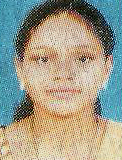
Pushpa

Uppinangady , March 29: The police have concluded that the Pushpa (20), whose body was found in the Kumaradhara River in Uppingangady on March 19, was murdered by her alleged boyfriend.

The Kadaba police have booked a case of murder against Ramesh, her alleged lover. Ramesh is a resident of Kookada village.

Pushpa , a PUC student at Subramanya Government First grade college had gone missing the day before her body was found in Koila village near Uppinangady.

A resident of Shantigodu village in Pajirodi and daughter of Sanku, she had come home for holidays. She used to live at the hostel.

During the post mortem it was found that her body was forcefully drowned and hence the police started investigation. Now it has been found that she had been killed for not reciprocating the love by a boy. Police have taken Kokkada Ramesh into custody. Having obtained ITI education he was working in Bangalore and claimed that Pushpa was in love with him before this and had left him to love somebody else. On getting agitated about this Ramesh called Pushpa to the river side under the pretext of talking. He then pushed her into the river and strangled her in the river, the investigation has revealed.

The relative of Pushpa's alleged murderer Ramesh is working in the Police Department and some of the belongings of Pushpa have been found in his house. The role of this officer in the murder is slowly taking shape in the investigation. Being on a job at Puttur Police station he seemed to have known about the murder and had co-operated in the act or must have co-operated for the murder in the pretext of being a relative. District crime prevention team and Puttur ASP are guiding the investigation.

The Kadaba police who had initially booked a case of unnatural death have now booked a case of murder based on the complaint filed by Pushpa's father Sanku.

According to the complaint, Ramesh had been in love with Pushpa for some time and had even promised to marry her after the latter completed her education. Sanku also mentioned in the complaint that Ramesh's had started behaving suspiciously since Pushpa went missing.

Comments

Add new comment

  • Coastaldigest.com reserves the right to delete or block any comments.
  • Coastaldigset.com is not responsible for its readers’ comments.
  • Comments that are abusive, incendiary or irrelevant are strictly prohibited.
  • Please use a genuine email ID and provide your name to avoid reject.
Ram Puniyani
June 29,2020

In Minneapolis, US an African American, George Floyd lost his life as the white policeman, Derek Chauvin, caught hold of him and put his knee on his neck. This is a technique developed by Israel police. For nine long minutes the knee of the while policeman was on the neck of George, who kept shouting, I can’t breathe.

Following this gruesome murder America erupted with protests, ‘Black lives matter’. The protestors were not just African Americans but also a large section of whites. Within US one police Chief apologized for the act of this. In a touching gesture of apology the police force came on its knees. This had reverberations in different parts of the World.

The act was the outcome of the remnants of the racial hatred against blacks by the whites. It is the hatred and the perceptions which are the roots of such acts of violence. What was also touching that the state of democracy in US is so deep that even the police apologized, the nation, whites and blacks, stood up as a sensitive collective against this violence.

US is not the only country where the brutal acts of violence torment the marginalized sections of society. In India there is a list of dalits, minorities and adivasis who are regularly subjected to such acts. But the reaction is very different. We have witnessed the case of Tabrez Ansari, who was tied to the pole by the mob and beaten ruthlessly. When he was taken to police station, police took enough time to take him to hospital and Tabrez died.

Mohsin Sheikh, a Pune techie was murdered by Hindu Rashtra Sena mob, the day Modi came to power in 2014. Afrazul was killed by Shambhulal Regar, videotaped the act released on social media. Regar believed that Muslims are indulging in love Jihad, so deserve such a fate. Mohammad Akhlaq is one among many names who were mob lynched on the issue of beef cow. The list can fill pages after pages.

Recently a young dalit boy was shot dead for the crime of entering a temple. In Una four dalits were stripped above waste and beaten mercilessly. Commenting on this act the Union Minister Ramvilas Paswan commented that it is a minor incident. Again the list of atrocities against dalits is long enough. The question is what Paswan is saying is the typical response to such gruesome murders and tortures. In US loss of one black life, created the democratic and humane response. In India there is a general silence in response to these atrocities. Some times after a good lapse of time, the Prime Minister will utter, ‘Mother Bharati has lost a son’. Most of the time victim is blamed. Some social groups raise their voice in some fora but by and large the deafening silence from the country is the norm.

India is regarded as the largest democracy. Democracy is the rule of law, and the ground on which the injustices are opposed. In America though the present President is insensitive person, but its institutions and processes of democratic articulations are strong. The institutions have deepened their roots and though prejudices may be guiding the actions of some of the officers like the killer of George, there are also police officers who can tell their President to shut up if he has nothing meaningful to say on the issue. The prejudices against Blacks may be prevalent and deep in character, still there are large average sections of society, who on the principles of ‘Black lives matter’. There are large sections of vocal population who can protest the violation of basic norms of democracy and humanism.

In India by contrast there are multiple reasons as to why the lives of Tabrez Ansari, Mohammad Akhlaq, Una dalit victims and their likes don’t matter. Though we claim that we are a democracy, insensitivity to injustices is on the rise. The strong propaganda against the people from margins has become so vicious during last few decades that any violence against them has become sort of a new normal. The large populace, though disturbed by such brutalities, is also fed the strong dose of biases against the victims. The communal forces have a great command over effective section of media and large section of social media, which generates Hate against these disadvantaged groups, thereby the response is muted, if at all.

As such also the process of deepening of our democracy has been weak. Democracy is a dynamic process; it’s not a fixed entity. Decades ago workers and dalits could protest for their rights. Now even if peasants make strong protests, dominant media presents it as blocking of traffic! How the roots of democracy are eroded and are visible in the form where the criticism of the ruling dispensation is labelled as anti National..

Our institutions have been eroded over a period of time, and these institutions coming to the rescue of the marginalized sections have been now become unthinkable. The outreach of communal, divisive ideology, the ideology which looks down on minorities, dalits and Adivasis has risen by leaps and bounds.

The democracy in India is gradually being turned in to a hollow shell, the rule of law being converted in to rule of an ideology, which does not have faith in Indian Constitution, which looks down upon pluralism and diversity of this country, which is more concerned for the privileges of the upper caste, rich and affluent. The crux of the matter is the weak nature of democracy, which was on way to become strong, but from decades of 1980s, as emotive issues took over, the strength of democracy started dwindling, and that’s when the murders of the types of George Floyd, become passé. One does complement the deeper roots of American democracy and its ability to protect the democratic institutions, which is not the case in India, where protests of the type, which were witnessed after George Floyd’s murder may be unthinkable, at least in the present times. 

Comments

Add new comment

  • Coastaldigest.com reserves the right to delete or block any comments.
  • Coastaldigset.com is not responsible for its readers’ comments.
  • Comments that are abusive, incendiary or irrelevant are strictly prohibited.
  • Please use a genuine email ID and provide your name to avoid reject.
News Network
July 25,2020

Dubai, Jul 25: The founder of NMC Health, BR Shetty, has had a worldwide freezing order placed on his assets at the request of a lender that claims he has defaulted on a loan of more than $8 million (Dh29.4m).

The order was granted to Credit Europe Bank (Dubai) last month ahead of a claim filed at the DIFC Courts against Mr Shetty, New Medical Centre Trading and NMC Healthcare.

The lender said in its claim they “are jointly and severally liable” for the repayment of money initially secured through a credit agreement in December 2013 and renegotiated in December last year. Credit Europe Bank is an Amsterdam-headquartered institution specialising in trade and commodities finance with operations in nine countries.

The credit agreement was guaranteed by two security cheques which the bank said in its claim were signed by Mr Shetty – one drawn on his personal account and another on the account of New Medical Centre Trading – that have been "dishonoured upon presentation due to insufficient funds".

The bank claimed Mr Shetty “has now fled the jurisdiction of the UAE to India” and that there was a risk of his “substantial” assets in the Emirates being dissipated.

The assets frozen include properties in Abu Dhabi and Dubai, as well as shares in NMC Health, Finablr, BRS Investment Holdings and other companies. It allows for up to $7,000 per week to be spent on “ordinary living expenses and reasonable sum[s] on legal advice and representation”, a DIFC Courts document granting the freezing order shows.

Credit Europe Bank declined to comment when contacted by The National, stating it does not comment on ongoing litigation proceedings. Representatives for Mr Shetty and for NMC Healthcare, which is now being run by administrators Alvarez & Marsal, also declined to comment.

NMC Healthcare was founded by Mr Shetty in 1975 and grew from a single hospital into the UAE’s biggest privately-owned healthcare operator, which employed 2,000 doctors and 20,000 other staff. The company was listed on the London stock exchange and at its peak was valued at £8.58 billion (Dh40bn). However, its shares slumped after short seller Muddy Waters Research issued a report in December 2019 alleging the company had inflated its cash balances, overpaid for assets and understated its debts. This led to a string of damaging revelations by the company, including the fact that its debt was materially higher – at $6.6bn – than the $2.1bn on its balance sheet. NMC Healthcare was placed into administration in April by its biggest creditor, Abu Dhabi Commercial Bank, but its UAE businesses continue to trade as a going concern.

Mr Shetty said in a statement issued in April that he has been a victim of fraud committed by "a small group of current and former executives” at companies owned by him. He said bank accounts were created in his name and transactions were made without his knowledge, and that loans, cheques and bank transfers were also fraudulently guaranteed in his name using his forged signature.

In response to the claim filed by Credit Europe Bank (Dubai) at the DIFC Courts, Mr Shetty says he did not personally guarantee loans made to NMC Trading or NMC Healthcare and that the signatures used on cheques guaranteeing the loans are forgeries. His defence cites the opinion of “Dr Al Bah, an independent, experienced and qualified forensic document examiner”, that someone other than Mr Shetty signed the lending agreements and cheques.

An application by NMC Trading and NMC Healthcare to the DIFC Courts to have the claim against it heard in private for fear of triggering claims by other lenders – the group owes money to around 80 local, regional and international lenders – was dismissed, given that the appointment of administrators at the group and allegations of fraud at the company are already in the public domain.

Both companies have indicated to DIFC Courts that they intend to contest the claim against them.

Comments

UAE Muslim
 - 
Sunday, 26 Jul 2020

give money to RSS now to kill muslim....GOD will turn the table for moran like you BR,...shamed of tulu guy cheated the UAE govennment...not root in hell

ANONYMOUS
 - 
Saturday, 25 Jul 2020

amount should be 8 billion dollar and not 8 million dollar

Add new comment

  • Coastaldigest.com reserves the right to delete or block any comments.
  • Coastaldigset.com is not responsible for its readers’ comments.
  • Comments that are abusive, incendiary or irrelevant are strictly prohibited.
  • Please use a genuine email ID and provide your name to avoid reject.
News Network
May 18,2020

Bengaluru, May 18: A large number of people in India are planning inter-city bus travel within a month of the lifting of travel restrictions, according to a randomised online survey of over 10,300 customers of redBus, India's largest online bus ticketing platform.

Nearly 57 per cent of the respondents are planning to travel within a month post the lockdown. However, there is a high standard of expectation on the implementation of measures to make buses safe for travel with over 79 per cent wanting deep cleaning and sanitisation of buses after every trip.

Hand sanitisers, mandatory masks and temperature screening for all passengers are next in expectations for bus travel. Over 78 per cent of the respondents want the implementation of hygienic conditions at boarding points and 70 per cent want social distancing protocols to be implemented at boarding points.

"The survey does underscore the fact that given the adherence to safety protocols, bus travel is possibly one of the safest options for travel since the number of travellers are fewer, checks can be done individually and the whole factor of pick up and drop as close to home as possible minimises the number of contacts throughout the journey," said redBus Chief Executive Officer Prakash Sangam.

In addition, online booking further reduces the number of contact points as people can book bus tickets directly from their home. Further, there is a heightened awareness of personal hygiene and safety measures which is important for the travel to be safe.

"The large number of people waiting to travel not only points to the need but also the importance it has for the revival of economic activity as very few of them would be travelling for leisure," said Sangam.

The survey also showed that passengers put a very high consideration on hygiene, sanitation and disinfection -- over 73 per cent -- and social distancing (63 per cent) and much lower consideration to traditional factors such as travel cost (22 per cent), comfort (21 per cent) and punctuality (18 per cent).

The survey was conducted among redBus customers across India. Only 5 per cent of the respondents were willing to postpone their travel to over six months while the rest had plans to travel within that period.

Comments

Add new comment

  • Coastaldigest.com reserves the right to delete or block any comments.
  • Coastaldigset.com is not responsible for its readers’ comments.
  • Comments that are abusive, incendiary or irrelevant are strictly prohibited.
  • Please use a genuine email ID and provide your name to avoid reject.