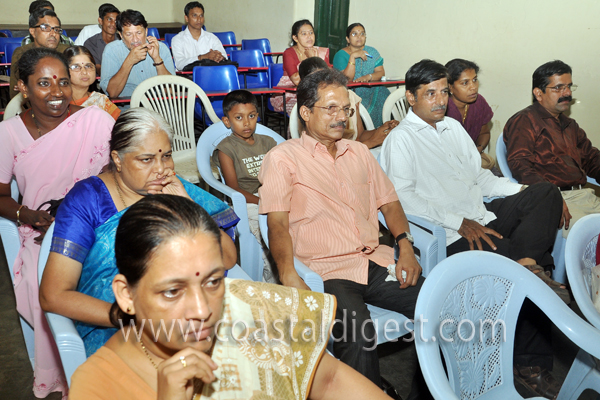
Students' feel proud of their own translation

April 3, 2012

nammanuvada1


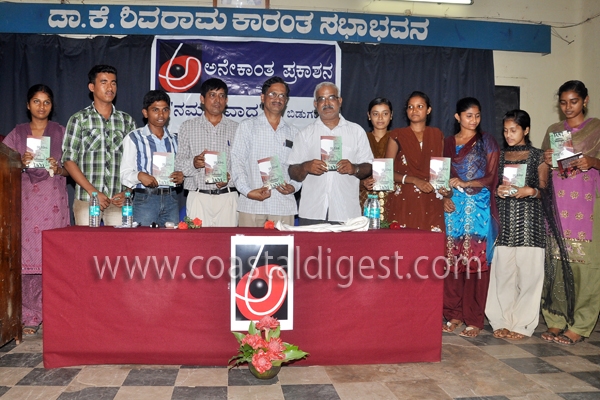
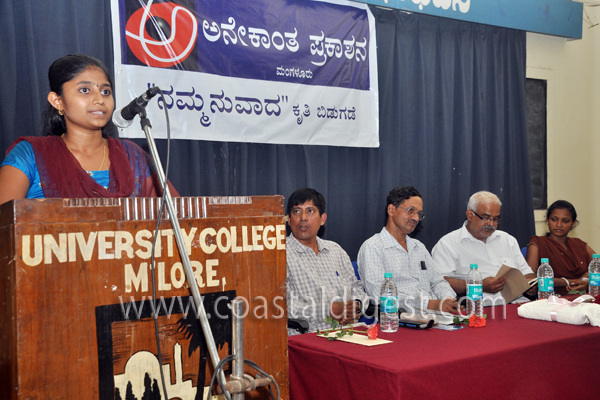
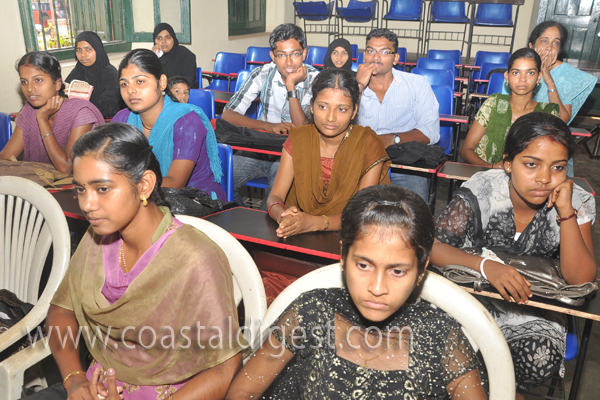
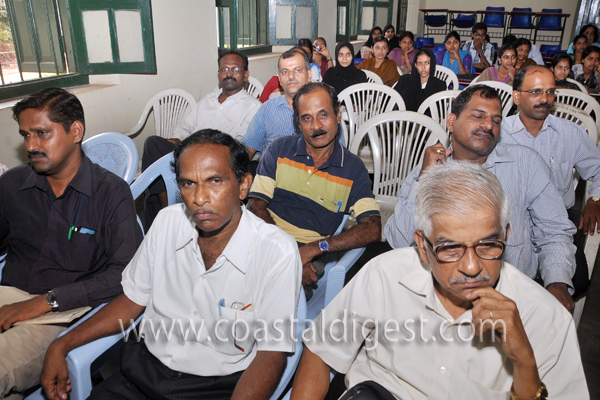
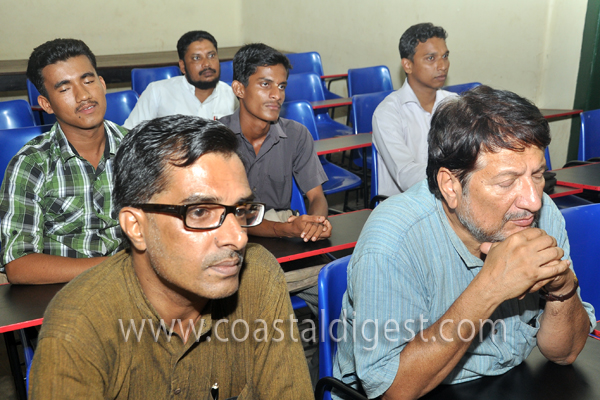
Mangalore, April 3: It was a memorable event for the nine graduation students of University College. An anthology of different stories from different books liked and translated by them from English into Kannada, was released under the title “Nammaanuvaada” (Our Translation) on Tuesday evening.

The programme was held at Ravindra Kalabhavana in the college premises. The story translators Mohammed Irshad, Fabina, Shabnam, Nimisha Domili, Sushma, Pramila D'Souza and Sarita had a rare opportunity to express their feelings in front of the audience.

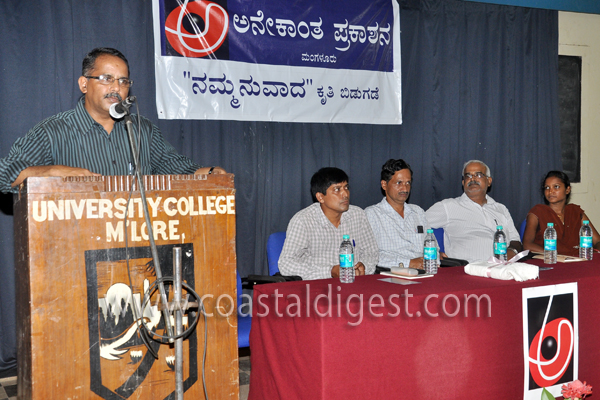
Interestingly the book is the second publication brought out by Anekanta Prakshana, which is run by Professor Uday Kumar and his wife Associate Professor Rajalakshmi N.K, both working at University College.

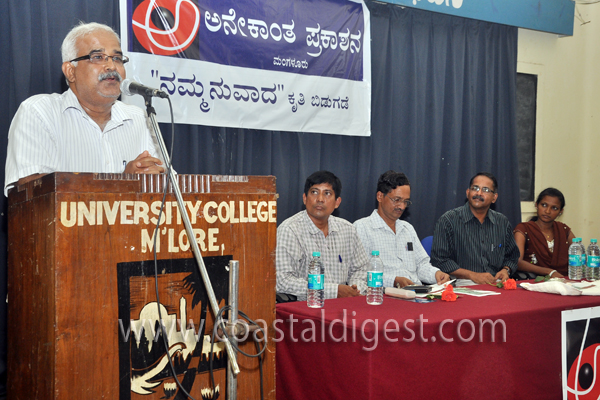
Speaking at the releasing ceremony Prof Mahalinga Bhat of St Aloysius Evening College, said it is a good trend to see students taking initiative in translating such stories and bringing out them in the form of book.

“The College must continue this drive of encouraging the students to indulge in literature. This helps the students to cultivate the habit of reading. Other colleges in the city too must develop the writing skills of their students”, he said.

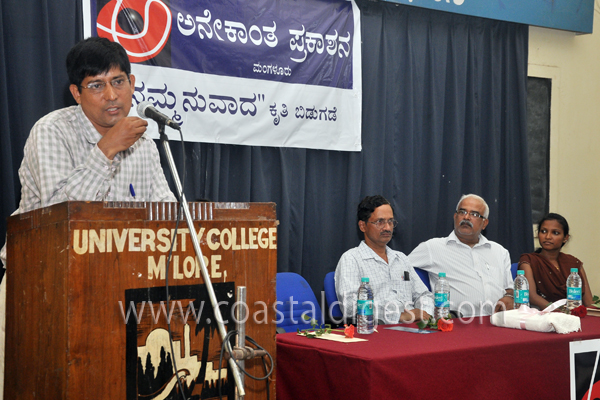
Prof Shridhar Rao of Mangalore University said that from the point of view of the students this is a very good attempt to showcase their writing and translation skills.

He said another attempt can be made at translating stories into English as well. He also said that by cultivating the habit of reading we get to learn about the culture of our country.

nammanuvada2

nammanuvada3

nammanuvada4

nammanuvada5

nammanuvada6

nammanuvada7

nammanuvada8

nammanuvada9

nammanuvada10

Comments

Add new comment

  • Coastaldigest.com reserves the right to delete or block any comments.
  • Coastaldigset.com is not responsible for its readers’ comments.
  • Comments that are abusive, incendiary or irrelevant are strictly prohibited.
  • Please use a genuine email ID and provide your name to avoid reject.
News Network
April 28,2020

Bengaluru, Apr 28: Karnataka has found that the rapid antibody test kits for COVID-19 that the Centre supplied to the state have only 47% sensitivity. The state will be returning the kits to the Indian Council of Medical Research (ICMR).

Karnataka had received 11,400 rapid antibody test kits from the ICMR a few days back, out of which it had sent around 200 of them to NIMHANS for validation.

After the ICMR, on Monday, sent a circular to all states to return the test kits to the suppliers, Dr CN Manjunath, Director, Jayadeva Institute of Cardiovascular Sciences and Research, and nodal officer for lab testing in the state's COVID-19 task force, said, "We have cancelled the orders we placed to Guangzhou Wondfo Biotech and Zhuhai Livzon Diagnostics for one lakh rapid antibody test kits. Since the ICMR supplied us with 11,400 kits out of the 6.5 lakh kits it procured, we will be returning the kits to them."

Manjunath told said that the validation at NIMHANS revealed the kits to have only 47% sensitivity. Sensitivity is the ability of a test to identify the true-positives in a population, i.e., the actual number of people who've been infected with the disease. With the rapid antibody testing kits being shelved, the state's plan to randomly test high risk groups has taken a backseat. 

So far, the state has tested 43,791 samples. 

Karnataka now has 22 testing facilities -- 14 government and seven private labs. Many private labs have not tested any samples so far because of the lack of test kits (the state has made it clear that it will not provide test kits to private labs). So, getting an ICMR approval for testing has become a moot point.p

Agreeing to the setback the state's plans of ramping up testing has taken, Manjunath said, "It is true that RT-PCR test kits are in shortage. Even Pune's Mylabs had a shortage in supplying test kits. But we are relying on institutes like Kidwai, Narayana Health and Biocon's Syngene that have received approval for testing. They're big institutes and we hope that they will test a large number of samples."

On reports that the Centre has RT-PCR test kits that will last for only a week, he said, "We have test kits that will last for eight to 10 days. We have ordered for more. We are hoping to receive them before the current kits run out."

Comments

Add new comment

  • Coastaldigest.com reserves the right to delete or block any comments.
  • Coastaldigset.com is not responsible for its readers’ comments.
  • Comments that are abusive, incendiary or irrelevant are strictly prohibited.
  • Please use a genuine email ID and provide your name to avoid reject.
News Network
March 25,2020

Thiruvananthapuram, Mar 25: Kerala Chief Minister Pinarayi Vijayan on Tuesday said that strict action will be taken against overpricing and hoarding of essential items during lockdown period in the state.
Speaking to media persons here, he said: "Today 14 new cases of COVID-19 have been reported taking the total number of cases to 105 (excluding four discharged) in the state."
"Out of this, six are from Kasaragod district, two from Kozhikode, eight have returned from Dubai, one each from Qatar and UK; and three have got infected from a mutual contact. One health worker is also suspected to be on the list," he said.
A total of 72,460 people are under observation in the state out of which 71,994 are in isolation in their homes and 466 in hospitals. Today 164 people were hospitalised. 4,516 samples were sent for testing out of which 3,331 have tested negative.
Chief Minister Vijayan said that people should take the lockdown seriously and strictly adhere to government instructions.
"All personal vehicles should strictly be off the road. Taxis and autos can only be used for emergency purposes. People using personal vehicles should give self-declaration giving details about the purpose of the journey. Police action will be taken against those giving false information or found misusing personal vehicles," he said.
The Chief Minister today interacted with the MLAs from Kasargod through audio conferencing and asked them to co-ordinate the activities there along with the Panchayat president.
"Special attention should be given to the elderly, homeless, specially-abled in the state and local self-government institutions should take effort to arrange food and shelter for the needy. Apart from medicines, those in isolation would also be given counselling if required," he said.
He also urged the youth to come forward in volunteering during this difficult time. They can volunteer as bystanders in hospitals and help in other places too.
The Chief Minister also informed that the testing facilities at Central Universities in Kerala, IISER in Trivandrum and MIMS, Kozhikode can be used.
"All MLAs are working in their respective constituencies and they should make the effort to identify places that can be used as regional isolation centres, as and when required," said Vijayan.

Comments

Add new comment

  • Coastaldigest.com reserves the right to delete or block any comments.
  • Coastaldigset.com is not responsible for its readers’ comments.
  • Comments that are abusive, incendiary or irrelevant are strictly prohibited.
  • Please use a genuine email ID and provide your name to avoid reject.
Agencies
February 20,2020

India ranked 77th on a sustainability index that takes into account per capita carbon emissions and ability of children in a nation to live healthy lives and secures 131st spot on a flourishing ranking that measures the best chance at survival and well-being for children, according to a UN-backed report.

The report was released on Wednesday by a commission of over 40 child and adolescent health experts from around the world. It was commissioned by the World Health Organization (WHO), UN Children's Fund (UNICEF) and The Lancet medical journal.

In the report assessing the capacity of 180 countries to ensure that their youngsters can survive and thrive, India ranks 77th on the Sustainability Index and 131 on the Flourishing Index, it said.

Flourishing is the geometric mean of Surviving and Thriving. For Surviving, the authors selected maternal survival, survival in children younger than 5 years old, suicide, access to maternal and child health services, basic hygiene and sanitation, and lack of extreme poverty.

For Thriving, the domains were educational achievement, growth and nutrition, reproductive freedom, and protection from violence.

Under the Sustainability Index, the authors noted that promoting today's national conditions for children to survive and thrive must not come at the cost of eroding future global conditions for children's ability to flourish.

The Sustainability Index ranks countries on excess carbon emissions compared with the 2030 target. This provides a convenient and available proxy for a country's contribution to sustainability in future.

The report noted that under realistic assumptions about possible trajectories towards sustainable greenhouse gas emissions, models predict that global carbon emissions need to be reduced from 39·7 giga­ tonnes to 22·8 gigatonnes per year by 2030 to maintain even a 66 per cent chance of keeping global warming below 1·5°C.

It said that the world's survival depended on children being able to flourish, but no country is doing enough to give them a sustainable future.

"No country in the world is currently providing the conditions we need to support every child to grow up and have a healthy future," said Anthony Costello, Professor of Global Health and Sustainability at University College London, one of the lead authors of the report.

"Especially, they're under immediate threat from climate change and from commercial marketing, which has grown hugely in the last decade," said Costello – former WHO Director of Mother, Child and Adolescent health.

Norway leads the table for survival, health, education and nutrition rates - followed by South Korea and the Netherlands. Central African Republic, Chad and Somalia come at the bottom.

However, when taking into account per capita CO2 emissions, these top countries trail behind, with Norway 156th, the Republic of Korea 166th and the Netherlands 160th.

Each of the three emits 210 per cent more CO2 per capita than their 2030 target, the data shows, while the US, Australia, and Saudi Arabia are among the 10 worst emitters. The lowest emitters are Burundi, Chad and Somalia.

According to the report, the only countries on track to beat CO2 emission per capita targets by 2030, while also performing fairly – within the top 70 – on child flourishing measures are: Albania, Armenia, Grenada, Jordan, Moldova, Sri Lanka, Tunisia, Uruguay and Vietnam.

"More than 2 billion people live in countries where development is hampered by humanitarian crises, conflicts, and natural disasters, problems increasingly linked with climate change," said Minister Awa Coll-Seck from Senegal, Co-Chair of the commission.

The report also highlights the distinct threat posed to children from harmful marketing.

Evidence suggests that children in some countries see as many as 30,000 advertisements on television alone in a single year, while youth exposure to vaping (e-cigarettes) advertisements increased by more than 250 per cent in the US over two years, reaching more than 24 million young people.

Studies in Australia, Canada, Mexico, New Zealand and the US – among many others – have shown that self-regulation has not hampered commercial ability to advertise to children.

Children's exposure to commercial marketing of junk food and sugary beverages is associated with purchase of unhealthy foods and overweight and obesity, linking predatory marketing to the alarming rise in childhood obesity, it said.

The number of obese children and adolescents increased from 11 million in 1975 to 124 million in 2016 – an 11-fold increase, with dire individual and societal costs, the report said.

To protect children, the authors call for a new global movement driven by and for children.

Specific recommendations include stopping CO2 emissions with the utmost urgency, to ensure children have a future on this planet; placing children and adolescents at the centre of global efforts to achieve sustainable development, the report said.

New policies and investment in all sectors to work towards child health and rights; incorporating children's voices into policy decisions and tightening national regulation of harmful commercial marketing, supported by a new Optional Protocol to the UN Convention on the Rights of the Child, it said.


Comments

Add new comment

  • Coastaldigest.com reserves the right to delete or block any comments.
  • Coastaldigset.com is not responsible for its readers’ comments.
  • Comments that are abusive, incendiary or irrelevant are strictly prohibited.
  • Please use a genuine email ID and provide your name to avoid reject.