Mangalore must be alert of water privatization hazard'

April 10, 2012

water1

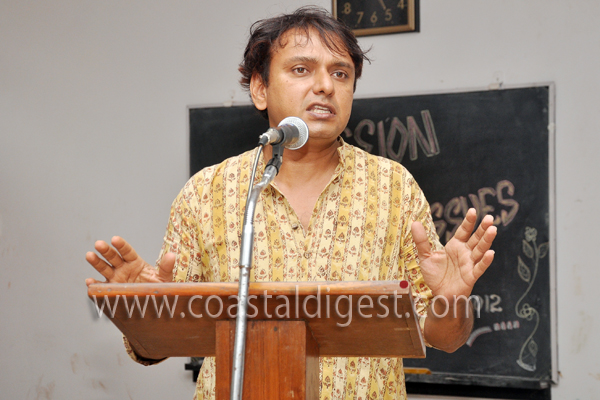
Mangalore, April 10: Privatisation of water is financially imprudent, ecologically unsustainable and socially unjust and a strong public opposition is required in Mangalore as authorities have planned to implement it in the coastal city, said Kshitij Raj Urs, Karnataka People's Campaign for Right to Water.

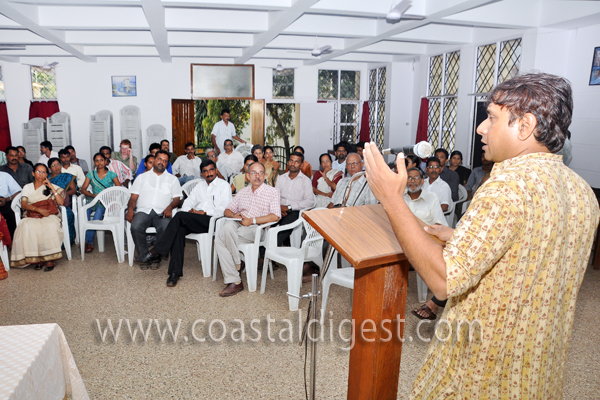
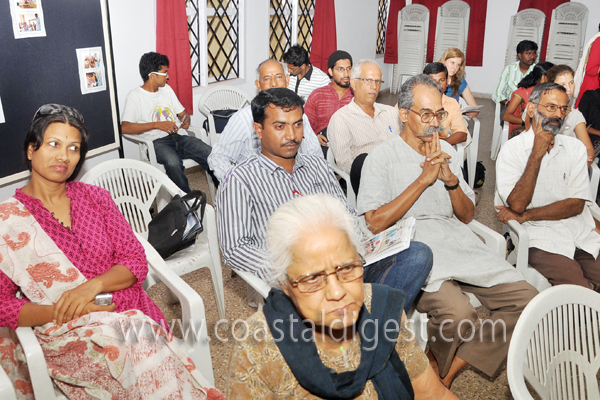
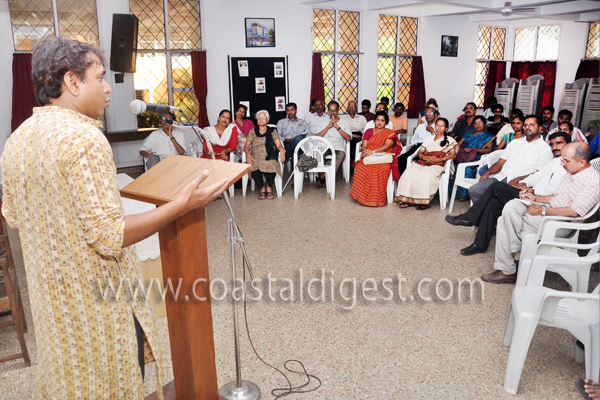
He was speaking at a discussion organized by Citizens' Forum for Development, Mangalore, at School of Social Work, Roshni Nilaya in the city on Tuesday.

Enlightening the gathering on the privatization and commoditization of water by governments against people's opinion, Mr. Urs said that authorities are budging to corporate powers who want to utilize the natural resource wealth of water to earn profits.

Stating that Karnataka was the first state in the country to privatize water, Mr. Urs said that the state government had in a deal with a French private company allowed parts of Hubli, Dharwad, and Belgaum to be used as 'demonstration wards' wherein they would be the first beneficiaries of the water resource in the region. “The demonstration wards would have first access to water while the street next to that very ward would not. They have designed it in such a way that they should get water first and what remains should be distributed to other wards. The water bills in these areas have gone up ten times of what people used to pay earlier”, he said.

Mr. Urs said that utter injustice is being done to people by forming policies facilitating privatization of water wherein the one who pays gets water supply and the ones who don't, connections are cut off to their houses mercilessly besides removal of public taps. “There are instances where locks have been put up on public taps”, he lamented. “There is something called as 'lifeline water' wherein 135 litres per day is considered as the minimum amount of water required per day. At least this amount of water should be supplied free of cost to all”, he said.

Criticising the central and state governments alike, Mr. Urs said that the JNNURM project of the Central Government is unjust. “Under the JNNURM scheme, the union government provides a part of the money and the rest has to be managed by the state government. It forces the state government to agree to conditions such as repealing of land ceiling act, conversion of agricultural land to non-agricultural purposes, foreign ownership of land and so on. The state government is made to privatize a public service”, he said.

Warning that Chief Minister D V Sadananda Gowda's budget proposal of seting aside Rs. 147 crore for 24x7 water supply in Mangalore is actually a World Bank estimate to privatize water in the region, Mr. Urs said that people's mobilization is the only way to stop such unfair policies. “Today Dakshina Kannada district's Deputy Commissioner is forcing your corporators to privatize water as the city is facing water crisis”, he said.

Mr. Urs said that although Tatas had tried to privatize water in Mysore by taking reins of Vanivilas Water Works, due to their inefficiency to handle it and people's strong opposition, re-municipalisation of water took place just three days ago, which is a very good development.

MLA U T Khader expressing his views on the occasion suggested that a seminar and briefing be held on the issue for corporators and representatives of local bodies such as Panchayats to create awareness. He also assured that he will raise the issue in the Assembly.

water3

water4

water5

water6

water2

Comments

Add new comment

  • Coastaldigest.com reserves the right to delete or block any comments.
  • Coastaldigset.com is not responsible for its readers’ comments.
  • Comments that are abusive, incendiary or irrelevant are strictly prohibited.
  • Please use a genuine email ID and provide your name to avoid reject.
coastaldigest.com news network
August 3,2020

Bengaluru/ Mangaluru, Aug 3: For the first time in many days, if not weeks, the number of recoveries in Karnataka was higher than new covid-19 cases in the state raising hope of some relief against the virus.

Karnataka confirmed 4752 new covid- 19 cases while the number of recoveries stood at 4776 in the 24 hours until 5 pm on Monday. The state also recorded 98 deaths. 

Medical education minister K.Sudhakar said that the recovery rate in Karnataka is at around 42%

"Everyday there is increase in recovery rate which is higher by 9.17% in Bengaluru city. Overall recovery rate of the state by Sunday evening was 42.81 % and it is 35.14% in Bengaluru," the minister posted on Twitter.

The total number of cases in Bengaluru crossed the 60,000 mark including 1497 cases on Monday.

The total number of cases in Mysuru breached 5000 cases as 372 persons tested positive. The mineral-rich district of Ballari recorded 305 cases. Other parts of Karnataka has seen a surge in cases with 15 out of the 30 districts reporting at least a 100 cases.

Dakshina Kananda

Dakshina Kannada district alone has recorded 153 new cases and seven deaths. 
Among the 153 new cases, 119 are from Mangaluru, 11 from Bantwal, six from Beltangady, four from Puttur, one from Sullia, and 12 from other districts.

The total number of covid positive cases in the district mounted to 6,168. Out of these, 3,138 cases are currently active. As many as 2,854 persons have recovered and been discharged, and 176 deaths have occurred so far.

Udupi

Udupi reported 126 fresh cases past 24 hours, according to health bulletin released by the Udupi district administration. They include 58 from Udupi, 34 from Kundapur, 28 from Karkala, and six from other districts. 

A total of 34,500 samples have been collected so far. 29,174 have turned out to be negative. As many as 4,800 confirmed cases of coronavirus have been reported so far in the district. 

As many as 2,812 patients have been discharged so far, and 1,952 cases are currently active. As per district bulletin, 36 deaths have occurred so far. One positive case has been transferred to Dakshina Kannada.

Comments

Add new comment

  • Coastaldigest.com reserves the right to delete or block any comments.
  • Coastaldigset.com is not responsible for its readers’ comments.
  • Comments that are abusive, incendiary or irrelevant are strictly prohibited.
  • Please use a genuine email ID and provide your name to avoid reject.
News Network
February 20,2020

Gadag, Feb 20: A 33-year-old Muslim man is all set to become a seer at Muruga Rajendra Mutt in Gadag.

Ordained by Sri Murugarajendra Koraneswara Swami of the mutt, Dewan Sharief Mullah claims he was taking the step not under any duress but after being "guided by the almighty".

"Nobody asked me to do it. The almighty came in my mind and guided me.... They have put the sacred thread and given me the responsibility. They have given me the 'Ishta-linga' and this honour. I have done the 'Ishta-linga dharan'. I will walk on the path of dharma. Love and sacrifice is the message given to me. That is what I want to propagate," he said.

Sri Murugarajendra Koraneswara Swami said, "It does not matter what caste you belong to. If God appears to you for a path of goodwill and sacrifice, you will do it regardless of the manmade restrictions of birth and caste."

Comments

Add new comment

  • Coastaldigest.com reserves the right to delete or block any comments.
  • Coastaldigset.com is not responsible for its readers’ comments.
  • Comments that are abusive, incendiary or irrelevant are strictly prohibited.
  • Please use a genuine email ID and provide your name to avoid reject.
Media Release
March 12,2020

Manipal, Mar 12: Team WGSHA is proud to announce that the culinary museum in WGSHA has been listed in Limca Book of Records as India's First Living Culinary Arts Museum.

Limca Book of Records (LBR) is a catalogue of achievements made by Indians, at home and abroad in diverse fields of human endeavour. LBR is a celebration of exemplary exploits and recognizes accomplishments such as firsts, inventions, discoveries, honours, awards and the truly extraordinary.

Chef Thirugnanasambantham, Principal of WGSHA, while thanking MAHE and ITC Leadership for extending all support towards instituting this museum in Manipal and WGSHA, also appreciated and thanked all those who have directly or indirectly helped towards setting up this museum in Manipal.

"The process for WGSHA's culinary museum to make an entry into the popular Limca Book of Records started almost six months back and after validation by LBR recently, has been listed in the book of records. We are glad that we could be the first of its kind in such endeavour and we also hope to be in Guinness World Records soon", said Chef Thiru.

"We are indeed grateful to Michelin-starred Indian celebrity Chef Vikas Khanna, the founder and curator of this museum, who had this idea of establishing a culinary museum and donated thousands of kitchen tools and equipment worth millions of dollars to this museum for preserving the history of India's rich tradition of culinary arts and to educate the future generations. Chef Vikas Khanna, 'Distinguished Alumnus' of WGSHA, being very desirous of making such a museum in India, what better place it would be than in his own Alma Mater!", he said on the background of having the museum.

Chef Thiru mentioned that Udupi, popular for the famous 'Udupi Cuisine', and being a temple town, is adjacent to International University Town of Manipal Academy of Higher Education (MAHE).

MAHE is home to thousands of international students and visitors. With a great heritage of Udupi, combined with the large number of Indian and International students residing in and around Manipal, it was very apt for the college to create a museum for today's Indian youth and the International visitors to understand the rich culinary heritage of India, through the priceless kitchen tools and equipment donated by Chef Vikas Khanna.

"Has placed WGSHA in the global culinary map and we are proud to have joined all such efforts to preserve the history of cuisines and cultures across the world", said Chef Thiru.

The culinary art academic block housing the museum was opened in April 2018, spread approximately over 25,000 sq ft and is shaped in the form of a giant pot very similar to the ones found in Harappa.

There are historical as well as regular household items such as plates made by the Portuguese in India, a 100-year-old ladle used to dole out food at temples and bowls dating to the Harappan era, an old seed sprinkler, an ancient Kashmiri tea brewer known as 'samovar', vessels from the Konkan, Udupi and Chettinad regions, apart from a large collection of rolling pins, utensils of all shapes and sizes, tea strainers of different types etc.

Comments

Add new comment

  • Coastaldigest.com reserves the right to delete or block any comments.
  • Coastaldigset.com is not responsible for its readers’ comments.
  • Comments that are abusive, incendiary or irrelevant are strictly prohibited.
  • Please use a genuine email ID and provide your name to avoid reject.