


The Norm of the Patriarch

March 4, 2012

PRN_GT

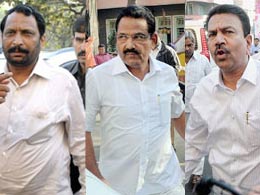
During middle of February 2012, BJP ruled Karnatka’s two ministers, Laxman Savadi and C C Patil were watching the porn clip on the mobile belonging to another minister Krishna Palemar. All three had to resign the job and BJP huddled in to a Chintan baithak (Meeting for Introspection) to do the damage control. Whether these BJP ministers are also RSS trained swayamsevaks, like most top functionaries of BJP are, is not known. But surely these porn watching ministers do come under the broad umbrella of RSS combine, popularly known as Sangh Parviar.

There are many other incidents about those in the ambit of RSS combine, in incidents which involve gender related issues. By now the aggression of Pramod Mutalik’s Sri Ram Sene attacking and humiliating the girls in a pub is too well known. Mutalik is a RSS trained person. He joined RSS in 1975 and became convener Bajrang Dal for South India in 2004. He also helped BJP’s election campaigns. Later he joined Shiv Sena before forming his own Sri Ram Sene. The attacks on those celebrating Valentine day, by Shiv Sena, Sri Ram Sene and other groups who are fellow travelers of RSS politics is a sort of annual ritual.

Many of these elements have been attacking Muslim boys who were found conversing with Hindu girls. In Gujarat, Babu Bajrangi, who was very active in Gujarat anti-Muslim pogrom, who was caught in the Tehelka sting operation boasting about playing the ‘One day match’, killing the Muslims, was also the leader of a squad which was intimidating the couples in the parks. The most systematic attempt to combine gender issues, patriarchal norms with anti Muslim tirade manifested in the form of the propaganda about ‘Love Jihad’, a hoax deliberately floated to browbeat Muslim youth has been seen in many a places particularly in Kerala. As per this propaganda Muslim youth are being given money and training to lure way Hindu girls with the aim of increasing Muslim population.

The pathological dislike for the girls trying to get autonomy in choosing their life partners is being opposed in many a ways. The couples meeting the in the public places are advised to abhor love marriage and to go for the partners selected by their parents. As a counter to Valentine day celebration, Asaram Bapu suggested the celebration of Matri Pitru day (Parents Day) on that day (14th February, the Valentine Day) and the BJP ruled Chhattisgarh Government has implemented this wish of Asaram Bapu and Matri Pitru day was observed in Chattisgarh this year. To cap it all the norms, morality and values followed by RSS combine were most in display in response to the statement of the Hyderabad police Chief Dinesh Reddy’s statement. Mr. Reddy (Dec 2011) linked the rape cases with the dress of women. Not the first time any police person or many others have said a similar thing. The difference this time was that when Mr. Reddy was being criticized for his crass statement, he received support from the un-expected or rather expected quarter of one women’s organization. This women’s organization happens to be Rashtra Sevika Samiti, an organization subordinate to Rashtriya Swayamsevak Sangh (RSS). While most of the incitements which have been observed are a manifestation of perverted sense of morality, a medieval mind set, the Rashtra Sevika Samiti’s support to Mr. Reddy in linking up women’s dress with rape, in turn holding them responsible for the crimes done against them, is very revealing.

The likes of Babu Bajrangi, Promod Mutalik may be dismissed as fringe elements, despite their association with RSS or its affiliates, and the porn clip watching BJP ministers may not be an exception in doing such a thing. But in the case of Rashtra Sevika Samiti’s action the attitude of RSS ideology toward women becomes more than explicit. RSS is an exclusively male organization. In 1936 Laxmibai Kelkar, a woman related to RSS members’ family, approached the then Sarsanghchalsk and asked permission to join the RSS. She was declined the membership on the ground that RSS is only for men. She was advised to start Rashtra Sevika Samiti instead. The nomenclature of the two organizations is very interesting. The dominating male organization has the word Swayam (self), while in the name of women’s organization the word Swayam (self) is missing, showing their subordinate position.

This deep adherence to patriarchy dictated by RSS keeps coming to surface time and over again. In the decade of 1980s the then BJP’s Vice President Vijaya Raje Schindia had supported the women committing Sati (self immolation by woman after husbands’ death), in response to the Roopaknwar Sati case. She asserted that Sati is a great glorious Hindu tradition. She also said that to commit sati, is the right of Hindu women. Somehow she herself never exercised this right herself!

Another major leader of BJP, Mridula Sinha, belonging to BJP Mahila Morcha (BJP Women’s Wing) had in an interview given to the Savvy Magazine in 1994 defended the wife beating and dowry. She said that women should not work outside unless there is a dire financial crisis’ in the family. The major ideologues of Sangh combine have talked gloriously about Manu Smiriti, the tome which ordains the caste system and subordinate position of women. The open preaching of patriarchal values is a core agenda of most of the communal organizations, irrespective of to whichever religion they belong to. RSS combine exemplifies it to the hilt, starting from its nomenclature to the ideology and practices undertaken by this multi headed hydra. In these matters the attitude of other fundamentalist organizations, deriving their legitimacy from Islam or Christianity may not be much different and they may hold hands together on such issues, the way they stood together on the issue of same sex relationships.

Our society during the period of 1950-1970s saw the strengthening of the process of caste and gender transformation. The period from 1980s has been a sort of reversal of the healthy elements of the process of social change. This reversal of the process of social transformation is an accompaniment of the rise of politics in the name of religion, the politics of RSS in India. While porn watching BJP ministers may not be the only ones’ in doing what they did, there is a need to look at the attitude to gender which is on display due to the politics of RSS, the Hindutva.

Comments

Add new comment

  • Coastaldigest.com reserves the right to delete or block any comments.
  • Coastaldigset.com is not responsible for its readers’ comments.
  • Comments that are abusive, incendiary or irrelevant are strictly prohibited.
  • Please use a genuine email ID and provide your name to avoid reject.
Agencies
March 3,2020

Kashmir, Mar 3: Four days after the National Investigation Agency made a major breakthrough in the Pulwama terror attack case over a year after the bombing, arresting one person who had sheltered the suicide bomber Adil Ahmad Dar, the NIA on Tuesday arrested two more people in the case - a father-daughter duo - who had also provided shelter to the bomber, officials said.

The NIA also claimed that the video of the suicide bomber was also recorded at their residence and released by the Jaish-e-Mohammad (JeM) terror group from Pakistan after the attack. An NIA spokesperson in Delhi said: "Two more persons have been arrested by the agency in the Pulwama terror attack case and they have been identified as Insha Jan, 23, and her father Tariq Ahmed Shah, 50, who works as a tipper driver."

The official said that the father-daughter duo have been arrested from Hakripora area in Pulwama for their involvement in the attack. The two were arrested on early Tuesday morning after senior officials of the NIA raided their house on Monday night.

A senior NIA official related to the probe told IANS: "The video of Dar, who attacked the CRPF convoy, was recorded at the home of the duo. And the same video was released soon after the Pulwama terror attack by the JeM terrorists from a Pakistani IP address."

He said, "The video was shared by them to their handlers in Pakistan."

The spokesperson further claimed that during the probe Tariq Ahmed Shah disclosed that his house in Hakripora area was used by Dar, Mohammad Umar Farooq, a Pakistani terrorist and IED maker, Kamran - another Pakistani terrorist (both were later killed in encounters with security forces), Sameer Ahmed Dar, a Jaish-e-Mohammad terrorist from Pulwama and Mohammad Ismail aka Ibrahim, a Pakistani terrorist.

The spokesperson said that Shah facilitated all the terrorists at his house for sheltering and for planning of the heinous attack on the CRPF convoy. He said Jan, daughter of Shah, facilitated the terrorists at their home and provided food and other logistics during their stay on more than 15 occasions for two to four days each time, in their house during the year 2018-2019.

"Initial interrogation has revealed that Jan was in constant touch with Farooq and was in communication with him over telephone and other social media applications," the spokesperson said. The fresh arrests of the two accused brings the total number of arrests in the case to three.

The arrests were made on the revelations of Shakir Bashir Magrey, who was arrested by the anti-terror probe agency on February 28. According to senior NIA officials, more arrests will be made in the coming days. Magrey, a resident of Hajibal, Kakapora in Pulwama district of Jammu & Kashmir, is an overground worker (OGW) of the Pakistan-based Jaish-e-Mohammad (JeM).

According to agency sources, Magrey allegedly provided shelter and other logistical assistance to the Pulwama suicide bomber. He was sent to 15 days' NIA custody by a special NIA court in Jammu & Kashmir on Friday. During interrogation, Magrey revealed that he had harboured Dar and Pakistan-based terrorist Mohammad Umar Farooq in his house from late 2018 till the attack in February 2019 and assisted them in the preparation of the Improvised Explosive Device (IED). His shop is located near Lethpora bridge, and as advised by Mohammad Umar, he started conducting reconnaissance of the movement of CRPF convoys on Jammu-Srinagar Highway in January 2019, and informed Mohammad Umar and Adil Ahmad Dar about it.

Magrey was also involved in modifying the Maruti Eeco car and fitting the IED into it in early February, 2019 and was introduced to Adil Ahmad Dar in mid-2018 by Mohammad Umar and he became a full-time OGW of JeM.

"During his initial interrogation, he disclosed that on several occasions, he collected and delivered arms, ammunition, cash and explosive material to JeM terrorists, including those involved in the Pulwama attack," the agency had said on February 28.

"During investigation, the make, model and number of the car used in the attack was quickly ascertained by NIA to be a Maruti Eeco through forensic examination of the tiny remnants of the car which were found at the spot during extended searches," the agency stated.

"This has been corroborated by accused Shakir Bashir Magrey. The explosives used in the attack were determined to be ammonium nitrate, nitro-glycerin and RDX, through forensic investigation," it said.

Comments

Add new comment

  • Coastaldigest.com reserves the right to delete or block any comments.
  • Coastaldigset.com is not responsible for its readers’ comments.
  • Comments that are abusive, incendiary or irrelevant are strictly prohibited.
  • Please use a genuine email ID and provide your name to avoid reject.
Agencies
April 23,2020

New Delhi, Apr 23: The nationwide lockdown in India which started about a month ago has impacted nearly 40 million internal migrants, the World Bank has said.

The lockdown in India has impacted the livelihoods of a large proportion of the country's nearly 40 million internal migrants. Around 50,000 60,000 moved from urban centers to rural areas of origin in the span of a few days, the bank said in a report released on Wednesday.

According to the report -- 'COVID-19 Crisis Through a Migration Lens' -- the magnitude of internal migration is about two-and-a-half times that of international migration.

Lockdowns, loss of employment, and social distancing prompted a chaotic and painful process of mass return for internal migrants in India and many countries in Latin America, it said.

Thus, the COVID-19 containment measures might have contributed to spreading the epidemic, the report said.

Governments need to address the challenges facing internal migrants by including them in health services and cash transfer and other social programmes, and protecting them from discrimination, it said.

World Bank said that coronavirus crisis has affected both international and internal migration in the South Asia region.

As the early phases of the crisis unfolded, many international migrants, especially from the Gulf countries, returned to countries such as India, Pakistan, and Bangladesh until travel restrictions halted these flows.

Some migrants had to be evacuated by governments, such as those of China and Iran, it said.

Before the coronavirus crisis, migrant outflows from the region were robust, the report said.

The number of recorded, primarily low-skilled emigrants from India and Pakistan rose in 2019 relative to the prior year but is expected to decline in 2020 due to the pandemic and oil price declines impacting the Gulf countries.

In India, the number of low-skilled emigrants seeking mandatory clearance for emigration rose slightly by eight percent to 368,048 in 2019.

In Pakistan, the number of emigrants jumped 63 per cent to 6,25,203 in 2019, largely due to a doubling of emigration to Saudi Arabia, it said.

According to the bank, migration flows are likely to fall, but the stock of international migrants may not decrease immediately, since migrants cannot return to their countries due to travel bans and disruption to transportation services.

In 2019, there were around 272 million international migrants.

The rate of voluntary return migration is likely to fall, except in the case of a few cross-border migration corridors in the South (such as Venezuela-Colombia, Nepal-India, Zimbabwe South Africa, Myanmar-Thailand), it said.

Migrant workers tend to be vulnerable to the loss of employment and wages during an economic crisis in their host country, more so than native-born workers.

Lockdowns in labour camps and dormitories can also increase the risk of contagion among migrant workers.

Many migrants have been stranded due to the suspension of transport services. Some host countries have granted visa extensions and temporary amnesty to migrant workers, and some have suspended the involuntary return of migrants, it said.

Observing that government policy responses to the COVID-19 crisis have largely excluded migrants and their families back home, the World Bank said there is a strong case for including migrants in the near-term health strategies of all countries, given the externalities associated with the health status of an entire population in the face of a highly contagious pandemic.

The Bank said governments would do well to consider short, medium and long-term interventions to support stranded migrants, remittance infrastructure, loss of subsistence income for families back home, and access to health, housing, education, and jobs for migrant workers in host/transit countries and their families back home.

The pandemic has also highlighted the global shortage of health professionals and an urgent need for global cooperation and long-term investments in medical training, it said.

Comments

Add new comment

  • Coastaldigest.com reserves the right to delete or block any comments.
  • Coastaldigset.com is not responsible for its readers’ comments.
  • Comments that are abusive, incendiary or irrelevant are strictly prohibited.
  • Please use a genuine email ID and provide your name to avoid reject.
Agencies
June 5,2020

Jodhpur, Jun 5: A video has gone viral on social media showing what could be called Jodhpur's George Floyd moment with a twist, showing cops throwing a person on the ground and pressing his neck with their knees for roaming around without a mask.

However, unlike the unfortunate incident in Minneapolis, Minnesota, the cops in Jodhpur reportedly acted after the person, said to be mentally challenged, turned violent after being confronted by the police.

Dumb TV media is playing the initial part of this video as 'India's George Flyod moment'. Doesn't matter to them that the same video shows the man beating the cops back badly pic.twitter.com/vGSaON6oii

— Swati Goel Sharma (@swati_gs) June 5, 2020

George Floyd, a 46-year-old black man, died after being arrested by the police outside a shop in Minneapolis in the US on May 25. Footage showed a white officer, Derek Chauvin, kneeling on Floyd's neck for several minutes while he was pinned to the floor. He was pronounced dead later in the hospital, triggering widespread protests across the US.

However, in the Jodhpur incident, the man, identifed as Mukesh Kumar Prajapat, did not die but instead started fighting with the policemen.

Jodhpur police officers confirmed that the video was shot in the city on Thursday after the police wanted to issue a challan against the man for roaming on the streets without wearing a mask before he started manhandling the police.

The video shows a cop pressing his neck with his knee while two other cops held the young man's legs. A huge crowd gathered when the scuffle broke out.

Meanwhile, the SHO of Dev Nagar police station, Somkaran, said that the police were issuing a challan to Prajapat when he attacked them and tore their uniform. An FIR has been lodged against Prajapat on a complaint lodged by the Pratap Nagar police station. He will be produced in the court later in the day.

Prajapat is said to be mentally challenged and had damaged his father's eye earlier for which a case was registered against him, the poice said. Action is being initiated against Prajapat under the Epidemic Act, they added.

Comments

Add new comment

  • Coastaldigest.com reserves the right to delete or block any comments.
  • Coastaldigset.com is not responsible for its readers’ comments.
  • Comments that are abusive, incendiary or irrelevant are strictly prohibited.
  • Please use a genuine email ID and provide your name to avoid reject.