Why Pakistanis in jail if sentence over: SC

April 10, 2012

court_copy


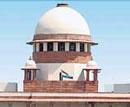
New Delhi, April 10: The Supreme Court Tuesday expressed its anguish at mentally challenged and deaf-mute foreign nationals, mostly Pakistanis, who continued to languish in Indian jails long after completing their sentence and asked why the issue could "not be taken up at the highest level".

An apex court bench headed by Justice R.M. Lodha said that "such cases pains us" and wanted to know "what is the hitch, problem and impediment" in the cases of these 16 people.

The issue of 16 foreign nationals believed to Pakistani citizens, 14 of them mentally challenged and two deaf-mute, still in jail despite completing their sentences had come up before the court.

Pointing to the meeting between Pakistan President Asif Ali Zardari and Prime Minister Manmohan Singh on Sunday, Justice Lodha asked: "Why can't the problem of these prisoners be taken up at the highest level?"

As additional solicitor general P.P Malhota sought more time so that he could sit with the petitioner, senior counsel Bhim Singh, the court adjourned the hearing till May 2.

Comments

Add new comment

  • Coastaldigest.com reserves the right to delete or block any comments.
  • Coastaldigset.com is not responsible for its readers’ comments.
  • Comments that are abusive, incendiary or irrelevant are strictly prohibited.
  • Please use a genuine email ID and provide your name to avoid reject.
News Network
April 13,2020

New Delhi, Apr 13: India's tally of positive COVID-19 cases rose to 9,152 following an increase of 796 cases in the last 24 hours, the Union Ministry of Health and Family Welfare said on Monday.

Out of the total number of cases, 7,987 patients are active cases while 857 cases have been cured/discharged and migrated.

With 35 deaths in the last 24 hours, the death toll mounted to 308.

According to the ministry, Maharashtra remained at the top with the total cases at 1,985, including 217 patients who have recovered/discharged and 149 patients died.

Delhi's tally of positive COVID-19 cases rose to 1,154 cases, including 27 recovered and 24 patients succumbing to the virus.

Tamil Nadu too reported 1,075 cases, including 50 recovered and 11 patients dead.

Meanwhile, four states have crossed the 500 mark with regards to the total number of cases as Rajasthan recorded 804 cases, Madhya Pradesh with 532 cases, Gujarat with 516 cases and Telangana with 504 cases, as per the ministry.

Comments

Add new comment

  • Coastaldigest.com reserves the right to delete or block any comments.
  • Coastaldigset.com is not responsible for its readers’ comments.
  • Comments that are abusive, incendiary or irrelevant are strictly prohibited.
  • Please use a genuine email ID and provide your name to avoid reject.
News Network
April 16,2020

United Nations, Apr 16: WHO chief Tedros Adhanom Ghebreyesus has welcomed the world health body's cooperation with India to leverage strategies that helped the country win its war against polio into the response to COVID-19 outbreak, saying such joint efforts will help defeat the pandemic.

The World Health Organization (WHO) has said it will work with India's Ministry of Health and Family Welfare to leverage the strategies that helped the country eradicate polio to fight the pandemic.

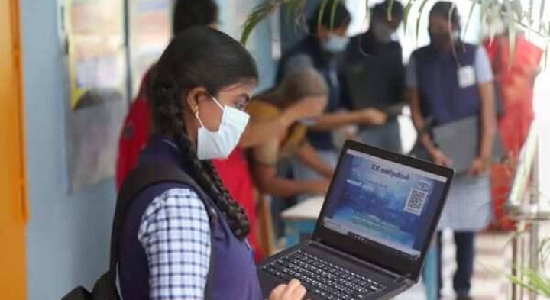
Migrants who returned to UP and Bihar were hurriedly housed in schools and panchayat buildings, which were turned into quarantine centres. However, unhygienic conditions and people running away have proved to be a problem

The WHO's national polio surveillance network will be engaged to strengthen COVID-19 surveillance and its field staff will continue to support immunization and elimination of tuberculosis and other diseases.

“Great news: @MoHFW_INDIA & @WHOSEARO initiated a systematic engagement of @WHO's national polio surveillance network, and other field staff, for India's #COVID19 response, tapping into the best practices & resources that helped win its war against polio,” the WHO director-general tweeted, referring to India's Ministry of Health and Family Welfare and World Health Organization Regional Office for South-East Asia.

According to the Johns Hopkins University data, over 2 million people are infected by the virus and more than 136,000 people have died of the disease globally.

Ghebreyesus expressed gratitude to Health and Family Welfare Minister Harsh Vardhan “for his leadership and collaboration” with WHO. “Through these joint efforts we can defeat the #coronavirus and save lives. Together!”

India eliminated polio in 2014.
According to a WHO press release, Vardhan said in New Delhi that “time and again the Government of India and WHO together have shown our ability, competence and prowess to the whole world. With our combined meticulous work, done with full sincerity and dedication, we were able to get rid of polio.”

“All of you in the field – IDSP (Integrated Disease Surveillance Project), state rapid response teams and WHO - are our ‘surveillance corona warriors'. With your joint efforts we can defeat the coronavirus and save lives,” Vardhan added.

WHO South-East Asia Regional Director Poonam Khetrapal Singh said the National Polio Surveillance Project (WHO-NPSP) played a critical role in strengthening surveillance for polio that generated useful, timely and accurate data to guide policies, strategies and interventions until transmission of the poliovirus was interrupted in the country,” adding that the other WHO field staff involved with elimination of tuberculosis and neglected tropical diseases and hypertension control initiative were also significant resources.

Singh added that “it is now time to use all your experience, knowledge and skills, with the same rigor and discipline that you showed while monitoring polio activities, to support districts with surveillance, contact tracing and containment activities.”

The WHO release said strengths of the NPSP team – surveillance, data management, monitoring and supervision, and responding to local situations and challenges – will be utilized to supplement efforts of National Centre for Disease Control, IDSP and Indian Council of Medical Research to strengthen COVID-19 surveillance.

The NPSP team will also support in sharing information and best practices and help states and districts calibrate their response based on transmission scenarios and local capacities.

The WHO field staff will continue to support immunization and surveillance and elimination of Tuberculosis and Neglected Tropical Diseases, Singh said, adding, “disease outbreaks can negatively impact progress in a range of areas, from maternal and child mortality to vaccine-preventable diseases and other treatable conditions. India had been making stupendous progress in these areas and we cannot afford for India's remarkable progress to be set back or reversed.”


Comments

Add new comment

  • Coastaldigest.com reserves the right to delete or block any comments.
  • Coastaldigset.com is not responsible for its readers’ comments.
  • Comments that are abusive, incendiary or irrelevant are strictly prohibited.
  • Please use a genuine email ID and provide your name to avoid reject.
Agencies
July 29,2020

New Delhi, Jul 29: The new National Education Policy (NEP) approved by the Union Cabinet on Wednesday is set to usher in a slew of changes with the vision of creating an education system that contributes directly to transforming the country, providing high-quality education to all, and making India a global knowledge superpower.

The draft of the NEP by a panel headed by former Indian Space Research Organisation (ISRO) chief Kasturirangan and submitted to the Union Human Resource Development Minister Ramesh Pokhriyal when he took charge last year. The new NEP replaces the one formulated in 1986.

Some of the key highlights of the New Education Policy are:-

The policy aims to enable an individual to study one or more specialized areas of interest at a deep level, and also develop character, scientific temper, creativity, spirit of service, and 21st century capabilities across a range of disciplines including sciences, social sciences, arts, humanities, among others.

It identified the major problems facing the higher education system in the country and suggested changes such as moving towards multidisciplinary universities and colleges, with more institutions across India that offer medium of instruction in local/Indian languages, a more multidisciplinary undergraduate education, among others. 

The governance of such institutions by independent boards having academic and administrative autonomy has also been suggested.

Under the suggestions for institutional restructuring and consolidation, it has suggested that by 2040, all higher education institutions (HEIs) shall aim to become multidisciplinary institutions, each of which will aim to have 3,000 or more students, and by 2030 each or near every district in the country there will be at least one HEI.

The aim will be to increase the Gross Enrolment Ratio in HEIs including vocational education from 26.3 per cent (2018) to 50 per cent by 2035.

Single-stream HEIs will be phased out over time, and all will move towards becoming vibrant multidisciplinary institutions or parts of vibrant multidisciplinary HEI clusters.

It also pushes for more holistic and multidisciplinary education to be provided to the students.

Comments

Add new comment

  • Coastaldigest.com reserves the right to delete or block any comments.
  • Coastaldigset.com is not responsible for its readers’ comments.
  • Comments that are abusive, incendiary or irrelevant are strictly prohibited.
  • Please use a genuine email ID and provide your name to avoid reject.