



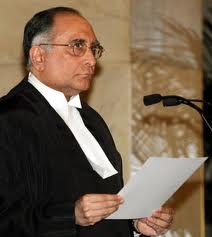
Queries under RTI crossing all limits: Chief Justice of India S H Kapadia

April 13, 2012

kapadiaNew Delhi, April 13: Chief Justice of India (CJI) S H Kapadia on Thursday said a very good law like Right to Information (RTI) was being misused to ask irrelevant and intrusive questions seriously impeding the working of the Judges and the Supreme Court.

When a bench of CJI and Justices D K Jain, S S Nijjar, R P Desai and J S Khehar were deliberating on reporting guidelines of sub-judice matters, Justice Kapadia said, "In RTI matters, since I took over as CJI, I have given answers to all questions except very few things. But the kind of questions and their number is also exceeding limit."

He gave samples of the irrelevant questions that were being put to the Judges taking away their precious time which could have been utilized in studying petitions and case materials. "Why did you attend Nani Palkhivala Lecture? What time did you leave? Did you eat lunch or had tea? Which lawyer invited you for the function? We are working hard but we are not being able to concentrate many a times because these kinds of questions," the CJI said.

"Are these questions relevant for press? It is all going beyond all limits. The RTI Act is a good law but there has to a limit to it," he added.

During the deliberations on reporting guidelines, the court asked senior advocate Anil Divan whether the Nariman Committee recommendations or the self-regulatory mechanism in News Broadcasters Association had provisions to deal with the problem of 'paid news'.

"If in the case of paid news comes before the association what steps would it take? What steps are prescribed in the self-regulatory mechanism? We are all for open court system. But we want to know if in a given case the court comes to a conclusion that reporting had vitiated fair trial and prejudiced the accused, what preventive steps are to be taken?" the bench asked.

The CJI took the lead in formulating the questions and said the court need not be misunderstood for this as it was coming across examples frequently relating to reporting on sub-judice matters. "Take for example today's article in The Hindu about Presidential Reference referring to it as 'all lies'," he said.

"The reference may not be sub-judice but it is coming to the court and the newspaper analyses all issues. How do we control such kind of things? Is it not interference in the administration of Justice? We are only asking to understand what should be done in such cases. Without saying whether it is right or wrong, we are giving the examples to get assistance from the counsel," Justice Kapadia said.

Divan, concluding his arguments, said he was still uncomfortable about framing of mandatory guidelines by the court as it would give a handle to accused and other vested interests would give various interpretations to the guidelines and rush to court seeking ban or postponement of reporting.

Senior advocate T R Andyarujina, assisting the court as amicus, said the US Supreme Court allows its proceedings to be telecast live thus leaving very little scope for misreporting by media. He said in India Parliament under its Privilege Rules could punish journalists for misreporting. "But in last 20 years, the Privileges Committee has only censured the erring ones and never punished them," he said. The arguments would continue on Tuesday.


Comments

Add new comment

  • Coastaldigest.com reserves the right to delete or block any comments.
  • Coastaldigset.com is not responsible for its readers’ comments.
  • Comments that are abusive, incendiary or irrelevant are strictly prohibited.
  • Please use a genuine email ID and provide your name to avoid reject.
News Network
July 17,2020
New Delhi, Jul 17:  Congress leader Rahul Gandhi on Friday said that as India's COVID-19 tally has crossed 10,00,000 mark and issued a warning that by August 10, more than 20,00,000 people may be infected in the country. He called on the government to take concrete steps to control the pandemic.
 
Taking to Twitter, Gandhi marked his earlier tweet from July 14 that stated: "This week the figure will cross 10,00,000 in our country."
"The tally has crossed 10,00,000 mark. If COVID-19 continues to spread at the same speed, by August 10, more than 20,00,000 people will be infected in the country.
 
The government must take concrete, planned steps to stop the epidemic," he tweeted today.
With the highest single-day spike of 32,695 cases and 606 deaths, India's COVID-19 tally on Thursday reached 9,68,876, informed the Union Ministry of Health and Family Welfare on Thursday.
 
The total number of COVID-19 cases includes 3,31,146 active cases, 6,12,815 cured/discharged/migrated and 24,915 deaths. 

Comments

Add new comment

  • Coastaldigest.com reserves the right to delete or block any comments.
  • Coastaldigset.com is not responsible for its readers’ comments.
  • Comments that are abusive, incendiary or irrelevant are strictly prohibited.
  • Please use a genuine email ID and provide your name to avoid reject.
News Network
March 11,2020

New Delhi, Mar 11: Congress leader Rahul Gandhi on Wednesday accused Prime Minister Narendra Modi of “destabilising” the elected Congress government in Madhya Pradesh.

Gandhi also said the PM may have “missed” noticing the 35 per cent crash in global oil prices and asked him to pass on the benefit to Indians by slashing petrol prices.

“Hey @PMOIndia, while you were busy destabilising an elected Congress Govt, you may have missed noticing the 35 per cent crash in global oil prices.

“Could you please pass on the benefit to Indians by slashing #petrol prices to under 60 per litre? Will help boost the stalled economy,” the former Congress chief said on twitter.

Congress' prominent youth leader Jyotiraditya Scindia quit the party on Tuesday and appeared set to join the BJP amid a rebellion in Madhya Pradesh by his supporters, pushing the 15-month-old Kamal Nath government to the brink of collapse.

On Tuesday morning, as much of India was celebrating Holi, Scindia met senior BJP leader and Union Home Minister Amit Shah, following which he called on Prime Minister Narendra Modi at his 7, Lok Kalyan Marg residence.

Comments

Add new comment

  • Coastaldigest.com reserves the right to delete or block any comments.
  • Coastaldigset.com is not responsible for its readers’ comments.
  • Comments that are abusive, incendiary or irrelevant are strictly prohibited.
  • Please use a genuine email ID and provide your name to avoid reject.
Agencies
March 15,2020

New Delhi, Mar 15: The new rules for debit and credit cards to increase security and reduce frauds kick in from Monday. In January, the Reserve Bank of India (RBI) had issued new rules to improve user convenience and increase the security of card transactions. These rules will help in curbing the misuse of debit and credit cards.

RBI has directed banks to allow only domestic card transactions at ATMs and PoS terminals in India at the time of issuance/reissuance of card. For international transactions, online transactions, card-not-present transactions and contactless transactions, customers will have to separately set up services on their card.

These rules will be applicable for new cards from March 16. Those with old cards can decide whether to disable any of these features.

As per the existing rules, these services used to come automatically with the card, but now it will start at the request of the customer.

Debit or credit card customers who have not yet done any online transaction, contactless transaction or international transaction with the card, then these services on the card will automatically stop from March 16.

The Reserve Bank has asked all banks to provide mobile banking, net banking option to enable limit and enable and disable service 24 hours a day, seven days a week.

If the customer makes any change in the status of the card, the bank will alert the customer through SMS/email and send the information.

Issuers shall provide to all cardholders facility to switch on/off and set/modify transaction limits (within the overall card limit, if any, set by the issuer) for all types of transactions -- domestic and international, at PoS/ATMs/online transactions/contactless transactions, etc.,

The provisions, however, are not mandatory for prepaid gift cards and those used at mass transit systems.

The latest instructions come in the wake of rising instances of cyber frauds and the huge increase in the use of cards.

Comments

Add new comment

  • Coastaldigest.com reserves the right to delete or block any comments.
  • Coastaldigset.com is not responsible for its readers’ comments.
  • Comments that are abusive, incendiary or irrelevant are strictly prohibited.
  • Please use a genuine email ID and provide your name to avoid reject.