



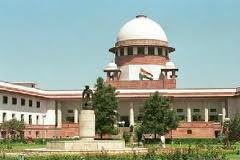
New norms for schools as SC backs Right to Education

April 13, 2012

SC

New Delhi, April 13: With the Supreme Court throwing its full weight behind the Right of Children to Free and Compulsory Education Act, 2009, (better known as the Right to Education Act or RTE Act) on Thursday, the composition of students in schools as well as the economics of running schools will undergo dramatic changes.

The apex court upheld the constitutional validity of the Act and directed all schools, including privately-run schools, irrespective of the board they are affiliated to, to admit from this academic year (2012-13) at least 25% students from socially and economically backward families. These students will be guaranteed free education from class I till they reach the age of 14.

This means the nature of the classroom will change. Until now, several schools were holding a separate shift for students from poor families after the main school was over. Under the RTE Act, they will have to induct these students in the main class - in other words, 25% of every class will have students from socially and economically disadvantaged families.

While many educationists feel the resultant social integration will make education more meaningful, the reaction of some expensive schools as well as of some parents hasn't been positive. Also, the need to give free education to 25% students is expected to increase the expenditure of schools, which is likely to lead to another round of fee hikes.

The schools will get a subsidy from the government for giving free education (65% of the subsidy will come from the Centre and 35% from states), but the subsidy is not expected to meet the full cost. The government subsidy will be based on the expenditure per student in government schools or Kendriya Vidyalayas, while many private schools spend (or at least, charge as fee) much more.

According to estimates, the government spends Rs 3,000 per child per year for primary education. The Centre has given states the freedom to implement its own grants and aids, but many states are financially broke and the grants vary from state to state. For instance, Delhi gives about Rs 1,200 per child per month, while Haryana doesn't give any aid to schools. Some educationists said that now private schools would have to hike fees as 75% of the class would have to pay for the 25% students admitted under the RTE Act.

Reacting to the Supreme Court order, HRD minister Kapil Sibal said, "I am very happy that the court has set all controversies at rest. One of the biggest controversies was on whether the 25% reservation applies to private schools or not... that controversy has been set to rest."

The court has, however, sought a clarification from the government on applicability of RTE Act to boarding schools and orphanages as the legislation applied only to day scholars. "To put the matter beyond doubt, we recommend that appropriate guidelines be issued under Section 35 of the 2009 Act clarifying the above position," the bench headed by Chief Justice S H Kapadia said.

According to 2007-08 statistics quoted by the Supreme Court, out of the 12,50,755 schools imparting elementary education in India, 80.2% were government run, 5.8% private aided and 13.1% private unaided. Of these, 87.2% of the schools were located in rural areas.

According to RTE activist Kiran Bhatty, former national coordinator for the monitoring of the RTE, several violations had cropped up recently, including non-compliance of the 25% quota for economically weaker sections. Other violations included running two shifts instead of integrating students in the class and conducting admission tests.

While National University of Planning and Administration's vice chancellor R Govinda did not rule out initial "turmoil", he said some "restructuring" on the part of government and private schools was necessary. He added that there was an increasing "ghettoisation of schools" that will now be discouraged. "The full impact will be seen in 7-8 years when the composition of the student community will change," he said.

Madarsas and institutions of vedic learning will continue to be outside the ambit of the Act as the HRD ministry has declared them as institutions of religious instruction rather than educational institutions as described under the RTE.

WILL FEES RISE?

What is RTE?

Free school education up to age of 14 for students from socially & economically backward families

Does RTE apply to all schools?

Yes, even private, convent schools, irrespective of the board. Only madrasas & Vedic schools exempt

What age group does RTE apply to?

To children from age 6 to 14, or from Class 1 to 8

Will there be a fee hike?

Most probably as govt subsidy won't meet full cost of providing free education to 25% students

Will students from poor families be in same classroom?

Yes. RTE says these students must be integrated in the main classroom

Can teachers hold private tuitions?

RTE says that no teacher can take private tuitions

Comments

Add new comment

  • Coastaldigest.com reserves the right to delete or block any comments.
  • Coastaldigset.com is not responsible for its readers’ comments.
  • Comments that are abusive, incendiary or irrelevant are strictly prohibited.
  • Please use a genuine email ID and provide your name to avoid reject.
News Network
March 28,2020

New Delhi, Mar 28: The total number of coronavirus positive cases in the country has risen to 918 that include foreign nationals, the Ministry of Health and Family Welfare said on Saturday.

The ministry said: "The total positive cases of coronavirus are 918. The active COVID-19 cases are 819. Cured and discharged are 79. While 19 deaths have occurred so far. One person with COVID-19 migrated. As many as 15,24,266 passengers were screened at airports."

Prime Minister Narendra Modi on Tuesday announced a 21-day lockdown in the entire country to deal with the spread of coronavirus, saying that "social distancing" is the only option to deal with the disease, which spreads rapidly.

Comments

Add new comment

  • Coastaldigest.com reserves the right to delete or block any comments.
  • Coastaldigset.com is not responsible for its readers’ comments.
  • Comments that are abusive, incendiary or irrelevant are strictly prohibited.
  • Please use a genuine email ID and provide your name to avoid reject.
Agencies
August 5,2020

Ayodhya, Aug 5: Prime Minister Narendra Modi on Wednesday recalled the significance of the path of 'maryada' associated with Lord Ram in the backdrop of the situation created by COVID-19 and emphasised the importance of social distancing and wearing face masks.

He said that the current situation demands 'maryada' should be 'do gaz ki doori, mask hai zaroori' and exhorted everyone to follow it.

In his speech after laying the foundation stone of the Ram Temple in Ayodhya, the Prime Minister said the temple of Lord Ram will inspire and guide humans for ages to come.

He said that the path of `maryada' followed by Lord Ram is all the more necessary today in the situation created by COVID-19.

"The `maryada' (need) today is do gaj ki doori, mask hai jaroori (keep distance of two yards, wear mask). The Almighty may keep all the citizens healthy and happy, this is my prayer. The blessings of Mother Sita and Shri Ram be always there on the citizens," he said.

The Prime Minister termed the occasion as historic and said that India is starting a glorious chapter when people across the country are excited and emotional to have finally achieved what they had been waiting for centuries.

Comments

Add new comment

  • Coastaldigest.com reserves the right to delete or block any comments.
  • Coastaldigset.com is not responsible for its readers’ comments.
  • Comments that are abusive, incendiary or irrelevant are strictly prohibited.
  • Please use a genuine email ID and provide your name to avoid reject.
Agencies
April 14,2020

Mumbai, Apr 14: Hours after Prime Minister Narendra Modi announed extension of the coronavirus-enforced lockdown till May 3, a large number of migrant workers who earn daily wages came out on road in Mumbai on Tuesday demanding transport arrangements to go back to their native places.

Bandra in Mumbai right now. Police probing what caused such a large crowd to gather. pic.twitter.com/04H1Mnggd2

— Padmaja joshi (@PadmajaJoshi) April 14, 2020

Daily wage workers have been rendered jobless ever since the lockdown was announced late last month to stem the spread of COVID-19, making their life a constant struggle.

Though authorities and NGOs have made arrangemnets for their food, most of them want to go back to their native places to escape the hardship brought by the sweeping curbs.

Wow. Thousands of ambassadors of peace doing this at #Bandra right now. Well done @OfficeofUT, well done. The world should see this.#Covid_19 #COVIDIOTSpic.twitter.com/SdinaZXm39

— Abhijit Majumder (@abhijitmajumder) April 14, 2020

According to a police official, daily wage earners, numbering around 1,000, assembled at suburban Bandra (West) bus depot near the railway station and squatted on road at around 3 pm.

The daily wage earners, who reside on rent in slums in in the nearby Patel Nagri locality, were demanding arrangement of transport facilities so that they can go back to their native towns and villages.

They originally hail from states like West Bengal and Uttar Pradesh.

Thousands of migrants gather at Mumbai's #Bandra railway station and protested. All are migrant workers, specially from Bihar-Bangal and they wanted to go home. They had hoped trains will start today. The police is investigating the matter and says crowd has been dispersed now. pic.twitter.com/NMHfv0CEpj

— Shivangi Thakur (@thakur_shivangi) April 14, 2020

One of the labourers, who did not reveal his name, said, NGOs and local residents are providing food to migrant workers, but they want to go back to their native states during the lockdown which has badly affected their source of livelihood.

"Now, we dont want food, we want to go back to our native place, we are not happy with the announcement (extending the lockdown)," he said, looking dejected.

Asadullah Sheikh, who hails from from Malda in West Bengal, said, We have already spent our savings during the first phase of the lockdown. We have nothing to eat now, we just want to go back at our native place, the government should made arrangements for us.

This happened in bandra just minutes back ! This can be potentially dangerous. Mumbai anyways is a hotspot ! What is the @MumbaiPolice and @OfficeofUT doing ???? Did @uddhavthackeray not provide food and shelter to such migrants ? #mumbai #UddhavThackeray #Lockdown2 pic.twitter.com/AeSuqbwhyN

— Megha Prasad (@MeghaSPrasad) April 14, 2020

Another labourer, Abdul Kayyun, said I am in Mumbai for last many years but have never seen such a situation. The government should start trains to shift us from here to our native place."

Heavy police deployment was made at the protest site to tackle any untoward incident.

Personnel from other police stations were called at the spot to maintain order, the official addd.

Comments

Add new comment

  • Coastaldigest.com reserves the right to delete or block any comments.
  • Coastaldigset.com is not responsible for its readers’ comments.
  • Comments that are abusive, incendiary or irrelevant are strictly prohibited.
  • Please use a genuine email ID and provide your name to avoid reject.